
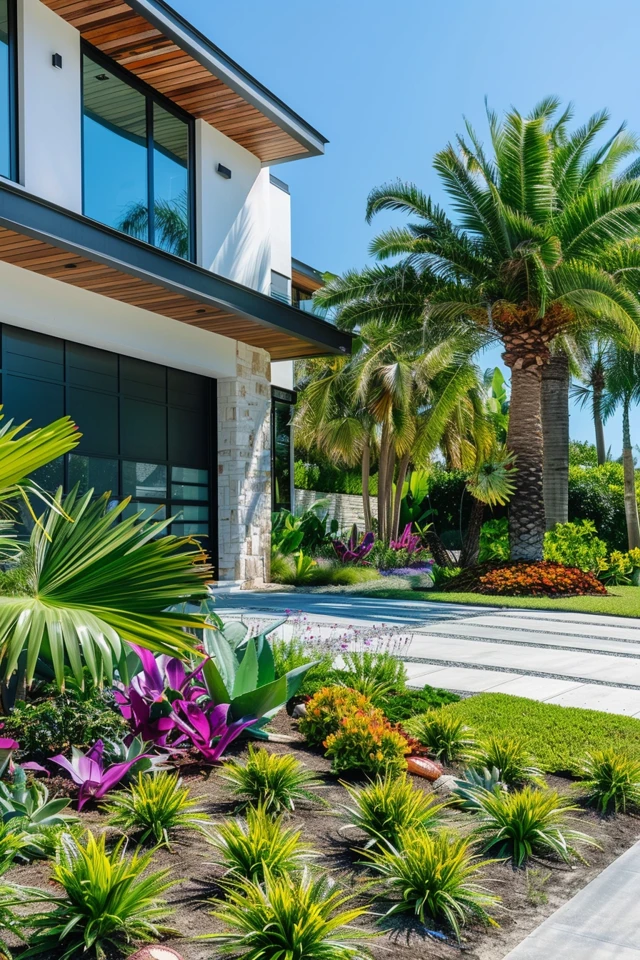
Florida Front Yard Landscaping Ideas Unveiled
Designing a landscape in Florida is unlike gardening anywhere else in the United States. You are dealing with a subtropical climate that encourages explosive plant growth, intense humidity that challenges materials, and a sun that can scorch delicate foliage in an hour. When I work on projects from Jacksonville to Miami, the goal is always to balance that lush, tropical appeal with the reality of maintenance and durability.
The front yard is your home’s handshake, setting the tone for what is inside while battling the elements outside. Whether you have a Spanish Revival bungalow or a modern coastal new build, the principles of scale, drainage, and plant selection remain critical. For a quick dose of visual inspiration, scroll down to the Picture Gallery at the end of this post.
In this guide, I will walk you through the specific strategies I use to create Florida front yards that survive the heat and look expensive. We will cover everything from hardscaping materials that stay cool underfoot to the logic of layering tropical plants.
1. Selecting Plants that Survive the Sunshine State
The biggest mistake homeowners make in Florida is assuming “tropical” means any plant with a big leaf. The reality is that Florida has distinct hardiness zones, ranging from Zone 8 in the panhandle to Zone 11 in the Keys.
If you plant a Coconut Palm in Tallahassee, a single frost will kill it. Conversely, certain temperate plants simply melt in the Miami heat. You must verify your specific zone before buying a single pot.
I always recommend starting with a backbone of native plants. Natives like Coontie, Sabal Palms, and Simpson’s Stopper are evolved to handle the cycle of drought and deluge. They require significantly less fertilizer and irrigation once established.
However, a purely native yard can sometimes look a bit wild or unkempt. The secret to a high-end look is mixing sturdy natives with exotic “accent” plants. Use the exotics for pops of color and the natives for structure.
Designer’s Note: The “Right Plant, Right Place” Rule
I recently consulted on a home where the owner planted shade-loving Bromeliads in full, direct afternoon sun. Within a week, the leaves were bleached white and dying.
Always map the sun exposure in your front yard. “Full Sun” in Florida is far more intense than “Full Sun” in New York. If a tag says partial shade, treat it as full shade in a Florida summer.
Common Mistakes + Fixes
- Mistake: Planting too close to the house foundation.
- Fix: Keep all vegetation at least 24 to 30 inches away from the exterior walls. This allows for airflow, prevents mold on your stucco, and keeps pests like ants or termites from having a bridge into your home.
- Mistake: Ignoring growth rate.
- Fix: Florida plants grow fast. Do not plant a hedge of Ficus right up against a walkway. Check the “mature width” and plant accordingly, even if it looks sparse for the first six months.
2. Hardscaping: Dealing with Heat and Water
In interior design, we talk about flow; in landscape design, we talk about drainage. Florida experiences torrential downpours, often dumping inches of water in an hour.
If your front yard is paved with non-permeable concrete, that water has nowhere to go but toward your garage or foundation. I highly recommend using permeable pavers or setting stones in gravel. This allows water to percolate into the ground instantly.
You also need to consider surface temperature. Dark asphalt or dark grey slate absorbs heat. In July, these surfaces can reach temperatures that will burn a pet’s paws or radiate heat back onto your plants, scorching them.
Opt for lighter materials. Travertine is a favorite of mine for Florida projects because it stays relatively cool to the touch, even in direct sunlight. Crushed shell driveways are also a classic, permeable, and cool option for coastal properties.
Measurements to Know
When laying out walkways, scale is vital. A standard builder-grade walkway is often 36 inches wide. This is too narrow for a welcoming entrance.
- Main Entry Path: Aim for 48 to 60 inches wide. This allows two people to walk side-by-side comfortably.
- Secondary Paths: 36 inches is acceptable for side yards or maintenance paths.
- Step Height: Keep outdoor risers between 6 and 7 inches max. Anything higher feels like a hike.
3. Styling: Defining Your Florida Aesthetic
Florida architecture usually falls into a few distinct categories. Your landscaping should act as an extension of the architecture, not a competitor.
The Coastal Contemporary Look
This style focuses on clean lines and a limited color palette. I use a lot of white stones, rectangular pavers, and architectural plants like Agave or Foxtail Ferns. The goal is low clutter. We often use Zoysia grass here for that carpet-like, manicured green look.
The Spanish/Mediterranean Revival
This is all about romance and lushness. Terracotta pavers or brick work beautifully here. For plants, think Bougainvillea for climbing vines, Hibiscus for color, and Robellini Palms for varying heights. Iron accents on gates or lighting fixtures complete the look.
The Tropical Jungle
This style embraces density. We layer plants heavily (more on that in the next section). Large leaf Philodendrons, Areca Palms, and Bird of Paradise are staples. The key is to create a canopy, a middle layer, and a ground cover so no bare dirt is visible.
What I’d Do in a Real Project: The Rental Compromise
If you are renting or on a tight budget, you cannot always repave a driveway.
- Focus on pots: Buy three large, matching glazed pots.
- Placement: Group them near the front door.
- Contents: Plant a tall palm or cordyline in the center, and surround it with trailing plants like sweet potato vine.
- Result: Instant curb appeal that you can take with you when you move.
4. The Logic of Layering and Layout
A flat yard is a boring yard. In interior design, we avoid pushing all furniture against the walls. In landscaping, we avoid planting everything in a single straight line.
Effective Florida landscaping relies on the “Tiered Effect.” You need to draw the eye up and create depth.
The Back Layer (Tall)
This goes against the house or the fence. Use tall shrubs or small trees. Podocarpus is excellent for screening because it grows dense and vertical.
The Middle Layer (Texture)
This is where you add interest. Plants that grow 2 to 4 feet tall belong here. Crotons are a Florida favorite because their leaves offer vibrant reds, yellows, and oranges without needing flowers. Flax lilies or Bromeliads also work well here to introduce different leaf textures.
The Front Layer (Ground Cover)
This defines the edge of the bed. You want low-growing plants that won’t hide the middle layer. Liriope, Mondo Grass, or Blue Daze are reliable options.
Designer’s Note: The Rule of Odds
When planting your middle and front layers, always plant in odd numbers. Groups of 3, 5, or 7 look natural and organic. Even numbers (2 or 4) tend to look forced and formal, which fights against the relaxed Florida vibe.
Also, consider the view from inside your house. Do not plant a large palm directly in front of your living room window. Frame the window instead. Place taller plants at the corners of the house to soften the sharp architectural edges.
5. Lighting and Irrigation: The invisible Essentials
You can spend thousands on plants, but without water and light, the investment is wasted.
Irrigation is Non-Negotiable
In Florida, the heat evaporates moisture from the soil rapidly. An irrigation system is mandatory for a healthy front yard. Drip irrigation is the gold standard for flower beds. It delivers water directly to the roots, minimizing evaporation and preventing fungal diseases on wet leaves.
Spray heads are fine for turf, but ensure they are adjusted correctly. I often see sprinkler heads spraying the side of the house or the sidewalk. This wastes water and stains your hardscaping with rust or calcium deposits.
Lighting for Evening Curb Appeal
Landscape lighting adds a dimension of luxury that plants alone cannot achieve. It also adds security.
Avoid “runway lights”—the cheap solar stakes placed every two feet along a path. It looks cluttered. Instead, use path lights sparingly to illuminate changes in elevation or turns in the walkway.
Use uplighting for trees. A palm tree lit from the bottom looks sculptural and majestic at night.
Technical Spec: Color Temperature
Pay attention to the Kelvin (K) rating of your LED bulbs.
- 2700K (Warm White): This is the sweet spot. It mimics the warmth of incandescent bulbs and makes foliage look rich and inviting.
- 3000K (Bright White): Acceptable for modern homes, but slightly crisper.
- 4000K+ (Cool/Blue White): Avoid this. It looks like a security floodlight or a hospital operating room. It washes out the colors of your plants and feels harsh.
Final Checklist: What I’d Do in Your Yard
If I were consulting on your property tomorrow, this is the mental checklist I would run through. You can use this to audit your own plan.
- Drainage Check: Have I observed the yard during a heavy rain? Do I need French drains or permeable pavers?
- Zone Verification: Are all selected plants rated for my specific USDA hardiness zone?
- Palette Discipline: Have I limited my plant species to 5-7 varieties to avoid a chaotic look?
- Scale Assessment: Are the walkways at least 48 inches wide? Are plants spaced for their future size, not their current size?
- Focal Point: Is there one clear focal point (a tree, a fountain, a door), or is the eye confused?
- Mulch Selection: Am I using pine bark or pine straw? (Avoid dyed red mulch; it fades fast and looks synthetic).
- Lighting Audit: Are the lights 2700K? Are they highlighting features rather than just lining the path?
FAQs
Q: Can I use rocks instead of mulch in my flower beds?
A: You can, but be careful. White stones reflect heat up at the plants, which can scorch them. Dark stones absorb heat and cook the roots. If you use rock, ensure you have drought-tolerant plants like succulents or palms that can handle the micro-climate heat. Also, keep rocks away from the immediate base of sensitive plants.
Q: What is the best grass for a Florida front yard?
A: It depends on sun and maintenance. St. Augustine is the most common; it is lush and handles salt well, but it needs a lot of water and is prone to bugs (chinch bugs). Zoysia is softer and more drought-tolerant but can be pricier to install. Bahia is the low-maintenance, pasture-style grass, often used in rural areas or large lots, but it doesn’t offer that “carpet” look.
Q: How do I handle HOA restrictions?
A: Always check your HOA bylaws before planting. Many Florida HOAs have strict lists of approved trees and percentage requirements for sod coverage. Some even ban xeriscaping (rock gardens). Get approval in writing before you dig.
Q: My front yard is full shade. What can I grow?
A: Full shade in Florida is actually a blessing. You can create a lush, jungle vibe. Look for Ginger varieties (Shell Ginger, Hidden Ginger), Ferns, Bromeliads, and Ti Plants. Caladiums are also fantastic for seasonal color in shady spots.
Conclusion
Creating a beautiful Florida front yard is about respecting the power of the environment. It requires balancing the aggressive growth of the tropics with the structural needs of a functional home entrance. By choosing the right materials, understanding your light conditions, and layering your plants with intention, you can create a space that boosts your curb appeal and withstands the elements.
Remember to plan for the mature size of your plants, prioritize drainage, and use lighting to extend the beauty of your home into the evening. With these guidelines, you are well on your way to a landscape that feels like a personal resort.
Picture Gallery


