
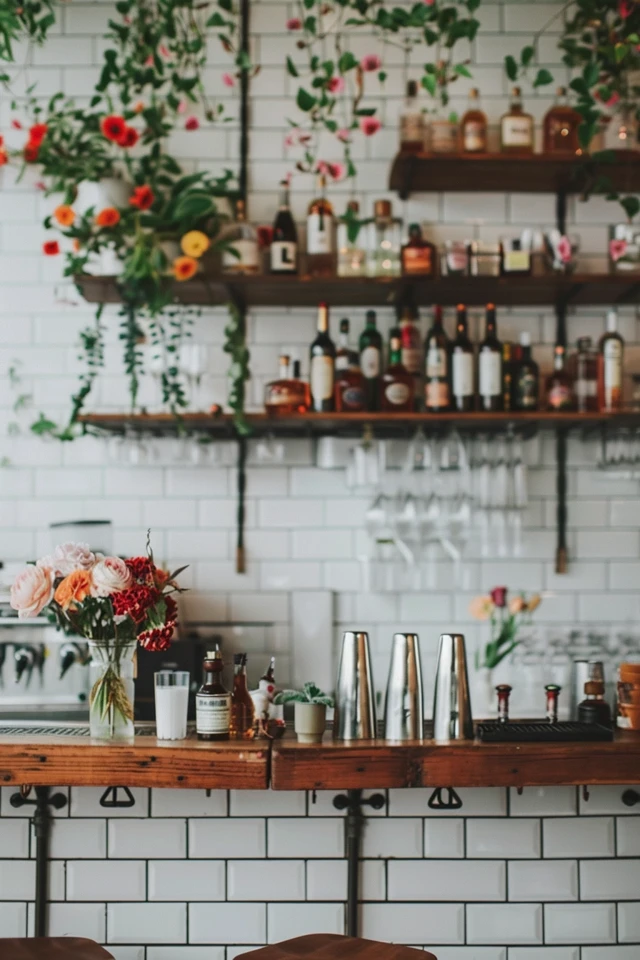
Fresh Bar Tile Ideas to Elevate Your Space
The home bar has evolved from a dusty cart in the corner to a central design feature in modern homes. It is the one place where I encourage my clients to take risks, use moody colors, and embrace textures they might be too scared to use in a main kitchen. When designing a bar, the backsplash is your greatest opportunity to inject personality and create a focal point that draws guests in.
However, choosing the right tile is about more than just grabbing a pretty sample from the showroom. You have to consider the specific hazards of a bar area, such as red wine splashes, citrus acids from cocktail garnishes, and the unique lighting conditions of a moody lounge space. I have seen beautiful marble ruined by a single margarita night, so getting the material right is just as important as the aesthetic.
If you are looking for visual inspiration, jump to the end of this post to view the Picture Gallery. Otherwise, let’s dive into the practical design rules, material choices, and styling secrets that will make your home bar both stunning and durable.
1. Material Matters: Durability Meets Design
When selecting tile for a bar, you are dealing with different stressors than a standard kitchen backsplash. In a kitchen, the main enemies are grease and heat. In a bar, the enemies are acid (lemon/lime juice), tannins (wine), and liquid volume.
Your choice of material dictates how much maintenance you will be doing on a Saturday morning. Some materials age beautifully, while others just look dirty. Here is how I break down the options for my clients based on their lifestyle.
Porcelain and Ceramic
This is your low-maintenance workhorse. Modern porcelain technology has advanced to the point where it can convincingly mimic handmade clay, natural stone, or even metallic finishes.
- Pros: Impervious to acid etching and staining; zero maintenance required.
- Cons: Can feel “flat” if you choose a cheap print; lacks the natural variation of stone.
- Best for: High-traffic wet bars and families with teenagers.
Natural Stone (Marble, Travertine, Limestone)
Nothing beats the real thing for luxury. However, calcium-based stones react instantly with acid.
- Pros: Unmatched depth, texture, and resale value.
- Cons: Will etch (dull spots) and stain; requires sealing every 6–12 months.
- Best for: Dry bars or homeowners who embrace a “patina” look over time.
Glass and Mirror
Antique mirror tiles are a classic choice for bars because they expand the space and bounce light around dark corners.
- Pros: Makes small nooks feel double the size; easy to wipe down.
- Cons: Shows every smudge and fingerprint; difficult to cut around outlets without cracking.
- Best for: Small, windowless alcoves that need brightening.
Designer’s Note: The “Acid Test”
Before you commit to a stone tile, take a sample piece home. Squeeze a lime on it and leave a drop of red wine on it overnight. In the morning, wipe it clean. If the mark bothers you, do not buy that stone. If you view the mark as a memory of a good night, proceed with the purchase.
2. Playing with Scale and Shape
We are moving away from the standard 3×6 subway tile running bond. While classic, it can feel a bit utilitarian for a space meant for entertainment. A bar is a jewelry box; it deserves a more intricate setting.
The “Kit Kat” or Finger Tile
These thin, vertical mosaic tiles are trending heavily right now. They add incredible verticality to a space, making low ceilings feel higher.
- Scale tip: Because the tiles are so small, you will have a lot of grout lines. Use a high-quality, stain-resistant grout.
- Installation note: Ensure your walls are perfectly flat. Small mosaic sheets will wave and ripple over uneven drywall.
Zellige and Hand-Cut Look
Moroccan Zellige tiles are celebrated for their imperfections. No two tiles are exactly the same shade or thickness. This creates a shimmering, water-like effect under dim bar lighting.
- The Look: Organic, textural, and warm.
- The Challenge: You cannot use standard tile spacers. They are meant to be butt-jointed (shoved together) or installed with a tiny wedge.
Large Format Slabs
For a truly modern, seamless look, skip the tile and run the countertop material up the wall. This is often called a “full splash.”
- Visual impact: It creates a quiet, luxurious backdrop that lets your liquor bottles be the star.
- Cost factor: This is usually the most expensive option due to fabrication costs, but it eliminates grout cleaning entirely.
Common Mistake: Ignoring the Return
If your bar is located in a niche or an alcove, homeowners often only tile the back wall. This can look unfinished.
The Fix: Wrap the tile onto the side walls (the “returns”). It creates an immersive, finished environment. If the side walls are short, tile them all the way to the front edge of the cabinetry.
3. The Wet Bar vs. Dry Bar Distinction
The functionality of your bar dictates your tiling height and coverage. I approach the design differently depending on whether there is a sink involved.
The Wet Bar (Sink Included)
Water splashes are inevitable. In these setups, the tile is not just decorative; it is a shield for your drywall.
- Height Rule: You need a minimum of 18 inches of coverage from the countertop. However, taking tile to the ceiling or the bottom of open shelving is far superior visually and functionally.
- Caulking: The joint between the countertop and the tile must be caulked with 100% silicone, not grouted. Grout will crack as the house settles, allowing water to seep behind the cabinets.
The Dry Bar (Storage and Prep Only)
Here, you have more freedom. You can use materials that might not be water-safe, like leather-wrapped panels or wallpaper, but tile remains a favorite for durability against bottle impacts.
- Design Freedom: Since you don’t have a faucet breaking the visual plane, you can do large-scale patterns or murals without visual interruption.
- Surface Area: You can often get away with a lower splash (4–6 inches) of stone and wallpaper above, though I usually advise against short splashes as they look dated.
What I’d Do in a Real Project
If the budget allows, I always tile from the countertop to the ceiling in a bar niche. It makes the room feel taller and more expensive. If the budget is tight, I stop the tile at the first shelf height and paint the wall above a dark, moody color to match the tile. This camouflages the transition.
4. Grout Colors and Texture
Grout is often an afterthought, but in a bar setting, it can make or break the design. The color of the grout changes the geometry of the wall.
Contrasting Grout
If you use white tile with dark charcoal grout, you are highlighting the pattern. This makes the space feel busier and more energetic.
- Use when: You have a simple tile shape (like a hexagon or diamond) and you want the geometric pattern to be the focal point.
- Warning: Your tile installer must be perfect. High-contrast grout shows every crooked line.
Matching Grout
Using a grout color that matches the tile creates a textural, monolithic surface.
- Use when: You are using Zellige or highly textured tile. You want the eye to see the shimmer of the glaze, not the grid of the lines.
- Visual Trick: This makes a small bar area feel larger and less cluttered.
The Gold Standard: Epoxy Grout
For any bar, I highly recommend spending the extra money on epoxy or urethane grout. Unlike traditional cement-based grout, these do not absorb liquids.
If a guest spills a glass of Cabernet on your white grout lines, cement grout will stain pink forever. Epoxy grout wipes clean with a wet rag. It is difficult to work with, so your installer may charge more, but it is worth every penny for longevity.
5. Lighting Interactions
You cannot design a bar backsplash without thinking about how you will light it. Bars are usually lit differently than kitchens; the lighting is dimmer, warmer, and often directed downward or upward to create mood.
Under-Cabinet Lighting
If you have upper cabinets or floating shelves, you will likely have LED strips underneath them.
- Glossy Tile: If you use high-gloss tile, you will see the reflection of the individual LED dots on the wall. This looks cheap. To prevent this, use a “channel” with a milky diffuser lens for your LED tape.
- Matte Tile: This absorbs the light and creates a soft glow. It is generally more forgiving with under-cabinet lighting.
Downlighting (Grazing)
If you have recessed cans in the ceiling above the bar, consider placing them close to the wall to “graze” the tile.
- Texture is key: This technique works best with 3D tiles, stacked stone, or varied-thickness handmade tiles. The light catches the top of the tile and casts shadows below, creating drama.
- Flatness check: Do not graze a flat wall of large-format tile. It will highlight every tiny lippage (unevenness) error the installer made.
Kelvin Temperature
For a bar, you generally want a moodier atmosphere. I specify 2700K (warm white) bulbs. However, be aware that 2700K light will make white tiles look slightly cream and grey tiles look slightly taupe. Always check your tile sample in the actual room with the lights dimmed.
Final Checklist: Before You Install
Use this mini-checklist to ensure you haven’t missed any critical details before the installer arrives.
- Outlet Color: Do not use standard white plastic outlets on a dark tile backsplash. Buy Lutron or similar architectural outlets that match your tile color.
- Height Calculation: Did you account for the thickness of the countertop? Standard counters are 36 inches high. Measure your tile space starting from the finished counter height, not the subfloor.
- Overage: Did you order 15–20% extra tile? Cuts around shelves, corners, and outlets waste more material than you think.
- Trim Pieces: How are you ending the tile run? Do you have matching bullnose pieces, or are you using a metal Schluter edge? Decide this before installation starts.
- Shelf Supports: If you are installing floating shelves, are the brackets already in the wall? You usually need to install heavy-duty brackets to the studs before the tile goes up. Tiling around them is cleaner than trying to drill through tile later.
FAQs
Can I tile a bar backsplash over existing drywall?
Yes, as long as the drywall is sound and flat. For a wet bar with a sink, I prefer using cement board or a waterproof membrane (like Schluter-Kerdi) immediately behind the sink area, but standard moisture-resistant drywall (green board) is usually code-compliant for dry areas.
Is peel-and-stick tile okay for a rental bar?
Absolutely. Technology has improved here. Look for “rigid core” or “composite” peel-and-stick tiles rather than the floppy vinyl stickers. They have real texture and can look convincing. Just ensure you clean the wall with TSP or alcohol before applying so the adhesive sticks.
What is the best tile size for a small bar?
Counterintuitively, don’t use tiny mosaic tiles in a tiny space; the thousands of grout lines can make it feel frantic and smaller. A medium-sized tile (like a 4×4 or a 2.5×8) strikes a good balance. Alternatively, a mirror backsplash has no size limits and doubles the visual space.
How do I clean grout behind a bar?
If you didn’t use epoxy grout and have stains, make a paste of baking soda and hydrogen peroxide. Let it sit on the grout line for 15 minutes, then scrub with a toothbrush. For daily maintenance, avoid abrasive scrubbers that can scratch glossy tile finishes.
Conclusion
Your home bar is the place where you get to play the host, mix a drink, and unwind. It should feel special. By choosing a tile that can withstand the occasional spill and combining it with the right lighting and layout, you create a space that is as functional as it is beautiful.
Don’t be afraid to go darker, moodier, or more textured than you would in your main kitchen. This is a destination zone in your home. Whether you choose the organic imperfection of Zellige or the sleek vertical lines of Kit Kat mosaics, the right tile will elevate your glass of wine into an experience.
Picture Gallery


