
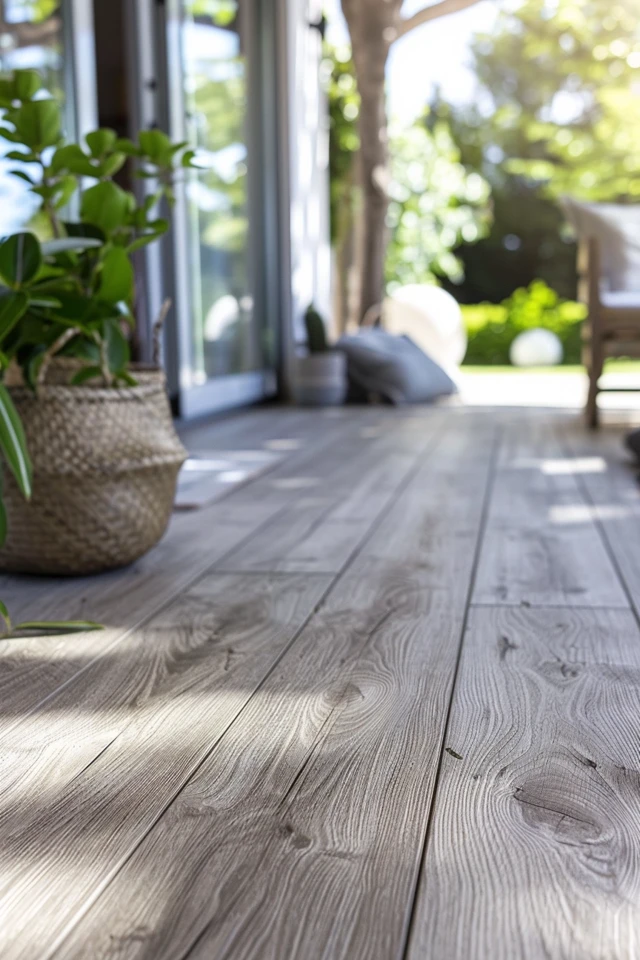
Fresh Deck Flooring Ideas to Transform Your Space
Your deck should be an extension of your indoor living space, not just an afterthought tacked onto the back of the house. I often tell my clients that the “floor” of your outdoor room is the single most impactful design element you have. It sets the tone for the furniture, dictates the maintenance schedule, and influences how often you will actually want to step outside.
I remember a specific project where a client had a structurally sound but incredibly ugly pressure-treated pine deck. It was gray, splintery, and completely uninviting. They assumed they had to tear the whole thing down, which would have cost a fortune. Instead, we looked at resurfacing options and creative layout changes. By switching the flooring material and adding a perimeter border, we saved the sub-structure and gave them a luxury look for half the price.
Whether you are building from scratch, resurfacing an existing frame, or looking for a temporary fix for a rental balcony, the right flooring makes all the difference. For plenty of visual inspiration, be sure to check out our curated Picture Gallery at the end of this post. Let’s dive into the materials and design strategies that will turn your deck into a destination.
1. Choosing the Right Material: Wood vs. Composite vs. PVC
The biggest decision you will make regarding deck flooring is the material itself. In the design world, this is often a tug-of-war between aesthetics and maintenance. While natural wood has a warmth that is hard to replicate, technology has made synthetic options incredibly viable for busy households.
Natural Wood Options
If you crave authenticity, real wood is still the gold standard. Pressure-treated pine is the entry-level option, but it requires annual sealing and stain to prevent warping. For a higher-end look, I often specify Cedar or Redwood. These woods have natural rot-resistant properties and a beautiful red-brown hue.
For the ultimate luxury deck, we use tropical hardwoods like Ipe or Cumaru. These are incredibly dense woods. An Ipe deck can last 50 years, but it requires a significant upfront investment. It also requires specific installation tools because the wood is so hard it can snap standard screws.
Composite and PVC
Composite decking is a blend of wood fibers and plastic, usually capped with a polymer shell. It resists fading, staining, and scratching. PVC is 100% plastic and offers the best resistance to moisture, making it ideal for decks near pools or in very damp climates.
Designer’s Note: The Heat Factor
Here is a lesson I learned the hard way on a south-facing project in Arizona: darker composite materials get significantly hotter than wood. If you have children or pets who will be walking barefoot, or if your deck gets direct afternoon sun, you must choose a lighter color. I always recommend taking a sample board home and leaving it in the sun for two hours. Step on it barefoot. If it burns you, it is the wrong choice for your space.
2. Deck Tiles: The Renter-Friendly and Concrete Fix
Not everyone is in a position to build a structural deck. If you are dealing with a concrete patio pad that is cracked, or you are renting an apartment with a dreary balcony, interlocking deck tiles are a fantastic solution. These are generally 12-inch by 12-inch squares that snap together floating above the existing surface.
You can find these tiles in various materials, including acacia wood, composite, stone, and even artificial turf. The beauty of this system is that it allows water to drain underneath, preventing puddles from forming on the walking surface. It also requires zero fasteners, so you won’t damage the rental property.
Common Mistakes + Fixes
Mistake: Ignoring the door clearance.
Fix: Deck tiles usually add about 1 inch of height to your floor. Before you buy 500 square feet of tile, open your door. Measure the gap between the bottom of the door threshold and the ground. If you have less than 1.25 inches of clearance, the tiles will block the door from opening. In this case, an outdoor rug is your only flooring option.
Mistake: Failing to clean the substrate.
Fix: Never lay tiles over debris. Sweep and hose down the concrete thoroughly. If you trap organic matter (leaves, dirt) under the tiles, it will stay damp and eventually smell or breed mold.
3. Layout Patterns to Elevate the Aesthetic
One of the easiest ways to make a deck look “custom” without spending extra money on materials is to change the laying pattern. Most DIY decks feature boards running parallel to the house. This is functional, but it can look a bit bowling-alley-ish on long, narrow decks.
The Picture Frame Border
This is my number one rule for a polished look. Regardless of the pattern in the middle, run a border of one or two boards around the perimeter of the deck. This is called “picture framing.” It hides the cut ends of the composite or wood boards, giving you a clean, finished edge. You can use the same color as the field or a contrasting color for a dramatic effect.
Diagonal Lay
Running boards at a 45-degree angle increases the rigidity of the deck frame and makes the space feel larger. It draws the eye outward to the corners rather than straight back.
Herringbone and Chevron
These patterns are stunning but labor-intensive. They require a lot of blocking (extra wood supports) underneath the deck frame because every board end needs to rest on a joist.
What I’d do in a real project:
- Small decks (under 200 sq ft): Stick to a simple linear lay but run it perpendicular to the house to draw the eye out toward the view.
- Large decks (over 400 sq ft): Use “breaker boards.” These are boards that run perpendicular to the main decking to divide the space into zones (like a dining zone and a lounging zone). This eliminates the need for ugly butt-joints where two boards meet end-to-end.
4. Staining and Resurfacing Existing Wood
If your structure is sound but the surface looks tired, you don’t always need new flooring. You might just need a better finish. However, there is a massive difference between painting and staining a deck, and choosing the wrong one can lead to a maintenance nightmare.
Transparent vs. Semi-Solid Stains
I almost always recommend a semi-transparent or semi-solid stain. These deposit pigment into the wood grain while still allowing the texture to show through. The pigment acts as UV protection. Clear sealers offer very little UV protection, meaning your wood will turn gray within a year.
Solid Body Stains and “DeckOver” Paints
Be very cautious with thick, acrylic deck paints or “resurfacing” products that claim to fill cracks. While they look great on day one, they create a film on top of the wood. When moisture inevitably gets into the wood from underneath, that film will bubble and peel. Once it peels, you cannot simply stain over it; you have to sand the entire deck down to bare wood, which is back-breaking work.
Designer’s Note: Preparation is Key
The success of any refinishing job is 90% preparation and 10% application. You must use a deck cleaner to remove mold spores and mill glaze. If you skip the cleaning step, you are just sealing in dirt, and the finish will fail within six months.
5. Layering with Outdoor Rugs
Once the hard flooring is sorted, we need to talk about softness. Outdoor rugs are essential for grounding furniture groupings and adding a layer of comfort. They also protect your investment. If you have a heavy steel dining table, a rug prevents it from scratching your new composite boards.
Material Matters
For outdoor use, look for 100% polypropylene. It is mold-resistant, colorfast, and can be bleached if necessary. Avoid jute, sisal, or cotton, even if the label says “indoor/outdoor.” Natural fibers will hold moisture and rot on an exposed deck.
Sizing Rules of Thumb
The rules for outdoor rugs are slightly different than indoor ones, but the scale remains important.
- Dining Areas: The rug must extend at least 24 inches on all sides of the dining table. This ensures that when a guest pulls their chair out to sit down, the back legs stay on the rug rather than catching on the edge.
- Lounge Areas: Aim for a rug large enough that at least the front legs of all sofas and chairs sit on it. This visually connects the furniture pieces. A 5×8 rug is almost always too small for a standard conversation set; look for an 8×10 or 9×12.
Final Checklist: Planning Your Deck Project
Before you head to the lumber yard or click “buy” on those tiles, run through this checklist. This is the exact mental process I use when initiating a deck design for a client.
1. Verify the Sub-Structure
If you are resurfacing, take a screwdriver and poke the existing joists (the frame underneath). If the wood is soft or spongy, the frame is rotting. No amount of fancy flooring will fix a structural failure.
2. Check Joist Spacing
Most standard decks have joists spaced 16 inches on center. However, if you plan to lay composite decking diagonally, most manufacturers require joists to be 12 inches on center to prevent the boards from sagging. Check the installation manual of your chosen product.
3. Calculate Waste
For a standard linear pattern, add 10% to your square footage for cut-offs and waste. If you are doing a herringbone or diagonal pattern, add 15-20%. You do not want to run out of material mid-project.
4. Plan for Lighting
If you want stair riser lights or in-floor uplighting, this must be planned before the flooring goes down. The wiring has to be run through the frame first.
5. Order Samples
Never trust a photo on a computer screen. Order physical samples of the flooring material and look at them outdoors in both morning light and evening shade.
FAQs
What is the most durable deck flooring?
Ipe (Brazilian Walnut) and high-quality capped polymer (PVC) decking are the most durable. Both can last 25 to 50 years with proper care. Ipe requires oiling to maintain its color, while PVC requires only soap and water cleaning.
Can I install deck tiles over grass or dirt?
No. Deck tiles must be installed over a solid, flat surface like concrete, asphalt, or an existing wood deck. If you put them on grass, they will sink, become uneven, and the grass will grow through the slats.
Is composite decking slippery when wet?
Early generations of composite were very slippery, but modern versions have excellent traction. Look for boards with a deep, realistic grain texture. If you have a pool deck, check the manufacturer’s “slip resistance rating” specifically.
Does dark decking fade in the sun?
Natural wood will always fade to gray unless stained regularly. Modern capped composite decking has UV inhibitors and is highly resistant to fading, usually backed by a 25-year fade and stain warranty.
Conclusion
Transforming your deck flooring is one of the most rewarding home improvement projects because the payoff is immediate. You go from avoiding a splintery, hot, or ugly surface to having a true outdoor sanctuary.
Whether you choose the warmth of natural cedar, the bulletproof durability of PVC, or the quick-fix magic of interlocking tiles, the key is to be realistic about your lifestyle. Be honest with yourself about how much maintenance you are willing to do. If you know you won’t sand and stain every two years, spend the extra money on composite now. It pays for itself in free weekends later.
Take the time to plan your layout, consider the borders, and layer in a rug for that finishing touch. Your deck is ready for its close-up.
Picture Gallery


