
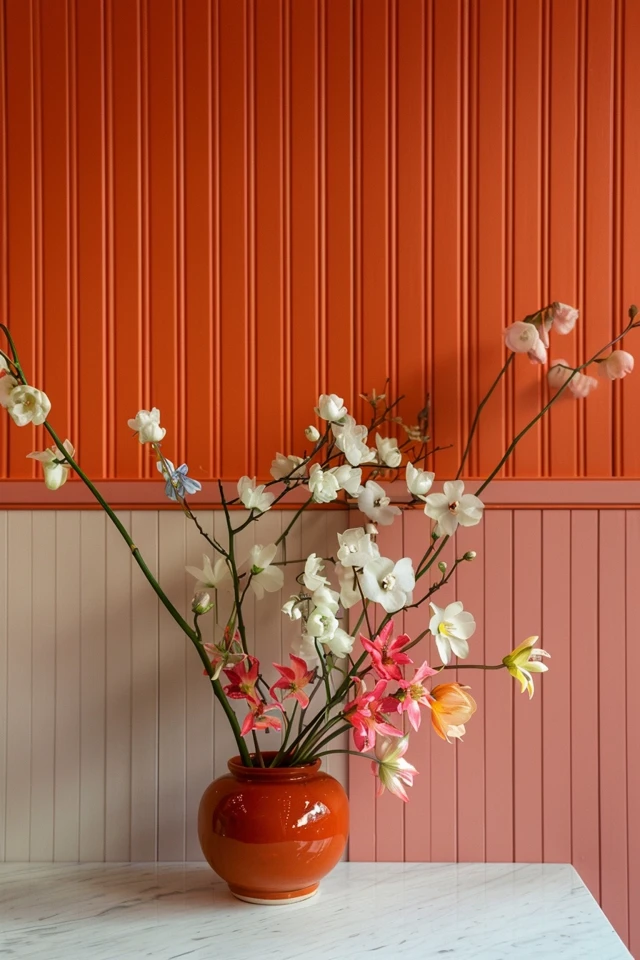
Fresh Half Wall Paneling Ideas for Your Home
Introduction
I still remember the first hallway I ever designed for a busy family with three golden retrievers and two toddlers. The drywall was taking a beating, scuffed by backpacks, paws, and toy cars on a daily basis. We needed a solution that was durable enough to withstand the traffic but elegant enough to elevate the home’s entry.
Half wall paneling, often called wainscoting, became our hero in that project. It provides a distinct architectural layer that protects your walls while adding immediate character to a plain boxy room. Whether you lean toward traditional charm or modern geometry, adding texture to the lower portion of your wall changes the entire scale of a space.
For a huge dose of inspiration before you start measuring, skip down to the Curated Picture Gallery at the end of this post.
1. The Art of Proportion: Height Matters
The most common mistake homeowners make with half wall paneling is cutting the room exactly in half. In design, we avoid a 50/50 split because it visually lowers the ceiling and makes the room feel static. Instead, we rely on the Rule of Thirds to create a balanced, dynamic look.
If your ceilings are the standard 8 feet high, your paneling should generally sit at either the bottom third (about 32 to 36 inches) or the top two-thirds (about 60 to 64 inches). The lower height is traditional and works perfectly as a chair rail to protect against dining chairs.
The higher placement, often called a “plate rail” height, creates a cozy, dramatic effect. This is particularly effective in entryways, mudrooms, or bathrooms where you want to install hooks. When I design a mudroom, I almost always set the paneling height to 66 inches. This allows plenty of room for coats to hang without brushing against the drywall above.
Designer’s Note: The Baseboard Rule
A rookie error is installing paneling that is visually heavier than the baseboard. Your baseboard anchors the wall. If you are installing board and batten or heavy beadboard, your baseboard must be at least 5.5 inches tall. Anything shorter will look top-heavy and unintentional. I prefer a chunky 7-inch baseboard for 9-foot ceilings.
2. Selecting Your Style Profile
The style of paneling you choose dictates the entire vibe of the room. Beadboard is the classic choice for cottages, bathrooms, and coastal interiors. It consists of narrow vertical planks with a small indentation, or “bead,” between them. It is generally the most affordable option and easiest to install for DIYers since the sheets cover large areas quickly.
Board and batten offers a craftsman or farmhouse aesthetic. This style uses wide vertical strips (battens) spaced evenly over a flat panel or smooth drywall. For a balanced look, I usually space battens 12 to 16 inches apart. If the spacing gets too wide, the wall looks sparse; too narrow, and it looks like a cage.
For a modern or transitional home, consider a geometric or grid pattern. This involves creating squares or rectangles using molding. It feels more formal than shiplap but fresher than traditional picture frame molding. If you have a small room, a horizontal shiplap half wall can trick the eye into thinking the room is wider than it actually is.
Common Mistakes + Fixes
- Mistake: Ignoring the electrical outlets.
- Fix: Before you glue any boards, map out your outlets. If a batten lands directly on an outlet, you have a problem. You will need to shift your entire layout left or right by a few inches to ensure the trim frames the outlet, rather than overlapping it.
- Mistake: Using thin plywood that warps.
- Fix: For painted applications, High-Density Fiberboard (HDF) or MDF is superior to cheap plywood. It is stable, does not have knots, and takes paint beautifully.
3. Color Theory and Finish Strategy
The finish you choose is just as important as the wood itself. The most timeless approach is painting the paneling white or off-white while adding a color or wallpaper to the drywall above. This keeps the room feeling bright and airy, especially in hallways without natural light.
However, for a moodier, more contemporary look, I love painting the paneling a deep, saturated color. Navy blue, forest green, or charcoal gray on the lower wall grounds the space. If you go this route, keep the floor in mind. A dark wall on a dark floor can feel heavy, so ensure you have a lighter rug to break up the visual weight.
“Color drenching” is another technique I frequently use in powder rooms or home offices. This involves painting the baseboards, the paneling, the upper wall, and even the crown molding the same color. The texture of the paneling provides the visual interest, rather than a color contrast. It makes small rooms feel like a jewelry box.
Sheen Levels 101
Durability is key for lower walls. Never use flat or matte paint on wainscoting. It will scuff instantly. I specify a Satin or Semigloss finish for all paneling. This creates a hard, wipeable shell that resists shoe scuffs and fingerprints. If you have imperfect drywall above, use a Flat or Eggshell finish there to hide the texture, creating a subtle contrast in sheen between the upper and lower walls.
4. Installation Logic for Real Homes
Installing half wall paneling is not just about gluing wood to a wall. You must deal with the existing architecture. The first step in any of my renovations is removing the existing baseboards. Never try to stack paneling on top of your old baseboards. It creates a thick, awkward ledge that collects dust and looks like an afterthought.
You also need to plan for the “cap.” This is the horizontal piece of molding that sits on top of the paneling to finish the edge. If you are doing a high wainscoting in a dining room, consider using a slightly deeper cap molding (around 2 to 3 inches). This acts as a narrow shelf where you can lean artwork or small framed photos without putting holes in the wall.
Corners are where projects usually fail. Walls are rarely perfectly square. If you simply butt two boards together in a corner, you will likely see a gap. In professional installations, we “scribe” the corner piece to fit the wall perfectly, or we use a dedicated corner molding to hide the transition.
What I’d Do in a Real Project:
- Living Room: I would install picture frame molding (applied box molding) at chair-rail height. It is elegant, traditional, and creates a high-end look for very little money.
- Kids’ Room: I would use vertical V-groove paneling up to 60 inches. It is incredibly durable against flying toys and can be repainted easily as they grow up.
- Bathroom: I advise against standard MDF in bathrooms with showers due to humidity swelling. Use PVC or solid wood beadboard, and always use an oil-based primer on all sides (even the back) before installation to seal it against moisture.
5. Material Selection and Budgeting
Budget drives many design decisions, but paneling has a high return on investment. For a budget-friendly renovation, you can simulate the look of board and batten by applying thin lattice strips directly to your existing drywall. This only works if your drywall is smooth. If you have heavy orange-peel texture, the illusion will break.
For textured walls, you must install a flat backing board first. 1/8-inch hardboard is cheap and smooth. You glue this to the wall, then apply your battens on top. This gives you that furniture-grade, smooth finish that looks expensive.
In terms of wood species, Poplar is my go-to for paint-grade trim. It is harder than pine (so it dents less) but affordable and easy to cut. If you plan to stain the wood for a library or study aesthetic, you need to upgrade to White Oak or Walnut. Stain-grade projects are significantly more expensive because the wood costs more and the installation must be flawless since you cannot hide gaps with caulk.
Final Checklist
Before you head to the lumber yard, run through this mental checklist to ensure you haven’t missed a critical detail.
1. Measure Your Linear Footage
Measure the perimeter of the room and subtract door openings. Add 10-15% extra for waste and bad cuts. Nothing is more frustrating than running out of material mid-project.
2. Check Your Depth
Confirm that your new paneling won’t be thicker than your door casings. If the paneling sticks out past the door trim, you will have an exposed raw edge. You may need to replace door casings or chamfer (angle cut) the paneling where it meets the door.
3. Plan Your Electrical
Buy “box extenders” for all your outlets and switches. These are plastic rings that push your outlet forward so it sits flush with the new, thicker wall. This is a code requirement in most areas.
4. Sample Your Paint
Paint a large swatch of your chosen color on the lower wall and observe it at different times of day. Shadows from the paneling profiles can make colors look darker than they appear on a flat chip.
5. Acclimate the Wood
Bring your wood or MDF into the house at least 48 hours before installing. Materials expand and contract with temperature and humidity. If you install cold wood in a warm house, it may shrink and crack your caulk lines later.
FAQs
Can I install paneling in a small room?
Absolutely. In fact, paneling can make a small room feel larger. Vertical lines (like beadboard) draw the eye up, making ceilings feel higher. Horizontal lines (like shiplap) make the room feel wider. Just avoid very dark, heavy colors in small spaces unless you have excellent lighting.
How do I clean half wall paneling?
Because of the ledge and profiles, paneling collects dust. I recommend a quick pass with a microfiber duster or vacuum attachment once a week. For scuffs on satin or semigloss paint, a magic eraser or a damp cloth with mild dish soap works wonders. Avoid harsh chemical cleaners that can dull the paint sheen.
Is this a project I can do myself?
Yes, half wall paneling is considered an intermediate DIY project. If you are comfortable using a tape measure, a level, and a chop saw, you can achieve professional results. The secret is not in the cutting, but in the finishing: liberal use of caulk, wood filler, and sanding is what separates a DIY look from a pro look.
Does paneling work in modern homes?
Yes, but the profile matters. Avoid intricate curves or colonial molding. Stick to flat stock lumber with square edges (S4S). Simple, clean grids or slat wood walls fit beautifully into mid-century modern or contemporary minimal homes without looking dated.
Conclusion
Half wall paneling is one of the most versatile tools in an interior designer’s kit. It solves practical problems like wall durability while simultaneously defining the aesthetic of a room. Whether you choose a classic beadboard for a bathroom refresh or a dramatic geometric grid for a dining room, the result is always a space that feels more finished and intentional.
Remember to respect the scale of your room, choose the right sheen for durability, and plan your layout around those pesky electrical outlets. With careful planning and the right materials, you can transform a plain drywall box into a home full of architectural character.
Picture Gallery


