
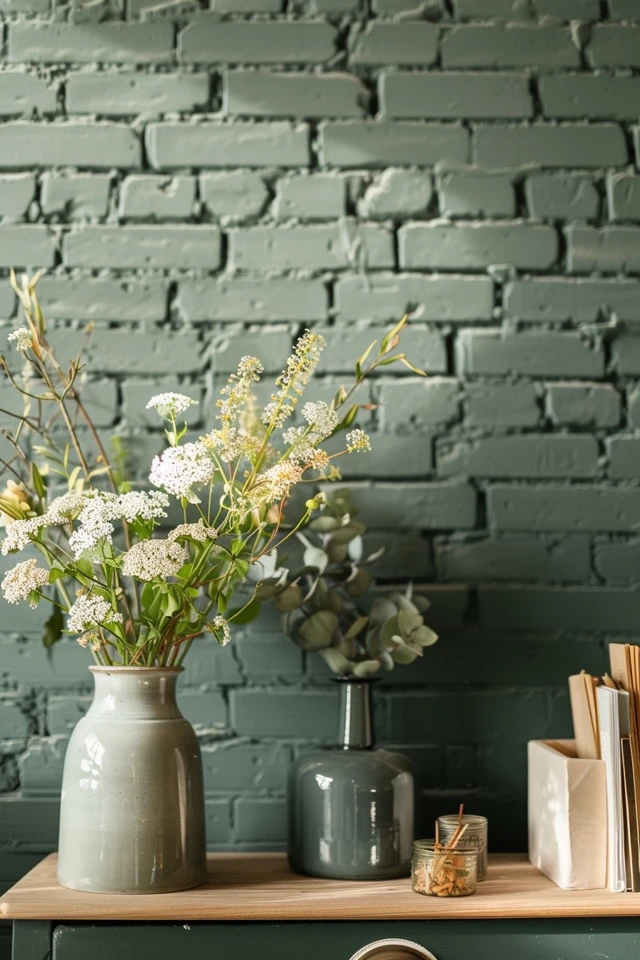
Fresh Paint Brick Wall Ideas To Inspire You
Painting brick is one of the most debated topics in the interior design world, yet it remains one of the most effective ways to modernize a home. Whether you are dealing with a dark, dating 1970s fireplace or an entire wall of orange-red clay that clashes with your furniture, a fresh coat of paint can completely alter the architecture of a room. While you scroll through for ideas, keep in mind that our curated Picture Gallery is waiting at the end of the blog post to spark your creativity.
I once worked with a client who felt trapped by a massive, dark masonry wall in her living room that sucked all the natural light out of the space. She was terrified that painting it would ruin the home’s “character,” but after we applied a soft, mineral-based white paint, the room instantly felt double the size and significantly more inviting.
The key to success isn’t just picking a color; it is understanding the texture, the porosity of the material, and how the light hits the uneven surface. This guide will walk you through professional techniques, color theories, and styling rules to ensure your painted brick feature looks intentional and high-end, not like a quick DIY fix.
Understanding Your Canvas: Brick Texture and Condition
Before you even look at color swatches, you must assess the condition of your existing brick. Brick is essentially a hard sponge; it is incredibly porous and absorbs moisture, which affects how paint adheres and cures.
If your brick is crumbling or the mortar is turning to dust when you touch it, painting over it will only mask structural issues that will eventually ruin the finish. You need to stabilize the surface first using a wire brush to remove loose debris, followed by a thorough vacuuming with a shop vac.
For interior applications, you generally have more flexibility with paint types because the wall isn’t fighting rain or freeze-thaw cycles. However, the texture of the brick dictates your tool choice.
Designer’s Note:
A common disaster I see is homeowners using a standard 3/8-inch nap roller on rough brick. It never gets into the crevices. You need a roller with a thick nap—at least 3/4-inch to 1-inch—to push the paint into the deep grout lines and pockets.
The Whitewash and Limewash Look
If you want to lighten a room but are afraid of losing the natural variation of the brick, whitewashing or limewashing is the superior choice. These techniques mute the red and orange tones while allowing some of the original texture and color to peek through.
Limewash is a specific mineral-based product that penetrates the brick rather than sitting on top. It calcifies to the surface, creating a beautiful, chalky, Old World finish that resists peeling. It is also naturally resistant to mold and bacteria.
Whitewashing, on the other hand, is simply watering down standard latex paint. It is easier to source and cheaper, but it sits on the surface.
To achieve a balanced whitewash:
- Mix water and paint in a 1:1 ratio for a translucent look.
- Work in small sections of about 2 feet by 2 feet.
- Apply the mixture with a large masonry brush, then immediately wipe it down with a lint-free rag to remove excess.
This technique is forgiving. If you apply too much, you can wipe more off while it is wet. If it is too sheer, you can add a second layer.
Solid Color Blocking: Modern and Moody
For a more dramatic, contemporary aesthetic, opaque color blocking is the way to go. This involves completely covering the brick and mortar with a solid coat of paint. This approach is excellent for hiding ugly grout lines or inconsistent brick colors.
Matte black, charcoal, or deep navy are incredible choices for a focal wall, especially behind a TV or a fireplace. Dark colors recede visually, which can actually make a small room feel larger by blurring the boundaries of the space.
However, sheen is critical here. Never use a glossy or semi-gloss finish on an entire brick wall. The shine will catch the light on every bump and imperfection, making the wall look like plastic.
Always stick to a flat or matte finish. Flat paint absorbs light, hiding the texture flaws and giving the brick a velvety, sophisticated appearance.
What I’d do in a real project:
If I am painting a fireplace wall matte black, I will ensure the room has adequate warm lighting (2700K to 3000K bulbs). I would also place a light-colored rug—typically wool or a high-texture blend—about 12 to 18 inches off the hearth to create necessary contrast.
Exterior Brick: Curb Appeal and Durability
Painting the exterior of a home is a massive commitment that requires different rules than interior design. The stakes are higher because trapping moisture inside exterior brick can cause “spalling,” where the face of the brick freezes and pops off.
You must use a masonry-specific paint that is “breathable.” These paints allow water vapor from inside the house to escape through the brick while preventing rain from entering from the outside.
Common Mistakes + Fixes:
- Mistake: Using standard exterior acrylic latex on old brick.
- Fix: Use a mineral or silicate-based masonry paint designed to bond with stone and brick.
- Mistake: Ignoring the roof color.
- Fix: Your paint color must have the same undertone as your shingles. If your roof is warm brown, a cool blue-grey paint will clash.
When choosing a color for the exterior, go two shades darker than you think you need. Natural sunlight washes out colors significantly. A “cream” color on a swatch often looks stark bright white at noon on a sunny day.
The Fireplace Makeover
The fireplace is often the heart of the living room, but an outdated brick surround can make the whole house feel stuck in the past. This is the most common entry point for homeowners wanting to try painting brick.
Heat resistance is a frequent concern. For the exterior surround (the brick facing the room), standard high-quality latex paint is usually fine, as the surface rarely gets hot enough to melt paint. However, for the firebox itself (inside where the wood burns), you absolutely must use high-heat spray paint rated for 1200°F or higher.
Before painting a fireplace, cleaning is the most important step. Decades of soot and ash contain oils that will bleed through your paint.
Scrub the brick with a solution of TSP (Trisodium Phosphate) and water. Wear gloves and eye protection. Rinse it thoroughly and let it dry for at least 24 to 48 hours before priming.
For styling the mantle after painting, keep scale in mind. If you have a standard 5-foot mantle, avoid cluttering it with tiny knick-knacks. Use one large piece of art or a mirror that is roughly two-thirds the width of the mantle for balance.
Styling the Room Around Painted Brick
Once your brick is painted, it changes the visual weight of the room. A white brick wall adds texture without chaos, allowing you to layer other textures in the room.
If you have painted your wall white, bring in warmth through wood tones and textiles. A walnut coffee table or leather armchair stops the room from feeling sterile.
If you have gone dark with the paint, use metallic accents. Brass or gold sconces installed directly onto the brick can look stunning against charcoal paint.
Lighting Rule of Thumb:
Brick loves “grazing” light. This is when light fixtures are placed close to the wall, shining down or up specifically to highlight the texture. If you are installing recessed cans, place them 12 to 18 inches away from the brick wall rather than the standard 24 to 36 inches, to wash the light down the textured surface.
Final Checklist: Your Project Roadmap
Use this checklist to ensure you don’t miss a step during your renovation.
- Test for Sealant: Splash water on the brick. If it beads up, there is a sealer present that must be removed before painting. If it soaks in, you are good to go.
- Clean Thoroughly: Use a wire brush for loose mortar and TSP for soot/grease.
- Protect the Area: Tape off floors, ceilings, and adjacent walls. Brick painting is splatter-prone.
- Prime: Use a high-quality masonry primer. Do not skip this, especially on raw red brick, or the color will bleed through.
- Cut In: Use a brush to paint the mortar lines and edges first.
- Roll: Use a 1-inch nap roller to cover the face of the bricks.
- Back-Brush: Immediately after rolling, use a brush to push paint into any deep pinholes the roller missed.
- Dry Time: Wait the manufacturer’s recommended time (usually 4+ hours) before the second coat.
Frequently Asked Questions
Is painting brick reversible?
Generally, no. Once you paint raw brick, removing it is incredibly difficult, expensive, and often damages the brick face. Limewash can sometimes be removed with high-pressure washing within a few days of application, but consider this a permanent change.
Do I have to paint the mortar a different color?
No, and I usually advise against it. Trying to paint the brick one color and the grout another is incredibly tedious and often results in a “cartoonish” look. Painting it all one cohesive color looks more modern and architectural.
Can I spray the paint instead of rolling?
Yes, spraying is faster and gets into crevices better. However, the amount of prep work required to mask off the entire room to prevent overspray is significant. For a single wall or fireplace, rolling is usually more efficient. For an entire empty room or exterior, spraying is better.
How much paint will I need?
Brick absorbs significantly more paint than drywall. Estimate needing 50% more paint than you would for a standard wall of the same square footage. Always buy an extra gallon to be safe; you can usually return it if unopened.
Conclusion
Painting a brick wall is a transformative design decision that bridges the gap between old construction and modern living. It allows you to neutralize bossy colors like orange and red, giving you the freedom to decorate with the palette you actually love.
Whether you choose a soft, romantic limewash or a bold, matte black statement wall, the success lies in the preparation. Respect the material, clean it properly, and use the right tools for the texture.
By following these guidelines, you can turn a dated architectural feature into the highlight of your home. Take your time with the prep work, and the results will last for years to come.
Picture Gallery


