
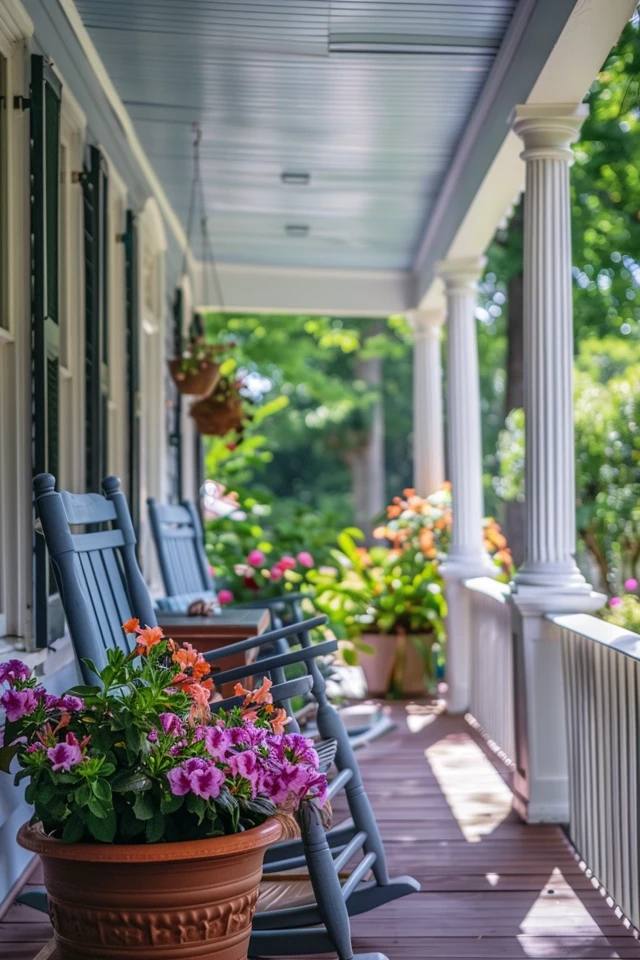
Fresh Porch Rocking Chairs Ideas for Your Home
There is something undeniably magnetic about a front porch. It is the transitional space between the sanctuary of your home and the energy of the neighborhood. In my design practice, I often tell clients that the porch is the handshake of the house, and nothing makes that greeting warmer than a set of well-placed rocking chairs.
However, selecting the right rockers involves more than just picking a color you like. You have to navigate material durability, scale relative to your architecture, and the actual mechanics of the rock. If you are looking for visual inspiration, jump to the Picture Gallery at the end of this blog post.
I remember a specific project where we ignored the “rocking radius” and ended up with chairs that banged against the siding every time someone sat down. It was a noisy, frustrating lesson in spatial planning. This guide is designed to help you avoid those pitfalls and create a porch setup that is as functional as it is charming.
1. Material Matters: Balancing Durability and Style
When specifying outdoor furniture for clients, the first conversation is always about climate. Your local weather patterns dictate which materials will survive and which will rot.
Natural Hardwoods (Teak, Acacia, Cypress)
Wood offers a warmth that synthetic materials struggle to replicate. Teak is the gold standard because it produces its own natural oils that repel water. If you leave it untreated, it weathers to a beautiful silvery-gray patina.
However, wood requires maintenance. You must commit to an annual sanding and sealing routine if you want to maintain the original honey-brown color. I often recommend Acacia as a budget-friendly alternative to Teak, though it is less dense and needs more protection from direct rain.
HDPE (High-Density Polyethylene) Lumber
This is often called “poly lumber.” It is made from recycled plastics (think milk jugs) and is virtually indestructible. It won’t crack, peel, or rot, and it never needs painting.
From a design standpoint, poly lumber has come a long way. The textures now closely mimic wood grain, and they come in matte finishes that look high-end. This is my go-to choice for rental properties or beach houses where salt air destroys everything else.
Wicker and Rattan
You must distinguish between natural rattan and all-weather wicker (resin). Natural rattan should never be used outdoors unless you have a deep, covered screened-in porch with zero exposure to rain.
All-weather wicker is woven resin over an aluminum frame. It gives that classic, texture-rich look but can handle the elements. When buying these, check the frame material. Powder-coated aluminum is lightweight and rust-proof. Steel frames are heavy but will eventually rust if the coating is scratched.
Designer’s Note: The “Click” Test
When shopping for poly lumber or resin chairs, tap on them. If they sound hollow and thin, skip them. You want high-density materials that sound solid. Lightweight rockers are dangerous in high winds and simply don’t feel substantial when you sit in them.
2. The Mathematics of Comfort: Scale and Layout
The biggest mistake homeowners make is buying furniture that is too large for their porch depth. A rocking chair is dynamic furniture; it moves. You cannot plan its footprint based on its static position.
The Rocking Radius Rule
You need to account for the “swing.” As a general rule of thumb, a standard rocking chair needs about 30 to 36 inches of depth for the chair itself. However, you must add at least 6 to 10 inches of clearance behind the chair and 10 to 12 inches in front of it.
If your porch is less than 6 feet deep, standard rockers might feel tight. In this scenario, I recommend “gliders” instead of rockers. Gliders move on a fixed track and require significantly less clearance than a traditional rocker.
Traffic Flow and Spacing
Never block the path to the front door. You need a minimum of 36 inches of clear walking space for comfortable traffic flow.
Between the chairs, I usually place a small side table. The ideal distance between two rocking chairs is 18 to 24 inches. This is close enough for conversation but far enough that guests aren’t bumping elbows.
Common Mistakes + Fixes
Mistake: Placing a rug that is too small under the rockers.
Fix: If you use a rug, it needs to be large enough that the rocker stays on the rug even at the full extension of the back swing. If the back legs catch the edge of the rug every time you rock, it creates a jarring bump. Usually, an 8×10 rug is the minimum for a seating group, or you should skip the rug entirely for the rockers and just use a doormat.
3. Selecting a Style Profile
Your rocking chairs should speak the language of your home’s architecture. A mismatch here can make the house feel disjointed.
The Traditional Porch
For Victorians, Farmhouses, or Colonials, the high-back spindle rocker is the archetype. Look for turned legs and wide, flat armrests. Black, white, or hunter green are safe, classic choices.
If you want to modernize a traditional home, keep the traditional shape of the chair but choose a bold, unexpected color like navy blue or sage green.
The Modern Minimalist
For mid-century modern or contemporary homes, avoid the spindles. Look for “slat back” designs with clean, horizontal lines. Teak works beautifully here, as does matte black poly lumber.
Low-profile rockers with a wider, deeper seat often read more modern. I often pair these with concrete or metal side tables to reinforce the industrial or sleek aesthetic.
The Rustic/Cabin Vibe
This is where log-style rockers or heavy cedar designs shine. These chairs are physically larger and visually heavy. They require a grand scale porch to look right.
If you have a stone facade, natural wood tones help soften the exterior. Avoid painting rustic rockers; a stain or clear coat is always preferred to show off the grain and knots.
4. Textiles and Accessories: Adding Softness
A wooden rocker is beautiful, but a rocker with a seat cushion and a lumbar pillow is a place you actually want to sit for an hour.
Performance Fabrics are Non-Negotiable
Do not buy generic cotton cushions for outside use. They will fade in two weeks and grow mold in four. You need solution-dyed acrylic fabrics. Brands like Sunbrella or Crypton Outdoor are the industry standard for a reason.
Solution-dyed means the color goes all the way through the fiber (like a carrot), rather than just being printed on top (like a radish). This prevents fading from UV rays.
Cushion Construction
For the seat, look for “quick-dry” foam. This is open-cell foam that allows water to drain right through it rather than soaking it up like a sponge.
For back pillows, I prefer a down-alternative fill that is specifically rated for outdoor use. It mimics the squish of indoor pillows but won’t clump when damp.
What I’d Do in a Real Project
1. Base Layer: Start with a neutral seat cushion (charcoal, taupe, or cream). This hides dirt and provides a flexible base.
2. Accent Layer: Use a lumbar pillow (typically 12×20 inches) in a pattern or bold color. This supports the lower back and adds personality.
3. The Anchor: Place a ceramic garden stool or a weather-resistant side table between the chairs. It should be heavy enough that the wind won’t knock it over.
4. Lighting: If you don’t have overhead porch lights, consider outdoor-rated floor lamps or high-quality string lights to create ambiance at night.
5. Maintenance and Longevity
Even the most durable furniture requires care. I tell my clients that outdoor furniture is like a car; you can leave it outside, but you still have to wash it.
Cleaning Protocols
For poly lumber and powder-coated metals, warm soapy water and a soft-bristle brush are usually sufficient. Avoid pressure washers on wood or wicker, as the high pressure can strip the finish or break the weave.
For wood rockers, keep an eye on the joints. Wood expands and contracts with humidity changes. Once a year, take a wrench or screwdriver and tighten all the hardware. A wobbly rocker puts stress on the joints and will break much faster than a sturdy one.
Winter Strategy
If you live in an area with harsh winters, cover your chairs. You can buy individual covers that cinch at the bottom.
If you have space in a garage or shed, storing them indoors is even better. This extends the life of the finish by years. At the very least, bring the cushions inside. Even waterproof cushions should not be left out in snow or standing water for months.
Final Checklist: The Designer’s Approach
Before you click “purchase” or head to the showroom, run through this mental checklist. This is exactly what I do before finalizing an order for a client.
Measure twice:
- Did you measure the porch depth? (Aim for 6 feet minimum for true rockers).
- Did you account for the swing radius? (Clearance front and back).
- Is the seat height comfortable? (Standard is 16-18 inches; easier for older adults to get out of).
Check the environment:
- Is the porch covered or uncovered? (Uncovered requires poly lumber or metal).
- Is the floor sloped? (Porches usually slope for drainage; ensure the rocker feels stable).
- Is it a high-wind area? (Avoid lightweight aluminum or wicker).
Coordinate the look:
- Does the material contrast or blend with the siding? (Contrast is usually better).
- Do the hardware finishes (screws/bolts) match your door handle or light fixtures?
- Are the cushions tie-on? (Essential to prevent them from blowing away).
FAQs
Q: Can I use an indoor rocking chair on my porch?
A: Only if you want to ruin it. Indoor finishes (lacquer, wax, indoor varnish) will peel and crack when exposed to humidity and temperature swings. The glue used in indoor furniture joints also isn’t rated for exterior use and may fail, causing the chair to fall apart.
Q: How do I stop my outdoor rocking chair from squeaking?
A: Squeaking usually comes from loose hardware or wood-on-wood friction. First, tighten all bolts. If it still squeaks, spray a dry silicone lubricant into the joints. Avoid standard WD-40, as it can attract dirt and grime which makes the problem worse later.
Q: What is the best rocking chair height for seniors?
A: Look for a seat height of at least 17 to 19 inches. Lower chairs are difficult to stand up from. Also, ensure the armrests are wide and flat, as people rely on them for leverage when pushing up to a standing position.
Q: Should I buy a rug for my rocking chairs?
A: Visually, yes, it looks great. Functionally, it can be tricky. If the rug is thick, it impedes the rocking motion. If you use a rug, choose a flat-weave outdoor rug or a very low-pile polypropylene rug. Ensure it is large enough that the rockers don’t catch the edge.
Conclusion
Adding rocking chairs to your porch is an investment in your quality of life. It creates a dedicated zone for morning coffee, evening reading, or simply watching the rain.
By focusing on the right scale for your space and choosing materials that suit your climate, you ensure that this investment lasts for decades. Remember that comfort is just as important as aesthetics. Don’t be afraid to test sit different models to find the one that fits your body type.
Take your time with the measurements, invest in quality cushions, and enjoy the process of creating a welcoming entrance to your home.
Picture Gallery


