
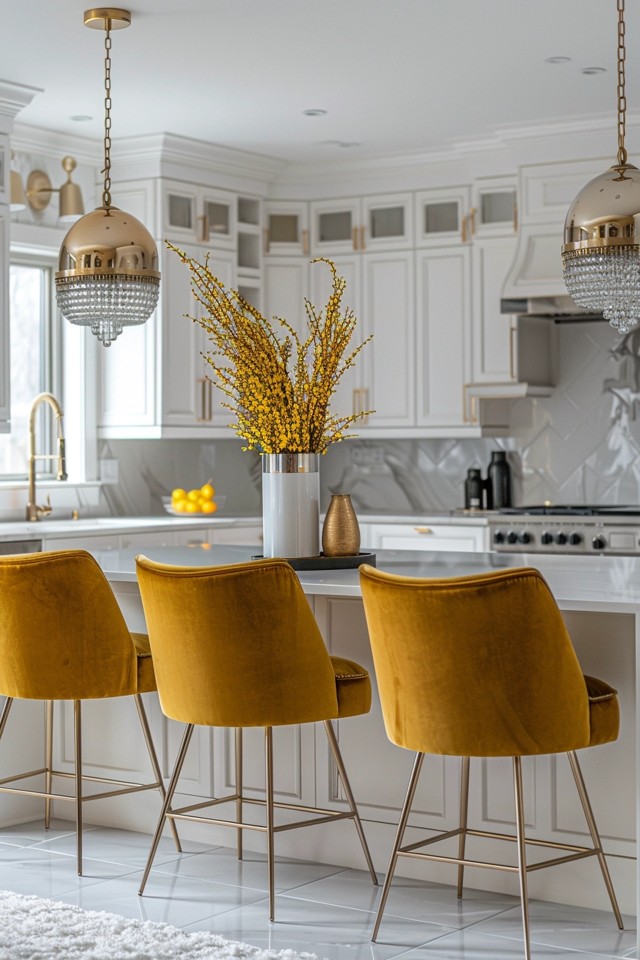
Glam Kitchen Decor with Gold Touches
Designing a kitchen that feels glamorous without crossing the line into gaudy is a delicate balancing act. Gold accents are the quickest way to inject warmth and luxury into the heart of the home, but they require a strategic hand. When done correctly, gold touches elevate a standard kitchen renovation into something that feels bespoke and high-end.
For many of my clients, the hesitation comes from a fear that gold will look dated in five years or that it is too difficult to maintain. The truth is that brass and gold tones have been a staple in design for centuries. The key is choosing the right finish and pairing it with timeless foundation materials.
In this guide, I will walk you through exactly how to layer these metallic elements into your space. From selecting the right hardware durability to spacing your lighting fixtures, we will cover the practical side of glam. To help you visualize these concepts, I have curated a stunning Picture Gallery at the end of this blog post to spark your imagination.
1. Selecting the Right Gold: Finishes and Durability
Not all gold is created equal. Before you buy a single knob or faucet, you must decide on the specific “temperature” and texture of the gold you want in your kitchen. Mixing unmatched gold tones is the number one way to make a kitchen look accidental rather than designed.
There are three main categories you will encounter: Polished Brass, Brushed/Satin Gold, and Unlacquered Brass. Polished brass is highly reflective and offers high-glam impact, but it shows every fingerprint. Brushed or Satin Gold is more forgiving and modern, offering a soft glow rather than a sharp shine. Unlacquered brass is a living finish that will patina and turn brown over time; it is beautiful for traditional homes but distinctively rustic-glam.
Durability is the second factor. For high-touch areas like faucets and cabinet pulls, I always recommend PVD (Physical Vapor Deposition) finishes. This is a manufacturing process that bonds the color to the metal at a molecular level. It is incredibly resistant to scratching and tarnishing compared to standard plating.
Designer’s Note: The Brand Trap
One of the most frustrating lessons I learned early in my career is that “Champagne Bronze” from Brand A does not match “Champagne Bronze” from Brand B.
Gold tones vary wildly between manufacturers. Some lean yellow, some lean red (copper), and some lean green. Always order a sample of your cabinet hardware and hold it next to your faucet sample before committing to a full order. If you cannot match them perfectly, intentionally mix them by choosing a matte finish for one and a polished finish for the other, but keep the undertones consistent.
2. The “Jewelry”: Cabinet Hardware and Placement Rules
Cabinet hardware is often referred to as the jewelry of the kitchen. In a glam kitchen, this is where you can take the biggest risks with the lowest stakes. If you get tired of the look in ten years, swapping out handles is a simple afternoon project.
For a glamorous look, scale is everything. A common mistake is using standard 3-inch pulls on large drawers or tall pantry doors. Small hardware on large cabinetry looks cheap.
Here is my rule of thumb for hardware sizing:
- Standard Drawers (up to 24 inches wide): Use a 5-inch to 7-inch pull.
- Large Drawers (24 to 36 inches wide): Use a single long pull (8 to 12 inches) or two smaller knobs spread apart.
- Upper Cabinets: Knobs generally feel more traditional/glam, while pulls feel more modern/glam. Place knobs exactly 2.5 to 3 inches up from the bottom corner of the door frame.
- Pantry Doors: This requires an appliance pull. Look for something 12 to 18 inches long to handle the visual weight of the door.
Common Mistakes + Fixes
Mistake: Installing knobs too high on the upper cabinets or too low on the lower cabinets.
Fix: Use a template jig. It costs less than $20 and ensures every single hole is drilled in the exact same spot. For upper cabinets, align the bottom of the hardware with the top of the bottom rail of the door frame.
3. Lighting: Pendants and Chandeliers as Focal Points
Lighting is where a glam kitchen truly shines. Unlike a utilitarian kitchen that relies solely on recessed cans, a glam kitchen uses decorative fixtures to define zones. The island is usually the stage for this.
When selecting gold pendants, pay attention to the “visual weight” of the fixture. If you have a small kitchen, clear glass globes with gold rods keep the sightlines open. If you have a large kitchen with high ceilings, you can afford heavy brass shades or lanterns.
Measurements for Success
Proper placement is critical for functionality and aesthetics.
- Height Above Counter: The bottom of your pendant light should be 30 to 36 inches above the countertop. If you have very tall family members, lean toward 36 inches so no one bumps their head.
- Spacing Between Fixtures: A general rule is to space pendants 30 inches apart, measuring from the center of one bulb to the center of the next.
- Edge Distance: Leave at least 6 inches (preferably 10-12 inches) of clearance from the edge of the island to the side of the pendant. You never want a light fixture hanging over the edge of the counter.
For an ultra-glam look, consider a linear chandelier instead of two or three separate pendants. This works exceptionally well over rectangular islands and provides a unified, dramatic silhouette. Ensure the linear fixture is at least two-thirds the length of the island to maintain proper scale.
4. Countertops and Backsplashes: The Canvas
Gold touches need a quiet canvas to stand out, or a dramatic canvas to compete with. You generally have two paths for countertops in a glam kitchen: crisp white with subtle veining, or dramatic dark stone.
If you choose a white quartz or marble (like Calacatta Gold), look for slabs that have warm, brownish-gold veining rather than cool gray veining. This ties the countertop visually to your brass hardware. The gold veins “speak” to the faucet.
For the backsplash, you can introduce gold without it being overwhelming. A white subway tile is classic, but using a gold-tone grout can look tacky and dated very quickly. Instead, use a Schluter strip (a metal trim piece) in a brass finish to edge your tile or create a transition.
What I’d Do in a Real Project
If I were designing a glam kitchen today, I would run the quartz countertop material up the wall as a full-height backsplash. It is seamless, easy to clean, and incredibly luxurious.
To add the “glam” factor, I would install a brass pot filler over the range against that solid stone slab. The contrast of the cold stone and the warm metal is the epitome of high-end design.
5. Faucets and Sinks: Form Meets Function
The kitchen faucet is the most used tool in the room. In a glam kitchen, high-arc gooseneck faucets or bridge faucets are the standard. A bridge faucet (where the hot and cold handles are separate and connect to the spout via a bridge) offers a vintage, architectural look that feels very expensive.
For the finish, stick to the PVD rule I mentioned earlier. Faucets face constant friction, water, and cleaning agents. A cheap gold spray coat will flake off within a year.
The Sink Question
Should the sink be gold? Generally, no. Gold stainless steel sinks exist, but they are incredibly difficult to keep looking clean. Water spots show up instantly, and scratches reveal the silver steel underneath.
I recommend sticking to a white fireclay farmhouse sink or a high-quality stainless steel sink. If you want to bring gold into the basin, simply use a gold-finished strain/drain flange. It is a subtle detail that designers notice, but it doesn’t compromise the durability of the sink basin itself.
6. Softening the Look with Textiles and Seating
Too much metal and stone can feel cold. To achieve “livable glam,” you need to introduce softness. This usually happens at the island with barstools and on the floor with runners.
For barstools, velvet is a popular glam choice, but it is a nightmare for messy eaters or families with kids. Instead, look for performance velvet (100% polyester) or a wipeable faux leather in a cognac or white tone. The legs of the stools are another opportunity to introduce gold.
However, be careful not to overdose on “gold legs.” If your island has gold hardware and gold pendants, choose barstools with wood or black legs to ground the space. If your island is very simple, then gold-legged stools add the necessary pop.
Rug Sizing and Placement
A vintage-style runner rug adds color and protects your floors.
- Clearance: Leave 3 to 6 inches of floor visible between the cabinets and the rug.
- Length: The rug should span the length of your main work zone (usually the sink and dishwasher area).
- Safety: In a kitchen, a rug pad is non-negotiable. You need a low-profile, non-slip grip pad to prevent tripping while carrying hot pots.
7. Styling Accessories for Renters and Budgets
You do not need to renovate to get the glam look. Accessories are the bridge for renters or those working with existing kitchens. The goal is to curate your countertops rather than clutter them.
Group items in threes. For example, a gold tray placed in the corner can hold a bottle of olive oil, a small plant, and a gold-tone salt mill. This turns utility items into a display.
Item Checklist for Instant Glam
- Canisters: Glass jars with gold lids for pasta, flour, or coffee.
- Utensil Holder: A white marble crock with gold veining or a hammered brass crock.
- Soap Dispensers: Ditch the plastic store bottles. Decant soap into amber glass or ceramic dispensers with gold pumps.
- Picture Frames: Lean a small gold-framed piece of art against the backsplash. It makes the kitchen feel like a room, not just a utility space.
Final Checklist: The Glam Kitchen Strategy
Before you start purchasing, run through this list to ensure your design is cohesive and functional.
- Check Undertones: Have you compared your faucet sample, cabinet hardware sample, and light fixture finish in natural daylight?
- Lighting Plan: Do you have dimmers installed? Glam kitchens need the ability to shift from bright task lighting to moody ambient lighting.
- Scale Check: Are your cabinet pulls large enough for the drawers? Remember the 1/3 width rule.
- Clearance Check: Is there enough room between the island pendants and the edge of the counter?
- Durability Plan: Have you confirmed the faucet is a PVD finish or a living finish you are willing to maintain?
- Contrast Balance: Do you have enough matte or soft textures to balance out the shiny metallic elements?
FAQs
Can I mix gold with stainless steel appliances?
Absolutely. In fact, it is preferred. Trying to match a gold faucet to a gold refrigerator is overwhelming and usually looks tacky. Stainless steel is a neutral. Think of it like wearing blue jeans; it goes with everything. The gold hardware acts as the jewelry against the neutral stainless steel background.
Is gold hardware harder to keep clean?
Polished gold shows fingerprints and water spots just like chrome does. Brushed gold or satin brass is much more forgiving and hides smudges well. If you cook often, go with a brushed finish.
Will gold kitchen decor go out of style?
Brass and gold are timeless metals that have been used for centuries. What goes out of style are specific manufacturing techniques, like the high-gloss, plastic-looking brass of the 1980s. Authentic-looking brass tones, whether unlacquered or satin PVD, are classic staples in design.
How do I clean gold fixtures?
Avoid abrasive sponges and harsh chemical cleaners like bleach or ammonia, as these can strip the clear coat off the metal. Use warm soapy water and a soft microfiber cloth. For unlacquered brass that has tarnished unevenly, you can use a brass polish, but be aware this resets the patina process.
Can I use gold in a small kitchen?
Yes, gold reflects light, which can actually help a small space feel brighter and more open. In a small kitchen, focus on lighter gold tones (like champagne bronze) rather than dark, heavy antique brass, which can visually shrink the space.
Conclusion
Creating a glam kitchen with gold touches is about confidence and restraint. It is about choosing the right jewelry for the room and ensuring it sits against a backdrop that allows it to shine. Whether you are doing a full renovation with quartz backsplashes and bridge faucets, or simply swapping out rental cabinet knobs and adding a runner rug, the principles remain the same.
Focus on the warmth of the metal, the durability of the finish, and the scale of the installation. When you prioritize these elements, you move beyond a trend and create a space that feels personal, inviting, and undeniably luxurious.
Picture Gallery


