
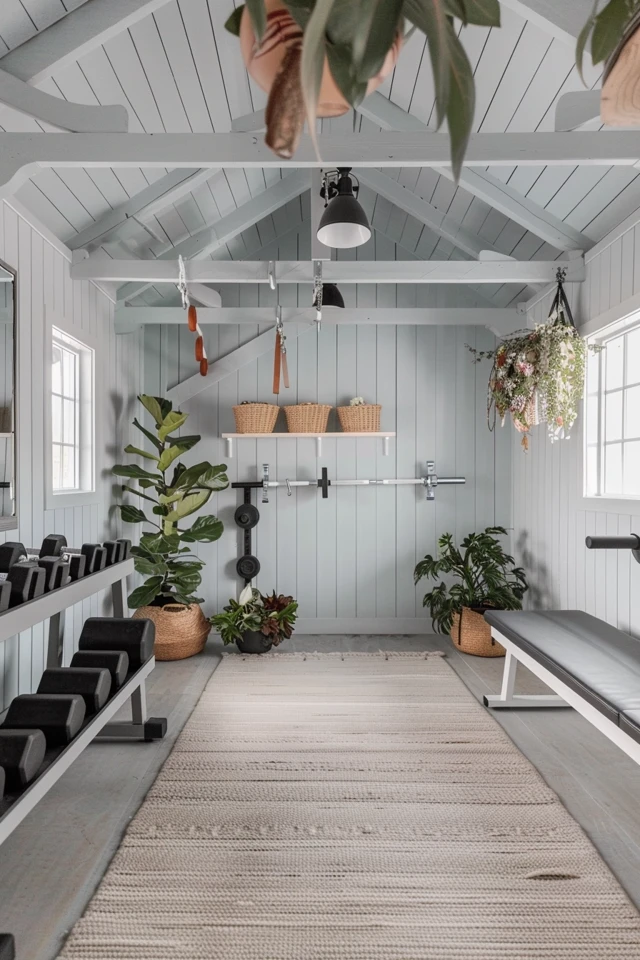
Home Gym Paint Ideas: Energize Your Workout Space
Designing a home gym is about more than just finding a spot for your Peloton or a rack of dumbbells. It is about creating an environment that shifts your mindset the moment you step across the threshold. A spare bedroom filled with equipment but painted a sleepy beige will rarely inspire a personal record. If you are looking for visual inspiration, you can jump right to our Picture Gallery at the end of this post.
In my years designing residential interiors, I have seen clients spend thousands on high-end equipment only to place it in a room that feels like a storage unit. The wall color is the single most cost-effective tool you have to change the psychology of a room. It dictates whether the space feels like a high-energy spin studio or a grounding yoga sanctuary.
The goal is to match the aesthetic to your primary movement style. A heavy lifter needs a different visual cue than a pilates enthusiast. This guide will walk you through the practicalities of paint finishes, color psychology, and spatial planning to help you build a gym you actually want to use.
1. Matching Paint Color to Workout Intensity
The first question I ask a client during a gym consultation is simple: “What is your heart rate doing in this room?” The answer dictates the color palette entirely. Color psychology is not just a buzzword; it is a physiological trigger.
For high-intensity training, cardio, or powerlifting, you want colors that stimulate the nervous system. We are talking about energizing shades like vibrant oranges, electric blues, or even aggressive reds in moderation. These colors increase alertness and can actually make a room feel physically warmer.
However, you have to be careful with saturation. A room painted entirely in fire-engine red will feel claustrophobic and can induce anxiety rather than motivation.
Designer’s Note: The 80/20 Rule
For high-energy colors, I recommend the 80/20 rule. Keep 80% of the room neutral (whites, cool grays, or concrete textures) and use that punchy color for the remaining 20%. This could be a single feature wall, a painted ceiling, or geometric color blocking.
If your workout style is low-impact, such as yoga, pilates, or stretching, the palette must flip. You need “receding” colors. These are shades that visually push the walls back and lower the heart rate.
Think regarding organic greens, misty blues, and warm terracottas. These earth tones ground the space and help with focus and breathing. In these rooms, monochrome painting (painting the walls and trim the same color) works beautifully to reduce visual noise.
2. The Critical Role of Finishes and Sheen
One of the most common mistakes DIYers make in home gyms is choosing the wrong paint finish. They default to “flat” or “matte” because it hides drywall imperfections. In a gym, this is a disaster waiting to happen.
Gyms are high-traffic, high-humidity zones. You will have sweat flinging off equipment, water bottle spills, and inevitable scuffs from rubber weights hitting the wall. A flat paint will absorb moisture and show every single mark. You cannot scrub flat paint without burnishing it (leaving a shiny spot).
Durability Guidelines:
- Walls: Go for a Satin or Eggshell finish. Satin is preferable because it has a tighter molecular structure, making it easier to wipe down.
- Trim and Baseboards: Use Semi-Gloss. Your vacuum cleaner and free weights are going to bang into the baseboards. You need a hard shell here.
- Ceilings: Flat is acceptable here, unless you are jumping rope or doing ball slams that might hit the ceiling.
I also recommend looking into “scuff-resistant” paint formulas. Most major brands now carry a line specifically designed for high-traffic commercial spaces like hallways and gyms. They cost a little more per gallon, but they save you from repainting every year.
Lighting glare is the other factor to consider with sheen. Home gyms usually have mirrors. If you use a high-gloss paint on a wall opposite a mirror, and you have overhead recessed lighting, the glare can be blinding. Satin offers the best balance of washability and light diffusion.
3. Zoning with Color Blocking and Accents
Many homeowners do not have a dedicated room for a gym. They are carving out space in a basement, a garage, or a home office. This is where paint becomes a zoning tool. You can define the “gym” area without building a single wall.
I frequently use color blocking to anchor equipment. For example, if you have a rower sitting against a long white wall, it looks like it is floating in a void. By painting a distinct arch or a wide vertical stripe behind the rower, you give the equipment a “home.”
Measurements for Zoning:
- Width: Extend the painted zone at least 6 to 8 inches beyond the width of the equipment on both sides. This ensures the machine feels framed, not crowded.
- Height: If painting a partial wall or wainscoting effect, the standard chair rail height is 32-36 inches. However, in a gym, I prefer taking the color line up to 60 inches. This clears the visual height of most benches and racks, creating a clean backdrop.
Common Mistake: The “Accent Wall” Trap
People often paint one random wall a bright color and call it an accent wall. In a gym, this can make the room feel unbalanced. If the painted wall is behind you while you face a mirror, you will see the reflection of that color constantly.
If you paint the back wall a bright neon green, your skin tone will look sickly in the mirror due to the reflection. I always advise painting the wall behind the mirror a dark, moody color (like charcoal or navy). It absorbs light and makes the reflection in the mirror pop, helping you focus on your form.
4. Don’t Forget the “Fifth Wall” (The Ceiling)
In a living room, you might look at the ceiling occasionally. In a home gym, you are looking at it constantly. Whether you are doing bench presses, crunches, yoga, or foam rolling, your view is directed upward.
Leaving the ceiling a standard builder-grade white is a missed opportunity. For basement gyms, which often have low ceilings and exposed ductwork, I love the “industrial blackout” technique.
The Industrial Blackout:
Painting the entire ceiling, including pipes, ducts, and joists, in a matte black or dark charcoal creates an infinite depth effect. It blurs the boundaries of the room and makes the ceiling feel higher than it actually is. It also hides visual clutter, allowing you to focus on the workout.
If you have a standard drywall ceiling and want a spa-like yoga vibe, consider a soft sky blue or a warm beige at 50% saturation. It mimics the sky and promotes open-mindedness.
Pro Tip for Lighting Installation:
If you paint your ceiling dark, you must upgrade your lighting. Dark paint absorbs lumens. You will need to increase your light output by about 20-30% to maintain visibility. Use dimmers so you can adjust the brightness for high-intensity versus cool-down sessions.
5. Lighting Temperature and Undertones
Paint color does not exist in a vacuum; it is entirely dependent on light. This is especially tricky in home gyms, which are often located in basements with little natural light or garages with fluorescent strips.
Before you commit to a gallon of paint, you must understand the Kelvin rating of your light bulbs.
The Kelvin Scale Breakdown:
- 2700K (Warm White): This is your standard living room cozy light. It casts a yellow/orange glow. It will turn blue paint green and white paint yellow. Generally, avoid this for gyms; it is too sleepy.
- 3000K (Soft White): A neutral middle ground. Good for yoga studios or multipurpose spaces.
- 4000K – 5000K (Daylight/Cool White): This is the gold standard for workout spaces. It mimics noon daylight. It is energizing and renders colors accurately.
If you choose a cool gray paint but keep your old 2700K basement bulbs, the walls will look muddy and dingy. If you want a crisp, clean look, you need 4000K bulbs.
How to Test Properly:
Never pick a color from a small paper chip in the store. Buy a sample pot. Paint a large poster board (at least 24×24 inches). Move this board around the room at different times of day. Place it behind your equipment. Place it next to the mirror. See how it reacts to your specific lighting conditions.
Final Checklist: What I’d Do in Your Shoes
If I were stepping into your home today to revamp your gym space, here is the exact mental checklist I would run through. Use this to ensure you haven’t missed a step.
1. Assess the “Scuff Factor”
Are you throwing medicine balls against the wall? If yes, install a plyometric rubber mat on the wall or use wainscoting. Paint alone will not survive consistent impact.
2. Check the Mirror Reflection
Stand where your mirror will go. Look at the wall behind you. Is that color flattering? Does it distract you? If yes, change that specific wall to a neutral or dark tone.
3. Verify Ventilation
Gyms get humid. Ensure you are using a paint with mold and mildew resistance, especially if the gym is in a basement or garage. Kitchen and bath formulas are actually great for gyms for this reason.
4. Coordinate with Flooring
Most home gyms use black rubber flooring or gray foam tiles. These are heavy, dark visual elements. If you paint the walls dark too, you need excellent lighting, or the room will feel like a cave. If you have black floors, lighter walls usually provide better balance.
Frequently Asked Questions
Q: Can I use white paint in a home gym, or is it too boring?
A: White is excellent for home gyms because it feels clean and sterile (in a good way). It maximizes light, making the space feel energetic. However, stay away from creamy or yellow-based whites, as they can feel “dirty” in a gym setting. Stick to crisp, cool whites or pure white.
Q: What is the best color for a small basement gym with no windows?
A: Counterintuitively, going dark can work well here to embrace the “cozy” vibe, but for energy, I prefer a high-LRV (Light Reflectance Value) color. A very light gray or an off-white with a blue undertone keeps the space feeling open. Ensure your artificial lighting is 4000K to prevent a dungeon feel.
Q: How do I paint a garage gym without it looking like… a garage?
A: The secret is the floor-to-wall transition. Install a 4-inch vinyl cove base or a painted wood baseboard. Covering the gap between the messy garage floor and the drywall instantly makes it look like an interior room. Also, painting the garage door insulation panels creates a finished look.
Q: Is it okay to paint exercise equipment to match the room?
A: Generally, no. Paint rarely adheres well to powder-coated metal or plastic on treadmills and racks without extensive prep and specialized industrial coatings. It usually chips and looks cheap within weeks. Stick to painting the walls and let the equipment be equipment.
Conclusion
Your home gym should be a destination, not an afterthought. By treating it with the same design consideration as your living room or kitchen, you remove the mental friction of working out.
Remember that functionality comes first. Choose the right sheen to handle sweat and scuffs, and upgrade your lighting to ensure your paint color reads true. Whether you choose a high-octane orange to power your sprints or a deep forest green for your daily flow, the right color is the one that makes you want to stay in the room for just five more minutes.
Picture Gallery


