
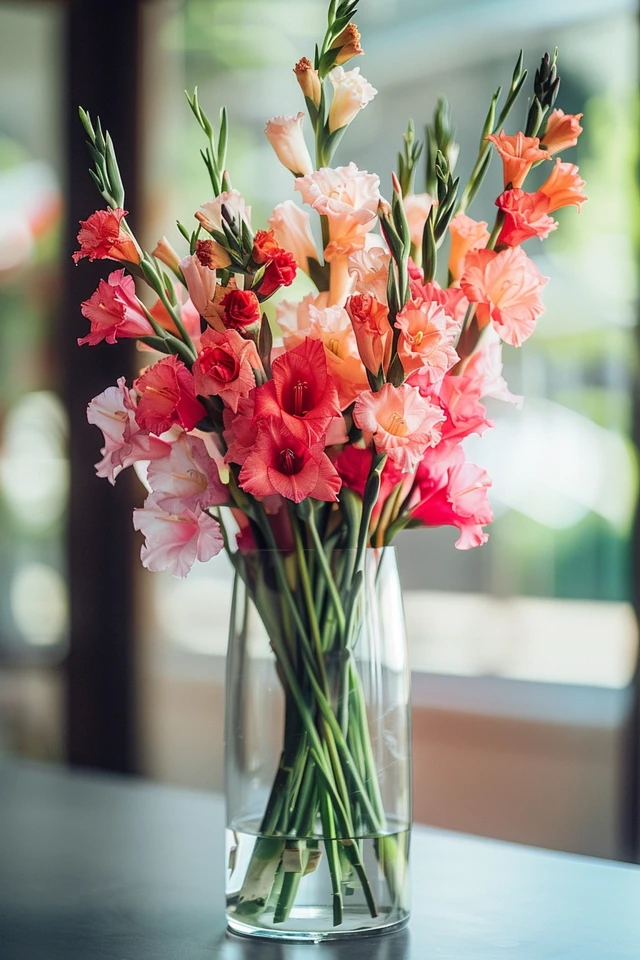
How To Arrange Gladiolus In A Vase: Floral Design
Gladiolus flowers are the skyscrapers of the floral world. They offer incredible architectural height, a wide range of colors, and a dramatic presence that few other blooms can match. However, their sheer size and linear growth pattern can make them intimidating for home enthusiasts to arrange without them looking stiff or toppling over.
I often use gladioli in my interior design projects when I need to fill vertical space without adding too much visual bulk horizontally. They are perfect for narrow entry consoles or empty corners that feel lifeless. Mastering the art of arranging them requires understanding their weight and thirsty nature.
For a dose of inspiration before you start cutting stems, be sure to check out the curated Picture Gallery at the end of this blog post.
Choosing the Right Vessel: Scale and Engineering
The most critical step in arranging gladiolus happens before you even touch a flower. You must select the right vase. Because these stems can reach three to four feet in height, standard vases often lead to disaster.
As a rule of thumb, your vase needs to cover at least one-third of the stem’s total height. If your stems are 36 inches tall, your vase should be a minimum of 12 inches tall. This prevents the arrangement from becoming top-heavy and tipping over.
Beyond height, you need weight. I recommend heavy ceramic, stoneware, or thick weighted glass. If you absolutely love a lightweight glass cylinder, you must add clear marbles or river stones to the bottom to act as a counterweight.
Designer’s Note: The Neck Width Matters
One lesson I learned the hard way involved a wide-mouth trumpet vase and two dozen heavy gladiolus stems. Without a narrow neck to support them, the stems splayed outward, creating a messy fan shape that eventually tipped the vase.
For a modern, structural look, choose a cylinder vase with a diameter of about 4 to 6 inches. This keeps the stems upright and disciplined. If you want a looser, garden-style look, use a slightly wider mouth but ensure you use internal mechanics like tape grids to keep the heavy stems in place.
Conditioning and Prep: The Secret to Longevity
Gladioli are geotropic, meaning the tips will naturally curve upward against gravity if the stems are placed horizontally. To keep them straight, keep them upright from the moment you bring them home.
Proper conditioning is vital because these flowers have a thick, fleshy stem that drinks a lot of water. Start by stripping all foliage that will sit below the water line. Gladiolus leaves are prone to decomposing quickly in water, which breeds bacteria and shortens the life of the bloom.
The “Top Pinch” Technique
This is a pro tip that changes the game. Gladiolus stems bloom from the bottom up. By the time the very top buds open, the bottom ones are often wilted.
To encourage the main blooms to open larger and last longer, pinch off the top inch of the bud spike (the very tip). This redirects the plant’s energy from trying to grow taller to opening the existing flowers. It also prevents that curved, “snake-like” tip that can happen as they age.
Water Temperature and Cutting
- Use lukewarm water: Unlike spring bulbs that prefer cold water, gladioli intake warm water (around 100°F to 110°F) more efficiently initially.
- Cut at a sharp angle: Use a sharp floral knife or shears to cut the stems at a 45-degree angle. This prevents the heavy stem from sitting flat against the bottom of the vase, which would block water uptake.
- Add preservative: These are hungry flowers. Always use the packet provided or a mix of sugar and a drop of bleach to keep the water clear.
Structural Mechanics: Keeping Them Standing
Because gladioli are top-heavy, relying solely on the vase for support isn’t always enough. You need internal mechanics to control the design.
The Tape Grid Method
If you are using a wide-mouth vessel, create a grid across the opening using clear floral tape or waterproof adhesive tape.
1. Make a tic-tac-toe pattern across the mouth of the vase.
2. Secure the tape ends by wrapping a long piece of tape around the rim of the vase.
3. Place your tallest, straightest stems in the center squares of the grid.
4. Place slightly shorter or curved stems in the outer squares.
This method allows you to control exactly where each stem sits, preventing them from leaning all to one side and creating an unbalanced look.
Using Chicken Wire
For opaque ceramic vases, I prefer using a ball of floral chicken wire inside the vessel. This offers multiple layers of support throughout the depth of the vase, not just at the top.
It allows you to insert stems at angles, which is helpful if you are mixing gladioli with other flowers. The wire grips the thick stems and holds them firmly in place, allowing for more dynamic, asymmetrical arrangements.
Styling and Placement in the Home
Once your arrangement is mechanically sound, you have to decide where it lives. Gladioli are “line flowers,” meaning they draw the eye upward. They are powerful tools for manipulating the perceived height of a room.
The Entryway Console
This is the classic placement. A tall arrangement of gladioli on an entry table immediately establishes a sense of grandeur.
Because these arrangements are usually one-sided (placed against a wall), you can arrange the flowers in a fan shape. Place the tallest stems in the back center, and step down the height as you move outward. This mirrors the architecture of a doorway and feels welcoming.
The Dining Room Constraints
I generally advise against using tall gladiolus arrangements on a dining table during a meal. They form a solid wall that blocks conversation across the table.
However, they are excellent for a sideboard or buffet table in the dining room. If you have a low chandelier, keep the arrangement to the side of the room to avoid visual clutter where the fixture and flowers compete for attention.
Lighting Considerations
Gladiolus petals have a slight translucency. Placing them in front of a window (but not in direct scorching sun) or near a lamp can create a beautiful glowing effect.
In a dark corner, use a floor up-light behind the vase to cast dramatic shadows of the spikes up the wall and ceiling. This makes the room feel taller and more spacious.
Pairing Gladiolus with Other Botanicals
While a mono-botanical arrangement (using only gladioli) is modern and chic, mixing them adds texture. The key is contrast. Gladioli are spiky and stiff; you need softness to balance them.
Common Mistakes + Fixes
- Mistake: Mixing with other spiky flowers like snapdragons or larkspur.
- Fix: This creates too many vertical lines. Instead, pair them with “mass” flowers like hydrangeas, peonies, or large roses. The round shapes anchor the tall spikes.
- Mistake: Ignoring foliage.
- Fix: Gladiolus leaves are sword-like. Introduce different leaf textures like bushy eucalyptus, broad monstera leaves, or trailing ivy to break up the geometry.
Color Blocking
For a high-end designer look, group your colors. Instead of mixing red, white, and pink randomly, try an ombre effect.
Place dark red stems on the left, fade into pink in the middle, and white on the right. This “color blocking” technique looks intentional and sophisticated, rather than like a grabbed bunch from the grocery store.
What I’d Do: A Real Project Mini-Checklist
If I were styling a client’s living room for a photoshoot or a dinner party using gladioli, this is my exact workflow:
1. Sourcing: I buy stems where the bottom two flowers are starting to open, but the rest are tight buds. This ensures the arrangement lasts a week.
2. Vase Prep: I select a heavy, cylindrical ceramic vase (white or charcoal) about 14 inches tall. I fill it with lukewarm water and flower food.
3. Processing: I strip all leaves except the top two small ones for greenery. I cut 2 inches off the bottom of the stems.
4. Structuring: I place the stems one by one, spiraling them slightly so the stems lock together in the vase. I aim for a total of 15 to 20 stems for a lush look.
5. Placement: I place the vase on a low coffee table or side table to emphasize the ceiling height.
6. Maintenance: Every two days, I remove individual wilted blooms from the bottom of the stem. This keeps the arrangement looking fresh even as the lower flowers die off.
Final Checklist
Before you call your arrangement complete, run through this quick list:
- Stability Test: Gently nudge the table. Does the vase wobble? If so, add weight or move it to a more stable surface.
- Water Level: Is the water deep enough? These stems drink fast. Check it daily.
- Foliage Check: Are there any leaves below the water line? Remove them immediately.
- Height Clearance: Is the top of the arrangement hitting a light fixture or artwork? You want at least 6 inches of negative space above the flowers.
- Pet Safety: Are you sure your cat cannot reach them? Gladioli are toxic to pets.
FAQs
How long do gladiolus arrangements last?
With proper care, a gladiolus arrangement can last 7 to 10 days. The bottom flowers open first and die first. You can snap off the dead lower blooms daily, and the upper buds will continue to open, keeping the arrangement looking fresh.
Are gladiolus toxic to pets?
Yes, gladiolus are toxic to both cats and dogs. The corms (bulbs) are the most poisonous part, but eating the leaves or flowers can cause salivation, vomiting, and lethargy. I recommend keeping them on high surfaces or avoiding them entirely if you have curious pets.
Why are my gladiolus stems bending?
This is usually due to dehydration or gravity (geotropism). If they were stored horizontally for too long, the tips will curve upward. To fix this, wrap the stems tightly in paper to straighten them and place them in warm water for a few hours in a bright spot. This can help re-hydrate and straighten the stems.
Can I cut gladiolus from my own garden?
Absolutely. The best time to cut them is early in the morning when the plant is most hydrated. Choose spikes where only the bottom one or two buds are showing color. If you cut them when they are fully open, they won’t last as long in the vase.
Conclusion
Arranging gladiolus is an exercise in boldness. They are not shy flowers, and they demand a confident hand. By respecting their weight, choosing the proper vessel, and maintaining the water quality, you can create a floral display that rivals any professional installation.
Whether you choose a sleek, modern monochromatic look or a wild, mixed garden arrangement, the height and drama of gladioli will always elevate a room. Remember to keep the scale of your room in mind, and don’t be afraid to cut those stems down if they feel too overwhelming for your space.
Picture Gallery


