
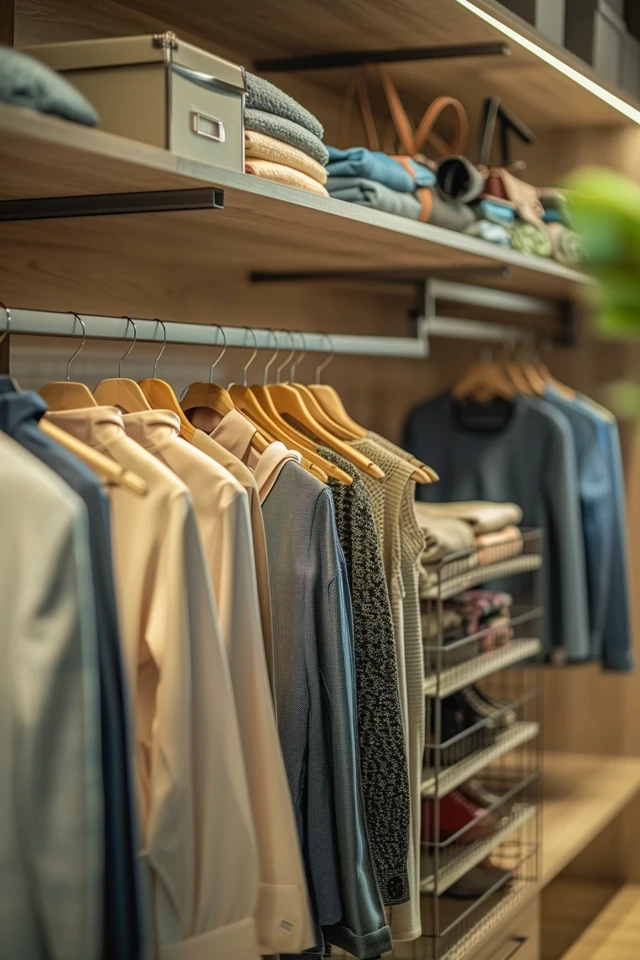
How To Build A Closet In A Basement: Extra Storage Solution
Basements are often the unsung heroes of home organization, absorbing the overflow of holiday decorations, off-season clothing, and sentimental bins we just can’t part with. However, without a dedicated structure, these spaces quickly turn into chaotic dumping grounds where items go to disappear forever. Building a proper closet in your basement doesn’t just hide the mess; it adds legitimate square footage and value to your home.
I have designed countless basements where the primary goal was simply “more storage,” but the result was a functional, finished space that felt like a natural extension of the upstairs. The key is treating the basement environment with respect—acknowledging the moisture, the lack of natural light, and the structural quirks—rather than just slapping up some 2x4s.
In this guide, I will walk you through the process of framing and finishing a basement closet from a designer’s perspective. For plenty of visual inspiration on finished basement closets, be sure to scroll down to the Picture Gallery at the end of this post.
Phase 1: Planning, Layout, and Moisture Control
Before you buy a single piece of lumber, you need to assess the physical environment. Basements are inherently different from the upper floors of your home because they are subterranean. The biggest enemy of a basement closet is moisture trapped behind a wall.
Start by taping a 2-foot square of plastic sheeting to the concrete floor and wall where you intend to build. Leave it for 48 hours. If you see condensation underneath the plastic when you peel it back, you have a moisture issue that must be addressed with concrete sealer or drainage solutions before you build.
Designer’s Note: Location Matters
I always advise clients to build closets around existing obstructions to camouflage them. Use the closet footprint to hide a sump pump, a lally column (support post), or awkward ductwork. However, if you are enclosing a sump pump or electrical panel, you must frame a wide access panel or door. Never permanently wall off mechanical systems.
When determining the size, stick to industry standards for usability. For a reach-in closet, you need a minimum depth of 24 inches of clear interior space. If you plan to install sliding doors, bump that depth to 26 or 28 inches to account for the door track overlap, otherwise, your coat sleeves will get pinched every time you open the door.
For a walk-in closet, the math changes. You need at least 24 inches for hanging clothes and a minimum 30-inch (ideally 36-inch) walkway. This means a single-sided walk-in needs to be at least 4.5 to 5 feet wide. Anything narrower will feel claustrophobic.
Phase 2: Framing the Walls and Structure
Once your location is set and dry, it is time to frame. In a basement, the most critical material choice is the bottom plate (the piece of wood that touches the floor). You must use pressure-treated lumber for this specific board. Standard pine will rot if it sits directly on concrete, wicking up moisture over time.
Secure the pressure-treated bottom plate to the floor using a powder-actuated tool (like a Ramset) or concrete screws (like Tapcons). I prefer concrete screws because they are removable if you make a mistake, whereas nails form a permanent bond.
Common Mistakes + Fixes
Mistake: Building the wall tight against the concrete foundation.
Fix: Leave a 1-inch to 2-inch gap between your new wood framing and the existing concrete foundation wall. This creates a thermal break and prevents moisture transfer. If you are insulating, use rigid foam board against the concrete before framing the wall.
When framing the vertical studs, place them 16 inches “on center” (from the center of one board to the center of the next). This is the standard spacing for hanging drywall and sourcing shelving hardware later. If you space them randomly, you will struggle to find a stud when it comes time to install your heavy closet rods.
For the door header (the structural beam above the door), measure the “rough opening” based on the door you want to buy. A standard 30-inch door usually requires a rough opening of 32 inches wide and 82 inches high. Always check the manufacturer’s specs before nailing your header in place.
Phase 3: Drywall, Flooring, and Trim
Basements generally require a different approach to drywall than bedrooms. I strongly recommend using moisture-resistant drywall, often called “green board” or “purple board.” These products are treated to inhibit mold growth, which is an essential insurance policy in a below-grade space.
When hanging the drywall, lift the bottom sheet about half an inch off the concrete floor. You do not want the gypsum material touching the damp floor. This gap will eventually be covered by your baseboards, so it doesn’t need to be pretty, but it does need to exist.
Flooring Transitions
If your basement is already finished with flooring, you can build the closet walls on top of it, provided it is a “floating” floor (like luxury vinyl plank). However, for structural stability, it is always better to cut the flooring back and anchor your wall plates directly to the subfloor or concrete.
If the basement is unfinished concrete, you have a choice. You can run the new flooring into the closet continuously for a seamless high-end look, or stop the flooring at the door and leave the closet floor as painted concrete to save money.
What I’d do in a real project:
I always run the flooring into the closet. It makes the closet feel like a room, not a utility box. It also makes cleaning easier. If you are using luxury vinyl plank (LVP), it is waterproof and perfect for this application. Avoid carpet in basement closets if possible; it traps moisture and allergens in a space with low airflow.
Phase 4: Interior Layout and Storage Systems
Now comes the design work. The functionality of your closet depends entirely on the height of your rods and shelves. In a basement, you are often working with lower ceiling heights (sometimes 7 feet rather than the standard 8 feet), so you have to be strategic.
For a standard “long hang” section (coats, dresses), position the rod at 66 to 68 inches off the floor. Above this, place a shelf at roughly 70 to 72 inches.
For “double hang” sections (shirts and pants), I place the bottom rod at 40 inches and the top rod at 80 inches. If your basement ceiling is low, you may need to adjust these to 38 inches and 76 inches. This maximizes density.
Shelf Depth Rules of Thumb
- 12-inch deep shelves: Best for linen closets or pantry storage. Cans and folded towels fit well here without getting lost in the back.
- 14 to 16-inch deep shelves: Necessary for bulky items, storage bins, or folded sweaters.
- Top Shelf: I always make the very top shelf the full depth of the return wall (usually 20 to 24 inches) to accommodate large plastic totes for holiday decor.
If you are using wire shelving, buy the heavy-duty bracket variety. The standard builder-grade wire shelves tend to bow under the weight of winter coats. If budget allows, melamine or plywood shelves are superior because things won’t tip over between the grates.
Phase 5: Lighting and Doors
Lighting is the element most DIYers forget until the end, but in a dark basement, it is vital. You cannot rely on the light spilling in from the main room.
Since you have likely framed new walls, you have the opportunity to run electrical. I recommend a simple 4-inch LED wafer light centered in the closet ceiling. These are ultra-thin, meaning they won’t conflict with joists or ductwork above, and they don’t generate heat, which is safer for tight spaces full of clothes.
If hardwiring isn’t an option, use battery-operated motion sensor LED bars. Mount them on the inside of the door header pointing inward. This illuminates the clothes directly when you open the door.
Door Selection Strategy
The door you choose dictates the flow of the basement.
- Standard Swing Door: Best for sound blocking and sealing out dust. Requires 3 feet of clear swing space in front of the closet.
- Bifold Doors: Great for accessing the full width of the closet at once. They only require about 15 inches of swing space. However, they can feel flimsy if you buy cheap hardware.
- Sliding/Bypass Doors: The best space saver as they require zero swing space. The downside is you can only ever access 50% of the closet at one time.
For basement closets specifically, I often recommend louvered doors (doors with slats). This allows air to circulate even when the closet is closed, preventing that “stale basement smell” from settling into your fabrics.
Final Checklist: The Designer’s Standard
Before you call the project done, run through this list to ensure the finish quality matches the rest of your home.
- Caulk the Trim: Run a bead of paintable latex caulk along the top of the baseboards and the sides of the door casing. This closes gaps and makes the carpentry look professional.
- Paint the Ceiling: Don’t leave the closet ceiling as raw drywall or primer. Paint it bright white to reflect your LED light downwards.
- Check the Airflow: If you installed a solid door, did you leave a 1-inch gap at the bottom for air return? If not, the closet may get musty.
- Anchor the System: Ensure every shelf bracket is screwed into a stud or a heavy-duty toggle bolt. Drywall anchors are not sufficient for a closet fully loaded with winter gear.
- Protect the Clothes: If you have rough framing or cedar planks, sand them smooth. You don’t want splinters snagging your favorite sweater.
FAQs
Do I need a permit to build a closet in my basement?
In most municipalities, adding walls—even non-load-bearing ones—requires a building permit. This ensures your electrical work is safe and you aren’t blocking required egress routes. Always check with your local building department to avoid fines or issues when selling your home.
Should I line the closet with cedar?
Cedar is a classic choice for a reason. It naturally repels moths and resists moisture rot. However, it can be expensive. A cost-effective compromise is to use cedar planks just for the back wall, or purchase cedar blocks to hang on the rods.
How do I stop my basement closet from smelling musty?
Moisture control is the root cause. Aside from louvered doors, you can install a small proactive measure: a rechargeable dehumidifier or a container of moisture absorber (like DampRid) on the floor. Ideally, the basement itself should be conditioned with a mechanical dehumidifier.
Can I use an IKEA Pax system in a basement?
Yes, but with a caveat. IKEA particle board frames are very sensitive to moisture. If your basement has any history of dampness, I recommend placing the IKEA units on top of a pressure-treated 2×4 base so the particle board never touches the concrete floor directly.
Conclusion
Building a closet in your basement is a manageable project that bridges the gap between rough carpentry and interior design. It requires careful attention to the unique conditions of a subterranean environment—specifically moisture and lighting—but the payoff is immense.
By following proper framing techniques and adhering to standard design measurements, you create a permanent asset for your home. You move from “storing stuff in the basement” to having a “custom storage solution.” Take your time with the layout, invest in moisture-resistant materials, and don’t skimp on the lighting. Your future organized self will thank you.
Picture Gallery


