
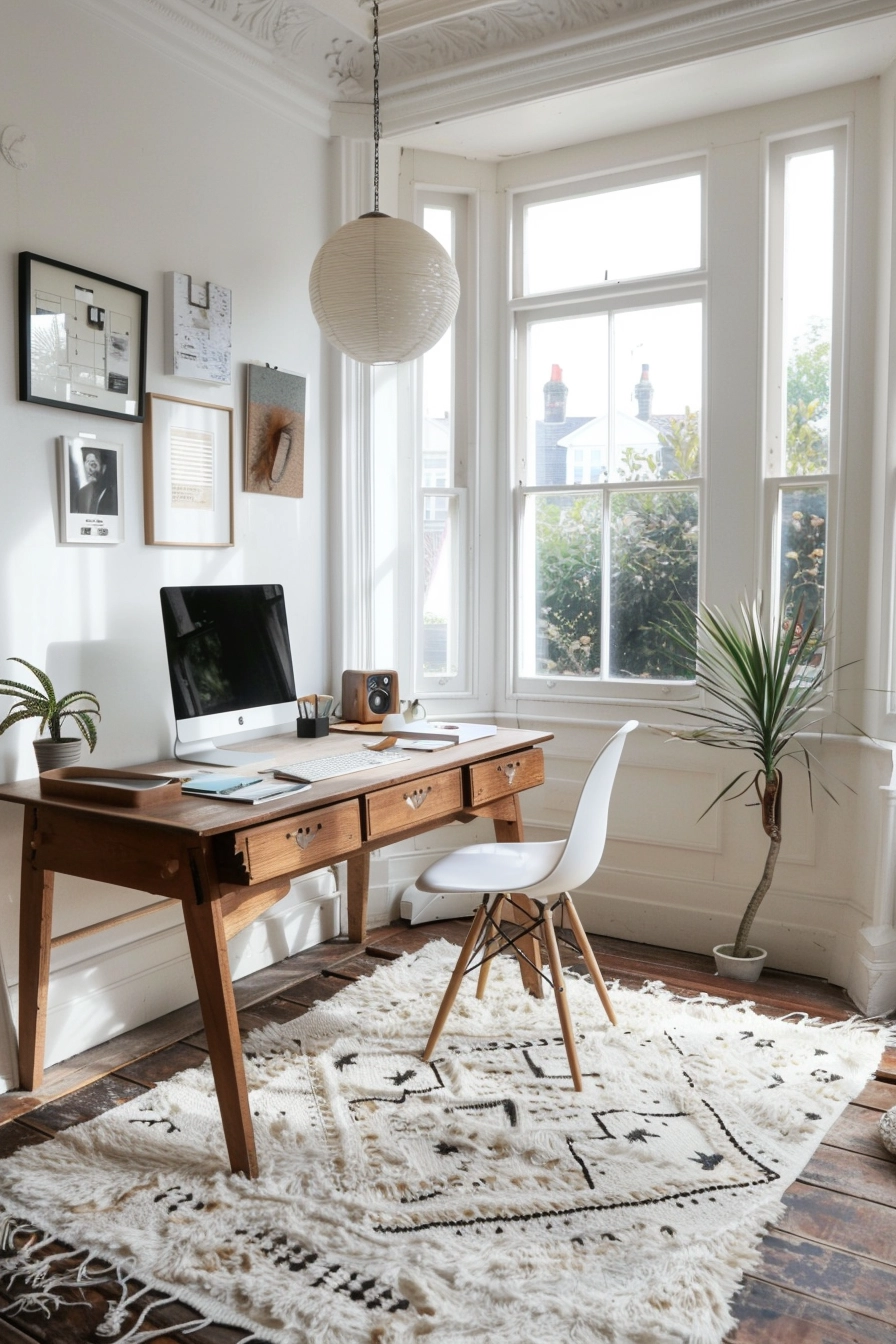
How To Choose A Rug For Home Office: Enhancing Work Space
Introduction
Designing a home office requires a delicate balance between rigorous functionality and personal comfort. I often see clients treat this room strictly as a utilitarian zone, filling it with hard surfaces like laminate desks, plastic chairs, and metal filing cabinets. The result is usually a space that echoes during conference calls and feels cold underfoot, which hardly motivates you to sit down and work for eight hours.
A well-chosen rug is the single most effective tool for softening these hard edges. It anchors your desk, improves room acoustics by dampening sound, and provides immediate visual warmth that makes the office feel like an intentional part of your home. It serves as the foundation for the room’s color palette, allowing you to inject personality into a space that might otherwise feel sterile.
However, selecting a rug for an office is significantly more technical than choosing one for a bedroom or living area. You have to contend with rolling chair casters, heavy desk legs, and the need for a flat, stable surface that won’t bunch up while you are trying to focus. For visual inspiration on how to pull these elements together, check out the Picture Gallery at the end of the blog post.
1. Determining the Correct Size and Layout
The number one mistake I encounter in home office design is the “postage stamp” rug effect. This happens when a rug is too small for the desk, looking like a floating island that disconnects the furniture from the rest of the room. In an office, sizing is dictated by movement, specifically the range of motion of your chair.
Your rug must be large enough to accommodate your chair even when you push back from the desk. If your chair wheels drop off the edge of the rug every time you stand up, it creates a tripping hazard and ruins the binding of the rug over time. You need a smooth, continuous surface for your “roll zone.”
The Golden Rules of Office Rug Sizing
- The 30-Inch Clearance Rule: You generally need 30 inches of rug extending backward from the edge of your desk. This ensures that when you slide back to stand up, your casters stay on the textile.
- The All-Legs-On Approach: Ideally, your desk and your chair should sit entirely on the rug. This anchors the furniture and makes the room feel larger. For a standard executive desk, an 8′ x 10′ rug is usually the minimum requirement.
- The Floating Desk Layout: If your desk “floats” in the center of the room, the rug should frame the desk with at least 12 to 18 inches of border on all sides. This defines the workspace as a distinct zone.
Designer’s Note: The “Half-On” Mistake
I recently worked with a client who bought a beautiful vintage 5′ x 8′ rug. She placed it just under the chair but not under the desk legs. The result? The chair sat on an uneven plane because the rug had a thick pile. It caused ergonomic issues and back pain because her chair was constantly tilting backward. Always ensure your chair and the front legs of the desk (at minimum) are on the same level surface.
2. Material Selection: Durability vs. Drivability
The fiber content and construction of your rug will determine whether it lasts five years or five months. In a living room, you might prioritize softness; in an office, you must prioritize “drivability.” This term refers to how easily a wheeled chair can maneuver across the surface without getting stuck or causing drag.
You need a material that has a low pile and a tight weave. High-pile shags or loose Moroccan weaves are disastrous in an office because wheels get tangled in the fibers. Furthermore, the constant friction of wheels will crush delicate fibers like viscose or silk, leaving permanent tracks in the sheen.
Top Recommended Materials
- Wool: This is the gold standard. Wool is naturally crush-resistant because the fibers have a coil-like structure that springs back. It is durable, naturally flame retardant, and handles traffic well. Look for low-pile, hand-tufted, or hand-knotted wool.
- Nylon/Polypropylene blends: For a more budget-friendly option, high-quality synthetics are excellent. They are easy to clean and often mimic the look of wool. Ensure the pile is dense; if you can feel the backing through the fibers, it is too sparse for a rolling chair.
- Flatweave Cotton or Wool: These have no pile, making them perfect for rolling chairs. However, they can be slippery and thin. You must pair these with a heavy-duty rug pad to prevent bunching.
Materials to Avoid
- Chenille or Viscose: These are too fragile. Liquid spills will ruin them instantly, and wheels will grind the fibers into dust.
- Chunky Jute or Sisal: While they look great, chair wheels will shred natural plant fibers over time. They are also rough on bare feet if you like to take your shoes off while working.
- High-Pile Shag: It is nearly impossible to roll a chair over these, and small items like paperclips will get lost in the depths forever.
3. Pile Height and Construction
The construction of the rug is just as important as the material. We measure this by “pile height,” which is the thickness of the rug from the backing to the top of the yarn. For a home office, you generally want a pile height of 0.25 inches (1/4 inch) or less.
Low-pile rugs create a firm surface that allows chair casters to glide. If the pile is too high, you create resistance. This puts strain on your legs and back as you fight to move the chair. It creates a surprising amount of physical fatigue over the course of a work week.
Understanding Weave Types
- Loop Pile (Berber): This is durable, but be careful with rolling chairs. If the loops are large, a caster wheel can snag a loop and unzip a row of the rug. Look for “tight loop” or “micro-loop” styles.
- Cut Pile: The loops are cut, creating upright tufts. This is generally safer for wheels than large loops, provided the pile is short and dense.
- Flatweave (Kilim/Dhurrie): These are woven on a loom rather than knotted, resulting in no pile. They are the absolute best for chair movement but offer the least amount of cushion.
Common Mistakes + Fixes
Mistake: Buying a rug that is too thin and flimsy, causing it to ripple under the wheels.
Fix: If you love a thin rug, use a “rug tape” or a dual-surface rubber gripper pad. Alternatively, layer the thin rug over a larger, low-pile jute rug to add stability and weight.
4. Style, Pattern, and Color Psychology
Your home office is a place of focus, but it is also a backdrop for your professional life. If you take frequent video calls, consider what the rug contributes to the frame if it is visible. More importantly, consider how the visual noise affects your concentration.
Color psychology plays a subtle but real role in productivity. Blues and greens are known to aid focus and calmness, making them excellent choices for high-stress jobs. Warmer tones like terracotta or rust can stimulate creativity and energy.
Practical Styling Tips
- Hiding the Mess: Offices generate debris—paper shreds, pencil shavings, and dust bunnies. A rug with a micro-pattern or a heathered design hides small particles much better than a solid-colored rug. Solid navy or black rugs show every speck of lint.
- The “Zoom” Factor: If your office doubles as a guest room, the rug helps define the space’s primary function. A bold, geometric pattern signals energy and modernism, while a vintage Persian style signals tradition and stability.
- Lighting Coordination: Offices often have bright task lighting. High-sheen rugs (like those with bamboo silk) can cause glare. Matte finishes, like wool or cotton, absorb light and reduce eye strain.
What I’d Do in a Real Project
If I am designing a small home office with neutral walls (white or beige), I almost always choose a vintage-style rug with a complex pattern in deep reds and blues. Why? The complex pattern creates a visual anchor that distracts from unsightly computer cables. It adds character without requiring me to paint the walls or add expensive art. It is a “one-and-done” decorating move.
5. Rug Pads and Floor Protection
Do not skip the rug pad. In a dining room, a rug pad is for comfort; in a home office, it is a safety device and a floor protector. Without a pad, the abrasive backing of a rug can scratch hardwood floors as the rug shifts under the weight of a moving chair.
Furthermore, a rug pad prevents the “creeping” effect where the rug slowly migrates across the room. For an office, you need a specific type of pad. You want grip, not necessarily plush loft.
Choosing the Right Pad
- Felt + Rubber Combination: This is the best all-around choice. The rubber side grips the floor, and the felt side grips the rug. Look for a 1/8-inch thickness. Avoid 1/2-inch pads, as they make the surface too squishy for rolling chairs.
- Solid Rubber Pads: These are excellent for thinner flatweave rugs. They offer a very firm foundation. Avoid the cheap, waffle-weave PVC mats; they disintegrate and can damage floor finishes.
A Note on Chair Mats
Many people ruin the aesthetic of a beautiful rug by placing a clear plastic polycarbonate chair mat on top of it. I strongly advise against this if possible. Plastic mats crack, yellow, and look cheap. If you choose the correct low-pile wool or synthetic rug, you do not need a plastic mat. If you are worried about your wood floors, a high-quality rug pad is the correct barrier, not a plastic sheet on top.
Final Checklist: Before You Buy
Before you click “purchase” or head to the showroom, run through this final checklist to ensure you haven’t overlooked a critical functional detail.
- Measure Twice: Tape out the rug dimensions on your floor using blue painter’s tape.
- Check the Roll Zone: Sit in your chair within the taped area. Roll back as if you are getting up. Do the wheels stay inside the tape line?
- Door Clearance: Does the door to the room swing into the rug area? If so, does the bottom of the door clear the pile height of the rug?
- Material Check: Is the pile height under 0.25 inches? Is the weave tight enough to resist snagging?
- Budget Check: Have you budgeted for a high-quality rug pad? (Usually add $50-$150 depending on size).
FAQs
Can I put a rug over the wall-to-wall carpet in my office?
Yes, you can. This is called layering. It is a great way to define a workspace in a carpeted bedroom. However, the rug will be prone to rippling because of the pile underneath. You must use a “carpet-to-rug” pad, which is specifically sticky on both sides to lock the two textiles together.
What if my desk is in a corner?
For corner desks, standard rectangular rugs can look awkward. Consider a square rug or even a round rug. A 6-foot or 8-foot round rug can soften the harsh angles of a corner desk and provide just enough floor coverage for your chair.
Are “washable” rugs good for offices?
Washable rugs are very popular right now. They are generally very thin, essentially a heavy fabric. They are great for durability, but because they are so thin, they bunch up easily under wheels. If you use a washable rug, you must use a heavy, stiff rug pad underneath to give it structure.
How do I clean my office rug?
Vacuum weekly, but turn off the beater bar (the rotating brush) if you have a looped rug to prevent snags. Because you sit in the same spot for hours, rotate the rug 180 degrees every six months. This prevents “traffic lanes” and uneven wear patterns where your feet rest.
Conclusion
Choosing the right rug for your home office is about respecting the unique physics of the room. It is a workspace first and a design statement second. By prioritizing size—ensuring you have that critical 30-inch clearance behind the desk—and selecting a dense, low-pile material, you create a foundation that supports your workflow rather than hindering it.
Don’t be afraid to choose a rug that brings you joy. You likely spend more waking hours in this room than in your living room or bedroom. A rug that feels solid underfoot and adds a layer of beauty to your day is not just a decoration; it is an investment in your daily well-being and productivity.
Picture Gallery


