
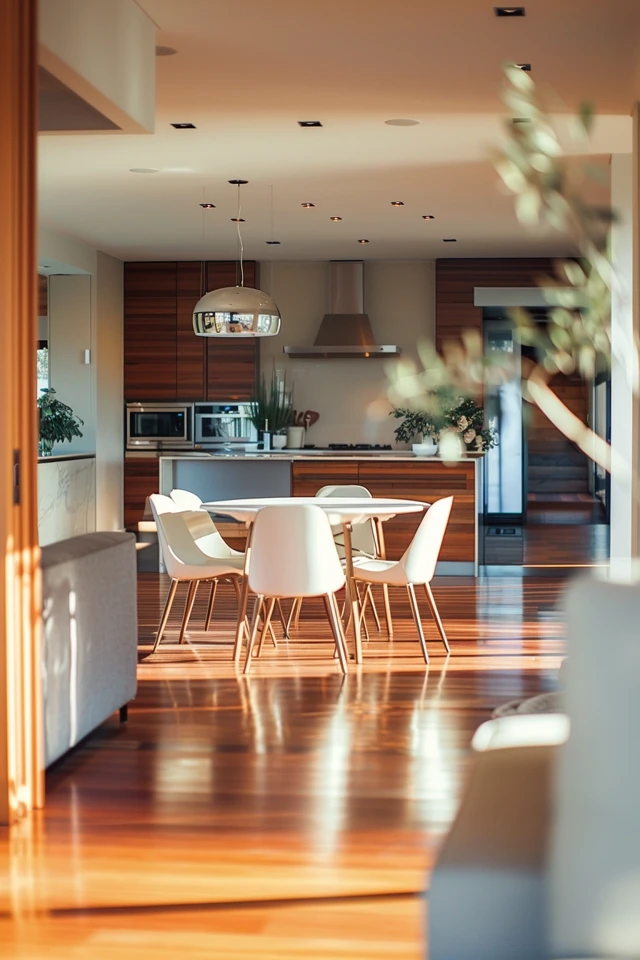
How To Combine Kitchen And Dining Room: Seamless Integration
The days of formal dining rooms isolated behind closed doors are largely behind us. Modern living centers on connection, where the boundary between cooking and eating dissolves to create a vibrant, shared experience. Merging these two spaces creates a sense of airiness and ensures the cook is never left out of the conversation.
However, tearing down a wall or rearranging furniture is only the first step in a successful open-concept design. Without careful planning, you risk creating a chaotic, noisy hall where dirty dishes ruin the dinner ambiance. For plenty of visual inspiration on open layouts, check out our curated Picture Gallery at the end of this post.
The secret lies in visual zoning and consistent design languages. By balancing practical workflow with comfortable aesthetics, you can build a space that handles morning coffee rushes and intimate dinner parties with equal grace.
1. Establishing Flow and Layout Zones
The success of a combined kitchen and dining area relies entirely on traffic patterns. In professional design, we look at “sightlines” and “circulation paths” before looking at paint swatches. You must ensure people can move freely without bumping into the cook or the seated guests.
The Buffer Zone Rule
Never place a dining table directly against a high-traffic work zone unless you have ample clearance. You need a minimum of 48 inches (4 feet) between the edge of your kitchen island or cabinets and the dining table. This allows someone to be cooking or opening drawers while a guest is seated comfortably behind them.
The Pathway Priority
Identify the primary path from the kitchen to the exterior doors or living room. This path should never cut diagonally through the “work triangle” (sink, stove, fridge). Keep the main walkway clear, ideally 36 to 42 inches wide, pushing the dining zone to a designated perimeter or nook.
Visual Anchoring
In an open space, furniture can feel like it is floating aimlessly. Use architectural features to anchor the dining area. This could be aligning the table with a large window, centering it under a ceiling beam, or placing it parallel to the kitchen island to create symmetry.
2. Unifying the Palette and Materials
When walls come down, your material choices must speak to each other. You are no longer designing two rooms; you are designing one cohesive environment with two functions. Disjointed styles will make the room feel cluttered and smaller than it actually is.
Flooring Continuity
The single most effective way to expand a space is continuous flooring. Run the same hardwood, luxury vinyl plank (LVP), or tile from the kitchen through the dining area. If you switch materials halfway—for example, tile in the kitchen and wood in the dining room—you visually chop the room in half, defeating the purpose of an open concept.
Cabinetry and Furniture Coordination
Your dining furniture does not need to match your kitchen cabinets perfectly, but they should be related. If you have matte black hardware in the kitchen, consider a dining table with black iron legs. If your island is a warm oak, a walnut dining table might clash; stick to similar wood tones or go for a high contrast, like a painted black table.
Countertop and Tabletop Dialogue
Look at the visual weight of your surfaces. If you have a heavy, thick quartz countertop with significant veining, balance it with a dining table that has substance. A delicate glass table might disappear or look out of place next to a massive chef’s kitchen.
3. Lighting: The Invisible Divider
Lighting is the most powerful tool for defining zones without walls. In a combined space, you need to treat lighting as a hierarchy. You need bright, cool light for chopping vegetables and warm, dimmable light for eating dinner.
Task vs. Ambient
Kitchens require high-Kelvin lighting (3000K–4000K) for safety and visibility. Dining areas benefit from warmer bulbs (2700K) to create intimacy. To make these coexist, every switch must be on a dimmer. This allows you to “turn down” the kitchen mess visually while highlighting the dining table during a meal.
The Pendant Rule of Thumb
Use a statement fixture over the dining table to act as a focal point. The bottom of the chandelier or pendant should hang 30 to 36 inches above the table surface. This lowers the visual ceiling over the dining zone, making it feel cozy and separate from the utilitarian kitchen space.
Layering Light Sources
Don’t rely solely on recessed cans. Add under-cabinet lighting in the kitchen to highlight the backsplash. In the dining area, add a floor lamp or a buffet lamp on a console. These layers allow you to shift the mood from “workspace” to “lounge” instantly.
Designer’s Note: The Acoustics Factor
One issue that rarely appears in Pinterest photos is noise. When you combine a kitchen (hard surfaces like tile, stone, appliances) with a dining room, acoustics can become a nightmare. I once worked on a project where the client removed a wall and immediately regretted the echo—clattering pots made conversation at the table impossible.
To fix this, you must introduce soft, sound-absorbing materials. Window treatments are mandatory; opt for lined drapes rather than wood blinds. Upholstered dining chairs absorb significantly more sound than metal or wood chairs. Finally, a thick wool or high-pile rug under the dining table acts as a sound damper. Don’t skip the textiles; they are the muffler for your open-concept engine.
4. Rugs and Defining the “Room”
Since you don’t have walls to define the dining space, the area rug becomes your virtual wall. It creates a psychological boundary that says, “This is where we sit and connect.”
Sizing is Critical
The most common mistake homeowners make is buying a rug that is too small (skimping on size to save money). The rule is non-negotiable: all chair legs must remain on the rug even when the chairs are pulled out for someone to sit.
The 24-Inch Calculation
To get the right size, measure your dining table and add 24 to 30 inches to every side. For a standard 6-person rectangular table, you typically need an 8×10 or 9×12 rug. Anything smaller will cause chairs to catch on the edge of the rug, creating a tripping hazard and a nuisance.
Material Selection for Durability
In a dining space near a kitchen, spills will happen. Avoid high-pile shags or delicate viscose rugs.
- Wool: Naturally stain-resistant and durable.
- Polypropylene: Inexpensive and easy to scrub; great for families with young kids.
- Flatweave: easy to move chairs over, but requires a thick rug pad to prevent slipping.
5. Managing the “Kitchen Mess” View
The biggest anxiety about open-concept living is visible dirty dishes while you eat. You want the connection, but not the clutter. Strategic design choices can minimize this visual noise.
Raised Bar Tops
While single-level islands are trendy, a two-tier island (bar height on the outer side) can effectively hide the sink and prep area from the dining table view. A 42-inch high bar creates a visual shield for the mess behind it.
Appliance Garages
Design your cabinetry to hide the clutter. An “appliance garage”—a cabinet with a roll-up or pocket door that sits on the counter—allows you to slide the toaster, blender, and coffee pot out of sight instantly.
The Deep Sink Strategy
If you are remodeling, install the deepest sink possible (10 inches or more). This allows you to stash dirty pots and pans below the countertop line, making them invisible from the dining table until you are ready to clean up.
6. Furniture Selection and Scale
Scale is the ratio of the size of the furniture to the size of the room. In a combined space, the furniture needs to be substantial enough to hold its own but streamlined enough to preserve flow.
Table Shape Matters
In tighter open concepts, round tables are often superior to rectangular ones. A round table has no sharp corners to bump into as you walk by with groceries. It also promotes better conversation flow and creates a distinct geometric contrast to the boxy shapes of kitchen cabinets.
Low Profile Seating
Keep sightlines open. Avoid high-backed dining chairs that block the view from the kitchen to the windows. Choose mid-height chairs or even a bench on one side. A bench can be tucked completely under the table when not in use, adding precious inches to your walkways.
The “Performance” Fabric Requirement
Because the dining area is now part of the kitchen, grease particles and cooking odors are more prevalent. If you choose upholstered chairs, use performance fabrics like Crypton or Sunbrella, or wipeable surfaces like leather and high-quality vinyl. Avoid velvet or linen unless they are specifically treated for stain resistance.
7. Transition Pieces
Sometimes the gap between the kitchen and dining area feels too empty. You need a “bridge” piece to connect the two zones comfortably.
The Buffet or Sideboard
Place a sideboard along the wall that spans both zones. Use it to store “overflow” items that apply to both areas, like serving platters, table linens, or the coffee station. Style the top with a lamp and art to bring warmth to the utilitarian side of the room.
Open Shelving
Install floating shelves between the upper kitchen cabinets and the dining area. Display items that bridge the gap: nice ceramic bowls, cookbooks, or plants. This draws the eye across the room rather than stopping abruptly at the end of the cabinetry.
The Breakfast Nook
If you have a large space, consider a small “transition” seating area between the main kitchen work zone and the formal dining table. A couple of comfortable armchairs and a small drinks table can create a spot for guests to chat with the cook without sitting at the dinner table prematurely.
Common Mistakes + Fixes
Mistake: Matchy-Matchy Metals
Trying to match the dining chandelier exactly to the kitchen cabinet pulls and the faucet.
Fix: Mix your metals. If the kitchen faucet is polished nickel, try a matte black or brass chandelier. It adds depth and makes the room feel curated, not bought from a catalog set.
Mistake: Ignoring Ventilation
Assuming a standard microwave vent is enough for an open concept.
Fix: Without walls to contain smells, garlic and fish odors will settle into your dining curtains and sofa. Invest in a high-CFM range hood that vents to the outside, not just a recirculating fan.
Mistake: Overcrowding
Trying to fit an island and a dining table in a space that only fits one.
Fix: Be realistic about square footage. If space is tight, combine them. Use a large dining table at counter height as a prep surface, or extend the island to include a lower dining-height table at one end (a T-shape layout).
What I’d Do in a Real Project: Final Checklist
If I were consulting on your home renovation tomorrow, this is the checklist I would run through to ensure your combined space works:
- Check the Clearances: Tape out the floor. Do I have 42 inches of walkway? Do I have 24 inches behind every chair?
- Audit the Light: Do I have dimmers on every single switch? Is the dining light warmer than the kitchen task light?
- Rug Check: Is the rug large enough that the chairs don’t catch? Is it a material that can handle a dropped meatball?
- Sightlines: Stand at the kitchen sink. Can I see the guests? Stand at the dining table. Am I staring at a messy trash can?
- Acoustics: Have I added enough fabric (drapes, rugs, pillows) to stop the echo?
- Ventilation: Is the range hood strong enough to keep cooking smells out of the dining upholstery?
FAQs
Q: How do I handle smells in an open kitchen/dining room?
A: Ventilation is key. Use a hood that vents externally. Also, using textiles that are easy to clean helps. Keep scented candles or an air purifier in the dining zone to neutralize odors after cooking.
Q: Can I use different paint colors for the kitchen and dining area?
A: It is risky. In an open concept, it is safer to use one main wall color to unify the space. If you want variety, use a different color on the dining room ceiling or use wainscoting/paneling in the dining area to add texture without breaking the color flow.
Q: My space is too small for an island and a table. What do I do?
A: Choose one. A dining table is more comfortable for meals and can double as a prep surface if the material is durable (like quartz or sealed wood). Alternatively, buy a moveable island or “butcher block cart” on wheels that can be pushed aside when guests arrive.
Q: How do I make a rental open-concept feel separate?
A: Since you can’t change flooring or lights, use a very large area rug to anchor the dining space. Use a tall, open bookshelf as a room divider that allows light through but creates a sense of enclosure for the dining area.
Conclusion
Combining a kitchen and dining room is about more than just removing a wall; it is about creating a lifestyle centered on togetherness. By paying attention to the technical details—flow, lighting temperatures, and acoustic control—you can avoid the common pitfalls of open-plan living.
The goal is a seamless integration where the utility of the kitchen supports the comfort of the dining room, and vice versa. With the right zoning and material choices, your home will feel larger, brighter, and infinitely more welcoming.
Picture Gallery


