
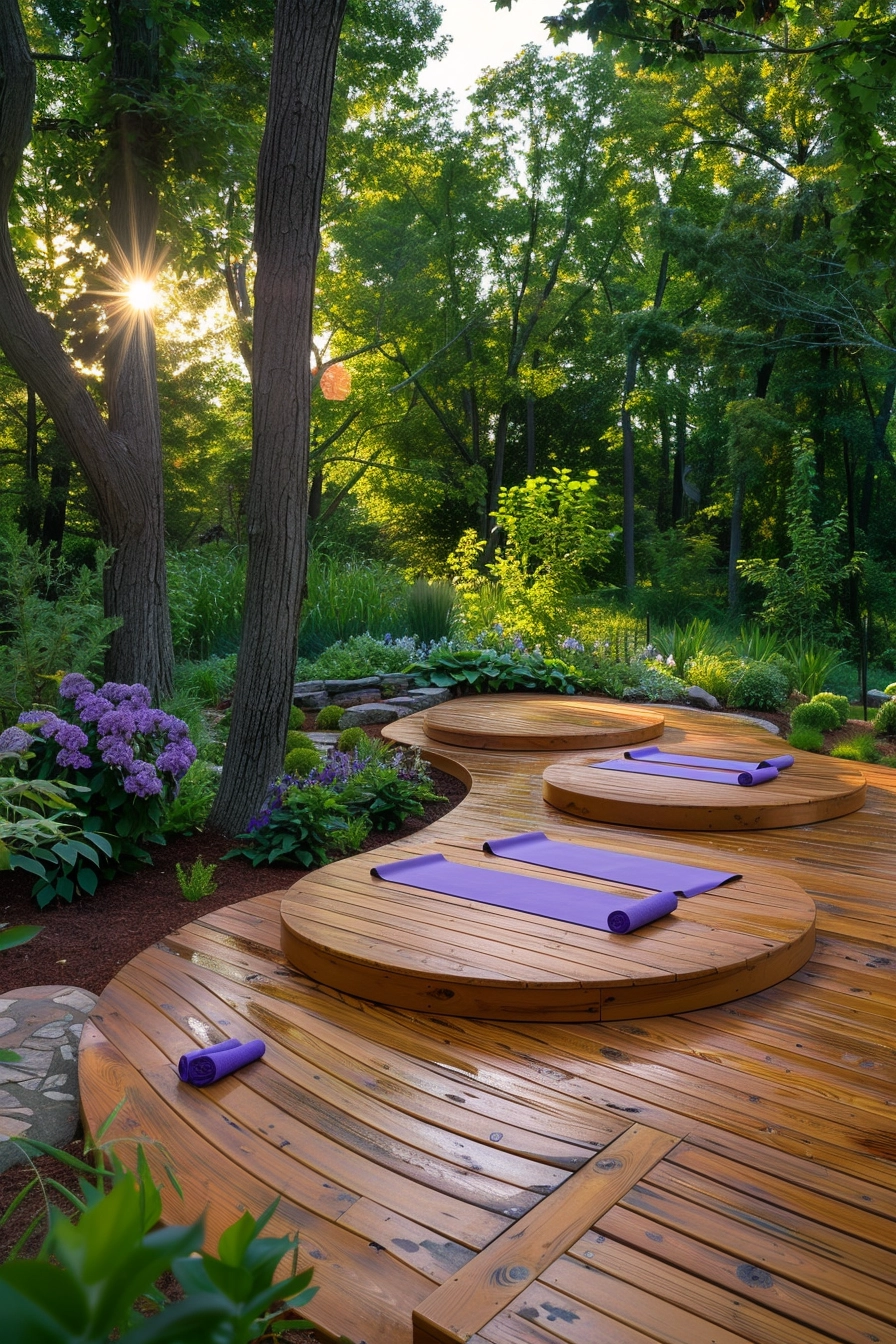
How to Create an Outdoor Yoga Sanctuary in Your Backyard
There is a profound difference between rolling out your yoga mat on the living room floor and stepping into a dedicated outdoor sanctuary. In the studio, we are often distracted by the buzzing of the fridge or the pile of laundry in the corner. Outdoors, the rustling leaves and shifting breeze become part of the practice.
Creating a dedicated space for yoga in your garden is not just about placing a mat on the grass. As a designer, I approach these projects by blending landscape architecture with interior comfort. We want to create a “room without walls” that feels private, grounded, and weatherproof.
If you need visual inspiration, check out the curated Picture Gallery at the end of this blog post.
1. Site Selection and Solar Mapping
The first step in any outdoor design project is site analysis. You cannot simply pick a corner that looks nice; you have to understand how the environment behaves.
Start by observing the “sun path” in your yard. If you are a morning practitioner, you likely want an East-facing spot to catch the sunrise. However, direct eye contact with the rising sun can be blinding during balancing poses, so filtered light is better.
If you practice in the evening to unwind, look for a West-facing orientation or a spot with ample shade coverage.
Designer Rule of Thumb:
You need a minimum flat footprint of 7 feet by 7 feet per person. A standard yoga mat is roughly 24 inches by 68 inches. You need at least 2 feet of clearance on all sides to extend your arms fully without hitting a fence, a plant, or a wall.
Consider the ground beneath you carefully. Avoid areas with aggressive surface roots or low spots where water pools after rain. Mosquitoes breed in standing water, and nothing ruins a meditation session faster than a swarm of insects.
2. The Foundation: Flooring and Ground Cover
This is the most critical technical element of an outdoor yoga space. You cannot practice safely on uneven terrain. A tree pose requires a perfectly level surface to engage your core properly.
Grass is often too lumpy and can be itchy or damp. Concrete is too hard on the joints and retains too much heat in the summer.
The Ideal Hardscaping Solutions:
- Wood or Composite Decking: This is the gold standard. Wood has a natural “give” that is kinder to knees and wrists. Composite decking is maintenance-free and won’t give you splinters.
- Pea Gravel with a Sub-Base: If you are on a budget, excavate 4 inches of soil, lay down a weed barrier, and fill it with crushed stone dust followed by pea gravel. You will need to lay a heavy rug over this for stability.
- Large Format Pavers with Ground Cover: Use large 24×24 inch smooth pavers. Plant creeping thyme or moss between them. This looks organic but offers a flat surface for your mat.
Designer’s Note:
If you choose decking, install the boards perpendicular to your primary view. This visually elongates the space. Ensure the gap between boards is no wider than 1/8 inch so your fingers or toes don’t get caught during floor work.
3. Zoning for Privacy and Sound
True relaxation requires a sense of containment. In interior design, we use walls; outdoors, we use “softscaping” and screens. You do not want to be in Downward Dog while making eye contact with your neighbor.
If you are renting or cannot wait for hedges to grow, use freestanding privacy screens. Bamboo fencing rolls are affordable and can be zip-tied to existing chain-link fences to instantly block sightlines.
Handling Noise Pollution:
Unless you live in the deep country, you will hear traffic or lawnmowers. You cannot eliminate this, but you can mask it using “white noise.”
Install a water feature. It does not need to be an expensive koi pond. A simple, recirculating ceramic fountain creates a consistent trickle that distracts the brain from intermittent street noise.
Privacy Planting Checklist:
- Clumping Bamboo: Grows fast and tall (up to 10-15 feet) but won’t invade your whole yard like running bamboo.
- Tall Ornamental Grasses: Varieties like Feather Reed Grass provide screening at seated eye level (about 3-4 feet).
- Potted Boxwoods: Great for renters. Place large rectangular planters around your mat area to create a “half-wall” effect.
4. Lighting and Ambiance Control
Lighting extends the usability of your sanctuary into the early morning or late evening. The goal here is low-lumen, warm-temperature lighting.
Avoid floodlights or cool-white security lights, which trigger alertness. Aim for a color temperature of 2700K (Warm White).
Layering Your Light Sources:
- Low-Level Path Lights: These guide you to the space without blinding you. Solar spikes are easy to install along the perimeter.
- Uplighting: Place small spotlights at the base of trees or tall plants surrounding your deck. This bounces light off the leaves, creating a soft, diffused glow.
- String Lights: If you have overhead structure, string lights add instant warmth. Ensure they are dimmable.
The Fire Element:
A fire feature can serve as a focal point (Drishti) during meditation. A small tabletop bio-ethanol burner is safe, smokeless, and requires no gas line.
5. Furnishing and Decor
Your outdoor sanctuary needs to be resistant to the elements. Interior textiles will mold within weeks outdoors.
When choosing an outdoor rug, look for 100% polypropylene or recycled PET fibers. These materials mimic the softness of wool but can be hosed off and are resistant to UV fading. Avoid jute or sisal outdoors; they absorb moisture and rot.
Storage is Key:
You do not want to haul props back and forth from the house. Invest in a weather-tight deck box that doubles as a bench. Look for one with a resin construction that mimics wood.
Inside the box, store:
- Your yoga mats (rolled).
- Cork blocks (cork resists mold better than foam).
- A stack of Turkish towels (they dry faster than terry cloth).
- Citronella candles or bug spray.
Common Mistakes + Fixes
I often see homeowners make these errors when DIYing their wellness spaces. Here is how to avoid them.
Mistake: Ignoring Drainage
The Issue: You build a beautiful ground-level deck, but water pools underneath, causing rot and mosquito breeding.
The Fix: Always grade the soil away from the center of the area before building. Use a gravel base under wood decks to encourage water to seep into the earth.
Mistake: Overcrowding the Space
The Issue: Using too many large potted plants or statues makes the space feel claustrophobic.
The Fix: Keep the floor clear. Go vertical with hanging planters or wall-mounted trellis vines. Negative space is essential for a clear mind.
Mistake: Using Dark Flooring
The Issue: Dark composite decking or slate gets scorching hot in the sun.
The Fix: Choose light grays, sandy beiges, or natural cedar tones. If you already have a dark surface, you must use a large, light-colored outdoor rug.
Designer’s Note: The Transition Zone
In my projects, the “journey” to the sanctuary is as important as the space itself.
If you have to walk through mud, dodge hanging laundry, or step over a garden hose to get to your yoga spot, you arrive stressed.
Create a stepping-stone path leading to the area. Use flat flagstones surrounded by pea gravel or mulch. This physical separation helps your brain switch modes from “home/work” to “practice/rest.”
I also recommend planting aromatic herbs along this path. Brushing against lavender, rosemary, or mint releases scent, engaging your senses before you even step on the mat.
What I’d Do in a Real Project: A Mini-Checklist
If I were hired to build this in your backyard tomorrow, this is the exact workflow I would follow. Use this to manage your own project.
- Survey the Grade: Use a string line and line level to see how much slope exists. If it drops more than 2 inches over 8 feet, we need a raised platform, not pavers.
- Check the Sun: I would stand in the spot at 8:00 AM and 6:00 PM. If there is direct eye-level sun, I would budget for a shade sail or pergola immediately.
- Select the Anchor: I would pick one visual focal point for balance poses. This could be a Buddha statue, a specific tree, or a piece of driftwood.
- Plan the Electrical: Before laying any hardscaping, run low-voltage wire for lighting. It is much harder to add later.
- Install Vertical Greenery: Plant the hedges or install the trellis first. They take the longest to establish.
Final Checklist
Before you call your sanctuary complete, ensure you have ticked these boxes:
- Level Ground: Is the surface flat enough for a single-leg balance?
- Clearance: Can you swing your arms wide without hitting obstacles?
- Shade Strategy: Do you have protection from the high noon sun?
- Wind Block: Is there a buffer against strong gusts?
- Dimmable Lighting: Can you control the mood for evening sessions?
- Storage: Is there a dry place for props?
- Sightlines: Are the neighbors blocked from view?
FAQs
What is the best orientation for a yoga deck?
East-facing is traditional for morning practice (Sun Salutations). However, North-facing provides the most consistent, diffused light throughout the day without harsh shadows or heat spikes.
Can I do this on a small apartment balcony?
Absolutely. Focus on the floor first—cover concrete with interlocking wood deck tiles. Use a bamboo screen for privacy and vertical wall planters to save floor space.
How do I keep the space clean?
Outdoor spaces get dusty. Keep a stiff-bristled broom and a leaf blower nearby. I recommend hosing down outdoor rugs once a month and letting them dry in the sun to prevent mildew.
Is a shade sail better than a pergola?
For yoga, often yes. A pergola creates dappled shadow lines that can be distracting visually. A high-quality fabric shade sail creates a solid block of shade and is generally more affordable.
Conclusion
Building an outdoor yoga sanctuary is an investment in your mental and physical health. It encourages consistency in your practice by reducing the friction of setting up indoors.
Remember that nature is not perfect. Leaves will fall on your mat, and birds will interrupt your focus. This is actually a benefit. Learning to practice amidst these small distractions strengthens your ability to find calm in the real world.
Start with the ground, secure your privacy, and keep the design simple. Your backyard is waiting to become your retreat.
Picture Gallery


