
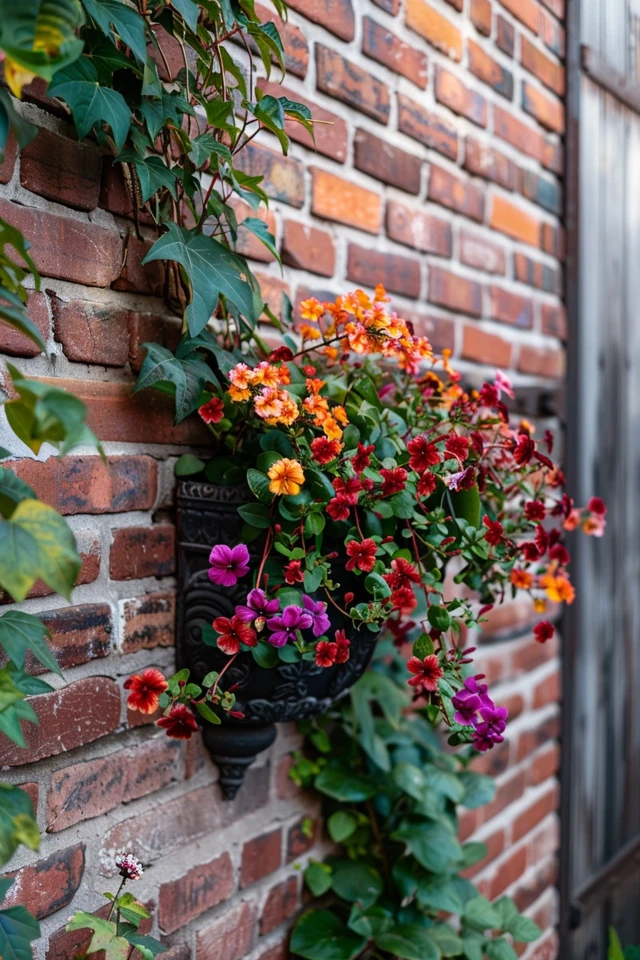
How To Decorate A Brick Wall Outside: Outdoor Style
Introduction
An exposed brick wall in an outdoor space is a double-edged sword for many homeowners. On one hand, it offers a robust, historic charm and a texture that vinyl siding simply cannot compete with. On the other hand, a large expanse of uninterrupted masonry can feel cold, industrial, or unfinished, leaving your patio or garden feeling more like an alleyway than a sanctuary.
I remember working on a small courtyard project in Boston where the client was surrounded on three sides by towering red brick. She felt boxed in, but by layering lighting, deliberate greenery, and scaling the furniture correctly, we turned those imposing walls into a cozy, “secret garden” asset. If you are looking for visual inspiration to spark your creativity, be sure to scroll to the Picture Gallery at the end of this post.
The secret to decorating an outdoor brick wall lies in respecting the material while softening its hardness. You do not want to cover it up entirely; you want to curate elements that contrast with the rough texture. In this guide, I will walk you through the practical steps of transforming that vertical surface into a stunning focal point, from cleaning the canvas to drilling the final anchor.
1. Evaluating and Refreshing the Masonry Canvas
Before you hang a single planter or string a light, you must address the condition of the brick itself. Decorating a dirty or damaged wall is like putting makeup on without washing your face first; the result will never look polished. Outdoor brick accumulates moss, mildew, and general grime that dulls its natural color.
Start with a deep clean. For most red clay bricks, a standard garden hose with a high-pressure nozzle and a stiff bristle brush is sufficient. If you have significant moss buildup or grime, you can use a pressure washer, but be extremely careful. Keep the pressure below 1,500 PSI to avoid damaging the mortar joints.
Look closely for efflorescence. This is that chalky white powder that sometimes appears on brick surfaces due to moisture drawing salts out of the masonry. You cannot just scrub this away with water, as it will often return. You need a specialized efflorescence cleaner or a diluted vinegar mixture to neutralize the salts before adding any decor.
Consider the color. If the natural red or yellow of the brick clashes with your desired aesthetic, you have options beyond opaque paint. I often steer clients toward a German smear or a limewash. These techniques soften the color and add an “Old World” charm without creating a maintenance nightmare. Unlike latex paint, which traps moisture and peels, limewash calcifies into the brick and allows it to breathe.
Designer’s Note: The Permanence of Paint
In my years of designing exteriors, the biggest regret I see clients face is painting exterior brick with standard exterior latex paint. Once you do this, you create a long-term maintenance cycle of peeling and repainting. If you want to change the color, look into mineral stains or limewash products. These soak into the brick rather than sitting on top, meaning they won’t peel off in five years.
2. The Art of Wall Grazing and Outdoor Lighting
Lighting is the most impactful tool for decorating a textured surface like brick. Smooth stucco creates flat shadows, but brick has thousands of tiny ridges and valleys. When you light it correctly, you create a dramatic interplay of shadow and highlight that acts as decoration in itself.
The technique you want to use is called “wall grazing.” This involves placing a light fixture very close to the wall—typically 6 to 12 inches away from the base—and aiming the beam directly up the surface. This catches every imperfection and texture in the brick, creating a warm, sophisticated backdrop for your evening entertaining.
Pay close attention to color temperature. For red or brown brick, you must use warm white light. Look for bulbs or integrated LED fixtures rated at 2700K to 3000K. Do not use 4000K or 5000K “Daylight” bulbs. The blue tint in those cooler bulbs will make red brick look muddy and create a sterile, commercial atmosphere that kills the vibe of a residential patio.
If you are renting or cannot run low-voltage landscape wire, use high-quality solar string lights. However, do not just drape them haphazardly. Use guide wires (thin aircraft cable) anchored into the mortar joints to create straight, deliberate lines. Drape the lights along the top edge of the wall to create a “wall wash” effect from above.
Common Mistakes + Fixes
- Mistake: Placing uplights too far from the wall.
- Fix: Move fixtures within 6–8 inches of the brick face to emphasize texture rather than just illuminating the general area.
- Mistake: Using mismatched bulbs.
- Fix: Check the Kelvin rating on every bulb. Ensure they match perfectly (preferably 2700K) for a cohesive look.
3. Softening the Hardscape with Living Walls
Brick is a “hard” material, visually and physically. To balance this, you need “soft” elements, and nothing works better than foliage. The goal is to break up the monotony of the repeating brick pattern with organic shapes and vibrant greens.
Vertical gardening is the standard solution, but you need to be careful about how you attach things. Ivy, particularly English Ivy, is romantic but destructive. Its aerial roots can dig into mortar and crumble it over time. If you own the home and have modern, hard mortar, it might be fine, but for older homes, I recommend using a trellis.
Install a trellis system that sits 2 to 3 inches off the wall. This gap is vital. It allows air to circulate behind the leaves, preventing moisture buildup that could rot your window frames or damage the masonry. It also gives the vines room to wrap around the trellis structure rather than clinging to the brick.
If you cannot mount anything, use the “pot grouping” method. Place three large pots of varying heights against the wall. I typically use a “thriller, filler, spiller” planting recipe. The “thriller” gives you height (like a tall grass or small tree), the “filler” creates volume, and the “spiller” (like creeping jenny) cascades down the pot. This arrangement covers the bottom third of the brick wall, grounding the space.
What I’d do in a real project:
- Measure: I would measure the wall height. If it is 6 feet high, I need plants that reach at least 3 feet to bridge the gap.
- Selection: I would choose Star Jasmine for a climbing plant. It is less aggressive than ivy, smells incredible, and is evergreen in many climates.
- Container: I would choose concrete or glazed ceramic pots in a neutral color (charcoal or cream) to let the brick and plants be the stars.
4. Mounting Art, Mirrors, and Water Features
Treating your outdoor space like a living room is a major trend, and that means hanging decor. However, drilling into brick intimidates many people. The rule of thumb for mounting anything on a brick wall is simple: Try to drill into the mortar joints, not the brick face, whenever possible.
Mortar is softer and easier to repair. If you drill a hole in a brick and decide to move the art later, that hole is there forever. If you drill into mortar, you can easily patch it with a tube of mortar repair. Use a masonry bit and a hammer drill for the best results. For lightweight items, plastic anchors are fine. For heavy items like large mirrors or fountains, use Tapcon concrete screws.
Mirrors are a fantastic addition to small, walled-in courtyards. They reflect light and create the illusion of a window or a passage to another area. Ensure the mirror is rated for outdoor use. Indoor mirrors will “desilver” (turn black) when exposed to humidity and temperature fluctuations. Look for mirrors with powder-coated iron frames or treated wood.
Water features are another excellent way to decorate a brick wall. A wall-mounted fountain creates a focal point and adds sound, which is crucial for masking city noise. When mounting a fountain, ensure you have access to a GFCI outlet nearby. Do not run extension cords across a walkway; it is a tripping hazard and looks messy.
Pro-Level Sizing Rules:
- Scale: Wall decor should fill roughly 50% to 75% of the empty wall space width above a piece of furniture. A tiny 12-inch clock on a massive 10-foot wall looks like a mistake.
- Height: Hang art so the center is at eye level, generally 57 to 60 inches from the ground. If it is above a sofa or bench, leave 8 to 10 inches of clearance above the furniture back.
5. Color Palettes and Furniture Placement
The color of your brick dictates your furniture and fabric choices. Brick creates a very strong background color—usually rust, orange, red, or yellow-cream. You must coordinate with this, not ignore it. If you have traditional red brick, avoid buying bright red cushions. They will almost certainly clash. Instead, look for high-contrast neutrals.
Navy blue, charcoal grey, and crisp white look exceptional against red brick. They provide a cooling counterpoint to the warmth of the clay. If you have yellow or cream brick, you can get away with warmer earth tones like terracotta, olive green, or warm beige. Black furniture frames generally work well with all brick types because the black iron ties in with the industrial nature of the masonry.
When placing furniture, avoid the “wallflower” syndrome. Do not push your outdoor sofa or dining bench flush against the brick wall. It makes the space look stiff and uninviting. Pull the furniture out at least 3 to 6 inches. This creates a shadow line behind the furniture, adding depth, and allows for airflow preventing mildew on your cushions.
If you are using a rug, it should be large enough to anchor the furniture. A common mistake is a “postage stamp” rug floating in the middle of the patio. At least the front legs of all seating furniture should sit on the rug. This defines the “zone” against the brick wall, making it feel like a deliberate room.
Designer’s Note: Dealing with “Ugly” Brick
If your brick is truly patchy or an unappealing color and you cannot paint it (perhaps you are renting), distraction is your best friend. Use a large, tall outdoor shelving unit with an open back. Fill it with potted plants, lanterns, and wood stacks. This breaks up the visual field so the eye focuses on the decor, not the wall behind it.
Final Checklist: Decorating Your Outdoor Brick Wall
Use this checklist to ensure you have covered all the bases for a professional finish.
- Prep Work: Have you pressure washed or scrubbed the wall to remove moss and dirt?
- Safety Check: Did you check for loose mortar or crumbling bricks that need repair before drilling?
- Hardware: Do you have the correct masonry drill bits and Tapcon screws for your weight load?
- Lighting: Have you planned for grazing lights to highlight the texture at night?
- Scale: Is your wall art or trellis large enough? (Remember: go big or go home with outdoor scale).
- Contrast: Have you chosen furniture colors that contrast with the brick rather than matching it?
- Airflow: Is there a gap between your furniture/foliage and the wall to prevent moisture damage?
Frequently Asked Questions
Can I hang things on brick without drilling?
Yes, you can use brick clips (often called “brick clamps”). These feature saw-toothed edges that grip the top and bottom of an individual brick. They are excellent for lightweight items like wreaths or string lights. However, for heavy mirrors or large art, drilling is much safer.
What plants are safe for brick walls?
Climbing Hydrangea and Star Jasmine are generally safer than English Ivy. However, the safest option is always to use a trellis system so the plant clings to the wood or metal support rather than the masonry itself. Annual vines like Morning Glories are also safe as they die back every year.
How do I stop my outdoor rug from sliding on the patio pavers near the wall?
Outdoor rug pads are essential. They allow water to drain through (preventing mold) while providing friction. If the rug is on a concrete pad, a standard outdoor rug pad works. If it is on grass or gravel, anchor it with heavy furniture or tent stakes at the corners.
Is painting brick a bad idea?
It can be if you use the wrong paint. Standard exterior latex paint forms a plastic-like film. If moisture gets behind it (which it will, through the mortar), the water cannot escape, causing the brick face to spall (crumble off). Always use masonry-specific stains or mineral paints that are breathable.
Conclusion
Decorating a brick wall outside is about finding the balance between the raw, industrial nature of the material and the comfort of a living space. By cleaning the surface, using light to dramatize the texture, and introducing soft organic elements like vines and fabrics, you transform a barrier into a backdrop.
Remember that outdoor design requires patience. Plants take time to grow up a trellis, and finding the perfect weather-resistant mirror might take a few weekends of hunting. But once you establish that balance of hardscape and softscape, your brick wall will stop feeling like a perimeter fence and start feeling like the anchor of your outdoor home.
Picture Gallery


