
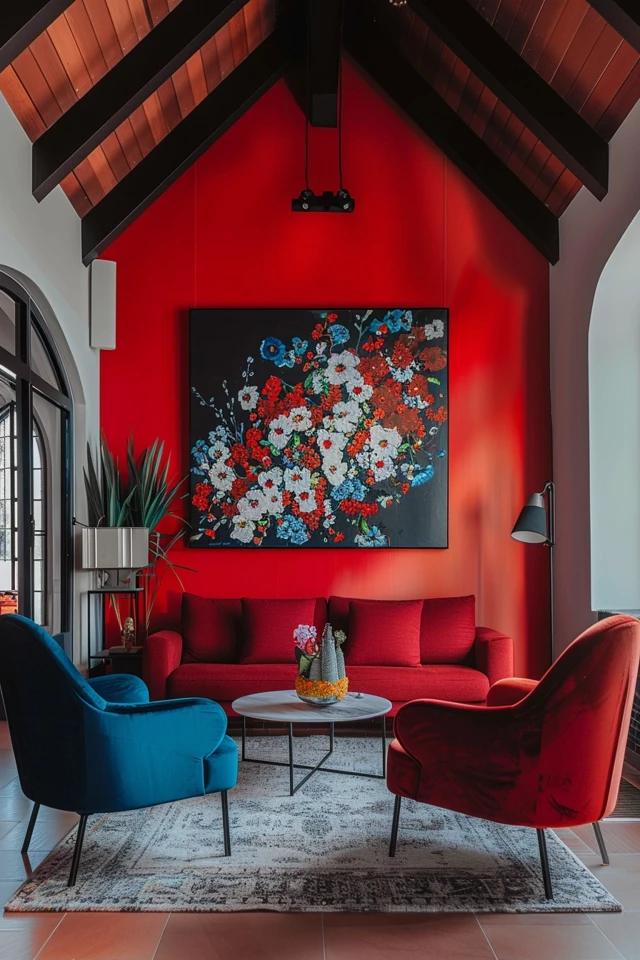
How To Decorate A Wall With A Vaulted Ceiling: Ideas
Walking into a room with a vaulted ceiling often creates a moment of awe. The architectural height adds grandeur, airiness, and a sense of luxury that standard eight-foot ceilings simply cannot match. However, once the furniture is moved in, clients often call me with a specific panic: “What do I do with all this empty vertical space?”
That vast expanse of drywall can quickly turn from an architectural asset into a cold, cavernous void. The challenge lies in bridging the gap between human-scale furniture and the soaring roofline without creating visual clutter. You want to celebrate the height, not feel dwarfed by it.
In this guide, I will walk you through the design principles I use to dress these tall walls effectively. For a visual summary of the concepts discussed here, feel free to skip ahead to the Picture Gallery at the end of this blog post.
1. Mastering Scale and The “Vertical Rule of Thirds”
The most common error I see in DIY designs for vaulted rooms is the use of “standard” decor. A standard 24×36 inch framed print looks perfectly fine in a normal bedroom, but on a 15-foot vaulted wall, it looks like a postage stamp.
To conquer a tall wall, you must adjust your perception of scale. I often use a variation of the “Rule of Thirds” applied vertically. Visually divide your wall into three horizontal sections: the bottom (furniture level), the middle (eye level to door-frame height), and the top (the vault).
Your goal is to guide the eye smoothly from the bottom third to the top third. You do not always need to fill the top third, but you must bridge the gap so the bottom and top feel connected.
Actionable tips for scaling art:
- Go Big or Go Home: If you are hanging a single piece of art, aim for oversized canvases. I rarely use anything smaller than 40×60 inches on a main vaulted wall.
- The Gallery Grid: If you prefer smaller photos, group them. A grid of nine or twelve matching frames (e.g., 16×20 inches each) reads as one massive, cohesive art piece.
- Spacing: Keep the spacing between frames tight—usually 2 to 3 inches. If the gap is too wide, the installation loses its collective impact and looks cluttered.
Designer’s Note: The “Floating” Mistake
In my first year of design, I tried to fill a high gap by hanging a piece of art 10 feet up the wall, completely disconnected from the furniture below. It looked like the artwork was floating away.
The Fix: Art should almost always relate to what is below it. Even on a tall wall, keep the bottom of the artwork within 8 to 10 inches of the sofa or console table. If you need to go higher, use a taller piece of art rather than lifting a small piece higher.
2. Using Architectural Millwork to Manage Height
Paint is great, but texture and shadow are better. When dealing with extensive drywall, adding architectural millwork is the most effective way to break up the monotony. It brings the ceiling height down to a human scale or draws the eye up intentionally.
For traditional or transitional homes, I love using board and batten. You can run the paneling up to a standard height, such as 5 or 6 feet, and cap it with a substantial picture rail. This creates a clear visual line that wraps the room.
If you want to emphasize the height rather than ground it, run vertical shiplap or tongue-and-groove boards all the way to the ceiling peak. This draws the eye upward and emphasizes the pitch of the roof.
Common Mistakes + Fixes:
- Mistake: Using wimpy trim. Standard 3-inch baseboards disappear in a vaulted room.
- Fix: Upgrade your baseboards to at least 6 or 8 inches. Beef up window casings to 4 inches. The scale of the trim must match the scale of the room.
- Mistake: Stopping a feature wall halfway.
- Fix: If you apply stone, wood, or wallpaper to the gable end (the triangle wall), you generally commit to the whole wall. Stopping a stone fireplace surround at 8 feet on a 16-foot wall can make the room look unfinished.
3. Lighting the Vertical Volume
Lighting a vaulted room is complex because you are dealing with two zones: the task zone (where you sit) and the ambient zone (the volume of air above you). Recessed cans usually end up being too high to provide effective task lighting.
You need to layer lighting to fill the void. A large chandelier is non-negotiable in most vaulted spaces. It acts as a piece of jewelry that occupies the “middle third” of the room’s airspace.
Placement Rules of Thumb:
- Clearance: If the fixture hangs in a walkway, leave at least 7 feet of clearance from the floor to the bottom of the fixture.
- Above Tables: If hanging above a dining table or coffee table, the bottom of the fixture should be 30 to 36 inches above the surface.
- Diameter: Add the length and width of the room in feet. The sum in inches is a good starting diameter for a chandelier. For example, a 15×20 room needs a fixture roughly 35 inches in diameter. In vaulted rooms, you can go even larger.
What I’d do in a real project:
1. Install beam-mounted lighting: If the ceiling has beams, I hide LED strips on top of them to cast a soft glow upward. This highlights the architecture at night without glare.
2. Use oversized sconces: I place large sconces (18+ inches tall) flanking artwork or windows. I mount these slightly higher than standard—around 66 to 70 inches from the floor—to account for the wall height.
3. Manage the cords: For pendants hanging from a very high vault, the chain or cord becomes a major visual element. I ensure the chain finish matches the fixture perfectly, or I use a fabric cord cover if appropriate for the style.
4. Statement Shelving and Built-Ins
Nothing conquers a tall wall better than built-in cabinetry. However, budget constraints often make custom joinery difficult. The alternative is careful styling of modular shelving to mimic the built-in look.
If you have a fireplace on the vaulted wall, flanking it with tall bookcases is a classic move. The key is height. Standard 7-foot bookcases look like miniatures in these rooms. You need to go taller, or you need to stack units.
Styling high shelves:
The upper shelves of a tall unit are purely decorative; no one is going to grab a paperback from 10 feet up without a ladder.
- Use large objects: Style the top shelves with large baskets, oversized pottery, or vintage trunks. Small trinkets become invisible dust collectors up there.
- Library Ladders: If you have built-ins that go above 9 feet, installing a rolling library ladder is both functional and incredibly stylish. It adds a vertical line that breaks up the cabinetry.
- Negative Space: Don’t pack every inch. In a tall unit, negative space (empty areas) is vital to prevent the room from feeling top-heavy.
Rental Friendly Tip:
If you are renting and cannot build in, buy three tall matching bookcases (like the IKEA Billy with height extenders). Bolt them together and paint them the same color as the wall. This monochromatic look mimics custom millwork for a fraction of the price.
5. Window Treatments and Soft Goods
Windows in vaulted rooms often come in two configurations: standard windows with a lot of wall above them, or tall windows that follow the roofline.
For standard windows on a tall wall, curtain placement is critical. A standard rule is to hang the rod 4-6 inches above the window frame. In a vaulted room, throw that rule out.
The High-Hang Technique:
I often hang drapery rods halfway between the top of the window frame and the ceiling line (or crown molding equivalent). This cheats the eye into thinking the window is much taller than it is.
Custom Drapery Lengths:
You will likely need custom lengths (96 inches, 108 inches, or more).
- Puddling: In formal spaces, let the drapes puddle 1-2 inches on the floor. This anchors the long fabric.
- Kissing: In high-traffic or modern spaces, have the hem just “kiss” the floor. Never let them hover 2 inches above the ground; “high-water” curtains ruin the elegance of a tall room.
Acoustics Note:
Vaulted ceilings are echo chambers. Sound bounces off the parallel walls and the angled ceiling.
The Fix: You need more soft goods than in a standard room. Use a high-pile area rug (sized appropriately—all furniture legs on the rug!). The drapes should be lined and heavy to absorb sound. I also recommend tapestry or canvas art (no glass) on the walls to reduce reflectivity.
6. Materials and Finishes: Warmer is Better
Because vaulted rooms have a higher volume of air, they can feel physically and visually colder. Your choice of materials on the wall needs to counteract this.
If you have a large chimney breast that extends to the vault, consider cladding it in stone or brick rather than drywall. The texture adds “visual weight,” which grounds the room.
Color Theory for Vaults:
- Dark Colors: Painting a tall wall a dark, moody color (charcoal, navy, forest green) visually advances the wall, making the room feel cozier and more intimate.
- Light Colors: Whites and creams maximize the feeling of airiness but require more texture (wood, wainscoting) to prevent feeling sterile.
- Ceiling Contrast: If you have a beautiful wood ceiling, keep the walls simple and light. If the ceiling is white drywall, consider painting the walls a contrasting color to highlight the roofline architecture.
Final Checklist: Designing Your Vaulted Wall
Before you buy a single nail or gallon of paint, run through this checklist to ensure your plan is solid.
- Measure the Peak: Know exactly how high your ceiling is at the highest point. You need this for ordering scaffolding or high ladders.
- Define the Focal Point: Is it the fireplace? The view? A piece of art? Don’t let the ceiling itself distract from the main focal point.
- Check the Acoustics: Clap your hands in the room. If it rings sharply, plan for more rugs, drapes, and fabric wall hangings.
- Scale Your Furniture: Ensure your sofa and chairs have high backs. Low-profile modern furniture can look lost in a vaulted room.
- Plan for Maintenance: How will you change that lightbulb? How will you dust that high shelf? If you can’t reach it easily, don’t put high-maintenance items (like clear glass fixtures) up there.
- Review Lighting Layers: Do you have floor-level light, eye-level light, and overhead light?
FAQs
Q: Should I paint the vaulted ceiling the same color as the walls?
A: This depends on the desired effect. Painting the walls and ceiling the same color (color-drenching) blurs the lines and makes the room feel infinite and modern. Painting the ceiling white and the walls a color emphasizes the architectural lines and the “lid” of the room.
Q: How do I clean high beams or fans?
A: You will need an extendable dusting pole (some reach up to 20 feet). For ceiling fans, there are specific brush attachments that slide over the blades to trap dust. I recommend cleaning these once a month to prevent dust bunnies from raining down.
Q: Can I use wallpaper on a vaulted wall?
A: Absolutely. A large-scale mural or a textured grasscloth looks stunning. However, installation is difficult on angled walls. I highly recommend hiring a professional installer who has scaffolding, as lining up patterns on a ladder is dangerous and difficult.
Q: My rental has a vaulted ceiling. What can I do without painting?
A: Focus on “grounding” the space. Use a very large area rug and tall floor lamps. Use removable command strips to hang a lightweight tapestry high up. Avoid small gallery walls that require many nail holes; stick to one or two large, lightweight statement pieces.
Conclusion
Decorating a wall with a vaulted ceiling is about confidence. It requires bold choices in scale and a willingness to embrace the volume of the room. By layering lighting, using substantial millwork, and ensuring your art and furniture are sized correctly, you can turn that intimidating void into the most impressive feature of your home.
Remember, the goal isn’t to fill every square inch of drywall. It is to create a balanced composition that draws the eye upward while keeping the space warm and livable.
Picture Gallery


