
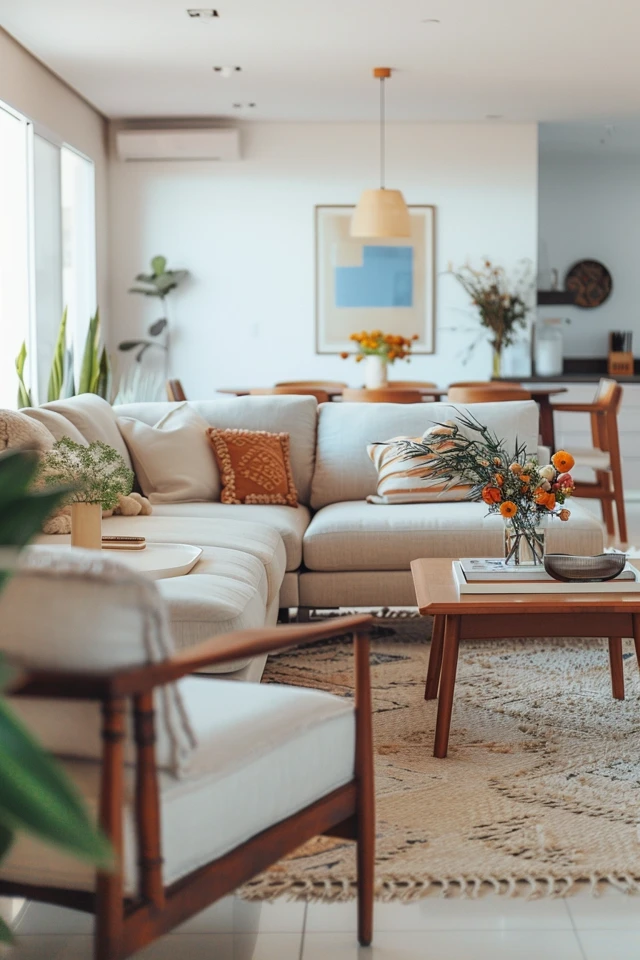
How To Decorate An L-Shaped Living Room: Layout Strategies
Introduction
L-shaped living rooms are one of the most common architectural features I encounter in residential projects, yet they remain one of the most confusing for homeowners to tackle. The duality of the space often leads to paralysis; you have two distinct areas that need to function independently, yet they share the same sightlines and often the same flooring. If you treat them as two completely separate rooms, the house feels disjointed, but if you treat them as one giant hall, you lose intimacy and function.
In my years of designing, I have found that the secret lies in treating the “L” not as an obstacle, but as an opportunity to create natural zones without the need for construction or drywall. The shape actually does the hard work of zoning for you, provided you know where to place the anchor pieces. Whether you are dealing with a rental apartment or a sprawling open-plan house, the principles of scale, flow, and cohesion remain constant.
In this guide, I will walk you through the exact strategies I use to map out these spaces, from the initial floor plan to the final textile choices. If you are looking for visual inspiration to accompany these technical tips, please scroll down to the Picture Gallery at the end of the blog post. Let’s dive into the mechanics of making an L-shaped room feel like home.
1. Defining The Zones: The 70/30 Rule
The biggest mistake people make in an L-shaped room is trying to give equal weight to both sections of the “L.” In reality, successful layouts usually follow a hierarchy. I call this the 70/30 rule.
The larger section of the L (the 70%) should almost always be your primary living space. This is where the main sofa, the television, and the primary gathering spots belong. It needs to feel grounded and substantial.
The shorter, narrower leg of the L (the 30%) requires a specific, dedicated function. If you try to just extend the living room into this space with extra chairs, it ends up looking like a waiting room.
Common uses for the 30% zone include:
- Dining Area: The most natural use, especially near a kitchen pass-through.
- Home Office: Perfect for tucking a desk away from the main lounge area.
- Reading Nook/Library: A quieter zone with a bookshelf and a statement armchair.
- Play Area: If you have children, this keeps toys contained but visible.
Designer’s Note: Watch the Hinge
The “hinge” is the corner where the two distinct rectangles of the room meet. This is the most volatile area of the layout. If you place a large piece of furniture here that protrudes into the walkway, you will choke the flow of the entire house. Keep the inner corner of the L clear of obstruction.
2. Furniture Layouts and Traffic Flow Strategies
Once you have determined your zones, you need to place the furniture. The instinct for many is to push all furniture against the walls to maximize floor space. In an L-shaped room, this is fatal to the design. It creates a “bowling alley” effect and makes conversation difficult.
Strategy A: The Floating Sofa
In the main living zone, pull the sofa off the wall. Ideally, you want the back of the sofa to act as a divider that visually separates the living zone from the secondary zone.
If space allows, leave a walkway behind the sofa. I recommend a minimum of 30 to 36 inches for a comfortable walkway. This allows traffic to move around the conversation area rather than through it.
Strategy B: The Sectional Solution
A sectional is often the best friend of an L-shaped room because it mimics the architecture. However, orientation matters.
- Facing the focal point: Orient the main seat toward the TV or fireplace.
- The Chaise: Ensure the chaise portion of the sectional does not block the entry to the room.
- Scale: Avoid overstuffed, marshmallow-style sectionals in narrow L-shapes. Look for “apartment scale” furniture with deeper seats but slimmer arms.
Common Mistakes + Fixes:
- Mistake: Placing the TV in the corner of the L.
- Fix: This creates an awkward viewing angle and dead space behind the screen. Place the TV flat against the longest wall in the 70% zone.
- Mistake: Blocking the window.
- Fix: If you must place a sofa in front of a window, choose a low-profile back that sits 3–5 inches below the window sill.
3. Managing the “Dead” Corner and Vertical Space
Every L-shaped room has that deep corner where the two walls meet. This space often becomes a dark void if not addressed intentionally. You cannot ignore it, but you also shouldn’t clutter it.
Lighting the Corner
Dark corners shrink a room. I always recommend placing a floor lamp or installing a sconce in this transition area. A tall arc lamp is particularly effective here; it reaches out from the corner to hover over the seating area, bridging the gap between the wall and the furniture.
Softening the Angles
An L-shaped room is full of right angles and hard lines. To prevent the space from feeling boxy or sterile, you need to introduce curves.
How to introduce organic shapes:
- Round Coffee Tables: A circular or oval coffee table breaks up the grid of the room. It is also safer for shins in tight spaces.
- Round Dining Table: If your 30% zone is a dining area, a round table improves flow significantly compared to a rectangular one. It creates a wider arc for walking around the perimeter.
- Plants: Place a large, leafy plant (like a Ficus or Monstera) in the corner. The organic shape softens the architectural harshness.
Designer’s Note: The Rule of Verticals
In rectangular spaces, eyes tend to stay at eye level. Force the eye upward to make the room feel larger. I achieve this by hanging artwork in a vertical stack or installing curtain rods high—ideally 2 to 4 inches below the ceiling molding, regardless of where the window frame actually is.
4. Visual Cohesion: Connecting the Two Zones
Even though we are zoning the room for different functions, it is crucial that the L-shape feels like one cohesive environment. If the living area is Boho Chic and the dining area is Industrial, the house will feel chaotic.
The “Red Thread” Theory
You need a design element that threads through both distinct zones. This doesn’t mean everything has to match perfectly, but there should be a recurring motif.
Examples of a Red Thread:
- Color: If you have navy blue throw pillows in the living room, use navy blue placemats or artwork in the dining area.
- Wood Tone: Try to keep the wood finishes (coffee table, dining table, media console) within the same tonal family. They don’t need to be identical, but they should share the same undertone (warm walnut vs. cool ash).
- Metal Finishes: If your curtain rods are matte black in one zone, they should be matte black in the other.
Paint and Wall Treatments
I strongly advise against painting the two sections of the L different colors. It chops up the room and highlights the strange geometry.
Keep the wall color consistent throughout the entire L-shape. If you want to create drama or separate a zone, use an accent wall or wallpaper on the far end of the shorter leg (the 30% zone). This draws the eye through the room and creates depth.
5. Rugs, Measurements, and Finishing Touches
Rugs are the most effective tool a designer has for zoning an open space without walls. In an L-shaped room, you will likely need two rugs: one for the living zone and one for the dining/office zone.
Rug Sizing Rules
- Living Zone: The front legs of all major furniture pieces (sofa and chairs) must sit on the rug. Ideally, the rug should extend 6–10 inches past the sides of the sofa.
- Dining Zone: The rug must be large enough that when a guest pulls their chair out to sit, the back legs stay on the rug. This usually requires a rug that is 24 inches wider than the table on all sides.
The “Sister” Rug Concept
Do the two rugs need to match? No. In fact, I prefer when they don’t match perfectly. However, they must be “sisters, not twins.”
If one rug is a bold, patterned vintage Persian, the other should be a solid color or a very subtle textural weave (like jute or wool sisal) in a coordinating hue. If you use two loud patterns, they will fight for attention and make the room feel cluttered.
Window Treatments
Uniformity is key here. Even if the windows are different sizes, use the same fabric and mounting style for curtains in both legs of the L.
Measurement specifics for curtains:
- Rod Width: Extend the rod 6–12 inches past the window frame on each side. This allows the curtain stack to sit against the wall, not blocking the glass.
- Length: Panels should “kiss” the floor or hover 1/4 inch above it. Never let them dangle 2 inches above the floor; it looks like high-water pants.
Final Checklist: What I’d Do In A Real Project
If I were walking into your home today to fix your L-shaped layout, this is the order of operations I would follow.
Step 1: Clear the Hinge
I would immediately remove any furniture blocking the path where the two rooms meet. This is non-negotiable for flow.
Step 2: Establish the Focal Point
I would identify the main wall in the larger zone for the TV or fireplace and orient the largest seating piece toward it.
Step 3: Measure the Walkways
I would take out my tape measure and ensure there is a minimum of 30 inches of walking path behind the sofa or around the dining table.
Step 4: Anchor with Rugs
I would place a large rug in the living area first to define the “conversation square.”
Step 5: Address the Lighting
I would ensure there are at least three light sources in each zone (overhead, table level, and floor level) to avoid shadows.
Step 6: Soften the Edges
I would add a round element (mirror, table, or ottoman) to counteract the room’s hard angles.
FAQs
Q: Can I put a sectional in a small L-shaped room?
A: Yes, but keep it against the walls if the room is very narrow (under 12 feet wide). If you push a sectional against the wall, make sure the color is light so it doesn’t visually weigh down the room. Ensure the “L” of the sofa fits snugly into the corner of the room to maximize floor space in the center.
Q: How do I handle lighting if there is only one ceiling fixture?
A: This is common in older homes. Do not rely on that single fixture. Use plug-in sconces behind the sofa or large arc floor lamps to bring light to the center of the zones. If you are renting, battery-operated “puck lights” inside sconces are a great hack to add wall lighting without wiring.
Q: Should I float the furniture or push it against the wall?
A: Floating is always preferred for a high-end look and better conversation circles. However, if your room is less than 12 feet wide, you may be forced to place the sofa against the wall. If you do this, pull the armchair in closer to the coffee table to create intimacy.
Q: How do I make the room kid-friendly?
A: Use an ottoman with storage instead of a hard coffee table—fewer sharp corners for heads to bump. Choose performance fabrics (like Crypton or velvet) that wipe clean. In the 30% zone, use closed storage (credenzas with doors) so toys can be hidden away at night, instantly returning the room to an adult space.
Conclusion
Decorating an L-shaped living room is ultimately about embracing the geometry rather than fighting it. By respecting the natural zones the architecture provides, you can create a home that feels organized and multi-functional.
Remember to prioritize the flow of traffic—no piece of furniture is beautiful enough to justify bruising your shin every time you walk past it. Use rugs to define boundaries, lighting to eliminate shadows, and a consistent color palette to tie the two legs of the “L” together.
Start with the big pieces, verify your measurements, and then layer in the textiles and personality. With a little planning, that awkward corner will become your favorite spot in the house.
Picture Gallery


