
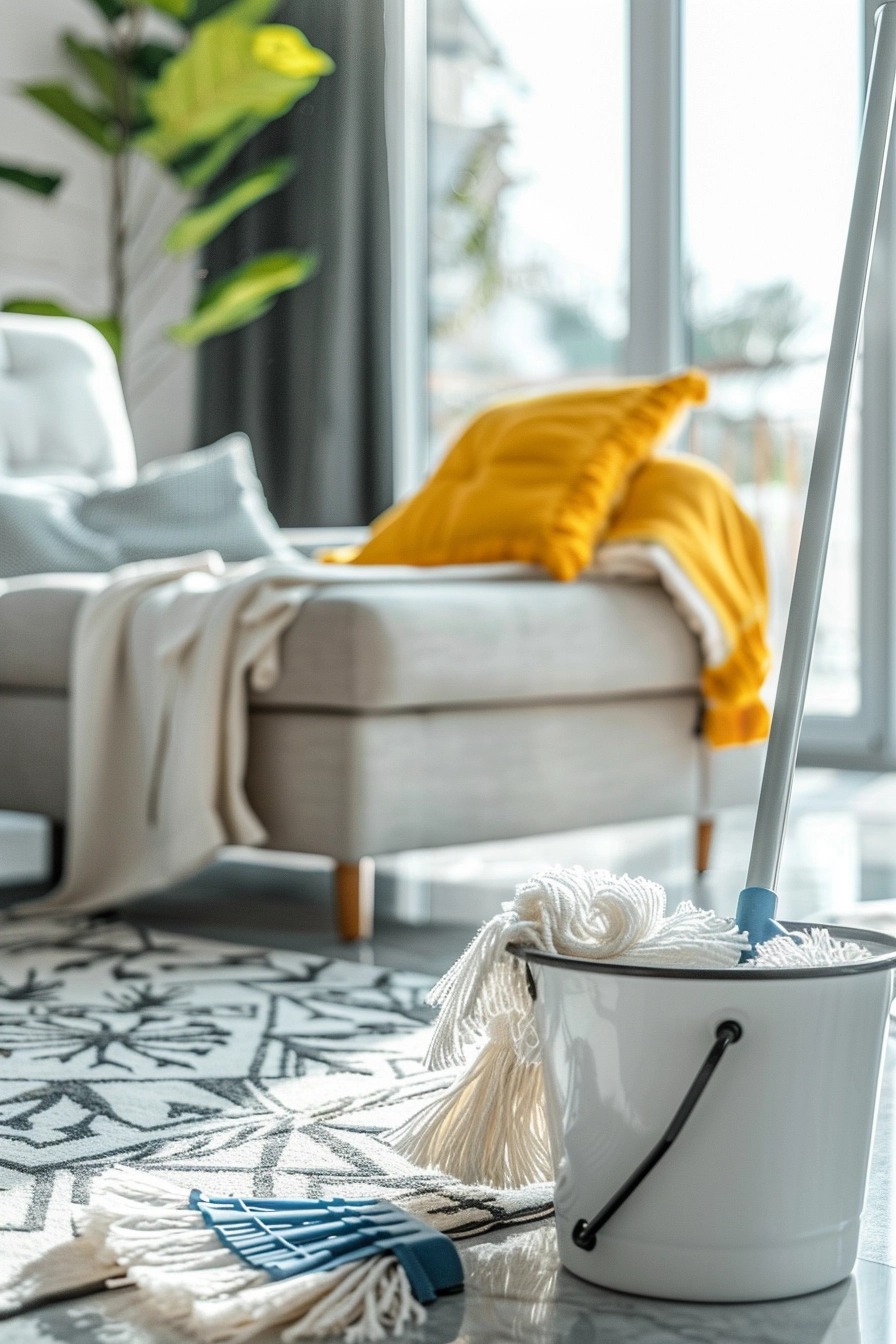
How To Deep Clean Your House In 2 Hours: Speed Cleaning Guide
There is a distinct difference between a home that is technically sanitary and a home that feels professionally styled and pristine. As an interior designer, I often have to perform a “reset” on a property just hours before a client walkthrough or a photoshoot. We do not have days to scrub grout lines with a toothbrush, but we need the space to feel expansive, fresh, and immaculate.
The secret isn’t working harder; it is about following a strict workflow that prioritizes visual impact and surface preservation. This guide focuses on the high-traffic zones and visual anchors that dictate how a room feels when you walk in. If you are looking for visual inspiration on how a perfectly staged and cleaned room should look, check out the Picture Gallery at the end of this blog post.
We are going to bypass deep organizational projects like sorting the junk drawer or color-coding the closet. Instead, we will focus on the architectural finishes, the lighting, and the flow of the room. This is the exact protocol I use to transform a “lived-in” chaotic space into a design-magazine-ready home in exactly 120 minutes.
Phase 1: The Setup and The Edit (Minutes 0–20)
The biggest mistake homeowners make is trying to clean and declutter simultaneously. This eats up valuable time and breaks your momentum. To speed clean effectively, you must first clear the “visual noise” that makes a room feel smaller than it actually is.
The Designer’s Kit
Stop running back and forth to the utility closet. In professional projects, we wear aprons or carry a caddy. You need the following:
- Microfiber cloths (at least 10, color-coded for glass vs. surfaces).
- A glass cleaner (ammonia-free if you have tinted windows or special finishes).
- A multi-surface spray (pH neutral for natural stone).
- A feather duster with an extendable handle.
- A vacuum with a horsehair floor attachment (to prevent scratching hardwoods).
- A laundry basket for “relocation items.”
The Relocation Sweep
Grab your laundry basket and do a fast loop of the entire house. Anything that does not belong in the room goes into the basket. Do not put it away yet.
We are looking for items that disrupt the “negative space” of your design. Allow your coffee tables and countertops to breathe. If a surface is more than 30% covered in miscellaneous items, the room will feel cluttered regardless of how clean it is.
Designer’s Note: The “Rule of Three” Check
During this sweep, I quickly re-style surfaces using the rule of three. If you have accessories on a console table, group them in odd numbers. This creates a visual triangle that is pleasing to the eye. If you have too many small items, the dusting process becomes a nightmare. Edit them down now so you can wipe surfaces in long, clean sweeps later.
Phase 2: The Top-Down Dusting Protocol (Minutes 20–50)
Gravity is your best friend and your worst enemy. You must clean from the highest point in the room to the lowest point. If you wipe the coffee table before cleaning the chandelier, you will just have to wipe the table again.
Ceiling Corners and Crown Molding
Start with your extendable duster. Walk the perimeter of every room. Dust the crown molding and the upper corners where cobwebs gather. These shadows in the corners shorten the visual height of the room.
Lighting Fixtures
Dust on light bulbs creates a yellow, dim cast that ruins your carefully selected paint colors.
- Pendants and Chandeliers: If you can reach them safely, wipe the bulbs with a dry microfiber cloth.
- Recessed Cans: Use the duster to sweep out the interior of the can.
- Shades: Use a lint roller on fabric drum shades. Dust settles into the weave and dulls the light output.
Window Treatments
Curtains act like massive air filters, trapping dust. Take your vacuum with the upholstery attachment. Run it lightly down the leading edge of the drapery (the side you pull).
You do not need to do the entire width of the fabric for a speed clean. Focus on the bottom 12 inches where dust settles from the floor, and the top pleats where dust settles from the air.
Common Mistakes + Fixes
Mistake: Ignoring the baseboards until the end.
Fix: Dust baseboards now, before you vacuum the floors. Use the brush attachment on your vacuum. Standard baseboards are usually 3 to 5 inches high; if they are covered in a layer of gray dust, they visually disconnect the wall from the floor, making the room look old.
Phase 3: The High-Gloss Zones (Minutes 50–80)
Kitchens and bathrooms sell houses, and they also take the most abuse. For a two-hour clean, we focus on “shine.” Matte finishes hide dust, but polished finishes magnify it.
The Kitchen Triangle
Focus on the sink, the cooktop, and the refrigerator. These are the anchors.
- Stainless Steel: Wipe with the grain, never against it. If you wipe in circles, you will see streaks. Use a dedicated stainless steel cleaner or a tiny drop of baby oil on a dry cloth for a show-house shine.
- Countertops: If you have quartz or granite, use a stone-safe cleaner. Clear everything off. Wipe the backsplash first, pulling crumbs down to the counter, then wipe the counter, pulling debris into your hand or onto the floor (which we will vacuum later).
- Cabinet Fronts: You don’t have time to scrub inside. Spot clean the cabinet fronts, specifically around the hardware. The oils from our hands build up here and catch the light, making the whole kitchen look greasy.
The Bathroom “Hotel Clean”
In the bathroom, moisture is the enemy.
- Mirrors: This is the most important surface. A spotted mirror ruins the luxury feel. Spray the cloth, not the mirror, to prevent black creep (damage to the silver backing) at the edges.
- Faucets: Polish the chrome or brass until it gleams. Use a dry cloth to buff out water spots. Shiny hardware tricks the eye into thinking the whole room is cleaner than it is.
- The Toilet: Quick scrub of the bowl, wipe down the seat and tank. Lower the lid. As a designer, I insist the toilet lid always be down. It looks finished and intentional.
What I’d Do in a Real Project
If I am prepping a house for a shoot, I always check the grout lines. If they look dingy, I don’t scrub the whole floor. I simply use a grout pen to touch up the high-traffic areas. For a speed clean, just ensure the corners of the room are free of hair and dust bunnies.
Phase 4: Textiles and Layout Reset (Minutes 80–100)
This is where the cleaning turns into styling. We are dealing with the soft goods: rugs, sofas, and pillows.
The Sofa Reset
Remove all throw pillows. Vacuum the seat deck (under the cushions if they are removable, or the crevices if they are not). Crumb accumulation here destroys fabric fibers over time due to friction.
Pillow Fluffing Protocol
Do not just throw the pillows back on the couch.
- Feather inserts: Give them a “karate chop” in the center to create a V-shape. This signals luxury and maintainability.
- Poly-fill inserts: Squeeze them from the sides to plump them up.
- Arrangement: Place larger pillows (22-24 inches) in the back corners, and layer smaller ones (18-20 inches) in front. This creates depth.
The Rug Rules
Vacuum the rug with the beater bar setting turned on for wool or synthetic rugs to agitate the pile.
- Fringe: Never vacuum the fringe with the beater bar. It will unravel. Use the suction-only setting or tuck the fringe under for a clean, modern look.
- Alignment: Check that your rug is straight. A rug that is skewed even one inch off-parallel from the wall creates a subconscious feeling of disorder. Use a tape measure if you have to, or eyeball it against the floorboards.
Designer’s Note: Pet Hair
If you have pets, a vacuum might not get hair off velvet or linen furniture. Put on a rubber dishwashing glove (dry) and rub it firmly over the upholstery. The friction balls up the hair instantly. This is faster and more effective than lint rollers for large surface areas like a sectional.
Phase 5: The Floors and Final Atmosphere (Minutes 100–120)
We end with the floors because all the dust from the previous steps has settled there.
The Exit Vacuum
Start at the farthest corner of the room and vacuum your way out the door. Imagine you are painting the floor; use long, overlapping strokes.
For hardwood floors, turn the beater bar off. The high-speed bristles can create micro-scratches on polyurethane finishes, which eventually leads to a cloudy floor that never looks clean.
Mopping Strategy
You do not need to slop a wet mop across every inch of hardwood.
- Spot Mop: Focus on the kitchen and entryways.
- Damp, Not Wet: A soaking wet mop can warp engineered hardwood and laminate. The mop should be barely damp.
- Wood Grain: Always mop in the direction of the wood planks to minimize streaking.
Scent Scaping
The final layer of design is invisible: smell.
Do not use cheap, sugary air fresheners. They smell artificial and “cover-up.”
- Natural Options: Open a window for 5 minutes to cross-ventilate.
- Essential Oils: Put a few drops of eucalyptus or lemon oil in your sink drain or inside the toilet paper roll cardboard.
- Candles: Light a high-quality soy candle in the entryway. Choose notes like sandalwood, fig, or amber for a sophisticated profile.
Final Checklist: The “Walk-Through”
Before you call it done, walk out your front door and walk back in. This resets your eyes. Look for these specific things:
- Entryway: Are shoes lined up or put away? The entry sets the tone.
- Sightlines: Look straight ahead. Is the focal point (fireplace, view, art) clear, or is a chair blocked by a wayward toy?
- Lamps: Turn on all accent lighting. Ambient light makes a clean house look warm and inviting.
- Toilet Lids: Are they all down?
- Faucets: Are they shining?
- Pillows: Are they chopped and upright?
- Magazines/Books: Are stacks straightened?
Frequently Asked Questions
How often should I do this 2-hour clean?
I recommend this process once a week, preferably on a Friday so you can enjoy your home over the weekend. If you maintain this rhythm, the “deep clean” aspect becomes easier because dirt doesn’t have time to bond to surfaces.
What if I have high ceilings I can’t reach?
For ceilings over 10 feet, you need a telescoping pole. However, regarding design scale, if you have a two-story great room, you only need to deep clean the upper reaches (beams, high windows) quarterly. For a weekly speed clean, focus on the “human level” (everything below 8 feet) where the eye naturally rests.
Can I use vinegar on everything?
No. As a designer who specifies expensive finishes, I beg you not to use vinegar on natural stone (marble, travertine, limestone). The acid etches the surface, leaving dull white spots that require professional repolishing. Stick to pH-neutral cleaners for stone. Vinegar is fine for glass and ceramic tile.
How do I hide clutter if I don’t have time to organize?
Use the “container concept.” If you have paperwork, toys, or cords that you can’t sort right now, put them into opaque, lidded baskets. Woven baskets add texture and warmth to a room while hiding the mess. It is a functional decor hack that buys you time.
What is the best way to clean velvet furniture?
Velvet is durable but tricky. Vacuum it weekly with a soft brush attachment. If you spill something, blot—never rub. Rubbing velvet when wet damages the pile and leaves a permanent “bald spot” look. Steam is often better than liquid cleaners for reviving crushed velvet pile.
Conclusion
Deep cleaning your home in two hours is not about perfection; it is about prioritization. By viewing your home through the lens of a designer, you learn to focus on the elements that carry the most visual weight: the lighting, the reflective surfaces, and the floor space.
When you clear the clutter and polish the anchors of the room, you allow the architecture and the furnishings to shine. This method protects your investment in your home’s finishes and creates a sanctuary that feels managed, calm, and beautiful.
Picture Gallery


