
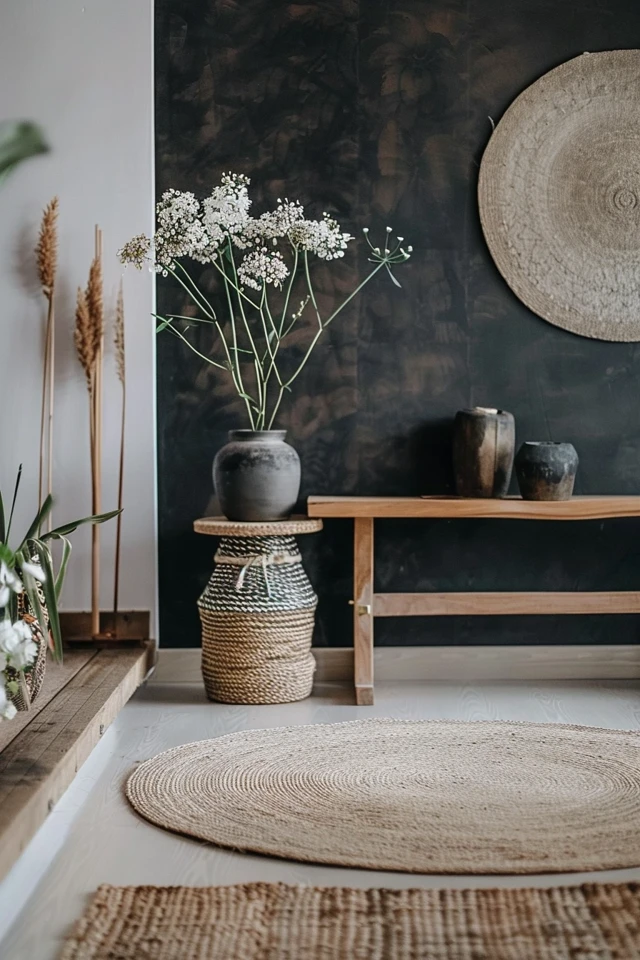
How To Hang A Round Rug On The Wall: Creative Display Ideas
Hanging a rug on the wall is one of my favorite ways to add instant warmth, texture, and acoustic dampening to a space without undergoing a major renovation. While rectangular rugs are straightforward to mount, round rugs present a unique set of challenges and opportunities. Their organic shape breaks up the rigid, boxy lines of standard rooms, acting as a soft visual punctuation mark.
However, gravity is not your friend when it comes to circular textiles. Without the proper support structure, a round rug will sag, warp, or pull away from the wall, turning a beautiful design element into a sloppy distraction. You need to account for weight distribution across a curve, which is much harder than pinning up a straight edge.
If you are looking for visual inspiration, check out the curated Picture Gallery at the end of this blog post.
Understanding Scale and Placement
Before you even pick up a hammer or a needle, you must determine where the rug sits in relation to the rest of the room. In my design practice, I often see clients hanging art too high. The center of the rug should be at eye level, which is generally 57 to 60 inches from the floor.
If you are hanging the rug above a piece of furniture, like a sofa or a console table, the math changes. You should aim for the bottom edge of the rug to sit 6 to 10 inches above the top of the furniture. This connects the two items visually, making them feel like a cohesive vignette rather than floating, unrelated objects.
Size matters immensely here. A small 3-foot rug on a massive two-story entry wall will look like a postage stamp. Conversely, a 6-foot round rug in a cramped hallway will feel suffocating.
Designer’s Note:
One lesson I learned the hard way involved a heavy wool rug and an entryway console. I centered the rug perfectly on the wall, but I didn’t account for the table lamp sitting on the console. Once styled, the lamp blocked half the rug. Always measure your accessories first. If you plan to have tall lamps or vases, offset the rug or hang it higher to create a layered look intentionally, rather than an accidental obstruction.
Method 1: The Velcro System (Best for Flatweaves and Renters)
For lighter rugs, such as cotton flatweaves, braided jute, or kilims, Velcro is the gold standard. It distributes the weight evenly along the entire upper curve of the rug, preventing the “scalloped” sagging look that comes from using individual clips or nails.
This method requires a bit of sewing, but it is the most professional way to mount a textile without visible hardware. It keeps the rug flush against the wall for a sleek, gallery-like appearance.
Materials Needed
- 2-inch wide industrial-strength Velcro tape (sew-on type for the rug, adhesive type for the mounting board)
- A thin strip of plywood or a flexible lattice strip
- Heavy-duty upholstery thread and a curved needle
- Wall anchors and screws
- Staple gun
Step-by-Step Instructions
- Prepare the mounting strip: Since the rug is round, a straight board won’t work perfectly unless you mount it slightly lower on the back. For a true curve, use a flexible lattice strip cut to follow the top arc of the rug.
- Attach Velcro to the strip: Staple the “hook” side (the scratchy side) of the Velcro to your wooden strip. Do not rely on the adhesive back alone; the weight of the rug will eventually peel it off.
- Sew Velcro to the rug: Hand-sew the “loop” side (the soft side) of the Velcro to the back of the rug along the top edge. Because you are sewing onto a curve, you will need to cut the Velcro strip into smaller 2-inch pieces or notch the tape so it fans out and follows the round shape.
- Mount the strip: Screw the wooden strip into the wall using drywall anchors. Ensure it is level.
- Press the rug: Simply press the rug against the strip. The Velcro will grab hold, and you can adjust it slightly to get it perfectly centered.
Common Mistake & Fix:
The most common error here is using sticky-back Velcro directly on the rug fibers. It never holds. The adhesive dries out, and the rug falls, leaving a sticky residue on your textile.
The Fix: Always sew the Velcro to a strip of cotton webbing first, then sew that webbing to the rug if the rug back is too delicate. This protects the rug’s structural integrity.
Method 2: The Sleeve and Rod Method (Best for Heavy Rugs)
If you are dealing with a heavy, hand-tufted wool rug or a dense Persian carpet, Velcro might not be enough. In this case, a rod sleeve is the safest bet. This mimics how museums display heavy tapestries.
The challenge with a round rug is that a straight rod will distort the shape if placed at the very top. You have to place the rod lower down on the back of the rug so the top edge “flops” over slightly, maintaining the circular illusion.
Designing the Sleeve
You cannot buy a pre-made sleeve for a round rug; you must make one. Cut a strip of heavy cotton canvas that is roughly 4 inches wide. The length should be about two-thirds of the rug’s diameter.
Pin this canvas strip to the back of the rug, positioning it about 2 to 3 inches down from the top edge. You want the rod to be hidden by the rug itself. Hand-sew the top and bottom edges of the canvas to the rug back, leaving the sides open to slide the rod through.
Hardware Selection
- The Rod: Use a sturdy metal curtain rod or a wooden dowel cut to size. It should be slightly shorter than the width of the rug at the mounting point so it doesn’t peek out the sides.
- The Brackets: Since the rod is hidden behind the rug, standard curtain brackets will push the rug too far off the wall. Instead, use flush-mount brackets or simple long screws with large heads that catch the rod.
Real Project Tip:
I recently hung a 50-pound circular rug in a client’s master bedroom. We used a piece of electrical conduit pipe as the rod because it is rigid but lightweight. We bent the conduit slightly to follow the curve of the rug, which prevented the top edge from flattening out. If you are handy, bending a metal pipe to match the rug’s arc is the ultimate pro move.
Method 3: Upholstery Tacks (The Rustic Approach)
For a more casual or rustic aesthetic, visible upholstery tacks can add character. This works particularly well for braided rugs or bohemian styles where the hardware contributes to the look.
This method is less about hiding the mechanics and more about celebrating them. However, you must be careful not to damage the wall or the rug with too much tension at a single point.
Execution Strategy
Do not just hammer nails through the rug. This breaks the fibers and causes the rug to sag between the nails. Instead, use decorative upholstery nails with large heads.
Place the nails close together—about every 3 to 4 inches along the top arc. The closer the nails are, the more evenly the weight is distributed. If you space them too far apart, the rug will droop in scallops between the tacks.
Designer’s Note:
Use a level and mark your spots on the wall with painter’s tape before hammering. Once you start putting holes in the wall, it is hard to correct a crooked line. I usually trace the top curve of the rug onto a piece of kraft paper, tape that paper to the wall, and hammer right through it to ensure the arc is perfect.
Method 4: The Carpet Strip Technique (The Invisible Floating Look)
Carpet tack strips are thin pieces of wood with sharp tacks sticking up, usually used to secure wall-to-wall carpeting to the floor. They are incredibly strong and can be repurposed for wall hangings.
This method is aggressive. The tacks are sharp, and they will grip the backing of the rug firmly. This is strictly for sturdy rugs with a thick backing, not for delicate silks or antique weaves.
Installation
- Cut a section of tack strip to fit the width of the upper third of your round rug.
- Mount the strip to the wall using wall anchors. The sharp tacks should be facing up and slightly toward the wall.
- Lift the rug and press it firmly onto the tacks.
- Use a rubber mallet to gently tap the face of the rug (protect it with a cloth) to drive the tacks into the backing.
This creates a completely floating look with zero visible hardware. It is extremely secure and works well for homes with pets or kids where a falling rug could be a hazard.
Styling Considerations: Lighting and Layering
Once the rug is secure, you need to style it to ensure it feels like an art piece. Lighting is the most overlooked element of wall decor. A rug has texture—loops, piles, and weaves—that flat artwork lacks.
To highlight this texture, use a picture light or a directional track light. Aim the light to graze the surface of the rug from above. This creates small shadows within the weave, enhancing the depth and making the colors pop.
Layering for Depth
In larger rooms, a single round rug might feel isolated. A technique I love is layering a round rug over a larger, flat wall hanging or even painting a circular color block on the wall behind it.
For example, paint a circle on the wall that is 12 inches wider than your rug in a contrasting color. Center your rug inside that painted circle. This acts as a frame, giving the rug more presence and visual weight.
Maintenance and Care
Rugs on the wall collect dust just like rugs on the floor, but they hold it differently. Because gravity pulls dust down, the top edge of the mounting hardware often becomes a dust trap.
I recommend taking the vacuum cleaner hose with a soft brush attachment to your wall rug once a month. Do not use high suction; gentle suction is enough to remove surface dust without pulling the fibers loose.
Rotational Advice:
If your room gets strong sunlight, the rug will fade over time. Since a round rug usually has a “top” once mounting hardware is attached, you can’t easily rotate it. Check behind the rug annually for moth activity, as the dark, undisturbed space between the rug and wall is a prime breeding ground for pests.
What I’d Do: A Real Project Checklist
If I were hired to hang a round rug in your home tomorrow, this is exactly the workflow I would follow to ensure success.
- Step 1: Weigh the rug. I verify if it’s under 10 lbs (Velcro/Tacks) or over 10 lbs (Rod/Cleat).
- Step 2: Check the backing. If it is floppy, I plan to add a stiffener or liner. If it is stiff, I proceed with mounting.
- Step 3: Map the wall. I use blue painter’s tape to outline the circle on the wall. I live with this outline for 24 hours to ensure the scale feels right.
- Step 4: Prep the rug. I sew the sleeve or Velcro on the floor. I never try to attach hardware while holding the rug up.
- Step 5: Install anchors. I never trust drywall alone. Every screw goes into a stud or a heavy-duty toggle bolt.
- Step 6: Steam it. Once hung, the rug will likely have creases from shipping or handling. I use a handheld steamer to relax the fibers so it lays flat against the wall.
FAQs
Can I use adhesive strips (like Command strips) to hang a rug?
I rarely recommend this. Rug fibers are porous and repel the adhesive, and the weight of even a small rug usually exceeds the shear strength of the strips. The risk of the rug falling and knocking over expensive items below is too high.
How do I stop the bottom of the rug from curling up?
This is common with round rugs. You can sew a small pocket at the bottom of the rug backing and insert a metal washer or a drapery weight. This adds just enough gravity to pull the rug taut and keep it flat against the wall.
Is it okay to hang a rug in the bathroom?
Generally, no. The humidity in a bathroom can cause natural fibers like wool or cotton to swell, smell, or even grow mold. If you must, choose a synthetic outdoor rug made of polypropylene, which is resistant to moisture.
How high should a round rug be above a bed?
If using it as a headboard alternative, the bottom of the rug should start about 4 to 6 inches below the top of the mattress (if the bed is pushed against it) or 8 to 10 inches above the headboard if one exists.
Conclusion
Hanging a round rug is a brilliant way to introduce softness and artistry into a home. It solves the “boxy room” problem instantly and adds a layer of acoustic comfort that paintings simply cannot match. While the curved shape requires a bit more planning than a rectangular tapestry, the visual payoff is worth the effort.
By choosing the right method for your rug’s weight and your wall type, you ensure that your installation remains safe and stylish for years to come. Whether you choose the invisible float of a tack strip or the gallery feel of a rod, the key is patience and proper measurement.
Picture Gallery


