
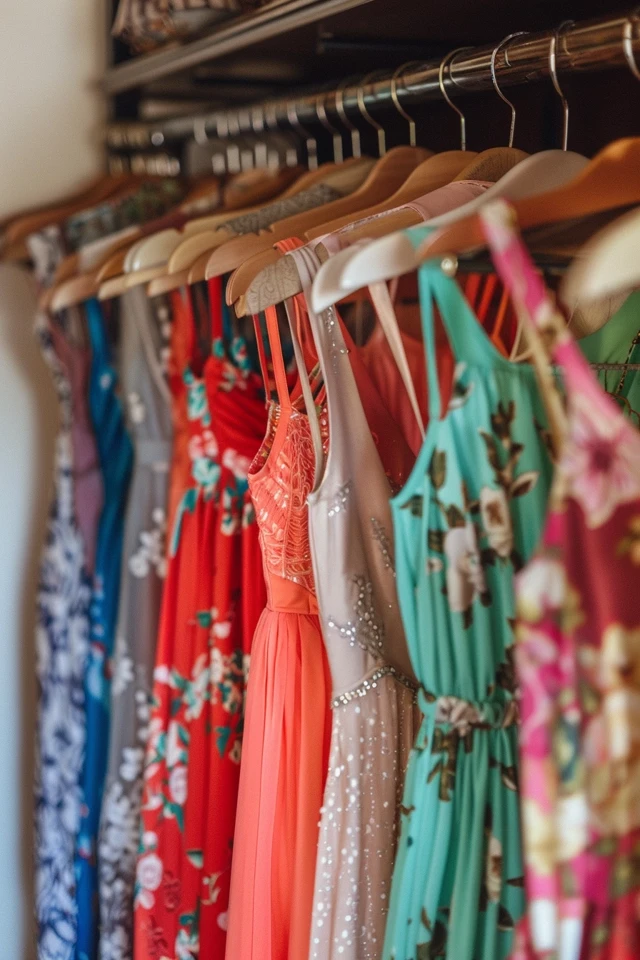
How To Hang Long Dresses In A Short Closet: Storage Solutions
There is nothing quite as disheartening as opening your closet door to find your favorite maxi dress pooled in a wrinkled mess on the floor. As an interior designer, I see this issue constantly in both rental apartments and older homes with standard builder-grade closets. You invest in beautiful garments, but your storage space simply does not account for floor-length fabric.
The good news is that you do not need a walk-in closet or a massive renovation to solve this problem. With the right spatial planning and a few industry tricks, you can keep your long garments pristine and dust-free. The goal is to manipulate the vertical space you have, rather than wishing for the space you don’t.
In this guide, I will walk you through professional methods for managing long hemlines in tight quarters. We will cover structural adjustments, folding techniques that don’t crease, and hardware hacks that create space out of thin air. For more visual inspiration on maximizing vertical space, don’t miss the Picture Gallery at the end of this blog post.
Understanding Vertical Scale and Closet Math
Before we start moving rods or buying organizers, we need to look at the numbers. In the design world, we never guess; we measure. A standard single-hang closet rod is typically placed about 66 to 70 inches from the floor. However, in a “double-hang” system (one rod over another), the spaces are usually split to give you about 40 inches of vertical space per section.
This 40-inch height is perfect for blouses, folded trousers, and blazers. It is terrible for a maxi dress, which generally measures between 54 and 60 inches from shoulder to hem. If you are taller, your dresses might even hit 65 inches. This math gap is exactly why your hems are getting crushed.
The first step in any closet project I take on is a “garment audit.” Take your longest dress and measure it from the top of the hook to the bottom hem. This is your “max vertical requirement.” If you have a closet section that is shorter than this number, we have to intervene.
You also need to account for clearance. You never want a dress to barely skim the floor or the shelf below it. In a perfect world, I aim for 3 to 5 inches of clearance below the longest garment. This promotes airflow, prevents dust accumulation, and keeps the hemline sharp.
If you are dealing with a standard reach-in closet that has a single shelf and rod, look at the floor. Is it cluttered with shoe racks or boxes? Often, the solution isn’t changing the rod, but clearing the “drop zone” beneath the clothes. By removing floor obstacles, you regain that critical bottom 12 inches where the dress needs to hang freely.
Structural Adjustments for Homeowners and Renters
If you have the ability to drill holes, moving the hardware is the cleanest solution. In many reach-in closets, the top shelf is mounted at 84 inches, but the rod is hung several inches below it. By raising the rod brackets even two inches, you can sometimes gain just enough clearance for midi-dresses or shorter jumpsuits.
For a more drastic change, consider the “L-Shape” configuration. This is a layout I frequently use in small closet remodels. You keep the double-hang system (two rods, one over the other) on one side of the closet for your shirts and pants. On the other side, you remove the bottom rod entirely to create a “long-hang” zone.
If you are renting and cannot remove a bolted-in bottom rod, look for tension rod solutions. You can install a heavy-duty tension rod as high up as possible inside the closet “returns” (the hidden side walls behind the door frame). This dead space is often overlooked. By placing a rod here, perpendicular to the main rod, you create a dedicated nook for 3 to 5 long dresses without disrupting the main storage.
Another structural option is the “waterfall” or face-out display arm. If your closet is deep enough (standard depth is 24 inches), you can mount a valet rod on the side wall or even on the back of the door frame. This allows you to hang dresses facing you. It utilizes depth rather than width, which can be a lifesaver in narrow closets.
The Double-Hanger Folding Technique
When you physically cannot create more vertical height, you must shorten the garment itself. The most effective way to do this without causing wrinkles is the double-hanger method. This is a stylist trick used in studios and on set to manage long garments on short racks.
You will need two hangers for this. I strongly recommend using slimline velvet hangers for the best grip. Wood hangers are often too slippery for this technique.
Step 1: Hang the dress on the first hanger as you normally would, securing the straps or shoulders.
Step 2: Take a second hanger and place it against the dress, about halfway down the fabric.
Step 3: Feed the bottom hem of the dress through the center of the second hanger.
Step 4: Pull the hem up until the dress is effectively folded in half horizontally.
Step 5: Hook the second hanger onto the neck of the first hanger.
This technique cuts the hanging length in half. Because the fabric is looping over the smooth velvet bar of the second hanger, it creates a soft curve rather than a hard crease. This is safe for most materials, including cotton, rayon, and polyester blends.
Be cautious with delicate silks or heavy beaded gowns. For heavy gowns, the weight of the fabric might cause a crease where it folds. In those cases, padding the bar of the second hanger with acid-free tissue paper can provide extra protection.
The Waist-Fold Method for Knits and Casuals
For jersey maxi dresses or knit jumpsuits, the shoulders can actually stretch out if hung for too long. For these items, hanging them by the waist is actually safer for the garment and solves the length issue simultaneously.
To do this properly, you need pant hangers—specifically the kind with a horizontal bar and clips, or the open-ended bar hangers with a non-slip coating.
Fold the dress in half at the waistline, matching the hem to the shoulders. Drape the folded dress over the bar of the hanger. The fold should happen at the waist, which is usually the structurally strongest part of the garment.
If you are using clip hangers, fold the dress in half vertically (shoulder to shoulder), then fold it horizontally at the waist. Clip the waistline to the hanger. This keeps the bodice and the skirt hanging side-by-side.
This method reduces the vertical footprint to that of a standard button-down shirt. You can now hang your floor-length jersey dresses on the lower rod of a double-hang closet system without any dragging.
Utilizing External Space: Hooks and Valets
Sometimes, the interior of the closet is simply at maximum capacity. In small bedrooms or studio apartments, I often treat beautiful clothing as part of the decor. A long floral dress or a silk slip can look intentional when displayed on the wall.
Install a sturdy, decorative wall hook at a height of 72 inches or higher. This ensures even your longest gowns will clear the floor. Placing this hook behind the bedroom door or on a side wall near the closet creates a “dressing station.”
If you don’t want the visual noise of clothes in the room, consider an over-the-door valet hook. These are inexpensive and require no installation. They slide over the top of your standard interior door and provide a high point for hanging.
This is an excellent solution for rotating your wardrobe. You might keep your 3 or 4 most-worn dresses on the back of the door and store the off-season ones folded in a bin. This rotation keeps your main closet rod uncrowded and ensures the dresses you are currently wearing are accessible and wrinkle-free.
Designer’s Note: The Reality of Weight and Sag
I want to share a lesson I learned early in my career during a closet refresh for a client with a massive vintage collection. We calculated the heights perfectly, but we ignored the weight.
We loaded all her heavy, beaded evening gowns onto a single, long rod. Within a month, the rod had bowed significantly in the center. This sagging actually reduced the vertical clearance we had fought so hard to create, causing the middle dresses to drag on the shoe shelf.
The lesson: Long dresses, especially formal ones, are heavy. If you are clustering them all in one area, ensure your rod has a center support bracket. If you are using a tension rod or a rental-friendly solution, check the weight rating. Distributing heavy items between lighter items (like hanging a heavy gown, then a light slip dress, then a gown) can help distribute the load, but structural support is key.
Common Mistakes + Fixes
Mistake: Leaving dresses in dry cleaning bags.
Plastic bags trap humidity and chemicals. Over time, this can yellow fabrics and weaken fibers. Plus, the excess plastic pools at the bottom of a short closet, creating a breeding ground for dust bunnies.
Fix: Remove plastic immediately. If you need dust protection, use breathable cotton or canvas garment bags that are specifically sized for the dress length.
Mistake: Ignoring the “puddle.”
Letting a dress crumple on the floor or a shelf seems harmless, but it ruins the fall of the fabric. Over time, the hem will become permanently creased or dusty.
Fix: Use the “Two-Hanger Trick” described above immediately. Never let fabric touch the floor for long-term storage.
Mistake: Using weak wire hangers.
Wire hangers bow under the weight of long fabric. This causes the dress to droop, effectively making it longer and harder to store. They also create “shoulder nipples”—those unsightly bumps in the fabric.
Fix: Switch to wooden hangers or sturdy rigid velvet hangers. They maintain the shoulder shape and hold the garment higher up, saving precious fraction-of-an-inch space.
Final Checklist: What I’d Do in a Real Project
If I were stepping into your home today to solve this problem, here is the exact workflow I would follow. You can use this as your project roadmap.
1. Clear the Floor: Remove everything from the floor of the closet. Shoes, boxes, and bags must find a new home or be stacked to the side.
2. Measure the Longest Item: Find the dress that hits the floor first. Measure its length.
3. Identify the “Long-Hang” Zone: Pick the side of the closet with the fewest obstructions.
4. Audit the Hangers: Swap everything to slimline velvet hangers to save horizontal width and prevent slipping.
5. Implement the Fold: For any dress that still touches the floor after the hanger swap, apply the “Two-Hanger” fold or the “Waist-Fold.”
6. Install Auxiliary Hooks: Place one high hook on the back of the closet door for the dress you plan to wear next.
7. Steam and Reset: Once hung, steam out any existing hem wrinkles so they hang straight and true.
FAQs
Can I fold long dresses in a drawer instead of hanging them?
Yes, but it depends on the fabric. Knits, jerseys, and synthetic blends fold beautifully and can be stored in drawers using the “file fold” method. However, linens, cotton poplins, and silks will crease sharply. If you must fold wrinkle-prone fabrics, place acid-free tissue paper between the folds to soften the creases.
How do I store a heavy wedding dress or formal gown in a short closet?
For very heavy and sentimental items, hanging might damage the shoulders over time regardless of height. The best storage solution is actually an archival box. Fold the gown with acid-free tissue into a large preservation box and slide it onto the top shelf of your closet. This saves hanging space and protects the garment.
Do tiered skirt hangers work for dresses?
Generally, no. Tiered hangers (where one hangs below the other) add significant length to the “stack.” If you are already short on vertical space, a tiered hanger will push the bottom garments even closer to the floor. They are better suited for shorts or mini-skirts.
What is the minimum height needed for a maxi dress?
While it varies by your height, a safe rule of thumb for interior planning is 60 to 65 inches of clear vertical space. If you are petite, you might get away with 55 inches. Always measure your actual garments rather than relying on standard dimensions.
Conclusion
Living with a short closet does not mean you have to give up on long style. By understanding the mechanics of your space and treating your garments with care, you can coexist with floor-length fashion in a compact footprint.
Whether you choose to modify the closet structure or master the art of the double-hanger fold, the key is intentionality. Stop fighting the space you have and start manipulating it to work for you. Your clothes will last longer, look better, and you will no longer dread opening that closet door.
Picture Gallery


