
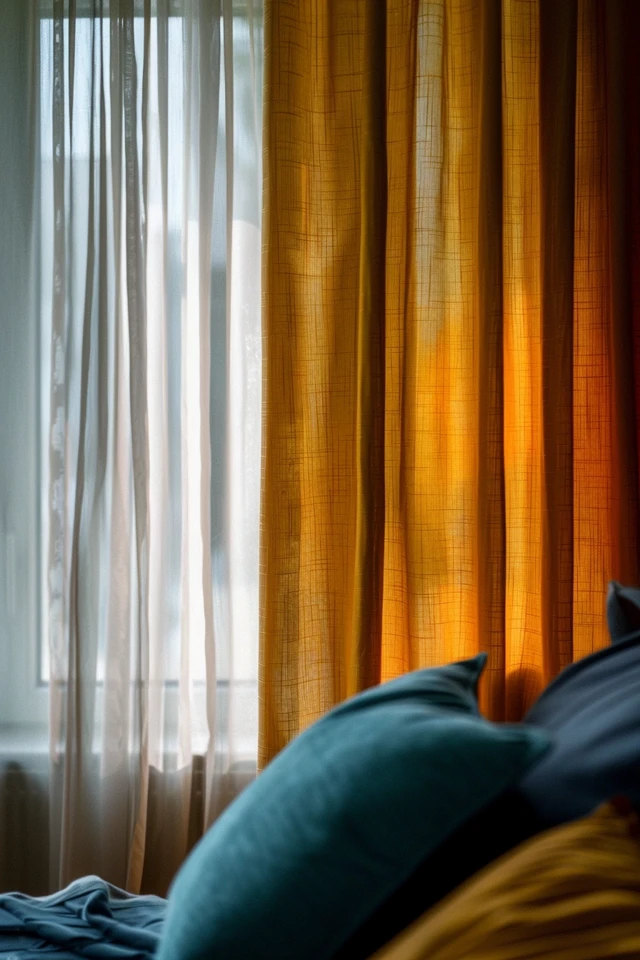
How To Hang Sheer And Blackout Curtains: Layered Look
There is a specific feeling of relief when you walk into a luxury hotel room and close the heavy drapes, instantly turning day into night. That combination of airy sheers for daytime privacy and substantial blackout curtains for deep sleep is the gold standard for window treatments. If you are looking for visual inspiration before diving into the technical details, feel free to skip ahead to the Picture Gallery at the end of this blog post.
Layering window treatments is one of the most effective ways to elevate a room from “furnished” to “designed.” However, many homeowners shy away from it because it seems mechanically complicated. They worry about drilling too many holes, buying the wrong hardware, or creating a bulky mess at the window.
The reality is that mastering the double-layer look is just a matter of math and the right brackets. In my design projects, I use this combination in almost every bedroom and media room. It offers flexible light control, improved insulation, and a finished, architectural look that blinds alone simply cannot achieve.
Why Layer? Function Meets Aesthetics
Before we start drilling, it is important to understand why we are pairing these specific fabrics. The sheer layer acts as your daytime filter. It softens harsh sunlight, protects your furniture from UV fading, and prevents neighbors from seeing inside while still letting light in.
The blackout layer serves a completely different purpose. It provides total privacy, sound dampening, and light elimination. When you layer them, you get total control over the environment of the room.
From an aesthetic standpoint, layering adds visual depth. A single flat panel can look one-dimensional, but seeing a hint of textured linen sheer peeking out from behind a velvet or heavy cotton drape adds complexity. It makes the window feel dressed rather than just covered.
Choosing Your Hardware: The Foundation
The biggest mistake I see DIYers make is buying two separate rods and trying to mount them one over the other. This creates a cluttered look and usually results in unstable brackets. To achieve a clean layered look, you need a dedicated double curtain rod system.
A double rod set comes with a specific bracket that holds two rods: a thinner one in the back (usually 5/8 inch or 3/4 inch) and a thicker one in the front (1 inch or larger). This ensures the spacing between the layers is perfectly consistent.
When selecting your rod, pay attention to the “projection” of the bracket. The projection is the distance from the wall to the rod. For a double system, the back rod sits closer to the wall, and the front rod sits further out.
You need to ensure the back rod has enough clearance so the sheers don’t drag against the window handle or trim. If you have bulky window molding, look for a bracket with an adjustable projection. You want your sheers to hang freely without snagging.
For a more modern, integrated look, you can also use ceiling-mounted tracks. This is often what you see in hotels. It involves screwing two parallel tracks into the ceiling or a wooden batten. This creates a floor-to-ceiling effect that makes ceilings look much higher, but it does require more precise installation.
Measuring Like a Pro: The High and Wide Rule
In interior design, we have a mantra for drapery: hang it high and hang it wide. This is especially critical when you are dealing with two layers of fabric, which can block a lot of light if not positioned correctly.
Height Rules:
- Do not hang the rod directly on the window frame. This is a cardinal sin of design.
- Ideally, mount your rod 4 to 6 inches above the top of the window frame.
- If you have standard 8-foot ceilings, I often mount the rod just 1 or 2 inches below the crown molding or ceiling. This draws the eye up and makes the room feel grander.
- Ensure you purchase curtain panels that are long enough. Standard 84-inch panels are almost always too short for this method. You will likely need 96-inch or 108-inch panels.
Width Rules:
- Extend the rod 8 to 12 inches past the window frame on each side. This is called the “stack back” area.
- When the curtains are open, the fabric should rest against the wall, not over the glass.
- By extending the rod, you ensure that when you pull the curtains back, you reveal the entire window, maximizing natural light.
- With two layers of fabric, you have twice the bulk to account for, so err on the side of a wider rod.
Designer’s Note:
In my years of practice, the most common regret clients have is buying panels that aren’t wide enough. A curtain panel should never look like a flat sheet when closed. For a luxurious look, the total width of your curtain panels should be 2 to 2.5 times the width of the window. If your window is 40 inches wide, you need at least 80 to 100 inches of fabric width for meaningful fullness.
Selecting the Right Fabrics and Headers
The “header” is the top part of the curtain that attaches to the rod. The style of header you choose affects how the curtains move and how much space they take up.
The Front Layer (Blackout):
For the main room-facing curtains, I recommend a pinch pleat or a back-tab header. These styles fold neatly and maintain a structured look. Avoid grommet top curtains (the ones with metal rings punched through the fabric) for the front layer in a double rod setup. Grommets require a lot of space to fold back and forth, and they often clash with the rod behind them.
Material-wise, look for heavy velvet, wool blends, or lined cotton. The weight helps the curtain hang straight. If you find a fabric you love that isn’t blackout, you can add a separate blackout liner, but buying pre-lined curtains is much easier for installation.
The Back Layer (Sheer):
For the sheers, keep the header simple. A rod pocket or a simple gather works well, but a small pleat is best for easy movement. Since this layer sits behind the main curtain, the top is usually hidden, so you don’t need an elaborate finish.
Stick to neutral whites, off-whites, or soft greys for the sheers. A linen-blend sheer is my go-to choice. Pure polyester can look shiny and cheap, while 100% linen wrinkles aggressively. A blend gives you the texture of linen with the durability of synthetic fibers.
Step-by-Step Installation Guide
Once you have your double rod and your fabrics, the installation requires patience. You will need a drill, a metal measuring tape, a level, a pencil, and a step ladder.
1. Locate the Studs
Curtains are heavy. A double layer of 96-inch curtains can weigh 20 to 40 pounds easily. Use a stud finder to locate the wood framing behind the drywall. If your desired placement doesn’t align with studs, you absolutely must use heavy-duty toggle bolts or drywall anchors rated for at least 50 pounds.
2. Mark Your Bracket Height
Measure from the floor up to your desired height. Do not measure from the ceiling down, as floors and ceilings are rarely perfectly level. Mark the screw holes for your center bracket first, then measure out to the sides for the end brackets.
3. Install the Center Support
Any rod spanning more than 60 inches needs a center support bracket. Without it, the rods will bow in the middle under the weight of the fabric. Install this first to act as your anchor point.
4. Mount the Hardware
Drill your pilot holes and secure the brackets. Double-check that they are level before fully tightening the screws.
5. Thread the Back Rod
Place your sheer panels onto the thinner back rod. Place the rod into the back notch of the brackets. Test the movement. They should slide easily.
6. Thread the Front Rod
Place your blackout panels onto the thicker front rod. Place this rod into the front notch. Adjust the panels so the pleats fall nicely.
7. Train the Curtains
This is the secret step professionals do. Once the curtains are hung, arrange the pleats by hand so they fold perfectly. Then, take a strip of fabric or ribbon and loosely tie the curtain panel together in the middle and bottom. Leave them tied for 3 to 4 days. This “trains” the fabric fibers to remember the folded shape, so they hang straight rather than flaring out at the bottom.
Common Mistakes + Fixes
Even with good intentions, things can go wrong. Here are the most frequent issues I see and how to correct them.
Mistake: Curtains are “flooding.”
This means the curtains are too short and hang 2 or 3 inches off the floor. It makes the room feel shorter and the design look unfinished.
Fix: If you can’t return the curtains, lower the rod. It is better to have the rod slightly closer to the window frame than to have curtains dangling awkwardly high. Alternatively, you can sew a contrasting fabric band to the bottom of the curtain to add length and style.
Mistake: The “Poodle” effect.
This happens when the curtains flare out wildly at the bottom instead of hanging straight down.
Fix: Steam them. Wrinkles from packaging cause stiffness. Steaming relaxes the fibers. After steaming, use the “training” method mentioned above. You can also sew small drapery weights into the bottom hem corners to pull the fabric straight.
Mistake: Light leaking at the sides.
Even with blackout curtains, light creeps in through the gap between the wall and the rod.
Fix: Use a “French return” rod. This is a style of rod that curves all the way back to the wall, eliminating the gap. If you already have standard brackets, you can use double-sided tape or a small velcro dot to pin the outer edge of the curtain flush against the wall.
What I’d Do in a Real Project: Mini Checklist
If I were designing a master bedroom today, here is the exact formula I would use for a foolproof result:
- Hardware: Matte black double rod with a simple end cap finial (no decorative balls or scrolls).
- Placement: Mounted 3 inches below the ceiling line.
- Sheer: Off-white semi-sheer linen blend with a pinch pleat header.
- Blackout: Heavy velvet in a color similar to the wall paint (for a serene look) or a deep navy (for contrast).
- Length: 1/4 inch clearance from the floor. This allows the curtain to hang straight without collecting dust bunnies.
Final Checklist
Before you head to the store or click “buy,” ensure you have verified these items:
- Measured width of window including molding.
- Determined stack back width (add 8-10 inches per side).
- Measured height from floor to desired rod placement.
- Selected a double rod set with sturdy brackets.
- Verified sheers are 2.5x the window width.
- Verified blackouts are 2x the window width.
- Bought a stud finder and level.
- Checked if you need a center support bracket (usually yes).
FAQs
Can I layer curtains if I have a radiator under the window?
This is tricky. Floor-length curtains covering a radiator are a fire hazard and block heat. In this case, I recommend using a Roman shade (fabric blind) inside the window frame for your blackout layer, and flanking the window with stationary floor-length panels that don’t close. Or, stop the curtains at the sill, though this is a less modern look.
Can I use a tension rod for the sheer layer?
If you are renting or have a deep window casing, yes. You can mount the blackout curtains on a standard rod on the wall, and place a tension rod inside the window frame for the sheers. This saves you from drilling extra holes and keeps the look tidy.
How do I wash layered curtains?
Always check the label. Sheers are often machine washable on a delicate cycle (hang to dry). Blackout curtains, however, often have a rubberized coating on the back that can melt or peel in a dryer. I usually recommend vacuuming blackout drapes with an upholstery attachment or having them professionally dry cleaned.
My room is small. Will double curtains make it feel smaller?
Not if you hang them correctly. By hanging them high (near the ceiling) and wide (exposing the whole glass), you actually create an optical illusion that the window is huge. Use light-colored fabrics that match the wall color to keep the visual weight low.
Conclusion
Hanging sheer and blackout curtains together is one of the highest-impact upgrades you can make to your home. It solves practical problems like sleep quality and privacy while adding a layer of softness that makes a room feel finished.
Don’t rush the measuring process. Take your time to find the studs, level your brackets, and most importantly, steam and train your curtains once they are up. The difference between a messy window and a designer look often comes down to those final 20 minutes of steaming and adjusting.
With the right hardware and a little patience, you can achieve that luxurious hotel vibe in your own bedroom.
Picture Gallery


