
How To Hang Things On Cubicle Walls Without Damage
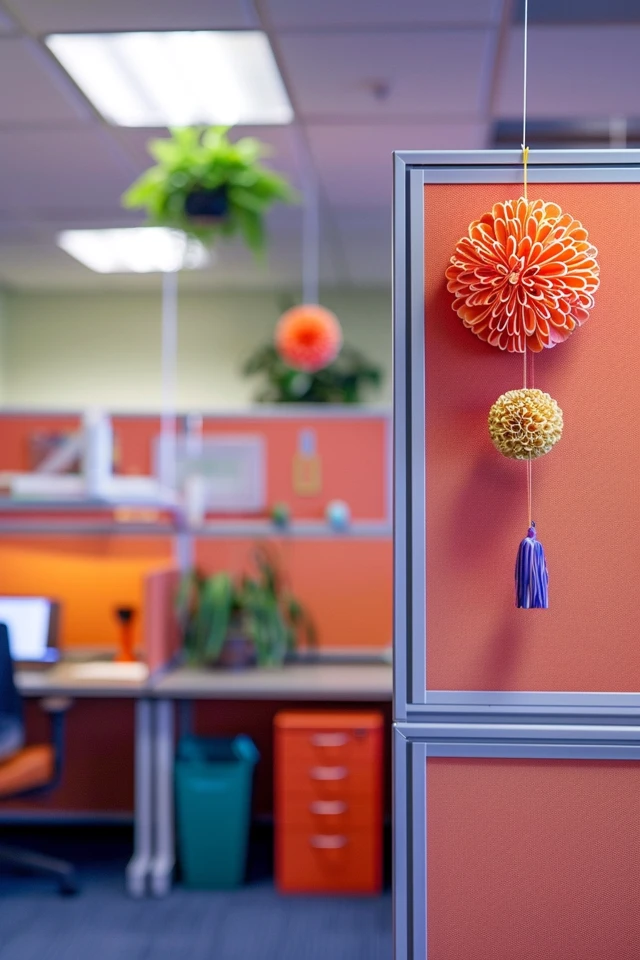
Walking into a sterile, gray cubicle every morning can drain your creativity before the workday even begins. We spend nearly as much time at our desks as we do in our living rooms, yet we rarely give our workspaces the same design attention. Personalizing your space is essential for morale, but office rules often prohibit nails, screws, or permanent adhesives.
Fortunately, transforming a fabric-walled box into a personalized sanctuary is entirely possible without losing your security deposit or upsetting the facility manager. The secret lies in understanding the unique anatomy of partition walls and utilizing tension and friction rather than puncture tools. For plenty of visual inspiration on how to style your workspace, make sure to check out the Picture Gallery at the end of the blog post.
As an interior designer, I have styled hundreds of commercial spaces. I have learned that vertical storage and decor are vital in small footprints to keep the desk surface clear for actual work. This guide will walk you through the specific hardware, installation techniques, and design principles needed to elevate your workspace damage-free.
Understanding Your Cubicle Wall Anatomy
Before you buy a single hook, you must identify what you are working with. Cubicle walls are not built like the drywall in your home. They are typically constructed from a honeycomb cardboard or fiberglass core covered in a thin layer of foam and woven fabric.
This construction means standard nails will slide right out because there is nothing for them to “bite” into. Furthermore, using adhesives like standard tape often fails because the fabric texture prevents a solid seal. Worse, strong chemical adhesives can leave a sticky residue that ruins the fabric permanently.
You also need to measure the width of your partition walls if you plan to hang items over the top. Most standard commercial partitions range from 1.5 inches to 3.5 inches in thickness. Knowing this measurement is critical for selecting the right over-the-panel brackets.
Designer’s Note:
I once had a client try to mount a heavy whiteboard using standard drywall anchors in a partition wall. It ripped a jagged hole through the fabric and crushed the internal honeycomb. Always test the wall density by pressing your thumb firmly against it; if it gives easily, rely on “over-the-top” suspension rather than pinning into the face of the wall.
Lightweight Solutions: The Pin and Clip Method
For paper items, unframed photos, and lightweight prints, you do not need heavy hardware. The fabric covering your cubicle acts essentially like a giant corkboard. The best tool for this is the “panel clip” or the classic T-pin.
Panel clips usually have two small, downward-facing fangs that slide into the fabric weave. They hold surprisingly well because the weight of the object pulls the fangs deeper into the fabric backing. This relies on gravity to secure the item.
Installation Steps for Panel Clips:
- Hold the clip at a 45-degree angle to the wall.
- Insert the points into the fabric.
- Push downward until the clip is flush against the wall.
- Tug gently to ensure the fangs have caught the backing material.
The T-Pin Trick:
If you don’t have clips, standard T-pins (often used in sewing or modeling) are a designer’s secret weapon. Insert the pin at a sharp downward angle rather than straight in. This angle increases the weight capacity significantly. I use these constantly for creating “mood boards” or pinning up color swatches without bulky plastic clips ruining the aesthetic.
Medium Weight: Velcro and Fabric Grippers
When you want to hang a small framed picture or a light canvas, T-pins might not cut it. This is where hook-and-loop fasteners (Velcro) designed specifically for fabrics come into play. However, you cannot use the standard sticky-back Velcro found at hardware stores.
You need “fabric tape” or “cubicle hangers” that feature a spiked back. These plastic backers have dozens of tiny hooks that grip the fabric wall loops, similar to how a burr sticks to a sweater. The more surface area you use, the more weight it can hold.
Common Mistakes + Fixes:
- Mistake: Using adhesive strips (like Command Strips) directly on fuzzy fabric.
- Fix: The adhesive will stick to the fuzz, not the wall, and eventually fall. Only use adhesive strips on the metal trim or hard plastic connectors of your cubicle.
- Mistake: Using too little fastener tape.
- Fix: Apply the fastener to all four corners of the frame. This distributes the weight and prevents the frame from tilting as the fabric shifts.
What I’d Do in a Real Project:
If I am hanging a diploma or certificate (typically 1–2 lbs), I use a spiked cubicle hanger. I place one in the center of the frame wire. Then, I place a small piece of double-sided velcro at the bottom corners of the frame. This keeps the picture from swinging every time someone bumps the desk.
Heavy Duty: Over-the-Panel Hangers
For items heavier than 5 pounds, such as coats, heavy bags, large whiteboards, or shelves, you must bypass the fabric entirely. You need to use the structural integrity of the wall itself. This requires an over-the-panel hanger.
These are metal or hard plastic brackets that hook over the top of the partition wall. Many are adjustable to fit different wall widths. Because the weight rests on the top metal frame of the cubicle, you can hang significantly heavier items without damaging the soft fabric face.
Selecting the Right Hanger:
- Fixed Width: These are sturdier but must match your wall thickness exactly (e.g., 2 inches).
- Adjustable: These clamp down on the wall. They are versatile but can look bulkier.
- Coat Hook Style: Best for backpacks and winter coats.
- Picture Hook Style: These have a long wire or drop-down hook, allowing you to hang a frame at eye level without putting a hole in the wall.
When using over-the-panel hangers for shelving, balance is critical. Ensure the weight is distributed evenly across two brackets. I recommend checking the manufacturer rating for your specific cubicle system, but generally, do not exceed 15-20 pounds per panel section to avoid tipping the partition.
Styling Your Cubicle: Design Principles
Once you have the mechanics of hanging figured out, you need a plan for what goes where. In a small space like a cubicle (often 6×6 feet or smaller), visual clutter accumulates quickly. A haphazard collection of photos can make the space feel smaller and more stressful.
The Focal Point Rule:
Choose one wall to be your “feature wall.” usually the one facing you directly. Place your largest piece of art or your calendar here. Leave the side walls for functional items like file pockets or whiteboards. This gives your eyes a place to rest.
Scale and Proportion:
A common error is hanging tiny pictures on a large fabric panel. It looks “floating” and disconnected. If you have small photos (4×6), group them together in a grid of four or six to create a single visual unit. This reads as one large design element rather than cheap clutter.
Grid Layout vs. Organic Layout:
- Grid: Arranging frames in straight rows and columns. This conveys order, professionalism, and precision. It is excellent for corporate environments.
- Organic: A “gallery wall” style with mixed frame sizes. This feels more creative and homey. If you choose this, keep the spacing between frames consistent (about 2 inches) to maintain cohesion.
Lighting and Decor placement
Lighting is the single biggest factor in making a cubicle feel high-end. Overhead fluorescent glare is harsh and unflattering. Hanging a lightweight string of lights or mounting a small clamp lamp can change the mood entirely.
If using string lights, use the lightweight panel clips mentioned earlier. Drape them along the top perimeter of the cubicle walls where the fabric meets the metal trim. This draws the eye upward and makes the space feel taller.
Placement Measurements:
- Monitor Height: Your eyes should hit the top third of your monitor. Decor should not compete with this line of sight.
- Art Height: In a seated environment, “eye level” is lower than in a hallway. Hang the center of your artwork about 45 to 50 inches from the floor, or roughly 15-20 inches above your desk surface.
- Shelf Clearance: If you hang a shelf, ensure it is at least 18 inches above the desk surface so you can fit a standard monitor underneath it without obstruction.
Final Checklist: Damage-Free Hanging
Before you finalize your setup, run through this quick checklist to ensure safety and aesthetics.
- Check the Core: Did you push on the wall to verify it’s fabric-over-honeycomb?
- Weigh Your Items: Are you using the right hardware for the weight? (Clip for paper, velcro for small frames, bracket for bags).
- Measure Thickness: Did you measure the top of the wall for the bracket width?
- Level Check: Did you use a small level? Crooked pictures are more noticeable in small spaces.
- Shake Test: Gently bump your desk. Does anything rattle? If so, secure the bottom corners.
- Review Policy: Did you double-check your employee handbook regarding personal items?
Frequently Asked Questions
Can I hang a mirror in my cubicle?
Yes, and you should! Mirrors reflect light and make the box feel larger. However, mirrors are heavy. Always use an over-the-panel metal hanger for a mirror, never just pins or velcro. Position it so it reflects a view of the entry behind you—this is a Feng Shui principle that reduces subconscious stress.
How do I hide the wires from my hanging lights?
Visual clutter kills productivity. Use velcro cable ties to bundle cords and run them down the corner seam of the cubicle. You can also tuck thin wires between the fabric panel and the metal post in many cubicle systems.
What is the best way to hang a heavy whiteboard?
Do not rely on the adhesive strips that come with the whiteboard. They will fail on fabric. Purchase “partition brackets” specifically for whiteboards. These screw into the back of the board and then hook over the wall.
Can I use wallpaper on cubicle walls?
Traditional wallpaper won’t work. However, you can use large sheets of fabric or specialized “cubicle wallpaper” which is essentially large sheets of paper held up by T-pins at the corners. It’s a great way to change the color of the gray walls without paint.
Conclusion
Your workspace environment has a direct impact on your mood, productivity, and professional image. While the constraints of a cubicle can feel limiting, the fabric walls actually offer a versatile canvas for creativity once you have the right tools.
By using mechanical fasteners like panel clips and over-the-door brackets instead of adhesives, you ensure that your deposit is safe and your walls remain pristine. Remember to respect the scale of the space—less is often more. A few well-placed, meaningful items are far better than a wall covered in clutter.
Take the time this week to assess your space. Add a warm light, hang a piece of art that makes you smile, and organize your vertical storage. You might be surprised at how much better 9-to-5 feels when the walls reflect your personality.
Picture Gallery


