
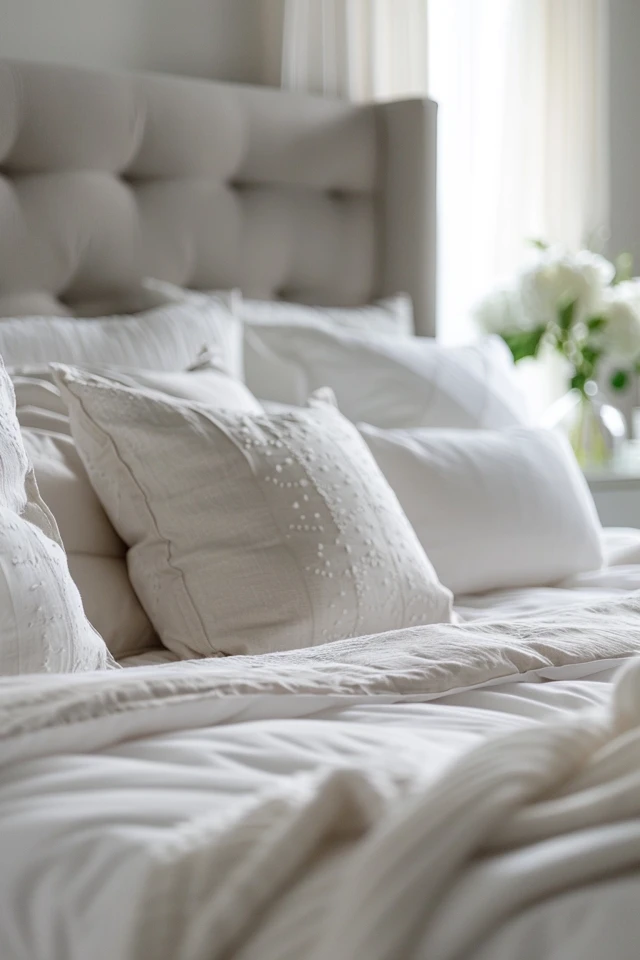
How To Make A Bed Like Pottery Barn: Luxurious Bedding Techniques
There is a distinct feeling you get when walking into a high-end home decor store. The beds look impossibly fluffy, layered, and inviting, creating an immediate desire to dive right in and take a nap. Achieving that specific “catalog look” isn’t about magic or buying the most expensive mattress; it is about specific styling techniques, layering ratios, and understanding how different textures interact.
As an interior designer, I often tell clients that the bed is the focal point of the primary suite, yet it is often the most under-styled area of the home. We tend to prioritize utility over aesthetics, but you can easily have both with the right strategy. If you are looking for visual inspiration to guide your styling process, please note that a curated Picture Gallery is available at the end of this blog post.
In this guide, I will walk you through the exact formulas designers use to create those voluminous, cloud-like beds. We will cover everything from the hidden foundation layers to the specific pillow math required for King versus Queen beds. By the end, you will have a practical roadmap to transforming your bedroom into a luxury retreat.
1. The Foundation: Sheets and The Base Layer
The “Pottery Barn look” starts before you even see the fluff. It begins with the base layers that provide a crisp, clean canvas. The biggest difference between a college dorm bed and a luxury suite is how tight and smooth the foundation looks.
Selecting the Right Sheet Material
Your choice of sheet material dictates the “drape” of the bed. For that crisp, hotel-style look that stands up stiffly, you want high-quality cotton percale. If you prefer the relaxed, lived-in vibe that is very popular right now, go for Belgian flax linen.
Whatever you choose, fit is paramount. A fitted sheet that is too loose will bunch up and ruin the clean lines of your bed frame. Always measure your mattress depth before buying sheets; standard pockets are usually 15 inches, while deep pockets go up to 17 or 20 inches.
The Flat Sheet Reverse Trick
Here is a pro tip that most people miss. When applying your top flat sheet, place it pattern-side down (face down) against the mattress. Pull it all the way to the top of the bed.
When you eventually fold the top of the sheet back over your duvet or quilt, the finished side of the fabric will be facing up. This creates a seamless transition and ensures you see the beautiful pattern or texture, rather than the dull underside of the fabric.
Designer’s Note: The “Hospital Corner”
- The Mistake: Leaving sheets untucked or bunching them at the foot of the bed. This creates visual clutter.
- The Fix: You must master the hospital corner. Tuck the foot of the sheet in first. Lift the side hanging fabric up at a 45-degree angle, tuck the excess under the mattress, and then fold the hanging flap down and tuck it in tight.
- Why it matters: This creates a sharp vertical crease at the corner of the mattress, which signals intentionality and high-end detailing.
2. The Volume Secret: Mastering the Duvet
The number one question I get regarding bedding is, “Why does my duvet look so flat compared to the pictures?” The answer is almost always the insert, not the cover itself. Catalog beds rely on “over-stuffing” to create that lofted, domed appearance.
The Double-Stuff Technique
If you want maximum drama and fluff, you need to use two duvet inserts inside a single duvet cover. This is the industry standard for photo shoots. It creates a heavy, luxurious weight and ensures every corner of the cover is filled to the brim.
If two inserts feel too hot or heavy for sleeping, purchase a single insert that is “extra loft” or “ultra-heavyweight.” Alternatively, buy an insert that is physically larger than your duvet cover. For example, if you have a Queen duvet cover (typically 90″ x 90″), try stuffing it with a King-sized insert (typically 104″ x 90″) for a massive boost in volume.
The Trifold Method
A bed looks more inviting when you can see multiple layers. Do not pull your duvet all the way up to the pillows. Instead, use the trifold technique.
Fold the duvet in half, pulling the top edge down toward the foot of the bed. Then, fold that top edge back up again. This creates a thick, triple-layer band of fluff at the foot of the bed. This technique exposes your sheets and your quilt (which we will discuss next), adding dimension and breaking up the large expanse of color.
Common Mistakes + Fixes
- Mistake: Using a down alternative insert that has become clumpy over time.
- The Fix: Shake your duvet vigorously every time you make the bed. If it is old, tumble it in the dryer with tennis balls to break up clumps. If it stays flat, it’s time to replace the insert. Real down or a high-quality down/feather blend will always loft better than cheap synthetics.
3. The Middle Layer: Quilts and Coverlets
A duvet alone is often too warm for summer and sometimes not warm enough for freezing winters. The solution is the middle layer: the quilt, coverlet, or matelassé. This layer bridges the gap between your flat sheet and your duvet.
Texture Variation
This is where you introduce contrast. If your duvet is smooth cotton, make your quilt a textured velvet or a stitched linen. If your duvet is patterned, keep the quilt solid. The goal is to separate the layers visually so the eye can distinguish between the sheet, the blanket, and the duvet.
Placement Options
You have two main options for styling this layer.
- The Peekaboo: Tuck the quilt tightly over the flat sheet and under the mattress on the sides. Fold the top edge back over the duvet slightly. This looks very tailored and traditional.
- The Sandwich: Lay the quilt flat over the sheet. Fold the top sheet down over the quilt, then fold the duvet up to meet them. This creates a “sandwich” of textures at the center of the bed.
Designer’s Note: Practicality for Pet Owners
- The Reality: Many of my clients have dogs or cats that sleep on the bed. A white duvet cover can be a nightmare in this scenario.
- The Solution: Use a darker, patterned quilt or a heavy-duty throw blanket across the foot of the bed where the pets usually settle. It protects the delicate duvet cover and is much easier to wash frequently.
4. The Pillow Equation: Sizes and Arrangements
This is the most technical part of styling a bed. The number and size of pillows you need depend entirely on the size of your mattress. Using standard pillows on a King bed will make the bed look massive and the pillows look cheap. Using too many Euro shams on a Queen bed will look cluttered.
The Rule of Layers
Generally, you build from the headboard forward. The order is:
- Euro Shams (Back): These are large, square pillows (26″ x 26″). They lean against the headboard and hide your sleeping pillows.
- Sleeping Pillows (Middle): These are the pillows you actually use at night.
- Standard/King Shams (Front): Decorative pillows that match a quilt or duvet set.
- Lumbar/Accent (Center): The jewelry of the bed.
Sizing Guide by Bed Type
For a King Bed:
- Back Layer: 3 Euro Shams (26″ x 26″). Three fits perfectly across a standard Eastern King.
- Middle Layer: 2 King-sized sleeping pillows (20″ x 36″). Do not use standard pillows here; they leave gaps.
- Front Layer: 2 King-sized decorative shams.
- Accent: 1 Long Lumbar pillow (14″ x 36″ or longer).
For a Queen Bed:
- Back Layer: 2 Euro Shams (26″ x 26″).
- Middle Layer: 2 Standard/Queen sleeping pillows.
- Front Layer: 2 Standard decorative shams.
- Accent: 1 smaller Lumbar (12″ x 24″) or two 20″ square throw pillows.
The “Karate Chop”
You have likely seen pillows with a V-shape indentation in the top center. This is called “chopping.” While it is a bit controversial, it generally helps down-filled pillows look plump rather than round and over-inflated. To achieve this, fluff the pillow, set it in place, and give it a firm chop with the side of your hand in the center top. This signals that the pillow is filled with feathers, not stiff foam.
5. The Final Polish: Throws and Styling Details
Now that the major components are in place, the final touches determine whether the bed looks “done” or just “made.” This involves managing wrinkles, ensuring symmetry, and adding a casual element to soften the look.
The Casual Throw
To break up the symmetry of the perfectly placed pillows and folded duvet, drape a throw blanket on one of the bottom corners of the bed. Do not fold it perfectly. Pinch the blanket in the middle and let it cascade naturally over the corner. This “imperfect” moment makes the bed feel approachable.
Choose a material that contrasts with your duvet. If you have a linen duvet, go for a chunky knit wool throw. If you have a velvet quilt, try a faux fur throw.
Dealing with Wrinkles
You do not need to iron your sheets every week—life is too short for that. However, to get the Pottery Barn look, you should smooth out the visible parts.
- Water Spray Trick: Once the bed is made, fill a spray bottle with plain water. Lightly mist the pillowcases and the turnover of the top sheet. Use your hand to smooth the fabric while it is damp. As it dries, it will pull tight and wrinkle-free.
- Handheld Steamer: For linen bedding, a handheld steamer is your best friend. A quick 30-second steam on the edges of the duvet cover and the pillow shams makes a massive difference in the overall presentation.
What I’d Do in a Real Project: A Mini Checklist
If I were styling a client’s primary bedroom tomorrow, this is exactly what I would do:
- Mattress: Ensure a mattress pad is on for volume and protection.
- Sheets: White cotton percale for a crisp contrast against a colored headboard.
- Quilt: A velvet quilt in a moodier tone (navy, charcoal, or moss green) tucked in tight.
- Duvet: A white linen duvet cover stuffed with two inserts, folded in thirds at the foot.
- Pillows: 3 Euro shams in a pattern that ties the room together, 2 sleeping pillows laid flat, and 1 extra-long lumbar in front.
Final Checklist: The Daily Bed-Making Routine
You don’t need to do a full styling session every morning. Here is a realistic daily routine to keep the look alive:
- Shake the Duvet: Grab the bottom corners and give it a hard shake to redistribute the down.
- Pull Up Sheets: Pull the top sheet and quilt up tight. Fold the top edge back 10 inches.
- Tri-Fold Duvet: Fold the duvet down to the foot of the bed to expose the sheets.
- Reset Pillows: Stand the Euro shams up against the headboard. Stack sleeping pillows in front. Place the accent pillow.
- Smooth: Run your hands over the layers to flatten major wrinkles.
FAQs
Q: Where do I store all these decorative pillows at night?
A: This is a logistical reality of luxury bedding. You need a dedicated spot. I recommend a large woven basket in the corner of the room, a bench at the foot of the bed, or a chest. Do not throw them on the floor, as they will collect dust and pet hair.
Q: My duvet cover is always empty in the corners. How do I fix this?
A: Ensure your duvet cover has internal corner ties. If your insert does not have loops, you can sew small ribbons onto the corners of the insert. Tying the insert to the cover inside prevents it from shifting and slumping to the bottom.
Q: Can I mix warm and cool tones in bedding?
A: Yes, but be careful. It is usually safer to stick to one temperature family. Mix creams, beiges, and warm browns, OR mix cool grays, crisp whites, and blues. Mixing a yellow-cream with a blue-gray can often make the cream look dirty or the gray look flat.
Q: Is thread count actually important?
A: It is a marketing myth. A thread count over 400 or 500 often means the manufacturer used double-ply threads, which can actually be weaker and heavier. Focus on the fiber quality (Long-Staple Cotton or Egyptian Cotton) rather than just the number. A 250-thread count percale made of good cotton will last longer and feel better than a 1000-thread count sheet set from a discount store.
Conclusion
Creating a bed that rivals a Pottery Barn catalog is not about buying the most expensive items on the shelf. It is about the discipline of layering and the intentional use of volume. By upgrading your duvet insert, adhering to the correct pillow ratios for your mattress size, and mastering the “fold and tuck,” you can dramatically change the feel of your bedroom.
Remember that a bedroom is a sanctuary. Investing time in styling your bed isn’t just about aesthetics; it is about creating a space that invites rest and relaxation at the end of a long day. Start with your foundation, add your fluffy layers, and don’t be afraid to mix textures.
Picture Gallery


