
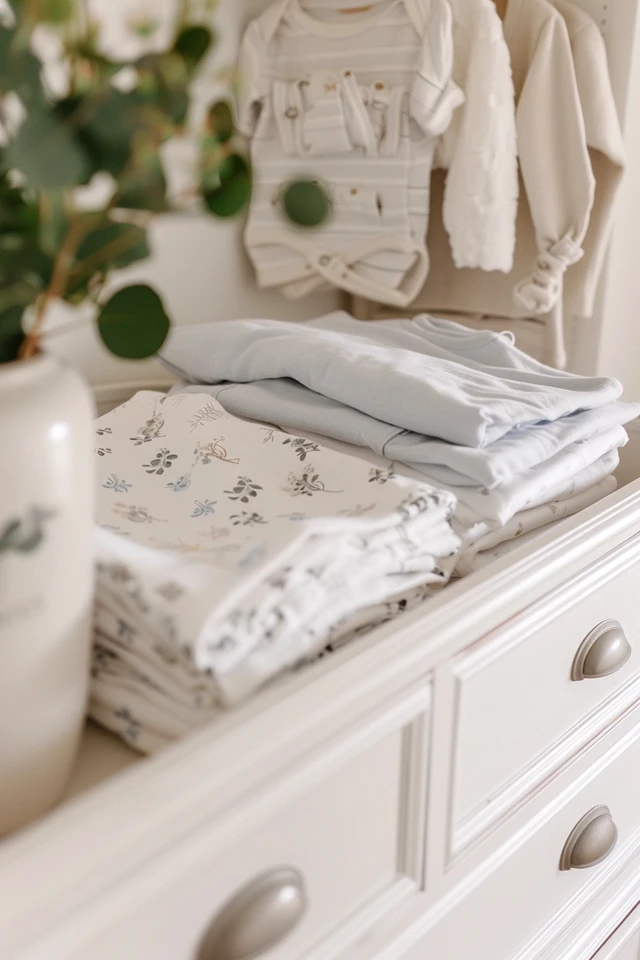
How To Organize Newborn Dresser: Efficient Baby Gear Storage
Bringing a new baby home is one of life’s most beautiful transitions, but it is also one of the messiest. As a designer, I often see parents focus heavily on the crib or the wallpaper, treating the dresser as an afterthought. However, at 3 AM when you are exhausted and fumbling for a clean diaper, the organization of that dresser becomes the most important element in the room.
A well-organized nursery dresser is not just about aesthetic perfection; it is about survival and flow. The goal is to create a system where you can find everything you need with one hand while keeping your other hand safely on your baby. If you are eager to see examples of finished nurseries for inspiration, please note that you can find our curated Picture Gallery at the end of this blog post.
We are going to move beyond basic tidying and look at the ergonomics of a changing station. I will share the strategies I use in client projects to maximize space, streamline your workflow, and ensure safety. Let’s turn that chaos of onesies and burp cloths into a streamlined system that works for you.
1. Selecting the Right Piece and Placement
Before buying bins or folding clothes, we must assess the furniture itself. In interior design, scale and proportion are everything, but in a nursery, height is the priority.
If you intend to use the dresser as a changing table, the ideal height is between 34 and 36 inches. Anything lower will hurt your back; anything higher makes it difficult to leverage your body weight safely. Ensure the dresser is at least 18 to 20 inches deep to accommodate a standard contour changing pad securely.
Designer’s Note: The Safety Anchor
In every nursery I design, anchoring furniture is non-negotiable. Dressers become climbing structures as soon as a baby becomes a toddler. Do not rely on the weight of the furniture to keep it in place. Install heavy-duty anti-tip kits into a stud immediately upon assembly, before you put a single sock in a drawer.
Placement and Flow
Place the dresser in a spot that allows for easy traffic flow. You need at least 30 to 36 inches of clearance in front of the dresser to open drawers fully while standing comfortably. Avoid placing the dresser directly under a window if possible, as drafts and curtain cords pose safety risks.
Lighting Considerations
Consider how light hits this station. You want soft, directional light for nighttime changes, not a blinding overhead fixture. If the dresser is far from outlets, plan for cordless lamps or secure cord covers to run power safely behind the unit.
2. The “Prime Real Estate” Strategy: The Top Drawers
In kitchen design, we have the “work triangle.” In a nursery, we have the “reach zone.” The top drawers of your dresser are your prime real estate.
These drawers should strictly contain items you need immediately during a diaper change or clothing swap. If you have to take a step away from the dresser to get it, it does not belong in the top drawer. This rule is vital for infant safety.
The Left-to-Right Workflow
If you are right-handed, organize your supplies from left to right based on the order of operations. Diapers on the far left, wipes in the center, and creams or lotions on the right. This creates a natural physical flow that builds muscle memory.
What Goes Here:
- Diapers (take them out of the plastic packaging).
- Wipes (in a weighted dispenser for one-handed grabbing).
- Diaper cream and spatula.
- The current size of onesies (short and long sleeve).
- Standard footie pajamas.
Common Mistake + Fix
Mistake: Stuffing the top drawer with socks, hats, and accessories.
Fix: Move accessories to the second level. You rarely need a sun hat in an emergency, but you always need a backup onesie during a blowout. Keep the top drawer strictly for essentials.
3. Zoning with Dividers and Folding Techniques
Newborn clothing is tiny and unstructured. Without containment, a drawer full of onesies will turn into a “clothing soup” within two days. As a designer, I always insist on drawer dividers or fabric bins for nursery projects.
The File Folding Method
Never stack baby clothes like pancakes. You will only ever use the top item, and the bottom ones will be outgrown before they are worn. Instead, “file fold” them so they stand vertically.
This allows you to see every single pattern and color as soon as you open the drawer. It also makes it easier to pull one item out without destroying the rest of the stack. This technique saves space and actually prevents overbuying because you can clearly see your inventory.
Choosing the Right Organizers
- Spring-Loaded Dividers: These are best for separating rows of filed clothes. They look built-in and adjust to any drawer width.
- Fabric Cubes (Small): Essential for socks, mittens, and bibs. Use 4×4 inch or 6×6 inch squares. Tiny items get lost in large open spaces.
- Acrylic Bins: Great for lotions, nail clippers, and medical supplies because spills are easy to wipe up.
What I’d Do in a Real Project
I typically use spring-loaded dividers to create three vertical columns in a wide drawer. The left column is for short sleeves, the middle for long sleeves, and the right for pants. I use small soft-sided bins in the gaps for socks to keep them paired.
4. Managing the Lower Drawers and Surplus
As you move down the dresser, the urgency of the items decreases. The middle and lower drawers serve as storage for bulk items, linens, and future sizes. This area requires a different organizational logic.
Middle Drawers: Linens and burp cloths
Bulky items live here. Swaddles, sleep sacks, crib sheets, and changing pad covers belong in the middle zone. You usually grab these before you start a task, so they don’t need to be in the rapid-reach zone.
Group swaddles by type (Velcro vs. blanket) so you aren’t hunting for a specific one in the dark. Keep at least three backup crib sheets and two backup changing pad covers washed and ready here.
Bottom Drawers: The “Next Size Up”
One of the biggest frustrations for parents is realizing their baby has outgrown an outfit that was hidden in a closet. Dedicate the bottom drawer to the next size up.
If your baby is in 0-3 months, the bottom drawer should hold 3-6 month clothing. Keep them washed and folded. Once the baby has a growth spurt, you can simply swap the drawer contents upward without doing laundry or digging through storage bins in the garage.
Medical and Grooming Kits
If you do not have a separate bathroom closet, designate a small section of a lower drawer for “pharmacy” items. Keep backup wipes, diaper genie refills, thermometers, and aspirators here. Use a clear, lidded bin to keep curious toddler hands away from medicines as they grow.
5. Styling the Surface and Vertical Space
The top of the dresser needs to be highly functional, but as a designer, I also want it to be beautiful. This is often the focal point of the nursery.
The Tray Trick
Corral loose items on top of the dresser using a tray. A rectangular tray placed next to the changing pad can hold your daily lotion, a small toy for distraction, and a hand sanitizer. This makes the surface look styled rather than cluttered. It also makes cleaning easier—just lift the tray to wipe the dust.
Wall Usage and Safety
Utilize the wall space above the dresser, but be careful. Floating shelves are excellent for holding decorative items or extra supplies, but they must be shallow (under 6 inches deep) to prevent head bumps.
Avoid heavy framed art with glass directly over the changing zone. Instead, opt for canvas art, soft wall hangings, or lightweight mirrors securely bolstered to the wall studs. A mirror is actually a great distraction tool for a fussy baby during changes.
Lighting the Station
Never rely solely on overhead pot lights. Place a small lamp with a dimmer switch on the dresser, or install a sconce above it. Aim for a warm color temperature (2700K). Blue-tinted light can disrupt the baby’s sleep cycle (and yours) during late-night changes.
Designer’s Real-World Checklist
When I am finishing a nursery installation for a client, I run through this specific checklist to ensure the dresser is ready for real life. Use this to audit your own setup.
1. The “Shake” Test
Open all drawers fully. Does the dresser tip? (It shouldn’t if anchored). Shake the changing pad. does it slide? (Secure it with straps or non-slip grip pads).
2. The One-Hand Test
Stand at the changing pad. Can you reach a diaper, a wipe, and a change of clothes without moving your feet? If not, reconfigure the top drawer.
3. The Noise Audit
Open and close the drawers. Do they squeak or bang? If so, add felt bumper pads to the inside of the drawer fronts and lubricate the tracks. A loud drawer can wake a sleeping baby.
4. The Label Check
Are sizes separated? If you have 0-3 month and 3-6 month clothes in the same drawer, use drawer dividers to physically separate them. I often add small clip-on labels to the dividers so sleep-deprived parents don’t have to guess.
Frequently Asked Questions
What if I have a very small nursery and a small dresser?
In small spaces, you must utilize vertical storage. Install a pegboard or shelves above the dresser for diapers and creams. Use the back of the nursery door for an over-the-door organizer to hold swaddles and shoes, keeping the small dresser strictly for daily clothes.
Should I hang or fold baby clothes?
Fold almost everything. Baby clothes are too small for standard hangers and often slip off. Hanging is best reserved for coats, special occasion dresses, or items made of linen that wrinkle easily. Knits, cottons, and pajamas should always be folded.
How do I organize for twins?
Assign specific drawers to specific babies only if they are different sizes or genders. If they wear the same size, pool the clothing to save space. However, you will need double the “consumables” storage. Consider using a rolling cart next to the dresser for extra diapers and wipes to free up drawer space for the extra clothing.
How do I keep the drawers smelling fresh?
Avoid strong chemical sachets which can irritate sensitive skin. I recommend placing a small block of cedar or a dried lavender sachet (tucked deep in the back) to keep things fresh and ward off moths naturally. Ensure these are unreachable by the child.
Conclusion
Organizing a newborn dresser is about predicting your future needs. It is about empathy for your future self who will be tired, distracted, and in need of a fresh sleeper immediately. By applying these design principles—zoning, proper scale, and logical flow—you create a space that supports you.
Remember that this system is not permanent. As your baby grows from a newborn to a toddler, your storage needs will shift from diapers and onesies to socks and shorts. A good organizational structure establishes a foundation that is easy to adapt over time. Start with the essentials, prioritize safety, and keep it simple. You have got this.
Picture Gallery


