
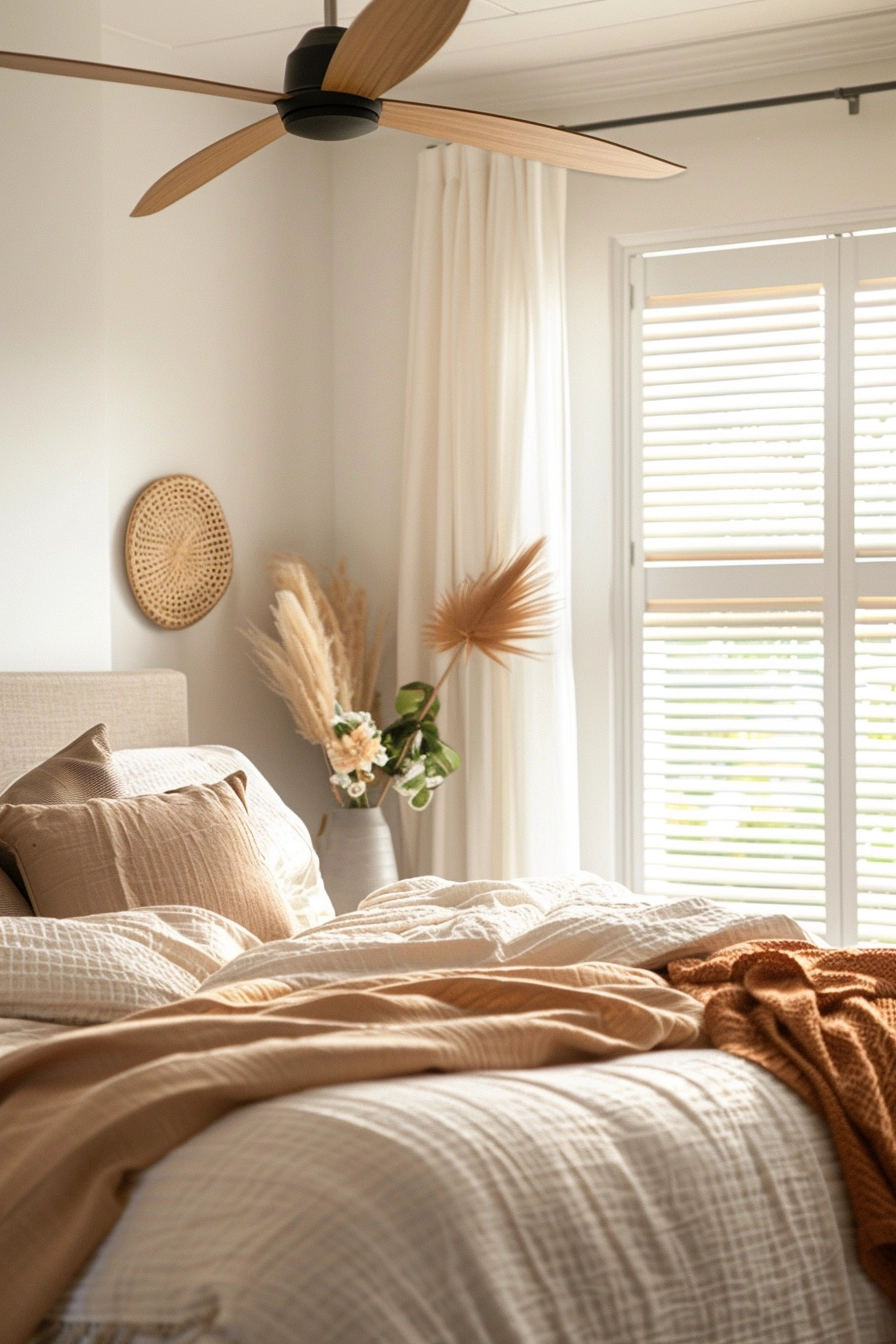
How To Pick Ceiling Fan Color: Complementing Your Room’s Aesthetics
Selecting the right ceiling fan used to be purely about function, often resulting in wobbly, intrusive fixtures that designers tried desperately to ignore. Today, fans are legitimate architectural features that can anchor a room or vanish seamlessly into the background. The challenge lies in choosing a finish that balances airflow requirements with your existing design palette.
The color you choose dictates the visual weight of the room. A fan that contrasts too sharply can make a ceiling feel lower, while the right hue can elevate the space and tie your metal finishes together. It is a balancing act between the floor, the furniture, and the overhead space.
For a visual summary of these color combinations, make sure to visit our inspirational Picture Gallery at the end of this post.
1. The First Decision: Blend In or Stand Out?
The most critical choice you will make is determining the fan’s role in the room’s hierarchy. Do you want it to be a focal point, or do you want it to disappear? This decision usually depends on your ceiling height and the busyness of your existing decor.
The “Ceiling Chameleon” Approach
If you have standard 8-foot ceilings, your goal is almost always to make the fan disappear. A heavy, dark fan on a low, white ceiling creates a “visual hole,” making the room feel shorter and more claustrophobic.
In these scenarios, white or off-white is your best friend. Matching the fan body and blades to the ceiling paint color allows the eye to glide past the fixture. This is particularly important in small bedrooms or cluttered home offices where you don’t need another object fighting for attention.
The Architectural Statement
If you have vaulted ceilings, beams, or height clearances above 9 feet, you have the luxury of using the fan as a design element. This is where you can employ high-contrast colors like matte black, oil-rubbed bronze, or rich walnut wood tones.
A dark fan against a light ceiling draws the eye upward, highlighting the architecture. This works exceptionally well in modern farmhouses, industrial lofts, or traditional living rooms with heavy molding.
Designer’s Note: The “Visual Clutter” Rule
In my projects, I always assess the “floor clutter” before picking a fan. If a client has a busy Persian rug, patterned throw pillows, and gallery walls, I almost exclusively specify a white, blending fan.
If the room is minimalist with neutral floors and sparse furniture, I will choose a black or timber fan to add necessary contrast and warmth. You generally only want one “star” in the room; if the fan is screaming for attention, the rug should whisper.
2. Coordinating with Hardware and Finishes
Once you decide on visibility, you need to coordinate with the hard finishes in the room. This includes door handles, cabinet pulls, curtain rods, and other light fixtures.
The Metal Mixology Guide
You do not need to match every metal in the room perfectly. In fact, a space looks more curated and less “builder-grade” when metals are mixed intentionally. However, the undertones must agree.
If your room features brushed gold or brass hardware, a matte black fan is a sophisticated partner. The starkness of the black grounds the warm shine of the gold. Conversely, if you have satin nickel hardware, avoid using oil-rubbed bronze fans, as the brownish undertones often clash with the cool silver.
Wood Tone Harmony
Wood blades add warmth and organic texture, but they are tricky to get right. A common mistake is introducing a wood fan that clashes with the hardwood floors or furniture.
Follow the “Sandwich Rule.” If your floors are a warm honey oak (the bottom slice of bread) and your fan is a cool grey-washed wood (the top slice), the room will feel disjointed. Try to keep the wood undertones in the same family—warm with warm, cool with cool.
Common Mistakes + Fixes
- Mistake: Matching the fan strictly to the floor color in a room with low ceilings.
- Fix: While matching the floor is a classic rule, it often makes low ceilings feel oppressive. If the ceiling is under 9 feet, prioritize matching the ceiling color over the floor color.
- Mistake: Using high-gloss finishes in a modern room.
- Fix: Swap glossy fans for matte finishes. Matte black or matte white looks premium and modern; shiny plastic looks cheap.
3. Sizing and Color Perception
The physical size of the fan changes how we perceive its color. A massive 72-inch fan in matte black is a dominating black hole in a small room, whereas a 44-inch fan in the same color might look like a tasteful accent.
The Volume of Dark vs. Light
Dark colors absorb light and appear “heavier” and smaller in space. Light colors reflect light and appear “lighter” but physically larger.
If you need a large fan (60 inches or more) to move air effectively in a large open concept, but you don’t want it to dominate the aesthetic, choose a metallic finish like brushed nickel or a soft champagne. These reflect the ambient light and feel less heavy than solid black or dark wood.
Downrods and Visual Space
The color of the downrod (the pole connecting the fan to the ceiling) matters just as much as the blades. If you are dropping a fan 2 feet down from a vaulted ceiling, a dark downrod acts like a line drawn in space.
Ensure this line aligns with other vertical elements, like fireplace flues or window frames. If the downrod is white against a white ceiling, it vanishes, leaving the fan blades to float. This is an excellent trick for keeping the sightlines open in rooms with great views.
What I’d Do in a Real Project: The Scale Check
When I am designing a living room, I tape out the fan diameter on the floor. Then I look at the color of the floor inside that tape circle.
If the fan is dark wood and the floor is dark wood, will it feel like a cave? If yes, I switch to a metallic fan (like pewter or soft brass) to break up the darkness while maintaining a high-end look.
4. Room-Specific Color Strategies
Different rooms serve different psychological and functional purposes. The energy you want in a bedroom is different from an outdoor patio, and your fan choice should reflect that.
The Master Bedroom: Serenity First
In bedrooms, the goal is rest. High-contrast patterns can be visually stimulating, which is the opposite of what you want when trying to sleep.
I almost always recommend matte white or satin white fans for bedrooms, regardless of wall color. If you have dark moody walls (like navy or charcoal), you can consider a dark fan to blend in, but be wary of the dust factor.
White fans look clean, crisp, and airy. They suggest a cool breeze before you even turn them on.
The Living Room: The Social Hub
This is the safest place to take a risk. A “windmill” style fan with weathered wood blades can be the centerpiece of a rustic living room.
If you have a fireplace with a black surround or a large black television, a black ceiling fan helps balance those dark elements on the vertical plane. It creates a triangle of dark points that keeps the eye moving around the room.
Outdoor Spaces and Patios
For outdoor aesthetics, you must consider durability alongside color. Dark-colored blades (especially dark browns and blacks) can fade rapidly if exposed to direct UV sunlight.
Over time, a rich black fan can turn into a chalky grey. For covered patios that get side sun, lighter wood finishes or marine-grade white finishes tend to age more gracefully. Additionally, “wet-rated” fans often have ABS plastic blades that hold paint differently than wood; stick to matte finishes here to hide the plastic texture.
5. Navigating Lighting and Blade Reversibility
Most homeowners need their ceiling fan to double as an overhead light source. The integration of the light kit significantly impacts how the color of the fan reads in the room.
The “Integrated” Look
Modern fans often have LED kits seamlessy built into the hub. If the fan is black, the white plastic diffuser of the light can look like a stark polka dot when turned off.
Look for fans where the glass is tinted or caged if you are buying a dark fan. Alternatively, many modern white fans have white diffusers, making the entire unit look like a single, cohesive sculpture.
Reversible Blades: The Rental Hack
Many mid-range fans come with reversible blades—one side might be Walnut, the other side Driftwood. This is fantastic for renters or indecisive homeowners.
If you are renting, you might move from a space with warm oak floors to a space with cool grey laminate. Having a fan with reversible blades ensures your investment travels well. When assembling, hold both sides up to your furniture to see which wood grain harmonizes best.
Color Temperature and Finish
The light bulb color temperature (Kelvin) affects the fan’s finish. A warm 2700K bulb will make a brushed nickel fan look golden/champagne. A cool 4000K bulb will make it look blue-steel.
If you have a specific metal finish you are trying to match (like a very specific antique brass), test your light bulbs. I generally recommend 3000K bulbs for a neutral, welcoming light that renders colors accurately without turning wood tones orange.
Final Checklist: What I’d Do in a Real Project
If I were walking into your home today to pick a fan, this is the mental checklist I would run through. Use this to make your final purchase decision.
1. Check Ceiling Height
- Under 8.5 feet: Go Flush Mount (Hugger). Color: Match the ceiling (usually white).
- Over 9 feet: Use a downrod. Color: Coordinate with hardware or beams.
2. Audit the “Visual Noise”
- Busy room (patterned rugs, gallery walls, knick-knacks): Choose a blending color (White/Beige).
- Minimalist room: Choose a contrasting color (Black, Brass, Wood) to act as art.
3. Match the Undertones
- Warm Palette (Red/Orange/Yellow woods, Gold metals): Choose Walnut, Bronze, or Matte Black.
- Cool Palette (Grey/Ash woods, Chrome/Silver metals): Choose Driftwood, Brushed Nickel, or White.
4. Consider Maintenance
- High dust area? White and light wood hide dust better than Black or Glass.
- Outdoor area? Light colors fade less than dark colors in the sun.
FAQs
Does my ceiling fan have to match my floor?
No, and in many cases, it shouldn’t. While matching the wood tone of the floor is a safe traditional choice, it can be heavy. It is more important that the fan matches the undertone of the floor (warm vs. cool) rather than the exact color.
Are white ceiling fans outdated?
Not at all. The “outdated” white fans are the shiny, glossy ones with gold brackets from the 1990s. Modern matte white fans with sleek, aerodynamic blades are incredibly popular and timeless because they look architectural rather than like an appliance.
Can I mix a black fan with brown furniture?
Yes, absolutely. Black is a neutral. It anchors the space. A matte black fan pairs beautifully with cognac leather sofas or walnut dining tables. It adds a modern edge to traditional brown furniture.
Should I get a fan with a light or without?
From a design perspective, fans look sleeker and more expensive without light kits. However, functionality is key. If you have recessed can lighting in the room, skip the fan light. If the fan is your only source of illumination, you must get a light kit—just ensure it is dimmable.
Conclusion
Choosing a ceiling fan color is about managing the visual gravity of your room. It is a tool that can either lift the ceiling to make a room feel airy or bring the scale down to make a large hall feel cozy.
Don’t be afraid of the “boring” choice. A matte white fan that fades into the ceiling is often the mark of a sophisticated design eye that knows when to let other elements shine. Conversely, if you choose a statement fan, commit to it—get the right scale, the right downrod length, and let it be the hero of your ceiling.
Picture Gallery


