
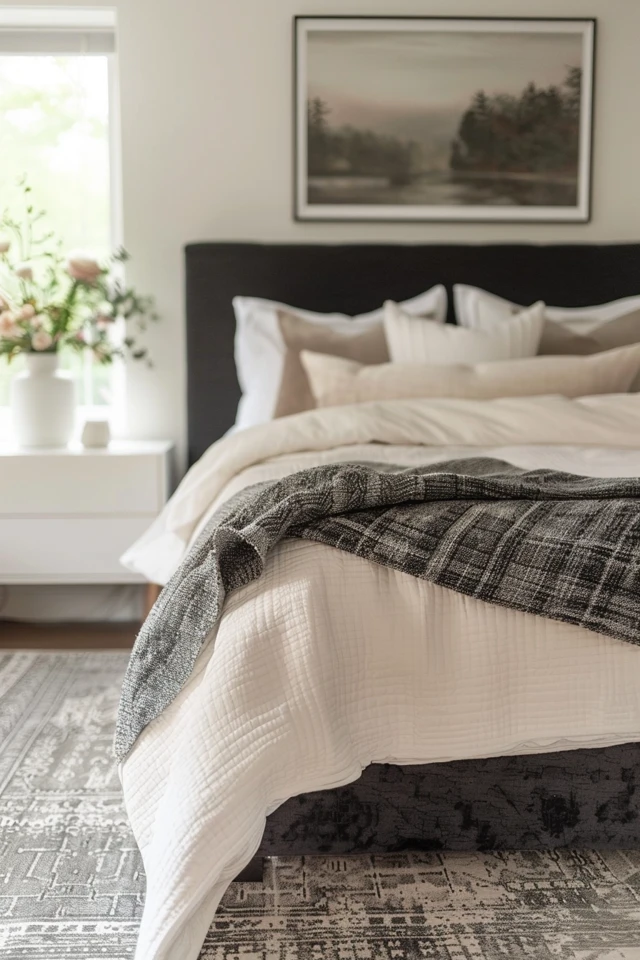
How To Place A Rug In A Bedroom: Strategic Decor Placement
There is nothing quite as jarring as swinging your legs out of bed on a winter morning and hitting a cold, bare floor. Beyond the physical comfort, a bedroom without a rug often feels unfinished and unanchored. The bed ends up looking like a raft floating in a sea of floorboards, rather than a deliberate centerpiece.
Adding the right rug is the single most effective way to pull a bedroom together. It adds texture, absorbs sound, and provides that crucial layer of warmth that makes a sleeping space feel like a sanctuary. However, getting the placement right requires a bit of math and a good understanding of scale.
If you need visual inspiration before diving into the measurements, check out the curated Picture Gallery at the end of this blog post.
Understanding Bed Sizes and Rug Proportions
The most common mistake homeowners make is buying a rug that is too small for the bed. In the design world, we call this the “postage stamp effect.” A rug that barely peeks out from the sides of the bed makes the room look cramped and the furniture look cheap.
To achieve a high-end look, you must respect the scale of your furniture. The rug serves as a frame for your bed. If the frame is too small, the picture looks ridiculous.
Here are the specific sizing rules I use for every project:
King and California King Beds
For a standard King or California King, you generally need a 9×12 rug. This size allows enough width for the rug to extend comfortably on both sides of the bed.
If you have a particularly large master suite, a 10×14 rug adds a level of luxury that is hard to beat. Avoid 8×10 rugs for King beds unless you have a very small room, as the rug will look disproportionate to the mattress width.
Queen and Full Beds
The sweet spot for a Queen bed is an 8×10 rug. This provides generous coverage on the sides and the foot of the bed.
In smaller guest rooms or apartments, you can sometimes get away with a 6×9 rug for a Full or Queen bed. However, this usually means you have to place the rug lower down the bed to ensure you have enough carpet exposed at the foot.
Twin and Twin XL Beds
For a single Twin bed, a 5×8 or 6×9 rug works perfectly. If you have two Twin beds in a shared room, the strategy changes.
You can either place a small 3×5 rug between the beds or use one large 8×10 or 9×12 rug to run horizontally beneath both beds and the center nightstand. The latter creates a more cohesive, designed look.
Designer’s Note: The 18-Inch Rule
In a perfect world, you want about 18 to 24 inches of rug extending from the sides and the foot of the bed.
This measurement ensures that when you walk around the bed, both feet remain on the rug. If you only have 6 inches of rug showing, it looks like an afterthought rather than a design decision.
Strategic Layout Configurations
Once you have the right size, you need to decide where it goes. You don’t just shove it under the bed and hope for the best. There are three main configurations interior designers rely on.
Your choice depends on your budget, the size of your room, and your personal style preference.
Configuration 1: The “All Legs On” Layout
This is the most luxurious and expensive option because it requires the largest rug size. In this layout, the rug sits underneath the entire bed frame and the nightstands.
The rug should extend past the foot of the bed and significantly past the nightstands on either side. This creates a defined “zone” for the sleeping area.
Pros: It looks like a 5-star hotel suite; the nightstands are level and stable.
Cons: Requires a massive rug (usually 9×12 or larger); expensive; difficult to install without help.
Configuration 2: The “Two-Thirds” Rule
This is the industry standard and what I recommend for 90% of my clients. The rug starts roughly 12 to 18 inches in front of the nightstands.
The nightstands sit directly on the hard floor, while the bottom two-thirds of the bed sits on the rug. The rug then extends well past the foot of the bed (usually by 2 or 3 feet).
Pros: Cost-effective as you can use a slightly smaller rug; easy to clean under nightstands; highlights beautiful flooring.
Cons: The head of the bed is not cushioned; you must ensure the nightstands don’t wobble if they are half-on/half-off (keep them fully off).
Configuration 3: The Runner Solution
If you have a beautiful hardwood floor you don’t want to cover, or if you are renting and move frequently, runners are a great alternative.
Place a runner on each side of the bed. You can also add a third runner at the foot of the bed for symmetry, though this is optional.
Pros: Very budget-friendly; easy to move; easy to wash; great for small rooms with awkward layouts.
Cons: Can look cluttered if the runners slide around; doesn’t anchor the bed visually as well as a large area rug.
Common Mistakes + Fixes
Mistake: The “Floating Island.” Placing a small rug at the foot of the bed with no furniture touching it.
Fix: Move the rug up so the legs of the bed sit on it, or buy a larger rug. The furniture and the rug must connect.
Mistake: Blocking vents or doors.
Fix: Measure the door swing radius before buying. Ensure the rug pile is low enough for the door to clear it.
Selecting the Right Material and Pile
The bedroom is a low-traffic zone compared to a living room or hallway. This allows you to prioritize comfort and luxury over heavy-duty durability.
However, you still need to consider who uses the room. A master suite has different needs than a child’s room or a rental property.
Wool: The Gold Standard
Wool is the best material for bedroom rugs. It is naturally soft, durable, and resistant to crushing.
It has a natural springiness that feels amazing underfoot. While it is more expensive, a wool rug can last for decades if cared for properly. It is also naturally flame retardant and resists stains better than synthetics.
Synthetics (Polypropylene/Polyester)
If you are on a strict budget, decorating a guest room, or have pets that are prone to accidents, synthetics are a smart choice.
Modern synthetics mimic the look of wool effectively. They are easy to scrub and often fade-resistant. The downside is that they can flatten out faster over time and don’t retain heat as well as wool.
Natural Fibers (Jute/Sisal)
I love the look of jute for a coastal or organic modern aesthetic. It adds fantastic texture and earthiness.
However, jute is not soft. It can be scratchy on bare feet and is difficult to clean if liquid spills on it.
Pro Tip: If you love the look of jute, layer a smaller, softer vintage or sheepskin rug on top of it where you step out of bed.
High Pile vs. Low Pile
Shag or Moroccan-style high pile rugs are very popular in bedrooms because they maximize coziness. They add a sense of romance and softness.
The trade-off is maintenance. High pile rugs trap dust, hair, and allergens. If you have asthma or allergies, stick to a low-pile wool or a flatweave rug.
Color, Pattern, and Visual Weight
The rug is the foundation of your room’s color palette. Because it covers such a large surface area, it dictates the mood of the space.
You need to decide early on if you want the rug to be the star of the show or a supporting character.
Solid vs. Patterned
If you have patterned bedding or wallpaper, go with a solid or tonal textured rug. This prevents the room from feeling chaotic.
Conversely, if you have white bedding and neutral walls, a patterned rug is the perfect place to inject personality. Traditional Persian-style rugs hide lint and crumbs exceptionally well, making them practical for real life.
Light vs. Dark
A light-colored rug will make a small bedroom feel larger and airier. It reflects light and creates a serene, spa-like atmosphere.
However, light rugs show every footprint and speck of dirt. If you allow shoes in the house or have a dark-haired dog, a light rug will be a maintenance nightmare.
A dark rug grounds the space and feels cozier and moodier. It is excellent for creating a “cocoon” effect, which is conducive to sleep.
Layering for Depth
One of my favorite styling tricks is layering rugs. This works exceptionally well in large master bedrooms.
Start with a large, neutral base rug (like a jute or plain wool sisal) that fills the room. Then, place a smaller, irregularly shaped hide or an antique rug on top at an angle.
This adds dimension and allows you to use a precious vintage rug that might otherwise be too small for the room.
Real-World Logistics: Pads, Pets, and Cleaning
Buying the rug is the fun part. Living with it requires practical planning.
As a designer, I see many clients skip the unsexy parts of rug installation, only to regret it a month later.
The Rug Pad is Mandatory
Never skip the rug pad. In a bedroom, the weight of the bed will hold the rug in place, so you don’t necessarily need a non-slip pad for safety.
However, you need a pad for protection and plushness. A thick felt pad extends the life of your rug by preventing the fibers from being crushed against the hard floor.
It also prevents the scratchy backing of the rug from damaging your hardwood finish. For bedrooms, I recommend a 1/4-inch to 1/2-inch felt pad for maximum luxury.
Dealing with Bedroom Doors
Before you order a thick shag rug, look at your bedroom door. Does it swing into the room?
If the door swings over the area where the rug will lie, you have a clearance issue. Measure the gap between the bottom of the door and the floor.
If your gap is half an inch and you buy a one-inch thick rug, your door will get stuck every time you open it. You may need to hire a handyman to shave the bottom of the door or choose a lower-profile rug.
Pet Considerations
Cats love to scratch rugs. Loop-pile rugs (like Berber) are a disaster for cat owners because claws get snagged in the loops, pulling them out and ruining the rug.
For cat owners, cut-pile rugs are safer. For dog owners, avoid very dark rugs if you have a light-haired dog, and avoid white rugs if you have a dark-haired dog or muddy paws.
Patterned rugs are the pet owner’s best friend because they camouflage everything.
Final Checklist: What I’d Do in a Real Project
If I were designing your bedroom today, here is the exact mental checklist I would run through before clicking “purchase.”
1. Measure the Bed: Confirm if it is a Queen (60″ x 80″) or King (76″ x 80″).
2. Tape it Out: Use blue painter’s tape on the floor to outline where the 8×10 or 9×12 rug will sit.
3. Check the Nightstands: Ensure the tape line stops
4. Check the Perimeter: Ensure there is at least 18 inches of rug on the sides.
5. Check the Swing: Open and close the bedroom door to check clearance over the tape line.
6. Select Material: Choose wool for longevity or synthetic for easy cleaning.
7. Add the Pad: Add a felt rug pad to the cart immediately.
FAQs
Can I put a rug over wall-to-wall carpet?
Yes, absolutely. This is a great way to define space and cover up ugly rental carpet. The key is texture. If the carpet is low-pile, you can use a thicker rug on top. You must use a “carpet-to-carpet” rug pad, which is sticky on both sides, to prevent the top rug from rippling or creeping as you walk on it.
How far should a rug extend beyond a King bed?
For a King bed, you want at least 18 inches on each side, though 24 inches is better. At the foot of the bed, try to have at least 24 to 36 inches of rug extending out. This balances the heavy visual weight of the headboard.
Does the rug have to match the curtains?
No, they should not match exactly. That looks dated. They should “coordinate.” If your curtains are a busy floral pattern, pull one color from that pattern to use for your rug. If your curtains are solid neutral, your rug can be the source of pattern.
What do I do if my room is too small for a standard rug?
If an 8×10 folds up against the walls, downsize to a 6×9. However, place the 6×9 horizontally under the bottom 2/3 of the bed. If even that is too tight, abandon the area rug and use sheepskin runners on either side of the bed for softness without the footprint issues.
Conclusion
Placing a rug in a bedroom is about more than just floor coverage; it is about creating a feeling. A well-placed rug grounds the furniture, dampens the acoustics, and introduces a layer of comfort that is essential for a space designed for rest.
By following the rules of scale—specifically ensuring you have that 18-inch border around the bed—you elevate the room from a simple sleeping area to a designed suite. Remember to prioritize the material that fits your lifestyle, not just your aesthetic. A beautiful rug that you are afraid to walk on serves no purpose.
Take the time to tape out the measurements on your floor. Seeing the footprint in real life is always better than guessing. With the right size and the right placement, your rug will become the anchor that holds your entire bedroom design together.
Picture Gallery


