
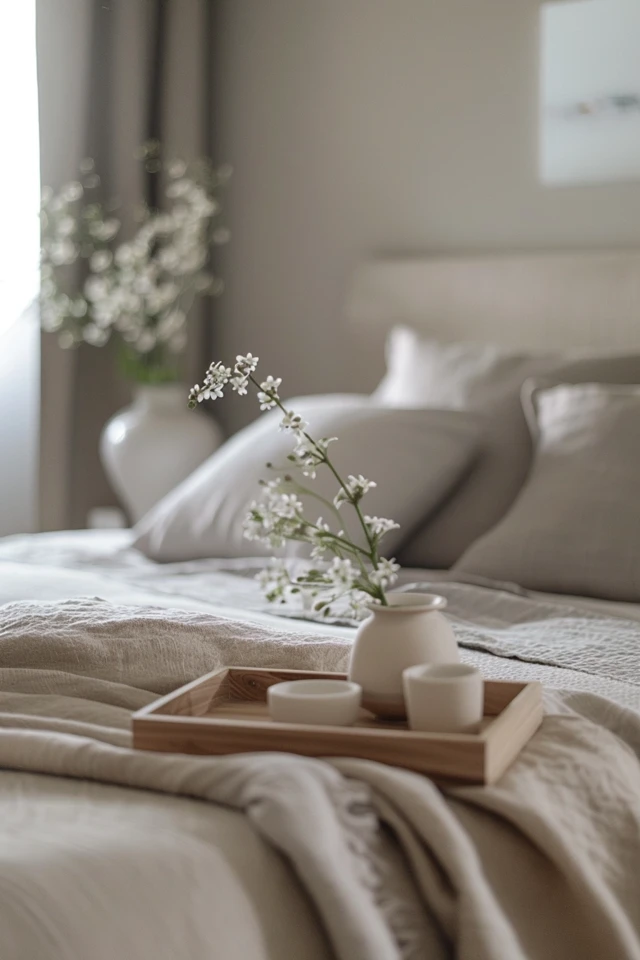
How To Prepare Guest Room: Welcoming Touches And Essentials
Hosting friends and family is one of the distinct joys of having a home, but it also comes with a specific pressure. You want your guests to feel relaxed, but you also need the space to function seamlessly without you hovering over them. A well-designed guest room bridges the gap between the comfort of a home and the amenities of a boutique hotel.
I have spent years fixing guest rooms that looked beautiful but functioned poorly. Often, homeowners treat this space as a repository for old furniture that didn’t make the cut in the primary bedroom. However, providing a truly welcoming experience requires intentional planning regarding layout, lighting, and textiles.
For visual inspiration on how to pull these looks together, make sure to check out the Picture Gallery located at the very end of this blog post.
1. Establishing the Layout and Furniture Scale
The foundation of a successful guest room is the floor plan. Before you buy new sheets or pick out paint colors, you must address the circulation and flow of the room. The most common error I see is overcrowding the room with a bed that is too large for the footprint.
For a comfortable guest room, you need a minimum of 30 to 36 inches of clearance on both sides of the bed. If you cannot walk around the bed without turning your shoulders sideways, the bed is too big. While a King bed is a luxury, a Queen is the standard for guest comfort. If the room is tight, a Full bed with proper clearance feels much more luxurious than a King bed pushed against a wall.
Nightstand height is another critical ergonomic detail. The top of your nightstand should be level with the top of your mattress, give or take two inches. If the nightstand is too low, guests struggle to reach water or their phone. If it is too high, they risk bumping their head or knocking items over in the dark.
Designer’s Note: The “Twin Bed” Hack
In my practice, I often recommend two Twin XL beds for guest rooms rather than a single Queen. This setup offers incredible flexibility. You can push them together with a “bed bridge” kit to create a King bed for couples, or separate them for friends or siblings who do not want to share a bed. This configuration dramatically increases the utility of the room.
What I’d Do in a Real Project: Layout Checklist
- Measure the room wall-to-wall before buying furniture.
- Place the bed on the longest uninterrupted wall.
- Ensure the door can swing open fully (90 degrees) without hitting the bed frame.
- If the room is small, skip the footboard. Use a headboard only or a platform bed to reduce visual bulk.
2. The Science of Bedding and Sleep Quality
Your guests are likely tired from travel, and sleeping in a new environment is difficult for many people. Your priority is to neutralize variables that disrupt sleep. This starts with the mattress, but the bedding layers are equally important. You do not need the most expensive sheets on the market, but you do need natural fibers.
Stick to 100% cotton percale or sateen sheets. Percale is crisp and cool, which is safer for guests who run hot. Sateen is softer and warmer. Avoid microfiber or synthetic blends, as they trap heat and can cause guests to wake up sweating.
Pillow variety is non-negotiable. I always dress a guest bed with four sleeping pillows: two firm and high-loft, and two soft and compressible (down or down alternative). This allows the guest to choose the support level that matches their neck needs.
Hygiene Layers
You must use a mattress protector. This is not just for spills; it is a hygiene barrier that protects your mattress investment and reassures guests. Look for “encasement” styles that zip around the entire mattress for maximum protection against dust mites and allergens. Make sure it is breathable and does not make a crinkling plastic sound.
Common Mistakes + Fixes
Mistake: Overloading the bed with decorative throw pillows.
Fix: Limit yourself to two Euro shams (against the headboard) and one lumbar pillow in the front. Guests do not know where to put ten decorative pillows, and they usually end up on the floor collecting dust.
3. Lighting Plans and Electrical Accessibility
Lighting in a guest room serves two purposes: ambiance and utility. A single overhead flush mount light is the enemy of a cozy atmosphere. You need to layer your lighting sources to allow guests to control their environment.
I aim for three distinct light sources in every room. First, you need general overhead lighting on a dimmer. Second, you need task lighting at the bedside for reading. Third, consider accent lighting, such as a floor lamp by a reading chair or a small lamp on a dresser.
The Bulb Temperature Rule
Check your lightbulbs. For a residential bedroom, you should strictly use bulbs with a color temperature between 2700K and 3000K. Anything higher (4000K-5000K) emits a blue daylight hue that suppresses melatonin and makes it harder for guests to fall asleep. Consistency is key; do not mix warm bulbs in the lamps with cool bulbs in the ceiling fixture.
Power Access
We live in a device-heavy world. Do not make your guests crawl behind the headboard to find an outlet. If you are renovating, install outlets with USB-C ports directly above the nightstands.
If you are working with an existing room, use power strips. However, do not leave them on the floor. Attach them to the back leg of the nightstand or use a weighted desktop charging station.
Designer’s Note: Sconce Placement
If you are hardwiring sconces beside the bed, a good rule of thumb is to mount them 60 to 66 inches from the finished floor to the center of the junction box. This keeps the light source effective for reading while clearing the headboard.
4. Rug Sizing and Window Treatments
The textiles in the room dictate the acoustic comfort and the visual warmth. A guest room with bare floors echoes and feels uninviting. A rug anchors the furniture and provides a soft landing for bare feet in the morning.
Size matters immensely here. A common mistake is using a 5×7 rug under a Queen bed. This results in the rug disappearing under the bed, leaving only a tiny strip visible.
Rug Sizing Rules
- Queen Bed: Use an 8×10 rug. Place the rug horizontally. The nightstands should generally stay off the rug, and the rug should start just in front of the nightstands. This ensures you have 18 to 24 inches of rug extending on both sides and the foot of the bed.
- King Bed: A 9×12 rug is ideal. An 8×10 can work if the room is tight, but a 9×12 feels much more high-end.
- Twin Beds: Place a runner (2.5×7) between the beds, or use one large 8×10 or 9×12 rug to unite both beds.
Window Treatments for Sleep
Style is secondary to function for guest room windows. You must provide a way to block light completely. Even if you love the look of sheer linen curtains, you need to pair them with a blackout solution.
You have two main options. The first is installing a blackout roller shade inside the window frame, with decorative drapes mounted on the outside. The second is using drapery with a sewn-in blackout liner.
When hanging curtains, mount the rod as high as possible—ideally 2 to 3 inches below the ceiling crown molding. This draws the eye up and makes the room feel taller. Ensure the rod extends 6 to 10 inches past the window frame on each side so that when the curtains are open, they do not block the glass.
5. Storage Solutions for Travelers
When guests arrive, they come with baggage—literally. One of the most frustrating experiences for a guest is having nowhere to open a suitcase. Do not force them to put their dirty suitcase wheels on your clean white duvet.
Every guest room needs a dedicated luggage surface. A folding luggage rack is a perfect, inexpensive solution that can be tucked into the closet when not in use. If you have the space, a bench at the foot of the bed is an elegant alternative.
Closet and Drawer Etiquette
Do not use the guest room closet as your personal overflow storage. You must leave at least 50% of the hanging rod empty. Provide 6 to 10 matching hangers. Wood or velvet “huggable” hangers are best; wire hangers from the dry cleaner should never be used in a guest room.
If there is a dresser, clear out at least two top drawers. If you must store items in the other drawers, use child-safety locks or clearly label them as “Storage” so guests do not feel like they are snooping.
Hooks: The Unsung Hero
If your guest room is small, wall hooks are a lifesaver. Install a row of sturdy hooks on the back of the door or on a blank wall. Guests use these for purses, coats, wet towels, or bathrobes. It keeps clutter off the floor and requires zero floor space.
6. Styling with Amenities: The “Hotel” Touches
Once the functional elements are in place, you can elevate the experience with styling. This is where you transition from “spare room” to “hospitality.” The goal is to anticipate needs so the guest does not have to ask.
The Welcome Tray
Create a small vignette on the dresser or nightstand. This consolidates clutter and looks intentional.
- Water: A carafe and two glasses. Guests get thirsty at night and may feel awkward navigating a dark kitchen.
- WiFi Info: Frame a small card with the network name and password. Do not make them type in a 20-character code; use a QR code they can scan if possible.
- Reading Material: A stack of coffee table books or current local magazines.
Bathroom Essentials
If the guest room has an ensuite or dedicated bathroom, stock it fully. Do not leave half-empty shampoo bottles from your own shower. Buy travel sizes or fill nice pump dispensers.
Include “forgotten” items in a small basket or drawer: a new toothbrush, toothpaste, a razor, makeup remover wipes, and ibuprofen. These small investments save your guest the embarrassment of asking or a late-night trip to the pharmacy.
Mirrors
A full-length mirror is crucial. Guests need to check their outfit before heading out. If you cannot fit a floor mirror, mount one on the back of the closet door or the bedroom door.
Final Checklist: The “Guest Ready” Audit
Before the doorbell rings, run through this audit to ensure the room is actually ready for human habitation.
- The “Sit Test”: Sit on the bed. Is the lamp switch reachable? Can you reach the charging outlet?
- The Blackout Test: Close the curtains at noon. Is the room dark enough to nap?
- The Storage Check: Are the closet hangers matching and empty? Is the luggage rack accessible?
- The Climate Check: Is there an extra blanket easily visible? Is there a fan or space heater available if the room runs hot or cold?
- The Tech Check: Verify the WiFi signal strength in that specific room.
- The Freshness Check: Open the window for 15 minutes to air out the room, then light a mild candle (blow it out before they arrive).
Frequently Asked Questions
What if my guest room is also my home office?
This is a very common constraint. The key is visual separation. Use a decorative screen to hide the monitor and desk clutter when guests are staying. Clear the desktop completely so they can use it as a vanity or surface for their items. If space allows, a daybed with a trundle can serve as a sofa during work hours and a bed during guest visits.
How do I handle pets when guests visit?
Not everyone loves your dog as much as you do. Ensure the guest room door latches firmly. Lint roll the bedding and rugs immediately before arrival. If your guest has allergies, use hypoallergenic pillow covers and keep the cat out of that room for at least a week prior to arrival to let the dander settle.
Is a sleeper sofa acceptable for a guest room?
It depends on the duration of the stay and the age of the guest. For a young friend staying one night, a sleeper sofa is fine. For parents staying a week, it is often uncomfortable. If you must use a sleeper sofa, invest in a high-quality memory foam topper to bridge the bar mechanism and improve comfort. Store the topper in the closet when not in use.
Do I need a TV in the guest room?
This is no longer a requirement. Most guests prefer to stream content on their iPads or laptops. Instead of a bulky TV, ensure the WiFi is strong and provide a comfortable place to sit up in bed (good pillows or an upholstered headboard) to watch their own devices.
Conclusion
Preparing a guest room is an act of empathy. It is about stepping outside your own routine and imagining what it feels like to live out of a suitcase in your home. By focusing on the fundamentals—a comfortable mattress, accessible power, dark sleeping conditions, and clear surfaces—you create a space that feels generous and restorative.
The best compliment you can receive is not that your guest room looks beautiful, but that your guest slept deeply. When you combine practical design rules with thoughtful amenities, you transform a spare room into a sanctuary.
Picture Gallery


