
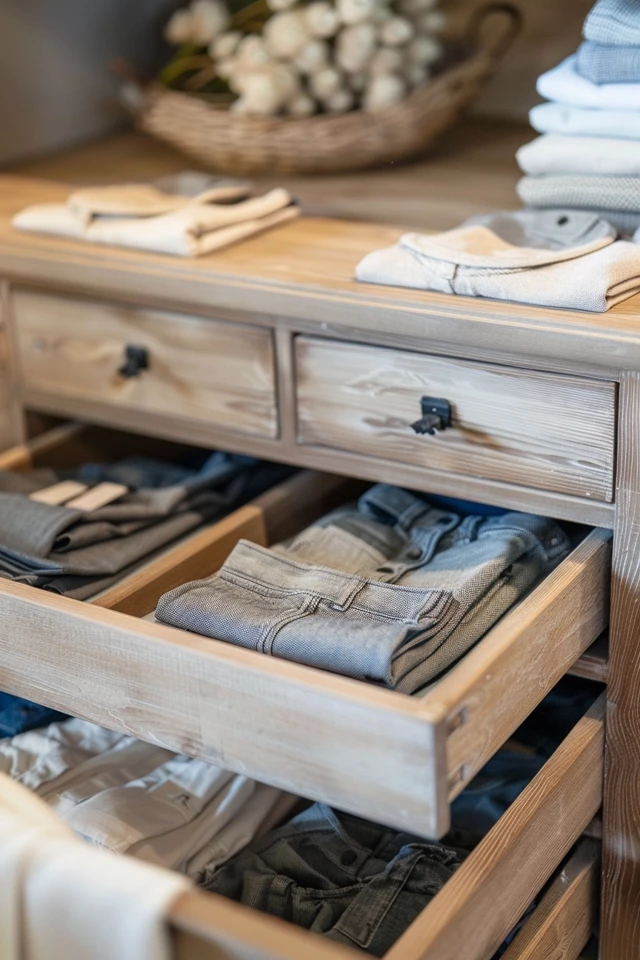
Title: How To Store Shorts In Closet: Efficient Organization
Introduction
Shorts are notoriously difficult to organize compared to the rest of your wardrobe. They lack the structural integrity of heavy denim jeans, yet they are often too bulky to fold as neatly as t-shirts. Because they vary so wildly in material—from slippery athletic mesh to crisp linen or structured cotton—finding a single method that works for every pair is rarely effective.
This usually leads to the dreaded “shorts pile” on a high shelf or a drawer that jams every time you try to close it. To solve this, we need to treat shorts with the same design consideration we give to blazers or dresses, focusing on accessibility and fabric preservation. For visual inspiration on how these layouts look in completed projects, please note that there is a curated Picture Gallery at the end of the blog post.
In this guide, I will walk you through the exact methods I use when styling closets for clients. We will look at how to balance drawer space with hanging space and how to handle awkward dimensions. Whether you have a walk-in closet or a compact reach-in, these strategies will streamline your morning routine.
1. Assessing Inventory and Sorting by Fabric Weight
Before buying a single bin or moving a shelf, you must audit what you actually own. In interior design, we call this “inventory analysis.” You cannot design a functional system if you don’t know the volume of items you are storing.
Start by pulling every pair of shorts out of the closet. Separate them into three distinct categories: activewear/lounge, structured casual (denim, heavy cotton), and dressy (linen, pleated, silk). This separation is crucial because each category requires a different storage mechanic.
Activewear is generally synthetic and resistant to wrinkling, meaning it can be compressed into tighter spaces. Structured denim is heavy and takes up significant volume; it needs sturdy containment. Dress shorts are delicate and prone to wrinkling, often requiring hanging space rather than folding.
Designer’s Note: The Volume Trap
In my years of designing custom millwork for closets, the biggest mistake clients make is underestimating the “fluff factor.” Ten pairs of neatly folded gym shorts might take up 8 inches of height. However, once you rummage through them for a week, that pile expands to 12 inches. Always calculate for 20% more space than your clothes take up when perfectly pressed. This creates “negative space,” which keeps the closet looking luxurious and easy to maintain.
2. The File Folding Method for Drawers
If you have drawer space, this is usually the best location for denim and athletic shorts. However, the traditional method of stacking clothes like pancakes is inefficient. The bottom pair gets crushed, and you essentially forget it exists because you can never see it.
I exclusively recommend “file folding” for drawers. This involves folding the shorts into a small, standalone rectangle and placing them upright, from front to back, like files in a cabinet. This allows you to see every single pair the moment you open the drawer.
To do this correctly, fold the shorts in half vertically (leg to leg). Then, fold the hem up to the waistband. Finally, fold that package in half or thirds again until it stands up on its own. The goal is to create a smooth edge that faces upward.
Standard Dimensions for Success
- Drawer Depth: Standard dresser drawers are usually between 14 and 20 inches deep. Make sure your rows run front-to-back.
- Drawer Height: You need a drawer height of at least 5 to 7 inches for shorts. Anything shallower (like a jewelry drawer) won’t work.
- Divider Spacing: Use spring-loaded tension dividers to keep rows straight. I usually space these 6 to 8 inches apart depending on the size of the garments.
3. Hanging Solutions for Delicate and Tailored Shorts
Not all shorts belong in a drawer. Linen shorts, tailored Bermuda shorts, and silk pieces should almost always be hung. Folding these fabrics creates hard creases that are difficult to steam out later. Furthermore, hanging them maintains the structure of the garment.
There are two primary ways to hang shorts: using clip hangers or folding them over a trouser bar. For a high-end look, I prefer clip hangers with a matte finish. They grip the waistband securely and keep the front of the short flat.
If you are designing a closet layout, shorts offer a unique opportunity to maximize vertical space. Because shorts are short, they require significantly less vertical drop than shirts or pants.
Vertical Spacing Rules
- The Double-Hang System: Shorts are perfect for double-hang sections (one rod above another). You typically only need 24 to 30 inches of vertical space for shorts on clips.
- The Gap: Ensure there is at least 3 inches of clearance between the bottom of the hanging shorts and the rod or shelf below it. This visual gap prevents the space from looking cluttered.
- Hardware Choice: Avoid multi-tier “waterfall” hangers. While they theoretically save space, they make accessing the inner pairs frustrating. In my experience, if it’s hard to reach, you won’t wear it. Stick to single hangers for accessibility.
4. optimizing Shelves with Bins and Baskets
If you lack drawers and have limited hanging rod space, open shelving is your next best option. However, simply stacking shorts on a shelf is a recipe for an avalanche. To maintain a clean aesthetic, you must contain the chaos using bins or baskets.
This approach mimics the function of a drawer but places it on a shelf. The key here is uniformity. Using matching baskets creates a cohesive “built-in” look even if you are renting and using basic wire shelving.
When selecting bins, choose materials that breathe. Woven hyacinth, rattan, or fabric-lined canvas are excellent choices. Avoid clear plastic for clothing if the bins are visible; seeing the messy folds inside ruins the visual calm of the space.
Common Mistakes + Fixes
- Mistake: Buying bins that are too tall.
Fix: Measure the distance between your shelves. Buy bins that leave at least 2 inches of clearance at the top so you can slide them out easily without scraping your knuckles.
- Mistake: Overstuffing the bin.
Fix: Use the file folding method inside the bin. If the bin is too deep, use a smaller insert or divider to keep the rows of shorts upright.
- Mistake: Placing heavy bins too high.
Fix: Store shorts in bins at waist level or below. Pulling a heavy basket of denim down from above your head is dangerous and impractical.
5. Solutions for Small Spaces and Renters
Not everyone has the luxury of a custom walk-in closet with island drawers. If you are in a rental or working with a small reach-in closet, you have to get creative with vertical integration.
One of my favorite tricks for small closets is the “vertical hanging organizer.” These are fabric or semi-rigid shelf units that hang from the closet rod. They are perfect for shorts because the cubbies are usually 6 to 8 inches high—the exact right height for a stack of 3-4 pairs of folded shorts.
If closet space is truly non-existent, look to the back of the door. Over-the-door shoe organizers are often repurposed for pantry items, but they are brilliant for athletic shorts and rolled lightweight cotton shorts. The clear pockets let you see exactly what you have, and it utilizes “dead” space that serves no other purpose.
The “Suitcase” Technique
For seasonal rotation, you don’t need access to your summer shorts in December. I recommend using under-bed storage containers for off-season items. Vacuum seal bags can save space, but be careful: do not vacuum seal natural fibers like wool or linen too tightly for long periods, as it can damage the fibers. Instead, use breathable zippered canvas bags for long-term storage under the bed or on the very top shelf of your closet.
Final Checklist: What I’d Do in a Real Project
If I were standing in your closet today to reorganize your shorts, this is the exact workflow I would follow. You can use this as your project roadmap.
- Step 1: Edit and Purge. Remove anything that doesn’t fit, is stained, or hasn’t been worn in 12 months. Be ruthless.
- Step 2: Define Zones. Designate a specific drawer or rod section for shorts. Do not mix them with t-shirts or pajamas.
- Step 3: Choose the Method. Decide if you are a “folder” or a “hanger.” Be honest with yourself. If you hate folding, buy more clip hangers.
- Step 4: Buy Supplies. Measure your space first. Buy tension dividers for drawers or matching hangers for rods. Consistency is key to the design aesthetic.
- Step 5: Execute the Fold/Hang. Process every item. Group them by color (light to dark) within their category.
- Step 6: Label (Optional). If you use opaque bins on high shelves, use a simple clip-on label so you know which bin holds “Denim” and which holds “Athletic.”
FAQs
How do I stop silky shorts from sliding off hangers?
This is a common frustration. Avoid standard plastic hangers. Instead, use hangers that are coated in velvet or rubber. For clip hangers, ensure the clips have rubber tips inside the grip. This protects the fabric and provides the friction needed to hold slippery materials in place.
Should I button the shorts before folding?
Yes, absolutely. Buttoning the waist and zipping the fly provides structure to the garment. It creates a flat surface, which makes folding much neater and prevents metal zippers from snagging on other clothes in the drawer.
How much space do I need between shelves for stacked shorts?
If you are designing adjustable shelving, aim for 10 to 12 inches of height between shelves. This allows for a manageable stack of 4-6 pairs of shorts without the tower tipping over. Any higher, and the stack becomes unstable.
Is it better to roll or fold shorts?
Rolling is excellent for packing a suitcase or storing soft, synthetic gym shorts in a bin. It saves space and prevents creases in synthetic fabrics. However, for denim, chino, or linen shorts, flat folding or hanging is superior as it maintains the shape of the garment better.
Conclusion
Organizing shorts doesn’t have to be a complicated puzzle. The secret lies in respecting the fabric and utilizing the right hardware for your specific closet configuration. Whether you choose to file fold your denim in deep drawers or hang your tailored linens on sleek clip hangers, the goal is visibility and accessibility.
Remember that an organized home is not just about aesthetics; it is about reducing the friction in your daily life. When you can see what you own, you wear what you own, and getting dressed becomes a joy rather than a chore. Take the time to measure your space, sort your inventory, and implement a system that fits your lifestyle.
Picture Gallery


