
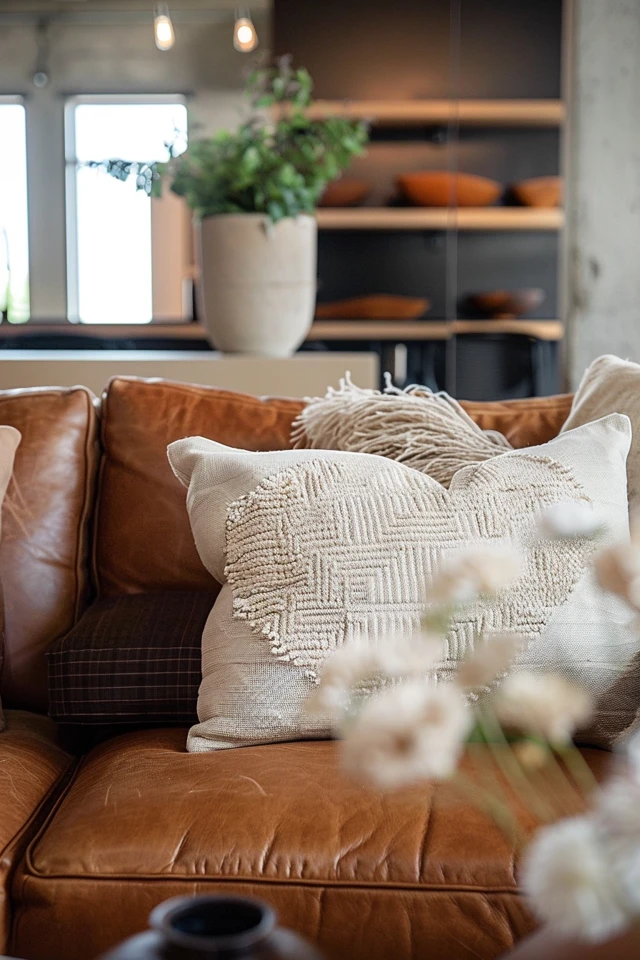
How To Style A Brown Leather Couch: Rich Texture Decor
A brown leather couch is the ultimate design chameleon, yet it often intimidates homeowners more than any other piece of furniture. I remember walking into a client’s living room in Chicago; she had inherited a beautiful vintage cognac sofa but was convinced she had to sell it because her space felt too “masculine” and dark. By the time we finished, that sofa was the anchor of a warm, bright, and incredibly textured room that felt nothing like a bachelor pad.
The secret to styling brown leather lies in balancing its visual weight with softer, tactile elements that break up the slick surface. Leather is a natural material that craves company from other organic textures like wood, wool, jute, and linen. When you get the balance right, the sofa stops feeling like a heavy block and starts feeling like a warm embrace.
For plenty of visual inspiration on how we transformed her space and others, check out the Picture Gallery at the end of this blog post.
1. Establishing Your Color Palette: Undertones Matter
Before you buy a single throw pillow, you must identify the undertone of your leather. Not all brown leather is created equal, and treating a reddish cognac sofa the same as a dark espresso one is a recipe for a clashing room.
If your sofa is a warm cognac or camel, it likely has strong orange or red undertones. These lighter leathers look incredible with cool, contrasting colors like navy blue, slate gray, or sage green. The contrast makes the leather pop without overwhelming the eye.
If you are working with a dark chocolate or espresso sofa, you are dealing with a neutral that borders on black. These pieces need lifting. I recommend pairing them with warm neutrals like cream, beige, or terracotta to prevent the room from feeling like a cave.
Designer’s Note: The “Brown-Out” Effect
I see this happen constantly: a homeowner buys a brown leather sofa, puts it on a brown hardwood floor, and adds a wood coffee table. We call this a “brown-out.” It creates a muddy visual plane where nothing stands out.
If you have wood floors, you need to break the visual connection between the floor and the sofa. A rug is mandatory here (more on that later). If you cannot use a rug, ensure your wall color is light enough to provide high contrast against the furniture.
Common Mistakes + Fixes
Mistake: Trying to match the leather color with other furniture.
Fix: Aim for contrast. If your sofa is dark, your accent chairs should be light fabric. If your sofa is sleek and modern, choose a rustic, matte wood for side tables.
2. Textural Layering: The “Rich Texture” Formula
Leather is smooth, slick, and visually “cold,” even if the color is warm. To make the space inviting, you must layer in opposing textures. This is where the “rich texture decor” concept truly comes to life.
I follow a “Rule of Three” for fabrics on a leather sofa: something nubby, something soft, and something smooth (but matte). For example, I might mix a heavy bouclé pillow (nubby), a velvet lumbar pillow (soft), and a linen throw blanket (matte).
Avoid using satin or silk pillows on leather. The materials are too slippery against the leather surface. You will spend your entire life picking them up off the floor. Stick to fabrics with “grip” like wool, cotton velvet, or heavy wovens.
Pillow Sizing and Arrangement
Scale is critical here. A common error is buying standard 18-inch pillows for a large leather sectional. They look like postage stamps.
For a standard sofa, start with 22-inch or 24-inch square pillows in the corners. Layer a 20-inch square in front of those. This graduation in size adds depth.
What I’d Do in a Real Project
- Base Layer: Two 24-inch pillows in a neutral, heavy weave (like a thick linen or wool blend).
- Accent Layer: Two 22-inch pillows in a pattern or deep color (like moss green velvet).
- Centerpiece: One rectangular lumbar pillow in the center to bridge the gap.
- Throw Blanket: A chunky knit throw draped casually over the arm, not folded perfectly. It softens the hard edge of the leather.
3. Rug Selection: Grounding the Space
The rug is the most important element for separating your brown leather couch from the floor, especially if you have hardwood flooring. The rug creates a dedicated zone for the furniture and lightens the visual load.
For brown leather, I almost always reach for vintage-style rugs or natural fibers. A faded Oushak or Persian-style rug with hints of rust, blue, and cream complements the leather’s patina perfectly. The intricate patterns hide stains, making them practical for families.
If you prefer a modern look, a jute or sisal rug adds immense natural texture. However, jute can be rough on bare feet. A great designer trick is layering: place a large, affordable jute rug as the base, and layer a smaller, softer vintage rug or cowhide on top.
Rug Sizing Rules
The “Front Legs” Rule: At a minimum, the front legs of the sofa must sit on the rug. The rug should extend at least 6 to 10 inches past the ends of the sofa.
The “Floating” Rule: In an open-concept room, it is often better to have all the furniture legs on the rug. This defines the “living room” clearly within a larger space.
Common Measurement Mistake: Buying a 5×8 rug for a standard 7-foot sofa. It is too small. You almost always need an 8×10 or 9×12 rug for a living room with a full-sized leather couch.
4. Hard Goods: Coffee Tables and Lighting
Because brown leather is a “heavy” material, you want to avoid matching it with heavy, blocky wood furniture. This is where mixed materials become your best friend.
Coffee Table Selection
I love using marble, glass, or metal coffee tables with leather sofas. A white marble top brightens the area immediately and offers a cool, smooth contrast to the warm, textured leather.
If you must use wood, ensure the tone is significantly different from the leather. If you have a dark espresso couch, go for a light white oak or bleached wood table. If you have a light camel couch, a black-stained wood table can look striking.
Distance Rule: Position your coffee table 18 inches from the edge of the sofa seat. This is close enough to reach your drink but far enough to walk through comfortably.
Lighting the Leather
Leather absorbs light rather than reflecting it. A room with a large leather sectional will naturally feel darker than a room with a beige linen sofa. You need to compensate with layered lighting.
Do not rely solely on overhead recessed lights. They create harsh shadows on leather. Use floor lamps at eye level to cast a warm glow.
Bulb Temperature: Always use bulbs in the 2700K to 3000K range. This warm white light enhances the natural richness of the brown leather. Anything over 3500K (cool white/daylight) will make the leather look flat and clinical.
5. Wall Decor and Backgrounds
The wall behind your sofa is the backdrop that frames your furniture. Since brown is a neutral, you have two distinct paths: Moody or Bright.
The Bright Path: White or off-white walls (like Benjamin Moore’s “White Dove”) create a crisp, modern gallery look. This makes the sofa the focal point. To keep it from feeling sterile, use large-scale art with warm wood or gold frames.
The Moody Path: Dark walls (charcoal, navy, or forest green) create a cozy, library-like atmosphere. This works exceptionally well in dens or media rooms. If you go this route, ensure you have excellent lighting, or the sofa will disappear into the shadows.
Decor for Renters
If you are renting and cannot paint, you are likely stuck with generic beige or white walls. Use this to your advantage by adding height.
Install floor-to-ceiling curtains. Even if your windows are small, hang the curtain rod 4 to 6 inches below the ceiling or crown molding. This draws the eye up and balances the visual weight of the low, heavy sofa. Choose curtain fabrics with texture, like a heavy linen blend in oatmeal or light gray.
Art Placement Logic
A common mistake is hanging art too high. The center of your artwork (or gallery wall arrangement) should be roughly 57 to 60 inches from the floor.
Visually, the artwork should span about two-thirds the width of the sofa. If you hang a tiny piece of art over a massive leather couch, the scale will feel off-balance.
Final Checklist: The Designer’s Audit
Before you consider your room finished, run through this checklist. This is the exact mental process I use when finalizing a client’s living room.
- The “Squint Test”: Squint your eyes when looking at the room. Does the brown sofa blend into the floor? If yes, you need a lighter rug.
- The Texture Count: Do you have at least three different fabric textures on the sofa? (e.g., velvet, linen, knit).
- The Lighting Check: Is there a lamp within arm’s reach of the sofa?
- The Clearance Check: Is there at least 30 inches of walking path around the main traffic areas?
- The Nature Element: Do you have something green? A large plant (like a Ficus or Monstera) next to a leather sofa is practically mandatory. The green vibrancy cuts through the brown perfectly.
FAQs
How do I protect my leather couch from pet scratches?
If you have pets, full-grain or top-grain leather is best because it develops a patina over time. Scratches become part of the “distressed” look. Avoid “bonded” or “faux” leather, as these will peel and cannot be repaired. Keep a quality leather conditioner on hand; buffing a scratch with conditioner often makes it disappear.
Can I mix a brown leather couch with a grey chair?
Absolutely. In fact, I encourage it. Grey is a cool tone, and brown is a warm tone. They balance each other out. Just ensure the grey fabric has some texture (like a tweed or herringbone) so it stands up to the visual weight of the leather.
What color curtains go with a brown leather sofa?
I generally prefer off-white, cream, or oatmeal curtains. These lighten the room and provide a clean vertical line. If you want drama, a dark charcoal velvet curtain can look stunning, but ensure the room has plenty of natural light.
How do I clean a thrifted leather couch?
Start with a vacuum using the soft brush attachment to remove dust from crevices. Use a dedicated leather cleaner (not harsh chemicals or bleach wipes). Follow up immediately with a leather conditioner to restore moisture. If the leather smells like smoke, wiping it down with a solution of 50/50 water and white vinegar can help, but test a hidden spot first.
Conclusion
Styling a brown leather couch doesn’t have to result in a room that feels dark or dated. By treating the leather as a neutral anchor and surrounding it with rich textures, intentional lighting, and correct scale, you create a space that is timeless.
Remember that leather is organic—it changes over time. It softens, it creases, and it fades. Lean into that evolution. The goal isn’t to make the sofa look brand new forever; the goal is to create a room that looks better the more it is lived in.
Picture Gallery


