
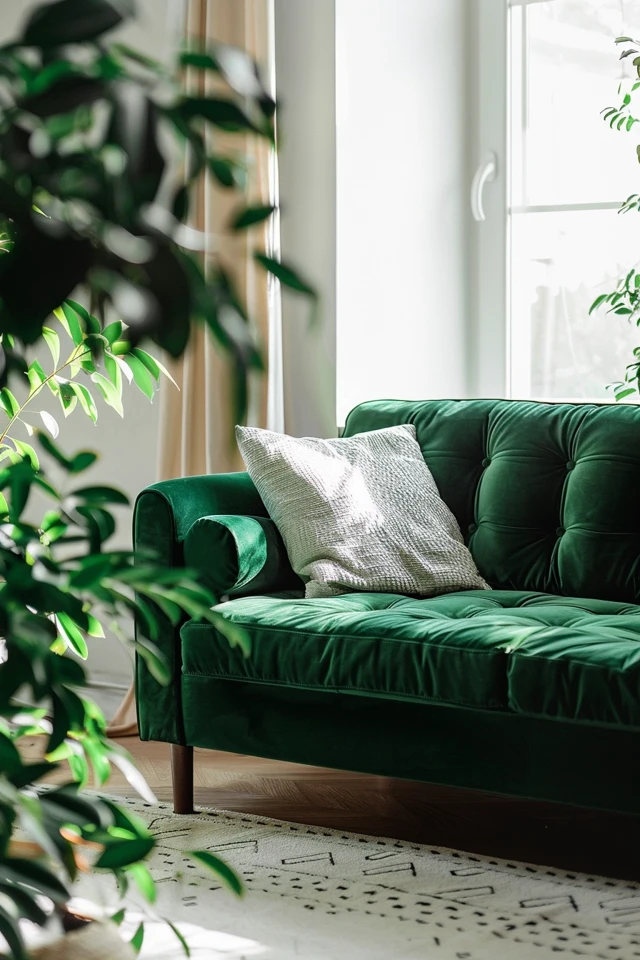
Title: How To Style A Green Velvet Sofa: Luxurious Decor Ideas
Introduction
Buying a green velvet sofa is a bold design move that signals confidence. Many of my clients initially hesitate to commit to such a strong centerpiece, fearing it will limit their future decor choices or feel too imposing in a small room. However, once we install the piece, it almost always becomes their favorite element in the home because it acts as a versatile neutral while providing a rich, tactile experience.
The key to styling this specific furniture piece lies in understanding that green connects us to nature, while velvet speaks to luxury. When you balance these two concepts, you create a room that feels both grounded and high-end. For more visual inspiration, I have curated a comprehensive Picture Gallery at the end of this post to help you visualize these concepts.
In this guide, I will walk you through the exact steps I use to build a room around a green velvet sofa. We will cover color theory, necessary texture contrasts, rug sizing rules, and lighting techniques to make the velvet sheen pop without overwhelming the space.
1. Establishing the Color Palette
Green is unique because it sits in the center of the color spectrum, meaning it can lean warm (olive, moss) or cool (emerald, teal). Before you buy a single throw pillow or rug, you must identify the undertone of your sofa. This ensures your wall color and accents harmonize rather than clash.
The High-Contrast Approach
If you want a modern, dramatic look, pair your green sofa with high-contrast neutrals. Crisp whites and deep blacks create a gallery-like setting where the sofa becomes the art.
- Wall Color: A warm white is essential here to prevent the room from feeling sterile. I often use Benjamin Moore’s “White Dove” or Sherwin Williams’ “Alabaster.” These shades have just enough creaminess to complement the warmth of the velvet.
- Accents: Use matte black metal finishes for curtain rods and picture frames. The sharpness of black cuts through the softness of the velvet.
The Monochromatic “Drench”
Color drenching is a technique where we layer multiple shades of the same color family. This is incredibly effective for creating a cozy, den-like atmosphere.
- Wall Color: Go for a sage or lighter olive on the walls. This reduces the visual contrast between the sofa and the wall, making the room feel larger because the boundaries blur.
- Accents: Bring in plants. Real foliage provides the truest green and connects the furniture to the living elements of the room.
Complementary Warmth
If your green velvet leans toward emerald or hunter green, it pairs beautifully with warm earth tones.
- Wall Color: Consider terra cotta or a soft beige with pink undertones. The red-green relationship on the color wheel creates a vibrating energy that feels very sophisticated.
- Accents: Leather is your best friend here. A cognac leather ottoman or side chair warms up the cool, smooth surface of the velvet.
2. Mastering Texture and Material Contrast
Velvet is a heavy, light-absorbing fabric. If you surround it with other heavy fabrics like wool or more velvet, the room will feel suffocating and dated. As a designer, my rule is to always pair velvet with at least two “hard” or “reflective” textures to maintain balance.
Wood Tones and Finishes
The type of wood you choose defines the era of the design.
- Mid-Century Modern: Walnut is the classic choice. The dark, warm grain of walnut against moss or olive velvet is a timeless combination. Look for coffee tables with tapered legs to keep the floor visual open.
- Scandi or California Cool: White oak or blonde woods work best with lighter sage velvets. This combination feels airy and organic.
Metals and Reflective Surfaces
Because velvet has a “pile” that absorbs light, you need metallic accents to bounce light around the room.
- Brass and Gold: These are the natural partners for green. Unlacquered brass creates a vintage, lived-in luxury. Use this for floor lamps or tray tables.
- Glass and Acrylic: If you are working in a small apartment, a glass coffee table is a smart move. It allows you to see the sofa’s fabric all the way to the floor, which visually extends the space.
Designer’s Note: The “No-Match” Rule
What usually goes wrong: A client loves the velvet look so much that they buy matching velvet curtains or velvet throw pillows.
How to prevent it: Never put velvet on velvet. It looks heavy and commercial, like a hotel lobby. If you have a velvet sofa, your curtains should be linen, cotton, or a textural weave. Your pillows should be boucle, silk, or leather. Contrast is what makes the velvet feel special.
3. Rugs, Curtains, and Soft Furnishings
The items that touch or sit near your sofa are critical for defining the zone. This is where scale and measurement become non-negotiable. A rug that is too small will cheapen the look of even the most expensive sofa.
Rug Sizing and Selection
The rug creates the “island” for your furniture.
- The Rule of Thumb: For a standard 84-inch sofa, you typically need an 8×10 or 9×12 rug. The front legs of the sofa must sit on the rug, overlapping by at least 6 to 8 inches. Ideally, all legs should be on the rug if the room size permits.
- Pattern vs. Solid: Since a green velvet sofa is a solid block of color, a patterned rug works wonders. Vintage Persian rugs with hints of red, rust, or navy hide stains well and add historical weight.
- Material: A natural jute or sisal rug creates a fantastic high-low friction. The rough texture of the jute makes the smooth velvet feel even softer by comparison.
Window Treatments
Green velvet demands vertical height to balance its visual weight.
- Mounting Height: Install your curtain rod 6 to 12 inches above the window frame, or all the way to the ceiling molding. This draws the eye up.
- Fabric Choice: Off-white linen curtains are a safe, elegant bet. They filter light beautifully and provide a crisp backdrop for the dark sofa. If you want drama, a dark charcoal linen can work, but ensure you have adequate lighting.
4. Lighting Schemes and Atmosphere
Lighting affects velvet more than any other fabric. Velvet has a “nap,” meaning the fibers stand up and catch light differently depending on the angle. Poor lighting can make a green sofa look black or muddy.
Layering Light Sources
You need three layers of light to make the green pop correctly.
- Ambient: This is your overhead fixture. Put it on a dimmer. Velvet looks best in soft, warm light.
- Task: Floor lamps placed slightly behind or to the side of the sofa are crucial. The light cascading down onto the fabric highlights the sheen and depth of the green.
- Accent: Table lamps on side tables should be at eye level when seated. This creates a cozy bubble of light.
Bulb Temperature Matters
I strictly use bulbs in the 2700K to 3000K range.
- 2700K (Warm White): Brings out the yellow/gold undertones in olive and moss greens.
- 3000K (Soft White): Better for emerald or teal greens, keeping them looking crisp without turning them blue.
- Avoid 4000K+: Daylight bulbs will make your luxurious green sofa look synthetic and cold.
5. Layout and Spatial Flow
A green velvet sofa is a command piece. It draws the eye immediately, so its placement dictates the flow of the entire room.
Float It If You Can
In open-concept living rooms, avoid pushing the sofa against the wall. Floating it in the center of the room, anchored by a rug, signals luxury.
- Clearance: Leave at least 30 to 36 inches of walking path behind the sofa if it is floating.
- Console Tables: If the back of the sofa is visible, place a narrow console table behind it. Style this with books and a lamp to add layers to the view.
Spacing for Comfort
Function is as important as form.
- Coffee Table Distance: Position your coffee table 14 to 18 inches from the edge of the sofa seat. This is close enough to set down a drink but far enough to walk through comfortably.
- Side Tables: These should be within reaching distance, roughly 2 to 3 inches from the sofa arm. The height of the table should match the height of the sofa arm (within 2 inches up or down).
Common Mistakes + Fixes
Mistake: Choosing a sofa with a skirt in a small room.
Fix: Select a sofa with exposed legs (wood or metal). Seeing the floor underneath the sofa creates a sense of airiness, preventing the dark green block from feeling too heavy in a compact space.
What I’d Do in a Real Project: Mini Checklist
If I were styling a client’s living room with a green velvet sofa today, this is the exact workflow I would follow:
- Step 1: Assess the natural light. If the room is dark, I choose a lighter olive velvet. If it’s bright, I go for deep emerald.
- Step 2: Select a vintage-style rug with rust and cream tones to anchor the space.
- Step 3: Paint the walls “Swiss Coffee” by Benjamin Moore at 75% strength for a warm, airy backdrop.
- Step 4: Install a walnut coffee table and brass floor lamp.
- Step 5: Add two cognac leather pillows and one cream boucle lumbar pillow. No chops.
Final Checklist
Use this summary to ensure you haven’t missed a step in your styling process.
- Check the Nap: Brush the velvet with your hand. Ensure the fibers are running in a consistent direction for a clean look.
- Rug Size: Verify the front legs are overlapping the rug by at least 6 inches.
- Pillow Count: Aim for 3 to 5 pillows. Avoid even numbers for a more casual, designer look.
- Lighting: Swap out cool bulbs for 2700K or 3000K LEDs.
- Curtain Height: Raise the rod to the ceiling to maximize visual height.
FAQs
How do I deal with pet hair on a green velvet sofa?
Velvet is actually surprisingly durable for pets because it has no loops for claws to snag on. However, pet hair sticks to it. I recommend keeping a velvet brush or a lint roller in a nearby drawer. For deeper cleaning, use a vacuum with a soft upholstery attachment once a week.
Does green velvet fade in the sun?
Yes, all fabrics fade, but darker jewel tones like emerald are more susceptible to visible sun bleaching. If your sofa is in direct sunlight, rotate your cushions monthly so they fade evenly, or invest in window film that blocks UV rays to protect your investment.
What colors should I avoid with a green velvet sofa?
Avoid bright primary red; it will look like Christmas decor. Also, be careful with purple. While purple and green are complementary, the combination can look like a comic book character villain if not handled with very specific, muted shades (like aubergine and sage).
Can I mix green velvet with blue accents?
Absolutely. This is an analogous color scheme (colors next to each other on the wheel). Navy blue and emerald green is a classic, sophisticated pairing. Just ensure you break them up with neutrals like white, cream, or wood so the room doesn’t feel too dark.
Conclusion
Styling a green velvet sofa is about embracing the balance between drama and comfort. It is a piece that invites you to touch it, sit on it, and live with it. By following the rules of scale, prioritizing texture over color matching, and ensuring your lighting is layered and warm, you turn a piece of furniture into the heart of your home.
Remember that design is iterative. Don’t be afraid to swap out pillows or move a lamp until it feels right. The goal is a space that feels curated, not cataloged.
Picture Gallery


