
How To Update Wood Paneling Without Painting: Modernizing Old Surfaces
I have walked into countless living rooms where the homeowner points to a wall of knotty pine or dark walnut paneling and sighs. They feel trapped by the texture, the color, or the sheer weight of the wood. Often, they are renting and cannot paint, or they simply respect the original craftsmanship too much to cover it with a coat of latex.
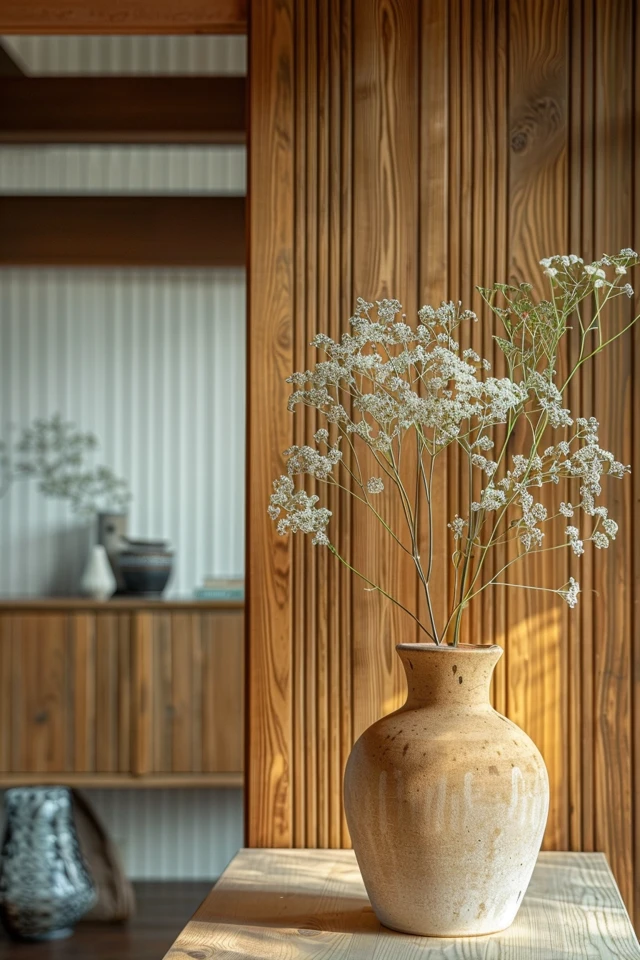
The good news is that you do not need a sledgehammer or a paint roller to modernize a wood-paneled room. By manipulating light, contrast, and layout, you can turn a dated den into a sophisticated, intentional space. The goal is not to hide the wood, but to change the context around it so the paneling becomes a feature rather than a flaw.
For a visual breakdown of these transformations, be sure to check the Picture Gallery at the end of this blog post.
Master the Art of Distraction With Large-Scale Decor
The biggest mistake homeowners make with wood paneling is hanging small, scattered artwork. Small frames get swallowed up by the vertical lines of the paneling, making the room feel cluttered and busy. To modernize the space, you need to play with scale and visual weight to break up the pattern of the wood.
The Gallery Wall Strategy
If you want to hang art, you must go big. Use oversized frames with generous white matting. The white mat acts as a visual “palate cleanser” against the wood, providing a crisp, modern contrast that brightens the wall.
When creating a gallery wall on paneling, tight spacing is essential. I typically space frames 2 to 3 inches apart, rather than the standard 4 to 6 inches used on drywall. This creates a cohesive block that reads as one large visual element, effectively covering a significant portion of the wood without permanent damage.
Textiles as Wall Coverings
Another effective method is using textiles to soften the acoustic and visual hardness of the wood. Hanging a large tapestry or a high-quality rug on the wall adds softness that wood lacks.
In bedrooms, I often recommend an oversized upholstered headboard. If you have a queen bed, look for a headboard that extends 6 to 10 inches beyond the mattress on either side. This introduces linen, velvet, or bouclé textures that absorb light, contrasting beautifully with the reflective surface of the paneling.
Designer’s Note: The “High and Wide” Curtain Rule
Window treatments are your best friend here. Do not hang your curtain rod directly on the window frame. instead, mount the rod 4 to 6 inches below the ceiling (or crown molding) and extend it 10 to 12 inches past the window casing on both sides.
When the curtains are open, they will cover the wood wall, not the glass. This maximizes natural light—which paneled rooms desperately need—and covers two feet of vertical wood paneling with soft fabric.
Lighting Adjustments: The Secret Weapon Against Dark Walls
Wood paneling absorbs light, whereas drywall reflects it. This is why paneled rooms often feel cave-like, even with the lamps on. To modernize the space, you have to aggressively layer your lighting and pay close attention to color temperature.
Correcting Color Temperature
The color of your light bulbs (measured in Kelvins) can make or break a wood room. Most people default to “Warm White” (2700K), but on wood paneling, this casts a yellow-orange glow that intensifies the dated look of pine or oak.
I recommend switching to 3000K or 3500K bulbs. This is a crisp, neutral white that cuts through the warmth of the wood without turning blue. It helps neutralize the orange undertones in aged varnish.
Washing the Walls
You need to direct light at the walls, not just down from the ceiling. Recessed can lights often leave the upper walls in shadow, which makes the ceiling feel lower.
Use floor lamps that cast light upward (torchiere style) or plug-in wall sconces to wash the vertical surfaces with light. By illuminating the corners of the room, you push the visual boundaries out, making the space feel larger and less oppressive.
Common Mistakes + Fixes
- Mistake: Relying on a single overhead ceiling fan or fixture.
- Fix: Incorporate at least three sources of light at different heights: ceiling, eye level (floor lamps), and table level.
- Mistake: Using exposed Edison bulbs.
- Fix: Exposed filaments are too amber for wood walls. Use lampshades in white linen or cream to diffuse the light and add brightness.
Floor Planning and Rug Sizing Rules
The floor is the largest surface in the room that reflects against the walls. If you have wood floors that match the wood walls, the “wooden box” effect can be overwhelming. You need to break this visual loop with a properly sized area rug.
The Importance of Rug Scale
In a room with wood paneling, the rug needs to be as large as possible. You are essentially creating a new floor to contrast with the walls.
A standard rule of thumb is to leave 12 to 18 inches of bare floor around the perimeter of the room. However, in a paneled room with wood floors, I often shrink that gap to 8 to 10 inches. This minimizes the point where the wood floor meets the wood wall.
Selecting the Right Tone
Avoid rugs with heavy warm tones (reds, rusts, browns) if your paneling is orange-based. It will look muddy. Instead, opt for cool neutrals or high-contrast patterns.
A large, ivory wool rug or a jute rug layered with a lighter vintage runner can instantly modernize the room. The lighter floor reflects light up onto the walls, brightening the entire space.
Furniture Spacing Logic
Do not push your furniture against the walls. This is a layout error in any room, but it is fatal in a paneled room. Pushing a sofa against dark wood creates a heavy, uninviting perimeter.
Float your furniture at least 4 to 6 inches off the walls, or ideally, in the center of the room. This creates “negative space” where shadows can play, making the room feel airy rather than stuffed.
Modernizing Through Hardware and Fixture Swaps
Sometimes the paneling feels dated not because of the wood itself, but because of what is attached to it. Cheap, shiny brass switch plates or dusty vent covers from the 1970s scream “outdated.”
Switch Plates and Outlet Covers
Replace plastic or yellowed switch plates with modern metal options. Matte black provides a handsome, industrial edge that looks intentional against wood. Brushed nickel or unlacquered brass can also work well depending on your furniture style.
This is a low-cost upgrade that takes an afternoon but significantly changes the “finish” of the room. It signals that the room has been updated, even if the walls remain the same.
Door Handles and Hinges
If your paneled room has doors (closets or entryways), the hardware is likely original. Swapping round, builder-grade knobs for modern levers makes a massive difference.
Look for hardware with clean lines and geometric shapes. The contrast of modern, sharp metal against the organic grain of the wood creates a transitional style that feels curated.
What I’d Do in a Real Project
If I were styling a client’s den with mid-tone wood paneling, here is the hardware palette I would choose:
- Metals: Matte black or Oil-rubbed Bronze.
- Shapes: Square rosettes on door knobs; linear pulls on built-ins.
- Vents: Spray paint old floor/wall registers with high-heat matte black paint to match the hardware.
Neutralizing the Finish: Cleaning and Matte Sealers
Often, the issue isn’t the wood itself, but fifty years of grime, smoke, and oxidized polyurethane. Old varnish turns yellow or orange over time, and high-gloss finishes can make a room look cheap and reflective.
The Deep Clean
Before you decide you hate the paneling, scrub it. I recommend using a solution of TSP (Trisodium Phosphate) diluted in warm water. TSP is a heavy-duty degreaser that strips away layers of dirt and smoke residue.
You will be shocked at how much “orange” comes off on your sponge. Wear gloves and ensure the room is ventilated. Once the grime is gone, the wood often looks lighter and more natural.
Reducing the Shine
If the paneling is clean but still looks too glossy and plastic-like, you can alter the sheen without painting. You can apply a coat of flat or matte clear varnish.
While this technically involves applying a liquid, it is not painting—it preserves the grain while modernizing the finish. A matte finish looks like raw, natural wood, which fits perfectly with modern “Japandi” or Scandinavian aesthetics.
Designer’s Note: Handling Scratches
Do not use those wax crayons from the hardware store to fill scratches; they never match and eventually collect dust. Instead, use a walnut meat (literally a walnut from the grocery store) to rub over small scratches. The natural oils darken the scratch just enough to blend it without adding artificial pigment.
Final Checklist: The Modernization Roadmap
If you are ready to tackle your room, follow this step-by-step priority list. Do not skip the prep work; it makes the styling steps far more effective.
1. Prep and Clean
- Wash walls with TSP or a wood-safe degreaser to remove oxidation.
- Dust baseboards and crown molding thoroughly.
2. Lighting Overhaul
- Swap all bulbs to 3000K–3500K LEDs.
- Add at least two sources of accent lighting (floor or table lamps).
3. The “Envelope” Strategy
- Install curtain rods high and wide.
- Hang light-colored drapes (linen or cotton velvet).
- Place a large area rug that covers 80% of the floor surface.
4. Furniture and Decor
- Float furniture off the walls.
- Hang large-scale art with white matting.
- Update switch plates and door hardware.
FAQs
Can I wallpaper over wood paneling without damaging it?
Yes, but you have to be careful. Peel-and-stick wallpaper is the best option for renters. However, if your paneling has deep grooves, the wallpaper may bubble or sag into the lines. In that case, you can staple heavy-duty liner paper up first, then wallpaper over that, but that requires more effort.
Does wood paneling lower home value?
Not necessarily. While cheap 1970s sheet paneling is generally considered a negative, solid wood paneling or well-maintained veneer is currently seeing a revival. Mid-century modern enthusiasts specifically look for original wood features. The key is condition—clean, matte wood is desirable; dirty, glossy wood is not.
What colors go best with wood paneling?
Green is the universal donor. Hunter green, sage, and olive look incredible with almost all wood tones because they mimic nature (trees). Navy blue is excellent for a moody, masculine vibe. Cream and warm white are safe bets for brightening. Avoid bright yellows or reds, as they clash with the wood’s undertones.
How do I hang art on paneling without leaving holes?
If you are renting, use Command strips, but be warned: they adhere poorly to glossy, dusty varnish. Clean the spot with rubbing alcohol first. For lighter items, you can sometimes hook picture wire over the top of the paneling if there is a gap at the ceiling molding. For heavy items, small nail holes are usually inevitable, but wood putty hides them easily in paneling.
Conclusion
Living with wood paneling does not mean you are stuck in the past. In fact, many high-end interior designers are currently paying thousands of dollars to install the very wood features you already possess. The difference lies in the presentation.
By removing the “clutter” of shiny finishes, yellow lighting, and small decor, you allow the warmth and texture of the wood to shine. Focus on bringing in light, soft textures, and intentional contrast. When you stop fighting the room and start curating around it, that dated paneling transforms into a rich, cozy backdrop that drywall simply cannot replicate.
Picture Gallery


