
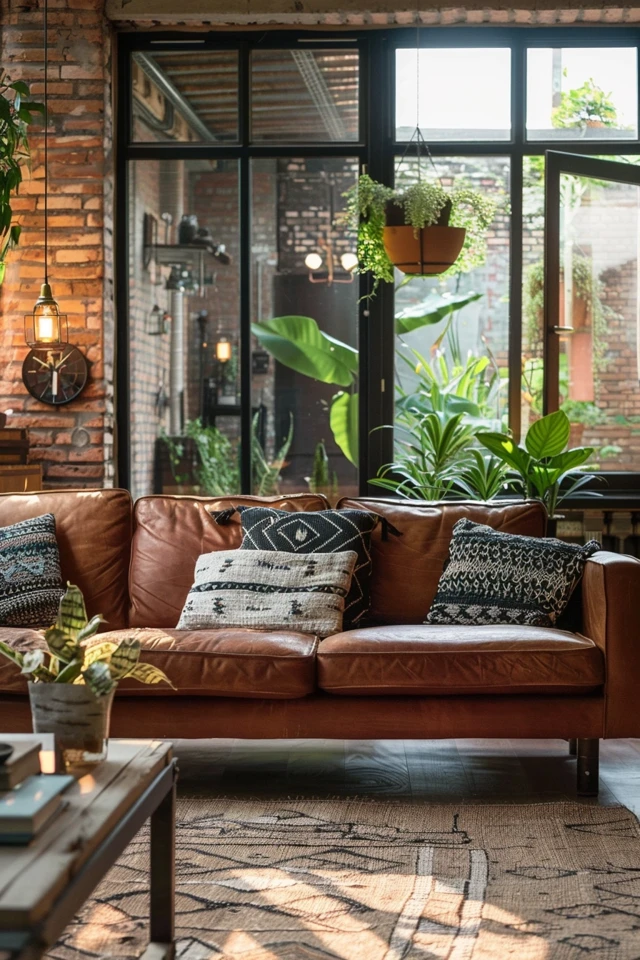
Industrial Design Living Room Essentials & Tips
There is a raw, magnetic pull to industrial design that is difficult to replicate with any other style. It celebrates the unfinished, the mechanical, and the structural integrity of a building rather than hiding it behind drywall. I remember my first industrial project in a converted warehouse; the challenge wasn’t adding decor, but knowing exactly when to stop.
Many homeowners assume you need a massive loft in Brooklyn or a converted factory to pull this off, but that is a myth. You can bring industrial grit and warmth into a standard suburban living room if you focus on materials and scale. It is about balancing the coldness of metal and concrete with the warmth of worn leather and reclaimed wood.
In this guide, I will walk you through the practical steps of building this look, from flooring choices to the exact spacing of your furniture. If you are looking for visual inspiration to go along with these tips, you will find a curated Picture Gallery at the end of the blog post.
1. The Architectural Envelope: Walls and Floors
The biggest hurdle in industrial design is dealing with a “vanilla box” room. If you do not have exposed brick or concrete floors, you have to create that texture artificially without it looking cheap. The goal is to create a shell that feels time-worn and substantial.
If you are renting or on a budget, avoid peel-and-stick brick wallpaper. In my experience, the seams always show, and the texture never catches the light correctly. Instead, opt for a limewash paint treatment or a concrete-effect plaster. This adds depth and movement to the walls that flat grey paint simply cannot achieve.
Designer’s Note: The “One Wall” Rule
A common mistake I see is forcing an industrial feature wall where it doesn’t belong. If you are adding a brick veneer or a concrete finish, apply it to a wall that makes structural sense. Usually, this is the wall with windows or the main fireplace wall. Applying it to a random partition wall breaks the illusion that the structure is original to the building.
Flooring Solutions
Concrete floors are the gold standard, but they can be hard on the joints and cold in winter. If you have hardwood, stick to matte finishes. High-gloss polyurethane looks too new for this aesthetic. Wide-plank engineered oak with a wire-brushed finish is a fantastic alternative that provides warmth while maintaining that raw look.
Rug Sizing and Placement
Because industrial furniture often features heavy metal legs, your rug choice is critical for anchoring the space. Here are the specific measurements I use for rug placement:
- Front Legs Only: For a more relaxed look, ensure the front legs of the sofa and accent chairs sit at least 6 to 8 inches onto the rug.
- Full Coverage: If you have a large open floor plan, place all furniture legs on the rug to define the “living zone.”
- The Border: Leave 12 to 18 inches of bare floor visible around the perimeter of the room. This negative space allows the architectural flooring material to breathe.
2. Selecting High-Impact Furniture
Industrial furniture relies on the “Holy Trinity” of materials: leather, metal, and reclaimed wood. However, you cannot just buy everything in black metal and call it a day. The secret to a livable industrial room is mixing visual weights. If your sofa is heavy and blocky, your coffee table should be visually light (like a glass top or thin metal legs).
The Sofa: Leather vs. Fabric
A distressed leather Chesterfield or a low-profile cognac leather sectional is the classic choice. Leather ages beautifully and handles the “wear and tear” aesthetic well. Scratches on a velvet sofa look like damage; scratches on an industrial leather sofa look like patina.
If you have pets that are heavy scratchers, distressed microfiber in a charcoal grey is a durable alternative. It mimics the matte look of suede but cleans up with water.
Spacing and Layout
Industrial lofts feel spacious because of the negative space. In a standard living room, we mimic this by floating furniture away from the walls. Push your furniture grouping toward the center of the room to create intimacy.
- Walkways: Maintain a minimum of 30 to 36 inches for main traffic paths. Industrial furniture can be bulky, so measure twice.
- Coffee Table Distance: Place your coffee table 14 to 18 inches from the edge of the sofa. This is close enough to set down a drink but far enough to walk through.
- Table Height: Ideally, the coffee table should be the same height as the sofa seat cushions or 1 to 2 inches lower. Never higher.
Common Mistakes + Fixes
Mistake: Buying a “matching set” of industrial furniture (coffee table, side table, and TV stand all from the same line).
Fix: Curate the room over time. If your coffee table is wood and metal, try a solid metal side table or a repurposed antique trunk. Contrast is key.
3. Industrial Lighting Mastery
Lighting is the jewelry of an industrial room. This style was born in factories that required bright, functional light, often delivered through caged bulbs and metal shades. Today, we use those same fixtures but swap the blinding factory bulbs for warm, ambient light.
You must layer your lighting. Relying on a single ceiling fixture will make the room feel like an interrogation room rather than a home. You need three layers: ambient (overhead), task (reading lamps), and accent (mood lighting).
The Bulb Matters
The “Edison bulb” is a staple, but be careful. Old-school incandescent Edison bulbs get very hot and use a lot of energy. Switch to “filament LED” bulbs. Look for a color temperature of 2200K to 2700K. This gives you that warm, amber glow without the heat.
Fixture Placement Guide
Getting the scale and height right is more important than the style of the fixture itself. Here are the rules I follow:
- Pendants: If hanging a pendant light in the center of the room, the bottom of the fixture should be at least 7 feet off the floor so tall guests don’t bump their heads.
- Over Coffee Tables: If you are hanging a statement chandelier directly over a coffee table (and no one walks under it), you can drop it lower, to about 60 to 66 inches from the floor to the bottom of the fixture.
- Floor Lamps: Use an oversized, adjustable architect lamp or a tripod surveyor lamp in a dark corner. This adds vertical interest and brightens shadows.
4. Softening the Edges with Textiles
This is where many DIY industrial designs fail. The room ends up feeling cold, sterile, and uninviting. To make an industrial living room livable, you must introduce soft textures to counteract the hard surfaces of brick, concrete, and steel.
Think of textiles as the “insulation” for the design. You aren’t covering up the industrial elements; you are framing them with comfort. The color palette should remain neutral—greys, creams, tans, and blacks—but the textures should be rich and varied.
What I’d Do in a Real Project
If I am styling a leather sofa in an industrial room, here is my exact textile checklist:
- The Throw: I drape a chunky knit wool blanket or a faux fur throw over the arm. This breaks up the shiny surface of the leather.
- The Pillows: I mix materials. I would use two 22-inch square pillows in a heavy canvas or linen (for structure) and two 20-inch pillows in a soft velvet or boucle (for comfort).
- The Curtains: Avoid sheer, frilly curtains. Go for floor-to-ceiling drapery in a heavy linen blend. Install the rod as high as possible (just below the ceiling cornice) to exaggerate the height of the room, mimicking a loft.
5. Decor, Accessories, and “Salvage”
Accessories in industrial design should feel salvaged or repurposed. This doesn’t mean your living room should look like a garage sale, but the items should have a sense of history or mechanical function. The keyword here is “utility.”
Avoid mass-produced knick-knacks. Instead, look for vintage gears, old metal signage, or antique fans. A large, oversized analog clock is a classic staple, but ensure it is made of real metal, not plastic.
Styling Shelving Units
Open shelving units made of pipe and wood are very common in this style. However, they can easily look messy. Use the “2/3 Rule”: fill only two-thirds of the shelf space and leave one-third empty. This negative space prevents the unit from looking cluttered.
- Books: Stack some vertically and some horizontally to create architectural lines.
- Storage: Use wire baskets or galvanized metal bins on lower shelves to hide remote controls, cables, and unappealing clutter.
- Greenery: This is non-negotiable. You need plants to breathe life into the room. A large Snake Plant or a Rubber Tree works perfectly because they have structural leaves that hold their own against heavy furniture.
Final Checklist
Before you consider your room finished, run through this quick checklist to ensure you have hit the right balance.
- Texture Check: Do you have at least one element of wood, metal, leather, and soft textile?
- Lighting Temperature: Are all your bulbs warm (2700K or lower)? Cold blue light kills industrial vibes.
- Rug Size: Does your rug extend at least 6 inches under the front legs of your sofa?
- Patina: Do you have at least one item that is actually vintage or repurposed, rather than brand new?
- Height Variation: Have you drawn the eye up with high curtains, tall plants, or high-hung art?
FAQs
Can I do industrial design in a small living room?
Absolutely. In small spaces, focus on “visual permeability.” Use furniture with exposed legs rather than skirted sofas, and choose coffee tables with glass tops or open metal frames. This allows you to see the floor underneath, making the room feel larger. Wall-mounted pipe shelving also saves floor space while adding that essential industrial look.
How do I stop the room from feeling too dark?
Industrial design leans towards darker colors, which can be tricky. Counteract this by using large mirrors. A large, grid-style mirror mimics the look of a factory window and bounces light around the room. also, keep your rug light-colored (like a cream wool or faded grey) to reflect light upwards.
Is industrial design kid and pet friendly?
It is actually one of the most durable styles for families. Industrial materials—distressed wood, metal, leather, and concrete—hide wear and tear better than almost any other style. A dent in a reclaimed wood table just adds character, whereas a dent in a polished mahogany table is a disaster. Avoid glass coffee tables if you have toddlers, and opt for a round wood ottoman instead.
Can I mix industrial with other styles?
Yes, industrial is very versatile. “Industrial Boho” is popular, adding more plants and colorful textiles. “Mid-Century Industrial” is also a great match, mixing sleek 1950s furniture lines with raw industrial architectural shells. The key is to keep the color palette cohesive across the different styles.
Conclusion
Creating a successful industrial living room is about embracing imperfection. It is a style that forgives scratches, welcomes age, and prefers sturdy utility over fragile ornamentation. Whether you are in a downtown loft or a suburban ranch, the principles of raw materials, moody lighting, and layered textures remain the same.
Start with your anchor pieces—the sofa and the rug—and build outwards. Don’t rush to fill every corner; let the space evolve as you find unique salvaged pieces that speak to you. The best industrial rooms look like they have been collected over a lifetime, not purchased in a single weekend.
Picture Gallery


