
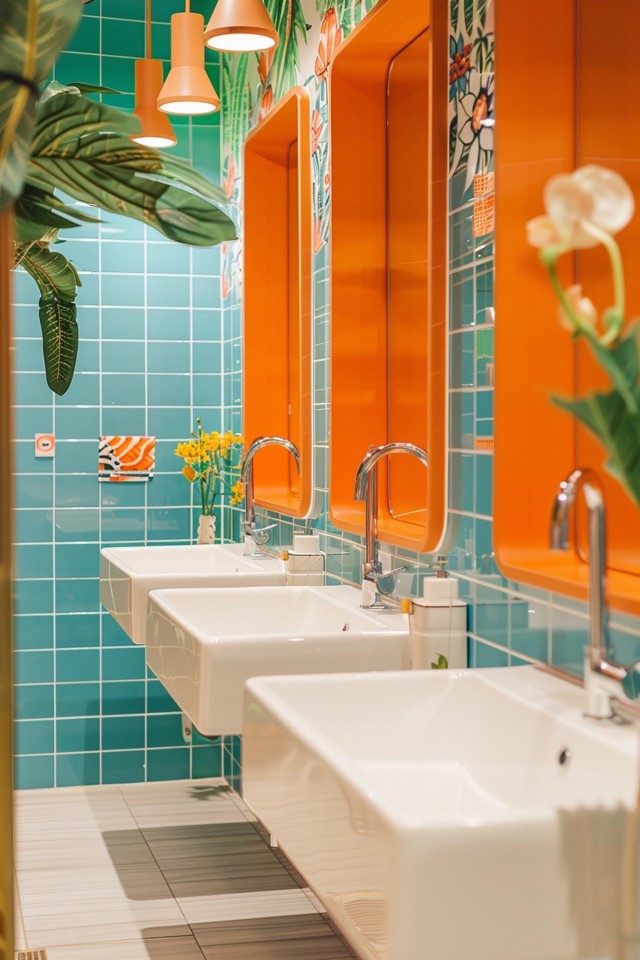
Innovative Commercial Bathroom Ideas for Businesses
I distinctly remember dining at a high-end steakhouse in Chicago a few years ago. The dining room was impeccable, featuring velvet banquettes and mood lighting, but the restroom felt like a sterile afterthought found in a gas station.
That disconnect ruined the immersion immediately. In commercial design, the restroom is not just a utility space; it is an extension of your brand’s story and a critical touchpoint for customer experience.
Whether you manage a boutique hotel, a bustling restaurant, or a corporate office, the details in the restroom signal how much you care about your guests’ comfort. For plenty of visual inspiration, don’t miss the extensive Picture Gallery located at the very end of this blog post.
1. The Immersive “Selfie” Moment: Lighting and Atmosphere
In the age of social media, the commercial bathroom has become an unexpected marketing tool. If your restroom design is unique, people will take photos, tag your location, and provide free advertising.
However, creating a “selfie moment” isn’t just about slapping a neon sign on a wall. It requires a strategic approach to lighting that flatters the face and eliminates harsh shadows.
I typically avoid standard overhead pot lights directly above the vanity. This creates “raccoon eyes” and casts unflattering shadows that make guests look tired.
The Lighting Rules of Thumb
Instead of relying solely on ceiling cans, layer your lighting. Use cross-illumination at the mirror level.
- Sconce Placement: Mount vertical sconces on either side of the mirror. The center of the light source should be approximately 60 to 66 inches from the finished floor (AFF).
- Color Temperature: For hospitality settings (restaurants/bars), aim for 2700K to 3000K warm white. For offices or retail, 3500K is crisp and clean without being clinical.
- Color Rendering Index (CRI): Always specify bulbs with a CRI of 90 or higher. This ensures colors (and skin tones) look accurate rather than washed out.
Designer’s Note: The Mirror Trick
What usually goes wrong: Business owners buy standard residential mirrors that are too small for commercial traffic.
The Fix: Go big. I often spec wall-to-wall mirrors or floor-to-ceiling glass behind the vanity. It doubles the perceived size of a cramped commercial restroom and bounces light into dark corners.
2. Material Durability Meets High Design
The biggest challenge in commercial design is balancing aesthetics with the brutal reality of high traffic. Materials must withstand heavy cleaning chemicals, water splashes, and thousands of uses per month.
You cannot use the same materials here that you would use in a residential powder room. Porous natural stones like Carrara marble will etch and stain within the first week of a restaurant opening.
For countertops, I almost exclusively use Quartz or compact sintered stone (like Dekton). These materials mimic the look of natural stone but are non-porous and antimicrobial.
Flooring Safety and Maintenance
Slip resistance is non-negotiable. When selecting floor tile, check the DCOF (Dynamic Coefficient of Friction) rating.
- The Rating: You need a DCOF greater than 0.42 for wet areas, but for commercial bathrooms, I prefer 0.60 or higher.
- Grout Strategy: Minimize grout lines on the floor to reduce scrubbing. Large format tiles (24″x24″ or larger) work best.
- The Material: Use epoxy grout rather than standard cement-based grout. Epoxy is waterproof, stain-proof, and doesn’t require sealing.
Common Mistakes + Fixes
Mistake: Using wood floors or laminate in a commercial restroom to “warm up” the space.
Fix: Use wood-look porcelain tile or luxury vinyl plank (LVP) rated for commercial use. It gives the warmth of timber but can be mopped with bleach solutions without warping.
3. Touchless Tech and Hygiene Integration
Post-pandemic, nobody wants to touch a handle. Touchless technology is no longer a luxury; it is a standard expectation for Class A offices and hospitality venues.
However, automated fixtures often look institutional and robotic. The goal is to find sensor technology that still feels architectural and high-end.
Look for sensor faucets where the sensor is hidden on the underside of the spout, rather than a visible black window on the front. This keeps the design sleek.
The Power Source Dilemma
When planning your plumbing and electrical, you must decide how these fixtures are powered. Do not rely on battery packs for high-traffic zones.
- Battery Operated: Cheaper upfront, but facility managers hate them. Batteries die unexpectedly, leading to “Out of Order” signs.
- Hardwired: Requires an electrical outlet under the sink during rough-in. This is the pro standard. It ensures consistent performance and reduces maintenance labor.
What I’d Do in a Real Project: The “All-in-One” Station
To keep floors dry, I often specify all-in-one wash stations (like the Dyson Airblade Wash+Dry or similar integrated deck systems). These wash and dry hands over the basin.
This prevents the trail of water on the floor that usually occurs when a guest walks from the sink to the paper towel dispenser. It improves safety and keeps the restroom looking cleaner for longer.
4. Acoustic Privacy and Partition Design
Nothing kills the vibe of a luxury establishment faster than a restroom with poor acoustics. Thin partitions and echoing tile create an uncomfortable experience for guests.
Privacy is the ultimate luxury. Standard stalls with large gaps at the floor and ceiling are quickly falling out of favor in better establishments.
I advocate for full-height partitions or individual water closets whenever the floor plan allows. This solves both visual and acoustic privacy concerns.
Controlling the Sound
Hard surfaces bounce sound. To mitigate the “echo chamber” effect, you need to introduce sound-absorbing materials where possible.
- Ceilings: Use acoustic ceiling tiles or acoustic drywall. If you have an exposed ceiling, install acoustic baffles painted to match the ceiling color.
- Doors: If building individual water closets, use solid core doors with weather stripping (gaskets) to block sound transfer.
- Music: always pipe music into the restroom. It should be slightly louder than the dining room or lobby ambient noise to provide a “sound mask.”
Layout Logic for Privacy
Avoid direct sightlines from the corridor into the restroom. If the door opens and a diner can see the urinal or toilet stalls, the layout has failed.
Use a labyrinth entrance (a winding entry with no door) to block sightlines while eliminating a touchpoint (the door handle). This also improves air circulation.
5. Universal Design and True Inclusivity
Accessibility is often treated as a box to check for code compliance, but innovative design goes beyond the bare minimum of the ADA (Americans with Disabilities Act).
Universal design means creating a space that works for everyone—including parents with strollers, people with mobility aids, and the elderly—without looking “medical.”
Integrate grab bars that match your faucet finish (matte black, brushed gold) rather than using standard institutional stainless steel.
Critical Spacing Measurements
While local codes vary, here are the operational standards I stick to for comfortable flow:
- Turning Radius: Ensure a 60-inch clear turning circle in the accessible stall or room. This is non-negotiable for wheelchair users.
- Corridor Width: Main pathways inside the restroom should be at least 42 to 48 inches wide to allow two people to pass each other comfortably.
- Sink Height: Mount accessible vanities at 34 inches maximum height. Ensure pipes underneath are wrapped or covered to prevent burns on legs.
Designer’s Note: The “Purse Check”
What usually goes wrong: Designers forget where guests put their belongings. I have seen countless luxury bathrooms with nowhere to set a phone or hang a bag.
The Fix: Install a heavy-duty coat hook on the back of every stall door. Inside the stall, providing a small shelf for phones is a detail that guests rave about.
Final Checklist: Before You Build
Use this checklist to validate your commercial bathroom design before construction documents are finalized.
- Code Check: Have you verified the required fixture count based on your building’s occupancy load?
- Lighting: Are vanity lights at face level (approx. 66″ AFF) rather than just overhead?
- Power: Did you rough-in electrical outlets under the sink for hardwired faucets?
- Slip Rating: Is the floor tile rated DCOF > 0.42 (ideally > 0.60)?
- Privacy: Are sightlines blocked from the main corridor?
- Storage: Is there a hidden cabinet for restocking toilet paper and soap?
- Hooks: Is there a hook in every single stall?
- Trash: Is the trash receptacle built into the vanity or wall to save floor space?
FAQs
How much budget should I allocate for commercial restrooms?
A general rule of thumb is 10-15% of your total interior build-out budget. While this seems high, remember that plumbing and durable finishes are expensive. Skimping here leads to higher maintenance costs later.
What is the best wall finish for easy cleaning?
Large-format porcelain tile is the gold standard. For a more budget-friendly option that is still durable, look into commercial-grade vinyl wall coverings (Type II). Scrubbable paint (semi-gloss or epoxy paint) is the bare minimum for areas above wainscoting.
Do I really need a floor drain in the center of the room?
Yes. Even if code doesn’t strictly require it in your specific jurisdiction, your cleaning crew needs it. It allows them to hose down or deep clean the floors efficiently in the event of an overflow.
Should I use paper towels or hand dryers?
This is a brand decision. High-end restaurants usually prefer cloth or high-quality paper towels as they are quieter and feel more luxurious. High-traffic venues (stadiums, fast casual) prefer air dryers to reduce waste and restocking labor.
Conclusion
Designing a commercial bathroom requires a distinct shift in mindset from residential design. You are engineering a machine that must process high traffic while maintaining the illusion of a private sanctuary.
By focusing on flattering lighting, durable non-porous materials, and thoughtful privacy details, you turn a basic necessity into a brand asset. The goal is for your guest to return to their table or desk feeling refreshed, not relieved to have escaped.
When you invest in the details—like hardwired sensors, acoustic privacy, and ample space for belongings—you signal respect for your customer. That attention to detail rarely goes unnoticed.
Picture Gallery


