Inspiring Gym Wall Painting Ideas for Your Space
Discover vibrant gym wall painting ideas to energize your fitness space and inspire your workout routine. Transform your gym’s ambiance now!
Introduction
Designing a home gym often falls to the bottom of the renovation list. Many homeowners simply shove a treadmill into a spare bedroom or clear out a corner of the basement and call it a day. However, I have found that the environment where you exercise has a direct correlation to your motivation and performance. If your space feels like a dungeon or a storage unit, you are far less likely to use it.
In my design practice, I treat home gyms as “high-energy zones.” Unlike a bedroom where the goal is rest, or a living room where the goal is conversation, a gym needs to stimulate action. Paint is the most cost-effective tool we have to change the psychological impact of a room. It can turn a cramped basement corner into a sleek, industrial fitness studio that rivals a high-end commercial gym.
You do not need to be a professional artist to pull this off, but you do need a plan. Whether you are looking for calming zones for yoga or high-contrast graphics for HIIT workouts, the right wall treatment changes everything. If you are looking for visual inspiration, you can jump right to the Picture Gallery at the end of the blog post.
1. Color Psychology: Matching the Hue to the Workout
The first question I ask clients during a gym consultation is simple: “What kind of movement happens here?” The color on your walls should support the physiological response you want from your body. A color palette that works for heavy lifting might actually be distracting for meditation or yoga.
Cardio and HIIT (High Intensity)
If your routine involves speed, sweat, and high heart rates, you want “active” colors. Red is scientifically proven to increase heart rate, but painting an entire room fire-engine red can feel oppressive. Instead, I recommend using energetic accents like tangerine orange, electric blue, or neon yellow against a neutral backdrop. These colors signal the brain to wake up.
Strength Training and Weights
For weightlifting, focus is key. You want an environment that feels solid and grounded. I often lean toward “industrial” palettes for these spaces. Charcoal grey, deep navy, or slate blue work exceptionally well. These darker tones help narrow your visual field, allowing you to concentrate on form and counting reps without visual clutter.
Yoga and Recovery
If your space is dedicated to Pilates, yoga, or stretching, avoid high-contrast patterns. You want the eye to rest. Soft sage greens, warm terracottas, and creamy whites are ideal. These colors mimic nature and lower cortisol levels.
Designer’s Note:
A common mistake is choosing a color based on a tiny swatch under a store’s fluorescent lights. Gyms often have unique lighting situations, especially in basements. Always paint a 2-foot by 2-foot patch on the wall and look at it during the time of day you usually work out.
2. Strategic Zoning with Color Blocking
Most home gyms are not massive, dedicated complexes. They are often shared spaces—a guest room that doubles as a Pilates studio, or a garage corner that holds a squat rack. This is where color blocking becomes a functional tool, not just a decorative one. You can use paint to visually separate the “work” area from the rest of the room.
The “Arch” Technique
A popular and effective trend is painting a solid arch shape behind a specific piece of equipment, like a Peloton bike or a weight bench. This frames the equipment and creates a dedicated mental zone. If you are doing this, scale is important. The arch should extend at least 6 to 10 inches past the equipment on all sides to avoid looking crowded.
Corner Wrapping
If your gym is in the corner of a larger room, paint that corner (two walls) and the ceiling above it in a distinct, bold color. This creates a “room within a room” effect. It visually contains the energy of the workout space so it doesn’t bleed into your home office or playroom area.
The Wainscoting Effect
For a classic look that adds durability, paint the bottom third of the wall a darker color and the top two-thirds a lighter shade. This grounds the space. Practically speaking, gym walls take a beating from medicine balls and dumbbells. A darker color on the bottom hides scuffs much better than white.
Common Mistake + Fix:
Mistake: Stopping the paint color exactly where the equipment ends.
Fix: Always give your color block “breathing room.” Extend the paint at least 12 inches beyond the footprint of your mats or machines to make the zone feel intentional, not accidental.
3. Visual Tricks for Small or windowless Spaces
Many home gyms end up in basements or windowless spare rooms. As a designer, my challenge here is to banish the claustrophobia. We want the room to feel expansive, regardless of the actual square footage.
The “Infinity” Ceiling
In small rooms with standard 8-foot ceilings, I often paint the walls and the ceiling the same color. This blurs the line where the wall ends and the ceiling begins, making the room feel taller and more enveloping. Deep colors like hunter green or charcoal work surprisingly well for this, creating a cozy, boutique studio vibe rather than a cramped box.
Vertical Stripes for Height
If the ceiling feels oppressively low—common in basement gyms with ductwork—vertical stripes are your best friend. You don’t need to stripe the whole room. A single feature wall with thick, 12-inch vertical stripes can trick the eye into seeing more height.
Mirrors and Paint Interaction
Mirrors are essential in a gym for checking form, but they also double the visual impact of your paint choices.
- Place mirrors opposite your most interesting painted wall to reflect the color.
- If you have a window, place the mirror on the adjacent wall, not opposite it, to bounce light without creating glare.
- Install mirrors 18 to 24 inches off the floor. You rarely need to see your feet, and this leaves wall space below for outlets and baseboards.
4. Creative Techniques: Geometrics and Murals
If you want a space that feels dynamic, geometric patterns are a great DIY-friendly option. They introduce movement to the walls, which subconsciously encourages physical movement.
The Diagonal Split
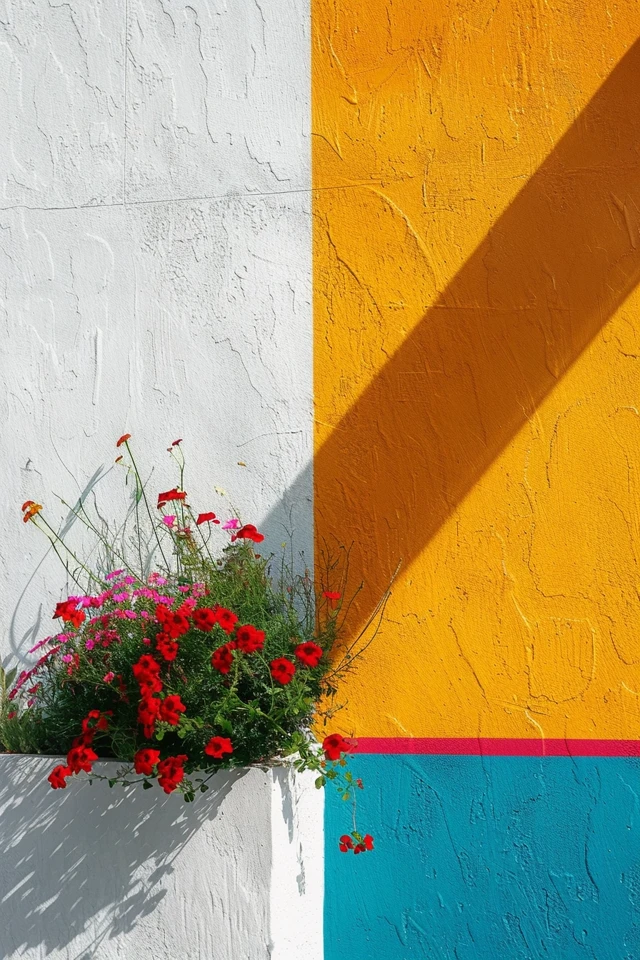
A diagonal line rising from left to right implies ascent and progress. Painting the bottom half of a wall in a dynamic color (like teal) and the top half white creates a feeling of energy. This is much easier to tape off than a complex mural but looks high-end.
Mountain Ranges and Chevrons
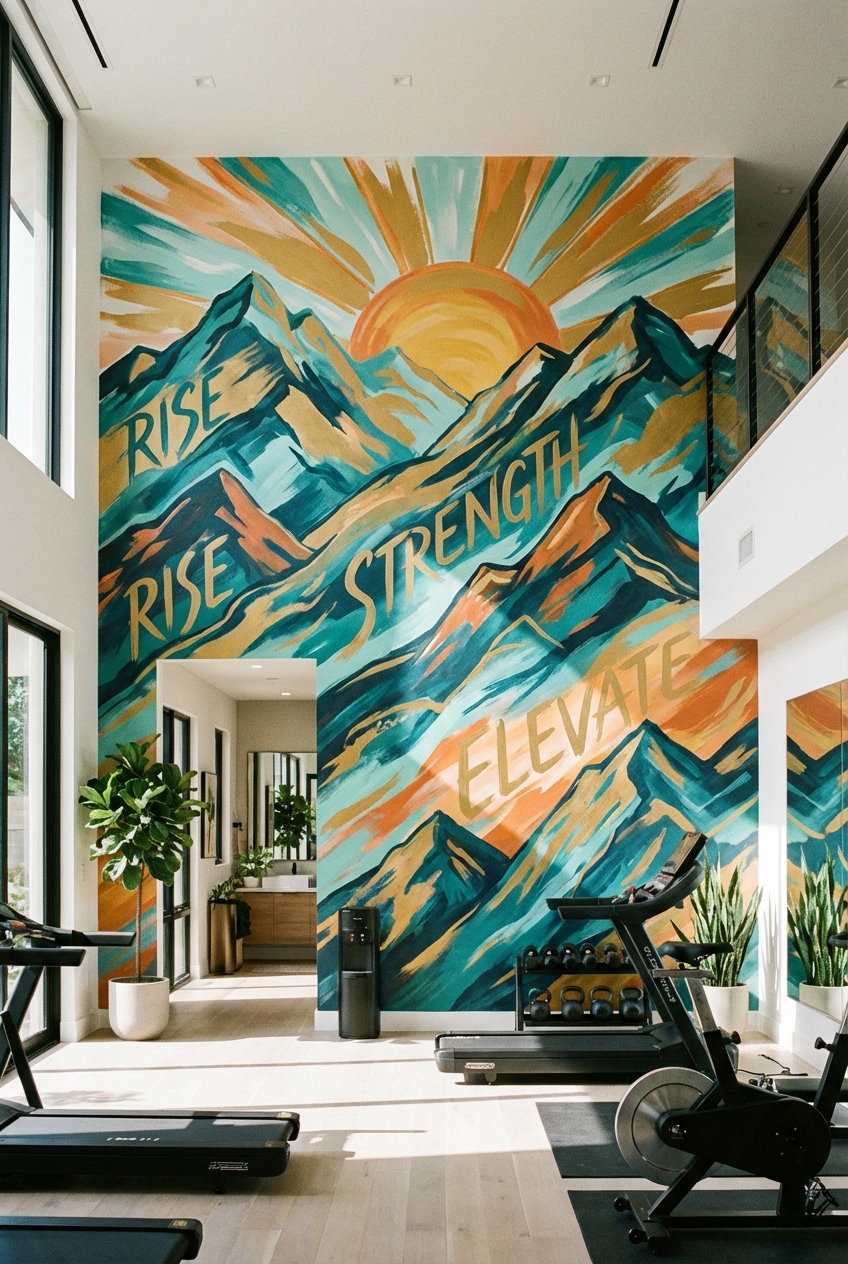
These shapes are popular because they are sharp and aggressive—perfect for a workout mindset. A subtle, tone-on-tone mountain mural (using three shades of grey) adds depth without overwhelming the eye.
Execution Tips for Clean Lines:
- Use high-quality painter’s tape (like FrogTape) meant for delicate surfaces if you are painting over fresh base coats.
- Once the tape is applied, run a damp rag over the edge to activate the seal.
- Pro Tip: Paint a thin layer of the base wall color over the tape edge first. This seals the tape. Once that dries, paint your accent color. This guarantees a razor-sharp line with zero bleed.
5. Selecting the Right Finish: Durability Matters
This is the most “technical” part of the design, but arguably the most important. A home gym is a high-utility space. There is moisture (sweat/humidity), friction (equipment rubbing against walls), and impact (weights hitting the plaster). The standard “flat” paint used in bedrooms will not survive here.
The Case for Satin or Eggshell
I almost exclusively recommend a Satin finish for home gyms. It has a slight sheen that reflects light, making the room feel brighter, but more importantly, it is scrubbable. You can wipe down a Satin wall with a damp cloth and mild soap.
Avoid Flat/Matte Paint
Flat paint is porous. If you splash water or sweat on it, it may leave a permanent mark. It also scuffs incredibly easily. If you lean a rubber weight plate against a flat-painted wall, you will likely leave a black mark that is impossible to clean without repainting.
Scuff-Resistant Formulas
Several major paint brands now offer “Scuff-X” or athletic-grade paints specifically designed for high-traffic areas like hallways and gyms. While they cost $10-$15 more per gallon, they harden to a much tougher shell than standard latex paint. For a room with heavy equipment, this investment is worth it.
Low VOCs are Mandatory
Because you will be breathing heavily in this room, air quality is paramount. Always choose Low-VOC or Zero-VOC paints. The “new paint smell” is actually off-gassing chemicals, which can cause headaches and respiratory issues—the exact opposite of what you want during a workout.
Final Checklist: What I’d Do in a Real Project
If I were designing your gym today, here is the exact mental checklist I would run through to ensure the space is successful.
The “Design” Checklist:
FAQs
- Can I paint my gym ceiling black?
- Yes, absolutely. Painting a ceiling black (especially in a basement with exposed joists) creates an industrial, loft-like vibe. It makes the ceiling “disappear” visually. However, you must increase your lighting output. Dark ceilings absorb light, so you will need additional track lighting or LED strips to keep the room safe and functional.
- How do I protect the paint from weight racks?
- Paint alone won’t protect drywall from a 45lb plate. I recommend installing a chair rail or a dedicated “rub rail” made of wood or rubber at the height where your weights might hit. You can paint this trim the same color as the wall for a seamless look, or a contrasting color for a graphic punch.
- What is the best color for a small, dark basement gym?
- Counterintuitively, bright white is not always best for dark basements because without natural light to bounce around, white can look dingy and grey. I prefer mid-tone warm greys or greiges (grey-beige). These colors hold their own in artificial light and make the space feel deliberate rather than unfinished.
- Is wallpaper a good idea for a gym?
- Vinyl wallpaper is a great option because it is durable and wipeable. However, avoid standard paper-based wallpapers as high humidity from sweat and breath can cause them to peel at the seams over time. If you use wallpaper, ensure the room has good ventilation.
Conclusion
Transforming your home gym with paint is about more than just aesthetics; it is about creating a space that respects the effort you put into your health. Whether you choose a calming sanctuary palette or a high-voltage geometric design, the goal is to reduce the friction between you and your workout.
By considering the psychology of color, the practical needs of durability, and the specific lighting of your room, you can create a gym that pulls you in rather than pushes you away. Remember to test your colors, invest in quality paint finishes, and have fun with the process. A gym is one of the few rooms in the house where you can afford to be bold and experimental.
Picture Gallery
Five photographs · drag or swipe