
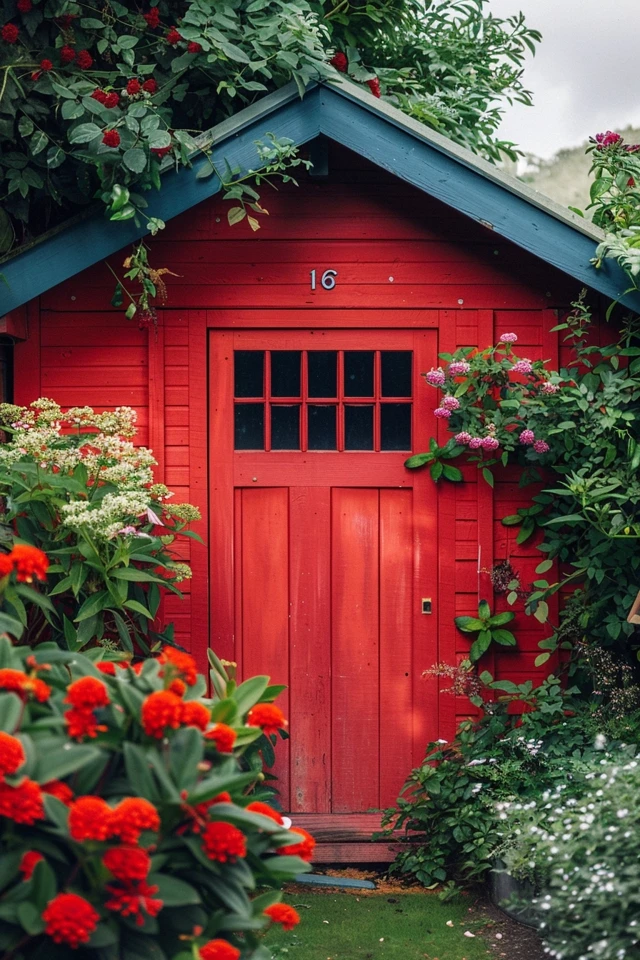
Inspiring Shed Paint Ideas to Enhance Your Yard
For years, the backyard shed was treated purely as a utilitarian necessity—a place to hide the lawnmower, stack bags of mulch, and let spiders spin their webs undisturbed. However, in recent landscape and exterior design trends, we have seen a massive shift toward treating these structures as architectural focal points. For a massive dose of visual inspiration, be sure to scroll all the way to the Picture Gallery at the end of this blog post.
I remember a project last year where a client wanted to tear down a perfectly sturdy, albeit ugly, metal shed because it clashed with their new patio renovation. Instead of demolition, we spent a fraction of the budget on high-quality exterior paint, new oversized hardware, and a charming window box. The result wasn’t just “tolerable”; it became the favorite visual element in the garden.
Choosing the right paint for your shed involves more than just picking a pretty swatch at the hardware store. It requires an understanding of how natural light hits the structure, how the color interacts with your surrounding foliage, and the specific durability requirements of outdoor structures. Whether you are creating a potting station, a home office, or simply upgrading your storage, the right color application can increase your property’s curb appeal instantly.
Understanding Color Theory in the Landscape
When I select colors for an exterior structure, I always start by analyzing the surrounding “fixed” elements. In a landscape design context, your fixed elements are the main house, the hardscaping (pavers or concrete), and the dominant foliage. You generally have two routes: blending in or standing out.
If your yard is small, a shed painted in dark, recessive colors like charcoal, forest green, or navy blue can actually make the space feel larger. These colors recede visually, allowing the eye to focus on the greenery and flowers rather than the structure itself. This is a common trick we use in urban garden design to hide bulk.
Conversely, if you have a large yard, a shed painted in a light, advancing color—like soft white, cream, or a pale buttery yellow—can act as a destination point. It draws the eye across the lawn, creating a sense of journey and depth.
Designer’s Note:
One of the most common mistakes I see is ignoring the roof color. Unless you are re-roofing the shed, the shingle or metal roof color is your boss. If you have warm brown shingles, cool grey paint will likely clash. Always hold your paint chip up against the roof material, not just the siding.
The “Rule of Three” for Exterior Palettes
Just like in interior design, exterior structures benefit from a cohesive color scheme. I recommend sticking to a strict three-color palette to keep the look professional and polished rather than chaotic.
First, you need your Field Color. This is the dominant color that covers the siding. It should comprise about 60% to 70% of the visual weight.
Second is your Trim Color. This applies to corner boards, fascia, window frames, and soffits. This usually accounts for 20% of the scheme. A crisp white is traditional, but a monochromatic look (using a shade two tones darker or lighter than the field color) feels much more modern.
Third is your Accent Color. This is exclusively for the door and perhaps the window boxes or shutters. This is where you can have fun with personality without overwhelming the yard. A bright red, deep teal, or sunny yellow door on a neutral shed is a classic move that adds incredible charm.
What I’d do in a real project:
- The Modern Box: Black field (Tricorn Black or similar), Black trim (same color but higher sheen), and natural cedar wood door.
- The Cottage: Sage green field, soft cream trim, and a terracotta orange door.
- The Classic: Navy blue field, stark white trim, and a varnished wood door.
The High-Contrast Door Strategy
If you are hesitant to paint the entire shed a bold color, focus all your energy on the door. The shed door is the “handshake” of the structure. It sets the tone for what is inside and offers the highest return on investment for your time.
When selecting a door color, consider the seasonality of your garden. If your shed sits next to azaleas that bloom bright pink in spring, a clashing orange door might look chaotic for two months of the year. I often look for complementary colors to the dominant bloom in the yard.
Additionally, consider the finish. For doors, I almost always specify a semi-gloss or high-gloss finish. Not only is it more durable against fingerprints and gardening dirt, but the light reflection also adds a touch of luxury.
Common Mistakes + Fixes:
- Mistake: Painting the hinges and hardware the same color as the door.
- Fix: Take the time to remove the hardware or tape it off meticulously. Better yet, spray paint the hardware matte black while it is off the door. Contrast makes the design feel intentional.
Interior Considerations: The “She Shed” or Studio
If your shed is finished on the inside for use as an office, studio, or retreat, the exterior paint needs to hint at the interior vibe. We call this “design continuity.”
If the interior is a moody, dark reading room, a pastel yellow exterior might feel disjointed. You want the transition from outside to inside to feel seamless. For studio sheds, I love carrying the exterior accent color inside—perhaps painting the interior door or the window sashes the same shade.
Space planning inside a shed is critical because every inch counts. If you are painting the interior, stick to light, high-LRV (Light Reflectance Value) colors to maximize the feeling of space. White, off-white, and very pale greys bounce light around, which is crucial in structures that usually have limited windows.
Pro-Level Rule of Thumb:
For interior shed layouts, ensure you have a clear “circulation path” of at least 30 to 36 inches wide. Don’t crowd the entrance with furniture. Paint can help define zones here, too; use a different sheen or color on the back wall to create a focal point that draws you in.
Technical Execution: Finishes and Durability
As a designer, I can pick beautiful colors all day, but if the paint peels in six months, I haven’t done my job. Sheds face harsher conditions than your main house because they are often lower to the ground, subjecting them to more splash-back from rain and higher moisture levels from vegetation.
Sheen Selection Guide:
- Flat/Matte: Hides imperfections in old wood siding well, but is harder to clean. Avoid this for high-traffic areas.
- Satin/Eggshell: The “Goldilocks” zone. It offers enough washability for exterior siding while hiding minor dents and dings. This is my standard recommendation for siding.
- Semi-Gloss: Reserved for trim, doors, and shutters. It stands up to moisture and scrubbing but will highlight every flaw in the wood.
Preparation is Key:
Never paint over raw wood without a primer, and never paint over mold or mildew. Use a bleach and water solution (1:3 ratio) to scrub the shed down before you start. If you skip this, the mold will continue to grow under the new paint, eventually bubbling up and ruining your finish.
Landscaping to Frame Your Paint Job
Your paint job does not exist in a vacuum. The plants you place around the shed act as the final layer of design. If you have painted your shed a dark color (like black or forest green), you need high-contrast plants in front of it to prevent it from looking like a black hole.
Think about planting light-colored ornamental grasses, white hydrangeas, or variegated hostas around the base. The light foliage will pop against the dark paint, creating a sophisticated, layered look.
Conversely, if you have a white or light-colored shed, deep green boxwoods or dark foliage plants like Ninebark provide the necessary grounding weight so the shed doesn’t look like it’s floating.
Maintenance Tip:
Keep all vegetation trimmed back at least 12 to 18 inches from the shed walls. This allows for airflow, which prevents rot, and keeps wet leaves from staining your fresh paint job.
Lighting and Hardware: The Jewelry
Once the paint is dry, the hardware and lighting are the “jewelry” of the outfit. Do not reuse rusty, small hinges unless that is the specific rustic look you are going for.
Oversized barn hinges in matte black look incredible on almost any paint color. They play with the scale of the small structure, making it feel more substantial and custom-built.
For lighting, a gooseneck barn light above the door is a classic choice. In terms of placement, I usually position the light fixture so the bulb is roughly 66 to 72 inches from the standing surface (the ground or ramp). This keeps the light functional without being right in your eyes when you open the door.
Final Checklist: The Shed Transformation
Before you buy your first gallon of paint, run through this list to ensure you have covered all your bases.
- Assess the Roof: Identify the color and undertone of your shingles or metal roof.
- Check the Neighbors: Ensure your color choice doesn’t clash violently with neighboring structures if they are visible.
- Prep the Surface: Clean, scrape loose paint, and sand rough patches. Replace any rotted wood.
- Prime: Apply a high-quality exterior primer, especially if changing color families drastically.
- Test Samples: Paint large swatches on the shed and look at them at different times of day (morning, noon, sunset).
- Paint Top Down: Start with soffits and fascia, then siding, then trim, and finally the door.
- Style: Add new hardware, a light fixture, and perhaps a ramp or stone landing.
Frequently Asked Questions
Should I paint the inside of my shed?
Absolutely. Even if it is just for storage, a coat of white exterior paint on the interior studs and sheathing brightens the space significantly. It makes it easier to see tools and spiders, and it seals the wood against odors.
Can I use a paint sprayer?
Yes, a sprayer is much faster for the siding, especially if you have textured T1-11 siding or board and batten. However, you must back-roll (go over the wet paint with a roller) to work the paint into the wood grain for better adhesion.
What is the best color to hide dirt?
Mid-tone greys, taupes, and earthy greens are the best for hiding dirt and mud splash-back. White shows everything, and surprisingly, very dark black can show dust and pollen quite heavily.
Do I need to paint the window frames?
If you have vinyl windows, painting them requires special vinyl-safe paint to prevent warping. If they are wood, painting them a contrasting color adds immense character.
Conclusion
Painting your shed is one of the most satisfying weekend projects you can undertake. It is low-risk compared to painting your main house, requires less material, and allows for more creative freedom. Whether you choose a moody, modern charcoal to make the greenery pop or a whimsical cottage yellow to add cheer to your backyard, the key is proper preparation and thoughtful color coordination with your existing landscape. Treat your shed not as a storage locker, but as a mini-house, and your whole yard will feel more cohesive and designed.
Picture Gallery


