
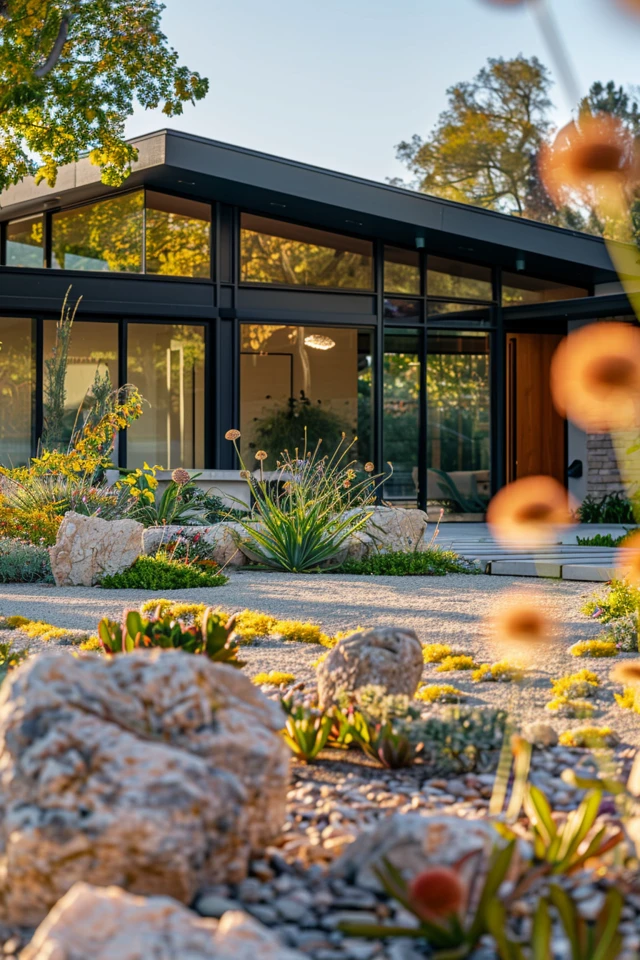
Invigorate Your Ranch Home with Top Landscaping Ideas
There is something undeniably timeless about a ranch-style home. The single-story layout offers an ease of living and a connection to the ground that multi-story homes struggle to replicate. However, that long, horizontal footprint can sometimes feel heavy or monotonous without the right exterior design.
I have worked with countless clients who love their ranch interiors but feel uninspired by their curb appeal. The challenge usually lies in the lack of architectural depth; when everything is on one level, the house can look like a simple box sitting on a flat platter. If you are looking for visual inspiration, you can jump right to the Picture Gallery at the end of the blog post.
In this guide, I want to walk you through how to break up those long lines and add dimension to your property. We will look at professional strategies to modernize your exterior while honoring the architectural integrity of the ranch style.
1. Playing with Scale: Breaking Up the Horizontal Line
The defining feature of a ranch home is its horizontal orientation. While you want to embrace this low-profile charm, you must avoid emphasizing it to the point where the house looks squat. The goal is to introduce vertical elements that interrupt the eye as it scans across the property.
In my design practice, I use the “rule of thirds” for planting heights. We never want a single row of shrubs that are all the same height, often referred to as a “soldier row.” This mirrors the roofline and makes the house look shorter.
Instead, layer your plantings in three distinct tiers. The back tier should anchor the corners, the middle tier provides texture, and the front tier offers color. This creates depth that pulls the eye forward, rather than just side-to-side.
Designer’s Note: The Corner Anchor Rule
One lesson I learned early in my career involves the corners of the house. On a ranch, the corners are often far apart, making the house feel stretched.
The fix: Plant ornamental trees or large, loose shrubs off the corners of the house, not directly against them. Place them about 6 to 8 feet out from the corner at a 45-degree angle. This softens the sharp edge and visually extends the garden, rather than the wall.
Correcting Flat Facades
If your ranch has a long, flat front wall without gables or porch indentations, you need to create artificial depth.
- Curve the beds: Avoid straight garden beds that run parallel to the house. Use sweeping, organic curves that vary in depth from 6 feet to 12 feet.
- Vary the textures: If your house is brick, use soft, feathery grasses. If your house is siding, use structure-heavy evergreens (like Boxwood or Holly) to add weight.
- Use clusters: Plant in odd-numbered groups (3, 5, or 7). A cluster of three hydrangea bushes has much more impact than three bushes spaced out evenly along the wall.
2. Redefining the Entryway: Hardscaping with Purpose
Ranch homes often suffer from hidden or recessed front doors. Because the roofline is low, the entryway can feel dark and uninviting. Your hardscaping needs to act as a clearly defined arrow pointing guests toward the door.
Standard builder-grade walkways are usually 36 inches wide. This is too narrow for a welcoming ranch entrance, as it forces people to walk single-file. It also looks out of scale with a wide house.
I always recommend widening the main walkway to at least 48 inches, or ideally 60 inches if space permits. This allows two people to walk side-by-side comfortably. It also gives the hardscaping enough visual “weight” to balance the long facade of the home.
Material Selection
The material you choose should contrast with your home’s siding but coordinate with the roof color.
- For Brick Ranches: Avoid red brick pavers; it looks too busy. Go for bluestone, slate, or grey concrete pavers to cool down the warmth of the brick.
- For Siding Ranches: You can get away with warmer tones like travertine or sand-colored pavers.
- Concrete: If pouring new concrete, ask for a “salt finish” or an exposed aggregate. Plain white concrete can look harsh and glary against a low ranch house.
Common Mistakes + Fixes
The Mistake: Having the walkway run parallel to the driveway and then make a 90-degree turn to the front door.
The Fix: Create a curved path that starts midway down the driveway or connects directly to the street. This creates a “journey” to the door and breaks up the boxy geometry of the lot.
3. The Foundation Planting Strategy
Foundation plantings are critical for ranch homes because the house sits so close to the ground. The transition between the siding and the soil is right at eye level. However, many homeowners make the mistake of planting too close to the wall.
When laying out beds for a ranch, I never make them less than 6 feet deep. If you only give yourself 3 feet, you are forced to plant in a straight line. With 6 to 8 feet, you can zigzag your plants for a fuller look.
You also need to account for the roof overhang. Ranch homes often have deep eaves (2 to 3 feet). This area underneath remains dry because rain cannot reach it. Do not plant anything in this “rain shadow” unless you plan to hand-water it forever.
Selecting the Right Plants
Focus on plants that naturally stay under the window line. Pruning a shrub into a square box to keep it below a window looks unnatural and high-maintenance.
- Low Growers: Look for “dwarf” varieties of Weigela, Spirea, or Juniper.
- Mid-Height Accents: Ornamental grasses like Fountain Grass or Little Bluestem add movement without bulk.
- Winter Interest: Since ranches are low, you see the roof and the garden together. Ensure 40% of your plants are evergreen so the house doesn’t look bare in winter.
What I’d Do in a Real Project
If I were designing a front bed for a classic 1960s ranch today, here is my go-to plant list for a Zone 5-7 climate:
- Back Layer: ‘Green Mountain’ Boxwood (spaced to grow naturally, not a hedge).
- Middle Layer: ‘Bobo’ Hydrangeas (they stay small and bloom white).
- Front Layer: Coral Bells (Heuchera) or creeping Phlox for ground cover.
- Accents: A single Japanese Maple on the corner to provide height and red contrast.
4. Blurring the Lines: Indoor-Outdoor Flow
One of the best architectural features of a ranch is the potential for seamless indoor-outdoor living. With no stairs to navigate, you can create a patio that feels like a true extension of your living room.
If you have sliding glass doors, the goal is to reduce the visual and physical barrier between inside and out. If your budget allows, consider a “flush threshold” transition where the interior floor and exterior patio are at the same level.
For the patio layout, scale is once again the priority. A 10×10 concrete slab is useless for a family. It creates a traffic jam between the grill, the table, and the door.
Sizing Your Outdoor Rooms
Treat the patio like a floor plan. You need designated zones for dining and lounging.
- Dining Zone: You need 12×12 feet minimum for a 6-person table.
- Lounge Zone: You need 10×12 feet for a sofa and two chairs.
- Circulation: Leave a 3-foot clear path around all furniture groupings.
Hardscape vs. Decking
Because ranch homes are built on slabs or low crawl spaces, a stone or paver patio is usually the best choice. It keeps the profile low.
However, if your lot slopes away, you might need a deck. If you build a deck, avoid heavy, tall railings if code allows. Use cable rails or glass panels to keep the view open. Tall wood railings can make a ranch feel like it is sitting behind a cage.
Designer’s Note: Privacy Screening
Ranch neighborhoods often have houses aligned side-by-side with clear views into backyards.
The fix: Do not build a massive fence around the whole perimeter; it feels claustrophobic. Instead, install “privacy panels” or a trellis specifically around the patio area. Plant fast-growing vines like Clematis or Honeysuckle to create a green living wall just where you need it.
5. Trees and Lighting: The Finishing Touches
Lighting a ranch home requires restraint. Because the house is wide, you don’t want to light it up like a runway. The goal is soft washes of light that highlight the architecture and the trees.
Avoid spotlighting the windows directly. Instead, place up-lights at the base of the trees or architectural columns. This reflects light softly back onto the house.
For path lighting, space fixtures further apart than you think. Pools of light should not overlap. If the path is 20 feet long, 3 or 4 lights are plenty.
Managing Shade and Rooflines
Ranch homes have large roof surface areas, which can make the interiors hot. Strategic tree placement is vital for energy efficiency.
Plant deciduous shade trees (like Maples or Oaks) on the south and west sides of the home. These will block the harsh afternoon sun in summer but drop their leaves to let light in during winter.
Distance Matters
Never plant a large shade tree closer than 20 feet to the foundation.
- Root Intrusion: Ranch foundations are spread out, increasing the risk of root conflict.
- Canopy Scale: You do not want the tree canopy to dwarf the house.
- Gutter Maintenance: Keeping the canopy away reduces the leaves clogging your gutters—a major chore with low-slope roofs.
Final Checklist
Before you head to the nursery or call a contractor, run through this checklist to ensure your plan is solid.
- Measure the Bed Depth: Are your garden beds at least 6 feet deep from the house wall?
- Check Walkway Width: Is the main path to the door at least 48 inches wide?
- Audit the Spacing: Did you calculate the mature size of the plants, not the pot size?
- Verify Drainage: Does the ground slope away from the foundation at a rate of 1 inch per foot for the first 6 feet?
- Review Lighting: Have you selected warm white LEDs (2700K to 3000K) to avoid a sterile blue look?
- Plan for Water: Do you have hose bibs accessible near the new planting zones?
FAQs
How do I landscape a ranch if I have a very limited budget?
Start with the “bones.” Widen the front walkway and plant the corner anchor trees first. These elements take the longest to mature and have the biggest visual impact. Fill in the rest with mulch and inexpensive perennials that you can divide and spread over time, like Hostas or Daylilies.
My ranch looks very flat. Should I add a pergola?
Absolutely. Adding a pergola over the front entry or the back patio is one of the best ways to add vertical interest. It breaks up the long roofline and creates a shadow play that adds dimension to the facade. Just ensure the posts are substantial (at least 6×6 inches) so they don’t look spindly.
What if I have old, overgrown yew bushes?
Remove them. Old yews that cover the windows make a ranch look like a bunker. It is very difficult to prune old wood back to a nice shape. Pulling them out and starting with fresh, layered plantings will instantly modernize the home and let more light inside.
Can I use modern landscaping on a traditional brick ranch?
Yes, mixing styles works very well. A traditional brick ranch looks sophisticated with modern, structured landscaping. Think geometric rows of grasses, steel edging for beds, and concrete pavers. The contrast between the vintage brick and the clean landscape lines is very current.
Conclusion
Revitalizing the landscape of a ranch home is about working with the architecture, not against it. By respecting the horizontal lines while introducing vertical layers, you can turn a low-profile house into a dynamic, welcoming home.
Remember that landscaping is a process, not an event. It is okay to tackle the front entryway this season and save the backyard patio for next year. The most important step is to start with a plan that accounts for scale, flow, and future growth.
When done correctly, your ranch won’t just look like a box on a lot. It will feel grounded, intentional, and seamlessly connected to the outdoors—exactly what the style was intended to be.
Picture Gallery


