
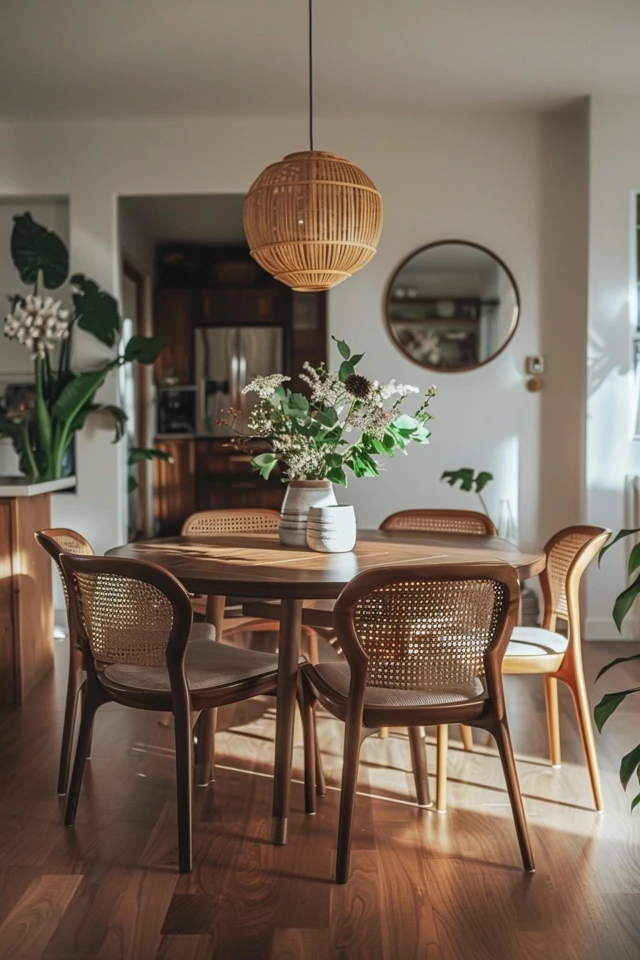
Inviting Dining Room Ideas with Dark Wood Floors
Dark wood floors are a stunning architectural feature that immediately grounds a home. They provide a sense of history, depth, and sophistication that lighter woods often struggle to replicate. However, they can also present a unique challenge: without the right balance, they can make a dining space feel heavy, cavernous, or overly formal.
My goal as a designer is always to embrace the drama of the dark floor while ensuring the room remains welcoming and livable. If you are looking for visual inspiration, you can jump right to the Picture Gallery at the end of this post. For those ready to start planning their renovation or refresh, we need to talk about light, contrast, and scale.
I once worked with a client who inherited a home with original, nearly black espresso floors. She was terrified to put anything in the dining room for fear it would look like a dungeon. By the time we finished, it was the brightest, most inviting room in the house, proving that dark floors are actually a neutral canvas waiting for the right layers.
1. The Foundation: Selecting the Right Rug
When you have dark floors, the area rug is not just an accessory; it is a necessity for separation. If you place a dark wood dining table directly onto a dark wood floor, the furniture legs disappear into the abyss. You lose the appreciation for the silhouette of your table and chairs.
The primary job of the rug here is to create high contrast. I almost always recommend lighter tones for this application. Think creams, light greys, soft beiges, or even desaturated pastels. If you have kids or pets and fear a light rug, look for a “greige” or a patterned wool rug where the primary background is light, but the pattern hides crumbs.
Scale is critical here. A common mistake DIYers make is buying a rug that is too small. In a dining room, the rug must extend at least 24 inches beyond all sides of the table.
This 24-inch rule ensures that when a guest pulls their chair out to sit down, the back legs of the chair stay on the rug. If the legs catch on the edge of the rug, it creates a tripping hazard and ruins the flow of the meal.
2. Wall Treatments and Paint Colors
The walls are your opportunity to dictate the mood of the room. With dark floors, you generally have two successful distinct paths: high contrast brightness or moody monochrome.
The High Contrast Approach
This is the safest and most popular route for an inviting space. Painting the walls a warm white or a soft, pale grey lifts the eye upward. It counteracts the visual weight of the floor.
When choosing a white paint, pay attention to the Light Reflectance Value (LRV). For dark floors, I prefer an LRV of 60 or higher to bounce natural light around the room. Avoid cool, blue-based whites, as they can make dark wood look stark and cheap. Stick to creamy, warm whites.
The Moody Approach
If you want a cozy, intimate dinner party vibe, you can lean into the darkness. Navy blue, charcoal, or forest green walls can look incredible with dark floors.
However, if you go this route, the ceiling must be considered. I often recommend keeping the ceiling light or adding crown molding to define the transition. If you paint a room dark with dark floors and poor lighting, it will feel oppressive.
3. Furniture Selection: Mixing Wood Tones and Materials
A major design misconception is that all wood in a room must match. In fact, matching your dining table exactly to your dark floors usually results in a flat, uninspired look.
Mixing Woods
I love mixing a medium-tone wood table, like walnut or white oak, with dark floors. The difference in grain and color creates a curated, collected look rather than a “catalog” set. If your floors have cool undertones (like an ash or ebony stain), stick to ash or walnut furniture. If the floors are warm (mahogany or cherry), warm oak or teak works beautifully.
Upholstery and Metal
If you prefer not to mix wood tones, avoid wood chairs entirely. Upholstered dining chairs break up the heavy textures.
For a family-friendly option, I use performance velvet or Crypton fabrics in light neutrals. These fabrics clean up easily with soap and water but provide that necessary visual break between the dark floor and the table.
Alternatively, consider a table with a metal base or a stone top. A marble-top dining table on dark wood floors is a timeless combination that instantly brightens the center of the room.
4. Lighting: The Jewelry of the Room
Dark surfaces absorb light, whereas light surfaces reflect it. This means a dining room with dark floors requires more lumens (light output) than a room with pale white oak floors.
Layering is Key
Never rely on a single chandelier. You need ambient light, accent light, and task light.
- The Chandelier: This is your focal point. Install a dimmer switch—it is non-negotiable for dining atmosphere.
- Sconces: Wall sconces add a perimeter glow that widens the room.
- Buffet Lamps: If you have a sideboard, place two tall lamps on it. This brings light down to eye level, which is the most flattering light for guests.
Scale and Placement
A chandelier should generally be about one-half to two-thirds the width of your dining table.
Hang the fixture so the bottom is 30 to 36 inches above the table surface. If you have ceilings higher than 8 feet, you can cheat it up slightly (about 3 inches for every extra foot of ceiling height).
5. Window Treatments and Softening Textures
Hardwood floors and wooden furniture create a lot of hard, reflective surfaces (acoustically speaking) and hard lines. To make the room “inviting,” we need to introduce softness.
Curtains
Floor-to-ceiling drapery is essential. With dark floors, I prefer linen or cotton blends in a light shade. This creates a vertical column of light that draws the eye up.
Hardware Placement
Mount your curtain rod at least 6 to 10 inches above the window frame (or just below the crown molding) and extend the rod 10 to 12 inches past the window on each side.
This trick makes your windows look massive and allows the curtains to stack against the wall, not the glass. This maximizes every inch of natural light, which you desperately need to balance the dark floors.
Designer’s Note: The “Red” Undertone Trap
Here is a lesson I learned the hard way early in my career. Many older dark floors, particularly those from the 90s or early 2000s, have a strong red or orange undertone (think Brazilian Cherry or Mahogany).
When choosing wall colors or rug colors, do not try to match this red. If you put a red rug or warm beige walls with pink undertones next to reddish floors, the room will look like the inside of a mouth.
Instead, look at the color wheel. Green and blue are complementary to red. Using paint colors with subtle green or blue undertones (like a slate grey or a sage green) will actually neutralize the red in the floor, making the wood look rich and brown rather than fire-engine red.
Common Mistakes + Fixes
Mistake: Floating Furniture
We see this when a rug is too small, or no rug is used, and the furniture seems to drift aimlessly on the dark sea of flooring.
The Fix: Anchor the space with a rug that is large enough. If a large rug is out of budget, consider binding a piece of broadloom carpet—it is often cheaper than a pre-made area rug.
Mistake: The “Cave” Effect
Using heavy, dark furniture, dark walls, and heavy drapes all at once.
The Fix: Use the “Rule of Three.” If the floor is dark (1), keep the walls light (2) and the ceiling light (3). Or, if walls and floor are dark, the furniture must be light. You need balance.
Mistake: Ignoring Dust
Dark floors show every speck of dust and pet hair.
The Fix: This is a lifestyle fix. Keep a Swiffer or robot vacuum handy. From a design perspective, choose a “satin” or “matte” finish for your floors rather than high gloss. High gloss highlights every scratch and dust bunny.
What I’d Do in a Real Project: A Mini Checklist
If I walked into your home today to design your dining room, this is the exact order of operations I would follow:
1. Assess Natural Light: I check which direction the windows face. North-facing light is cool/blue; South-facing is warm. This dictates my paint choice.
2. Select the Rug First: It is easier to match paint to a rug than a rug to paint. I’d pick a textured, light-colored flatweave.
3. Check Table Contrast: If you are keeping an existing dark table, I am sourcing light upholstered chairs or slipcovers immediately.
4. Lighting Audit: I check the Kelvin temperature of your bulbs. I would swap everything to 2700K or 3000K LED bulbs for a warm, inviting glow. Anything higher (4000K+) looks like a hospital against dark wood.
5. Add Life: I would place a large indoor tree (like a Ficus Audrey) in a corner. The green leaves pop beautifully against dark floors.
Final Checklist
- Rug Size: Extends 24 inches past the table on all sides.
- Rug Color: High contrast (light) against the dark floor.
- Wall Color: Warm white or light neutral to reflect light (unless doing moody monochrome).
- Furniture: Mix wood tones or use upholstered chairs to avoid “matchy-matchy” look.
- Lighting: Chandelier centered; dimmer switch installed; bulbs at 2700K-3000K.
- Window Treatments: High and wide rod placement; light fabrics.
- Protection: Felt pads on every single chair leg to prevent scratching the dark finish.
FAQs
Can I use a dark rug on dark floors?
You can, but it requires a specific technique. The rug needs to have a different texture than the floor (like a thick jute or shag) and should ideally have a border or pattern that separates it visually. However, for most homeowners, a lighter rug is much easier to pull off.
How do I protect dark wood floors from dining chair scratches?
Dark floors show scratches white, which makes them very obvious. Avoid plastic glides. You must use high-quality, nail-on felt pads or slip-on silicone protectors. Stick-on pads tend to slide off after a few months of dragging.
My dining room is small. Will dark floors make it look smaller?
Dark floors can actually make a room look larger if you paint the walls and ceiling the same light color. It blurs the lines where the wall meets the ceiling, drawing the eye up. Add a large mirror on the wall perpendicular to the window to bounce light and double the visual space.
Is it okay to mix metal finishes with dark wood?
Absolutely. In fact, it is encouraged. Brass and gold tones look incredibly rich against dark espresso or walnut floors. Matte black metals can disappear, so if you use black metal, make sure it is against a light wall or rug. Brushed nickel provides a more modern, cool contrast.
Conclusion
Designing a dining room with dark wood floors is all about managing visual weight. You have a strong, grounding element underfoot, which gives you the freedom to keep the rest of the room airy and light.
By layering appropriate textures, ensuring your rug is sized correctly, and paying close attention to your lighting temperature, you can turn a potentially heavy space into the most sophisticated room in your house. Trust the process, test your paint swatches, and don’t be afraid of contrast.
Picture Gallery


