
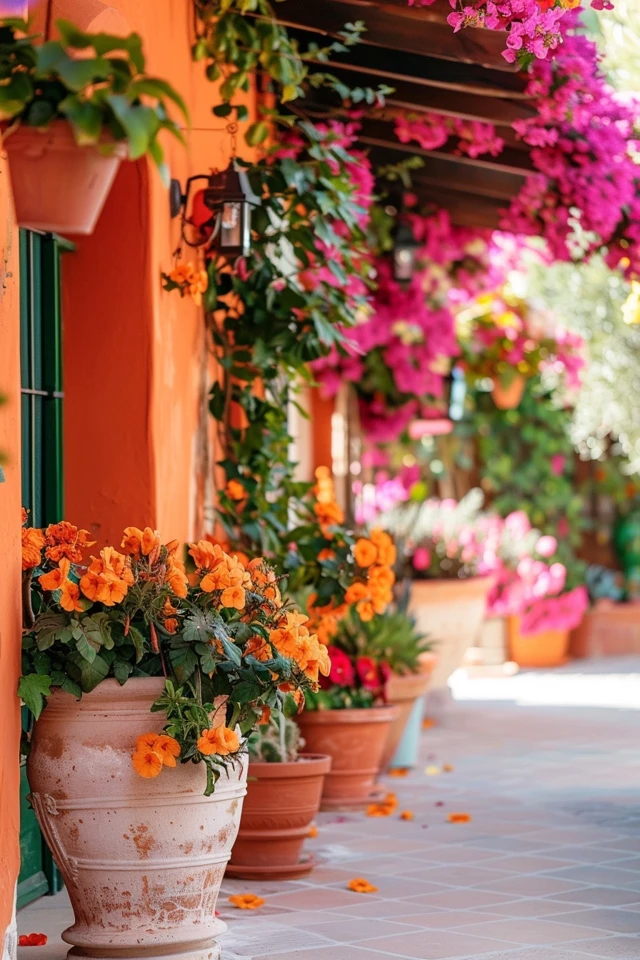
Italian Style Patio Ideas: Transform Your Space
There is something undeniably magnetic about an Italian terrace. It is not just about the look; it is about the feeling of slowing down. We often chase that “La Dolce Vita” vibe because it prioritizes connection, long meals, and effortless beauty over perfection.
When I design Italian-inspired spaces for clients, I steer them away from the polished, symmetrical look often found in American suburbs. Instead, we focus on texture, warmth, and a little bit of controlled chaos. It should feel like the patio has been there for fifty years, even if we just installed it last week.
To help you visualize these concepts, I have curated a collection of stunning examples, and you can find the full Picture Gallery at the end of this blog post to spark your imagination. But first, let’s break down the mechanics of how to actually build and style this look in your own backyard.
1. The Foundation: Hardscaping and Flooring
The ground you walk on sets the tone for the entire space. In Italian design, we rarely see poured gray concrete or perfectly stained wooden decks. The goal is to introduce earthy, organic materials that age gracefully.
Travertine and Natural Stone
If your budget allows, unfilled travertine pavers are the gold standard. They offer a tumbled, rustic texture that feels historic. I usually recommend a “French Pattern” (also called the Versailles pattern), which mixes four different paver sizes. This breaks up grid lines and makes the space feel more expansive.
Gravel as a Budget-Friendly Alternative
You do not need to spend a fortune on stone to get the look. Pea gravel or decomposed granite is incredibly authentic to Tuscan farmhouses.
- Material choice: Opt for beige, tan, or gold-toned gravel. Avoid gray or blue-toned stones, which look too modern or industrial.
- Installation tip: Always lay a weed barrier first. Use metal or brick edging to keep the gravel contained.
- Practicality: Gravel is excellent for drainage, but avoid it in high-traffic dining zones if you have thin metal chair legs, as they will sink.
For Renters or Wood Decks
If you are working with an existing concrete slab or wood deck, you can cheat the look with outdoor rugs. Look for flat-weave rugs in warm terracotta, sage green, or neutral sisal tones. Avoid bold geometric prints; stick to solids or subtle borders to keep the focus on the surrounding garden.
2. Vertical Gardens and Shade Structures
The Italian sun can be intense, so shade is not just aesthetic; it is a survival mechanism. An Italian patio always features some form of overhead structure or vertical greenery that creates a sense of enclosure. This “ceiling” makes the outdoor room feel intimate and safe.
The Pergola
A rough-hewn wooden pergola or a slender black iron frame creates the perfect skeleton for your patio.
- Height rules: The bottom of the beam should be at least 8 feet high, but no higher than 10 feet. If it is too high, you lose the cozy factor.
- Materials: Cedar or redwood weather to a beautiful gray. If you use metal, matte black or rusted iron finishes work best.
The Living Ceiling
The structure exists to support plant life. Wisteria, trumpet vines, or grapevines are the classic choices.
- Growth speed: Vines take time. For immediate gratification, hang high-quality outdoor string lights across the beams while the plants grow in.
- Maintenance note: If you plant Wisteria, be warned that it is heavy. You need 6×6 posts minimum to support the weight of a mature vine.
For Small Spaces
If you have a balcony, use a trellis against the wall. A simple diamond-patterned wooden trellis painted green or left natural can support Star Jasmine, which smells incredible and grows well in containers.
3. Furniture Selection: Rustic Iron Meets Comfort
One of the biggest mistakes I see is people buying a matching 8-piece patio set from a big-box store. Italian style is collected, not matched. We want to mix materials to create depth and history.
The Wrought Iron Staple
Wrought iron is the backbone of this style. It is heavy, durable, and visually light because you can see through the frames.
- The mix: Pair a heavy iron dining table with wicker or teak chairs. The contrast between the cold metal and warm wood is what makes the design sing.
- Finish: Avoid high-gloss black. Look for “gunmetal,” “aged bronze,” or “matte black.”
Prioritizing Comfort
Iron looks great, but it is hard to sit on for hours. You need high-quality cushions.
- Fabric choice: Use solution-dyed acrylics (like Sunbrella) in creamy whites, oats, or soft stripes.
- Cushion thickness: For dining chairs, a 2-inch pad is sufficient. For lounge chairs, aim for 5 to 6 inches of foam thickness for true luxury.
- Scale check: Ensure your sofa depth is at least 36 inches. Anything shallower feels like a waiting room bench, not a lounge space.
4. Dining Al Fresco: The Italian Table
The dining table is the heart of the Italian patio. It is not just furniture; it is an appliance for living. The table should look like it can handle a spilled glass of wine or a hot pot of pasta without strict coasters.
The Table Dimensions
For a true family-style gathering, a rectangular table is best.
- Width: Look for a table that is at least 38-40 inches wide. You need room for platters of food in the center, plus place settings on both sides.
- Length: 84 inches is a standard good size to seat 6-8 people comfortably.
Lighting the Table
You want a warm, amber glow. Harsh white light kills the mood instantly.
- String lights: Use “bistro style” lights with exposed filaments. Look for a color temperature of 2700K (Kelvin). This mimics candlelight. drape them loosely; do not pull them tight like a circus tent.
- Candles: Use varying heights of glass hurricanes on the table. The glass protects the flame from the wind.
Designer’s Note: The “Imperfect” Table Setting
Do not use plastic plates. I always encourage clients to use real ceramic or heavy melamine that mimics pottery. Use linen napkins. They wrinkle, and that is the point. The texture adds to the rustic charm. If you have kids, colored glass tumblers are great—they hide fingerprints and look beautiful catching the sunlight.
5. Pots, Planters, and Lemon Trees
If you cannot change your flooring or build a pergola, you can still achieve 80% of the Italian look just through container gardening. This is where you bring in the “Giardino” element.
The Terracotta Rule
Use unglazed terracotta pots. They are porous, which allows the soil to breathe (great for plants), and they develop a white patina over time as minerals leach through. This aging process is desirable.
- Quick aging trick: If your new pots look too orange and perfect, rub them with plain yogurt and leave them in a shady spot for a few weeks. It encourages moss and algae growth for that “ruin” look.
Plant Selection
You want plants that evoke the Mediterranean landscape.
- Citrus: Lemon or kumquat trees are iconic. If you live in a freeze zone, keep them in pots and roll them indoors during winter.
- Herbs: Plant rosemary, basil, and thyme in smaller pots on the table. They act as decor and fragrance.
- Structure: Italian Cypress trees (or “Pencil Holly” as a hardy substitute) provide height and drama.
Grouping and Layering
Never place one lonely pot in a corner. Group them in odd numbers (3 or 5). Vary the heights. Place a tall olive tree next to a medium boxwood, next to a low pot of spilling ivy. This creates a lush, abundant vignette.
Designer’s Note: Real-World Lessons
In my years of designing, I have learned that drainage is the unsexy hero of outdoor design.
I once designed a beautiful terrace with heavy terracotta pots directly on a wooden deck. Two years later, we had to replace the deck boards because moisture got trapped under the pots and rotted the wood.
The Fix: Always use “pot feet” or rigorous plastic risers under your containers. This lifts the pot off the ground by an inch, allowing water to flow away and air to circulate. It saves your flooring and prevents unsightly rings.
Also, be realistic about maintenance. If you hate sweeping, do not plant Bougainvillea or Wisteria over a dining area. They drop flowers constantly. A grape vine is mess-free for most of the season until the leaves drop in autumn.
Common Mistakes + Fixes
Mistake: Over-polishing the space.
Many homeowners try to make the outdoor space look like an indoor living room with perfectly karate-chopped pillows and spotless rugs.
Fix: Embrace the outdoors. Let the leaves fall on the gravel. Let the brass lantern tarnish. The beauty of Italian style is in the wabi-sabi—the acceptance of imperfection.
Mistake: Using cool-toned LEDs.
Using 4000K or 5000K “Daylight” bulbs makes a patio feel like a hospital operating room or a parking lot.
Fix: Strictly buy 2700K or “Warm White” bulbs. If you have security lights nearby, put them on a separate switch so you can turn them off when entertaining.
Mistake: Undersized Rugs.
Putting a tiny 5×7 rug under a dining table where the chairs fall off the edge when you pull them out.
Fix: The rug should extend 24 inches past the table on all sides. If you cannot afford a rug that big, it is better to have no rug at all and let the stone or wood shine.
What I’d Do in a Real Project: A Mini Checklist
If I were landing at your house today to renovate your patio, this is the exact order of operations I would follow:
1. Define the zones: I would map out where we eat vs. where we lounge. I leave a minimum of 30 inches for walkways between furniture groupings.
2. Address the perimeter: I would plant tall hedging or install lattice for privacy. You cannot relax if you feel like you are on a stage for the neighbors.
3. Select the anchor pieces: I would source a large teak or iron dining table first. Everything else revolves around this.
4. Layer the lighting: I would install string lights overhead and plan for at least three sources of low-level light (lanterns or solar path lights).
5. Accessorize with life: I would go to the nursery and buy the largest terracotta pots the budget allows. I would prioritize three large statement plants over twenty small ones.
Final Checklist
Ready to start? Here is your summary to keep you on track.
- Palette: Stick to earth tones—terracotta, cream, sage, warm stone, and matte black.
- Materials: Prioritize natural stone, gravel, wood, and iron. Avoid shiny plastics.
- Greenery: Use terracotta pots. Plant citrus, olive, herbs, and vines.
- Lighting: Warm white (2700K) string lights and candle lanterns.
- Comfort: Deep cushions, shade structures (pergolas/umbrellas), and throw blankets for cool evenings.
- Texture: Mix smooth ceramics with rough wood and soft linens.
FAQs
What if I live in a cold climate? Can I still do Italian style?
Absolutely. The structure remains the same. Instead of fragile terracotta which can crack in a freeze, use high-quality fiberglass pots that look like terracotta or heavy cast stone. Swap lemon trees for cold-hardy boxwoods or junipers that can be trimmed into structural shapes.
How do I maintain outdoor cushions?
Even the best fabric will mildew if left in the rain constantly. I recommend buying high-quality covers for your furniture. It takes 2 minutes to cover them, and it extends the life of your cushions by years. Store cushions indoors during the harsh winter months.
My patio is tiny. How do I make it work?
Think vertical. Use a bistro set (a small round table and two folding iron chairs) rather than a full dining table. Use wall-mounted planters to get greenery without sacrificing floor space. A large mirror hung on a privacy wall can also “double” the space visually and reflect light.
Is gravel safe for pets?
Generally, yes. Most dogs maximize their nap time on cool gravel. However, ensure the gravel is smooth (pea gravel) rather than crushed granite with sharp edges, which can be hard on paws. Avoid cocoa mulch, which is toxic to dogs.
Conclusion
Creating an Italian-style patio is not about replicating a photo from a magazine perfectly. It is about creating a backdrop for life to happen. It is about building a space where you want to linger after dinner, where the lighting makes everyone look good, and where the materials feel grounded and real.
Start with the basics—good flooring, some shade, and comfortable seating—and then layer in the pots and plants over time. The best gardens are not built in a day; they evolve.
Picture Gallery


