
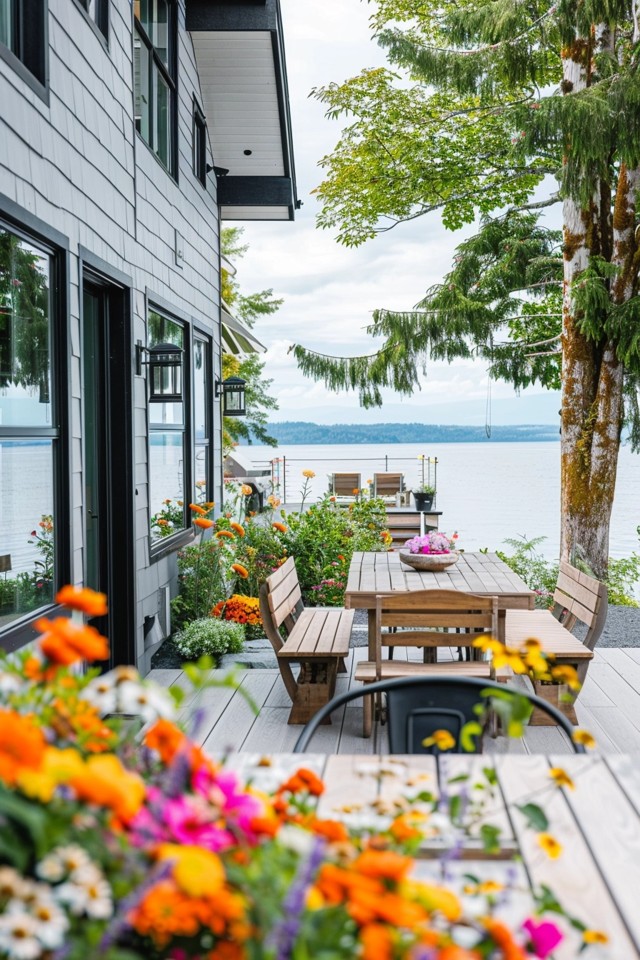
Lake House Backyard Ideas for Dreamy Retreats
There is a specific kind of magic that happens at a lake house. The rhythm of the water sets the pace for the day, inviting you to slow down, breathe deeper, and linger outside a little longer. As an interior designer, I view the backyard of a lakefront property not just as a yard, but as the primary living room of the home.
However, designing these spaces comes with unique challenges. You are dealing with sloped terrains, strict environmental regulations, damp conditions, and the eternal struggle between preserving the view and creating functional privacy. The goal is a seamless transition where the architecture of the home shakes hands with the landscape.
Whether you are renovating a rental property or building your forever home, the design needs to be durable enough for wet swimsuits yet elegant enough for sunset cocktails. If you are just looking for visual inspiration, you can skip straight to the Picture Gallery at the end of this post. Otherwise, let’s dive into the technical details of creating a functional, beautiful lakefront retreat.
1. Zoning the Layout: Maximizing Views and Flow
The biggest asset of a lake house is the view. The biggest mistake I see homeowners make is blocking that view with poorly placed furniture or overgrown landscaping. The first step in any successful backyard design is “zoning.”
You need to establish distinct areas for different activities without creating visual barriers. I typically divide a lake backyard into three zones: the upper terrace (dining/grilling), the transition zone (lounging/fire pit), and the shoreline (active play/dock access).
Rules of Thumb for Layouts:
- Traffic Patterns: Main pathways from the house to the water should be at least 48 inches wide to accommodate two people walking side-by-side carrying coolers or towels.
- Sightlines: Sit inside your living room and look out. Mark the window frame boundaries on your site plan. Do not place tall structures (pergolas, tall shrubs) within these sightlines.
- Terracing: If your lot is sloped, use retaining walls to create flat “rooms.” A wall height of 18 to 22 inches is ideal because it can double as overflow seating during parties.
Designer’s Note: The “Invisible” Railing
One lesson I learned early in my career involved a beautiful deck that was ruined by bulky wooden railings. When seated, the railing perfectly blocked the horizon line.
The Fix: Always use cable railing or tempered glass panels for decks facing the water. If you must use wood or metal pickets, keep the top rail below eye level when seated (typically 36 inches, though codes vary) or choose a dark color like charcoal or black. Dark colors tend to disappear against the landscape, whereas white stops the eye.
2. Hardscaping and Material Selection
Lake life is wet, muddy, and sandy. The materials you choose for your patio, deck, and walkways need to withstand high moisture levels and temperature fluctuations. In interior design, we talk about “performance fabrics,” but outdoors, we need “performance hardscapes.”
You also need to consider the heat. Dark composite decking can become scorching hot in the sun, burning bare feet. Natural stone is beautiful but requires sealing to prevent moss and mildew growth in shady, damp lake environments.
Top Material Recommendations:
- Thermal Bluestone: If budget allows, thermal-finished bluestone is excellent. It is non-slip and stays cooler than standard slate.
- Permeable Pavers: Many lake associations have strict limits on “impervious surfaces” to prevent runoff into the lake. Permeable pavers allow water to drain through, keeping you code-compliant and eco-friendly.
- Slip Resistance: Always check the slip resistance rating. For pool or lake decks, look for a dynamic coefficient of friction (DCOF) of 0.42 or higher.
Common Mistakes + Fixes
Mistake: Using polished stone or smooth tiles outdoors.
Why it fails: Morning dew or a splash from the lake turns these surfaces into ice rinks. It is a major liability.
The Fix: Choose materials with a “flamed,” “tumbled,” or “brushed” finish. If you already have slippery tile, apply a non-slip anti-slip sealer immediately.
3. Furniture: Balancing Durability with Comfort
The furniture at a lake house takes a beating. It faces intense UV rays, moisture, spider droppings, and wet bathing suits. When I select furniture for clients, I look for “marine grade” specifications.
You also need to consider weight. Lakefronts can get incredibly windy. Lightweight aluminum or wicker furniture can easily end up in the neighbor’s yard—or worse, in the lake—during a storm.
What I Look For in Lake Furniture:
- Heavy Frames: Teak, wrought iron, or high-density polyethylene (HDPE/Polywood) are heavy enough to stay put.
- Open Weaves: If using woven furniture, choose an open weave that allows wind to pass through rather than acting like a sail.
- Fabric Choices: Use 100% solution-dyed acrylic fabrics (like Sunbrella or Perennials). They are bleach-cleanable and fade-resistant.
- Quick-Dry Foam: Ensure cushions have reticulated foam, which allows water to drain through instantly rather than soaking it up like a sponge.
Measurements for Comfort
Dining Areas: Allow 36 inches of clearance behind every dining chair so guests can slide out without hitting the edge of the deck or a wall.
Lounge Spacing: Place the coffee table 18 inches from the sofa edge. This is close enough to set down a drink but far enough to walk through.
Conversation Circles: Keep seating within an 8 to 10-foot diameter. If chairs are too far apart, the sound of the wind and water makes conversation difficult.
4. Lighting: Setting the Mood and Ensuring Safety
Lighting a lake house backyard is a delicate balance. You want to highlight the trees and ensure safe footing, but you must avoid “light pollution.” Glare on the water ruins the view and annoys boaters or neighbors across the cove.
The goal is to see the effect of the light, not the source. We want soft pools of illumination, not a landing strip.
My Lighting Strategy:
- Moonlighting: Mount downlights high in mature trees to shine through the branches. This creates dappled shadows on the ground that mimic moonlight.
- Path Lights: Use shielded path lights that direct light downward onto the walkway, not up into your eyes. Space them 6 to 8 feet apart; you don’t need a continuous stream of light, just pools of guidance.
- Kelvin Temperature: Stick to 2700K or 3000K LED bulbs. This warm white light mimics firelight and feels cozy. Anything higher (4000K+) looks blue and sterile, like a hospital.
What I’d Do in a Real Project
1. Zone Control: I always install smart dimmers. You want bright lights for cooking, but you want them at 20% brightness when sitting by the fire.
2. Hardscape Lighting: I integrate subtle strip lights under the lip of stone stair treads. It is the safest way to light stairs without cluttering the design.
3. Dark Sky Compliance: I verify all fixtures are “Dark Sky” compliant, meaning they prevent light from projecting upwards, preserving the view of the stars.
5. The Shoreline: Fire, Water, and Transition Zones
The area closest to the water is the destination. This is where the memories are made. However, it is also the most regulated area. Most local codes have a setback line where you cannot build permanent structures.
Fire Pit Placement:
A fire pit near the water is iconic. If you cannot pour a concrete pad due to regulations, use a crushed gravel circle. It is permeable and often classified as landscaping rather than hardscaping.
Fire Pit Dimensions:
Build the fire pit 18-20 inches high if you want to prop your feet on the edge. Leave 4 feet of clearance between the fire pit edge and your chairs for legroom and circulation.
The Transition Zone (The Sand Trap):
One thing nobody tells you about lake houses is the amount of dirt that gets tracked inside.
The Solution: Create a designated “transition zone” between the dock and the house. This could be a small pea-gravel area with an outdoor shower or a simple foot wash station. Place a large, open-weave mat here to catch sand before it hits your deck.
Final Checklist: Before You Break Ground
Before you buy the first paver or plant the first hydrangea, run through this checklist to ensure your project stays on track.
- Survey and Setbacks: Have you confirmed the high-water mark and building setbacks with your local municipality?
- Sun Tracking: Have you observed where the sun hits at 4:00 PM in July? This will dictate where you need shade structures like umbrellas or pergolas.
- Utility Lines: Have you called 811 to mark underground lines, including irrigation and gas for fire pits?
- Material Samples: Have you tested your stone and decking samples wet? They look different when damp.
- Storage Plan: Do you have a designated spot for kayaks, paddleboards, and cushions? If not, plan for a deck box or under-deck storage.
FAQs
How do I deal with mosquitoes and bugs near the water?
Still water breeds insects. Incorporate ceiling fans in covered porches; the air current discourages mosquitoes. Additionally, plant lavender, marigolds, and citronella near seating areas. For severe cases, consider a misting system installed along the perimeter of the patio.
What is the best way to add privacy without blocking the view?
Use layered planting. Low ornamental grasses can define a boundary without blocking the sightline. For privacy from neighbors on the side, use tall, columnar trees (like Arborvitae or Sky Pencil Holly) that grow up rather than out, creating a green wall exactly where you need it.
Is it worth investing in an outdoor kitchen for a lake house?
If you entertain often, yes. However, keep it simple. A built-in grill, a trash pull-out, and a small prep counter are usually sufficient. Avoid outdoor fridges unless you are there full-time, as they consume energy and are prone to breaking in harsh winters. A high-quality cooler built into the cabinetry is often a smarter choice.
Conclusion
Designing a lake house backyard is about honoring the environment. It requires a shift in perspective from purely ornamental gardening to functional landscape architecture. You are building a stage for life to happen—wet feet, sunsets, s’mores, and all.
By focusing on durable materials, smart zoning, and respectful lighting, you can create a retreat that feels effortless. The best designs are the ones that don’t scream for attention but quietly support the main event: the water. Take your time with the layout, invest in quality where it counts, and enjoy the process of creating your sanctuary.
Picture Gallery


