
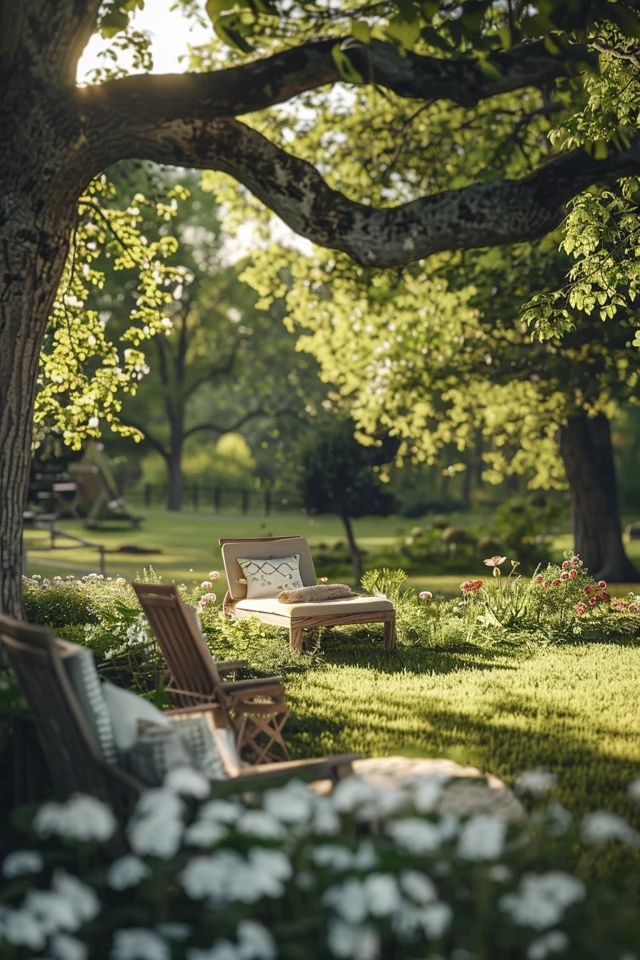
Landscape Ideas Under Oak Trees for Your Yard
There is something undeniably majestic about having a mature oak tree in your yard. It provides an architectural anchor for the entire property, creates a ceiling for your outdoor room, and offers a sense of history that new construction simply cannot replicate. However, as any homeowner with a large oak knows, gardening beneath one is a significant challenge that involves navigating dense shade, thirsty roots, and acidic soil.
I often tell my clients that fighting an oak tree is a battle you will lose; the secret is learning to work with the ecosystem the tree has already created. For plenty of visual inspiration on tackling these shady spots, be sure to scroll down to the Picture Gallery at the end of this blog post. We have curated a selection of real-world examples that show just how lush and functional these spaces can be.
In my design practice, I treat the area under an oak not as a problem to be solved, but as a distinct “room” requiring its own set of rules. Whether you are dealing with a massive Live Oak in the South or a White Oak in the Northeast, the principles of preservation and aesthetics remain the same. Let’s look at how to turn that patchy, dust-bowl circle under your tree into your favorite part of the yard.
1. Respecting the Root Flare and Soil Grade
Before we plant a single fern or lay a paver, we have to talk about tree health. The most common mistake I see homeowners make is burying the trunk.
The “root flare” is the area at the base of the tree where the trunk widens and enters the ground. This area must remain exposed to the air. If you pile mulch or soil against the bark, you invite rot and pests that can kill a century-old tree in just a few years.
When landscaping under an oak, you must maintain the existing soil grade. Oaks have very shallow feeder roots that reside in the top 12 to 18 inches of soil. Adding even a few inches of heavy topsoil over this area can suffocate the roots by cutting off oxygen exchange.
Designer’s Note: The “Volcano” Mistake
I constantly see “volcano mulching” in residential neighborhoods. This is where mulch is piled high in a cone shape up the trunk.
The Issue: It traps moisture against the bark and suffocates roots.
The Fix: Pull the mulch back 3 to 6 inches from the trunk. The mulch layer should look like a donut, not a volcano.
Rules of Thumb for Grading:
Never add more than 2 inches of porous material (like mulch or compost) over the root zone per year.
Avoid rototilling under the canopy. This shreds the feeder roots.
If you need to change the level for a patio, build “up” using a floating deck rather than building “up” with dirt.
2. Hardscaping: Creating Usable Surfaces
If grass won’t grow under your oak, stop trying to force it. Instead, consider hardscaping to create a functional sitting area. However, pouring a solid concrete slab is generally a bad idea because it blocks water and air from reaching the roots.
Option A: The Floating Deck
In my projects, I love using floating decks around large trees. This involves setting posts on concrete piers carefully placed between major roots, rather than a continuous footing.
Clearance: Leave at least 2 inches of gaps between the deck boards and the tree trunk to allow for future growth.
Airflow: The gap between the ground and the deck joists allows the soil to breathe.
Option B: Dry-Laid Stone or Pavers
If you prefer stone, use a flexible, dry-laid method. This means setting stone or pavers on a bed of sand and gravel rather than setting them in wet concrete (mortar).
Permeability: Water can seep through the joints to the roots below.
Flexibility: As roots grow and shift the ground slightly, dry-laid stones can move without cracking. You can simply lift a stone, adjust the sand, and replace it.
Option C: Gravel or Crushed Granite
For a more casual, European park vibe, washed gravel or decomposed granite is excellent.
The Function: It is 100% permeable.
The Border: Use steel edging or larger river rocks to keep the gravel contained so it doesn’t migrate into the lawn.
Common Mistakes + Fixes:
Mistake: Cutting large roots to make a patio flat.
Fix: Adjust your design. If a large root is in the way, build a bridge over it or curve the patio around it. Never cut a root larger than 2 inches in diameter.
3. Selecting the Right Plants for Dry Shade
Oak trees are resource hogs. They have massive canopies that block rain, and their roots are incredibly efficient at drinking up whatever moisture does hit the ground. This creates an environment known as “dry shade,” which is difficult for many standard garden plants.
You need plants that are tough, drought-tolerant once established, and can handle acidic soil (which oak leaves naturally create).
Top Tier Plant Picks:
Cast Iron Plant (Aspidistra): Nearly indestructible. It offers a lush, tropical look and requires almost zero maintenance.
Lenten Rose (Helleborus): These bloom in late winter when nothing else is colorful. They are deer resistant and handle dry shade beautifully.
Autumn Fern (Dryopteris erythrosora): Unlike some delicate ferns, the Autumn Fern is robust. It adds a coppery color to the landscape.
Sedges (Carex): This is your grass alternative. Varieties like ‘Pennsylvania Sedge’ offer a soft, grassy look but thrive in shade where lawn grass dies.
Planting Logistics (Crucial Step):
When planting under an oak, you cannot dig large holes. I recommend buying plants in smaller sizes.
Size: Buy “plugs” or 4-inch pots, or maximum 1-gallon containers.
Tool: Use a hand trowel or a soil knife (hori-hori), not a large shovel.
Placement: Poke around to find pockets of soil between roots. If you hit a root, move the plant. Do not hack through the root.
What I’d Do in a Real Project:
1. Map out the major roots with spray paint so I know where
2. Install a drip irrigation line. Even drought-tolerant plants need help for the first two years. Drip lines are better than sprinklers because they deliver water to the new plants without wetting the tree trunk.
3. Plant in drifts (groups of 5, 7, or 9) for visual impact.
4. Lighting the Canopy
Lighting is where the magic happens. An oak tree at night can be the most dramatic feature of your home’s exterior, but it requires a delicate touch. You want to highlight the structure of the branches without creating a harsh, spooky effect.
Uplighting vs. Moonlighting:
Moonlighting: This involves climbing the tree (hire a pro) and mounting lights high in the canopy pointing down. This creates a dappled shadow effect on the ground that mimics a full moon. It is incredibly romantic and functional for pathways.
Fixture Selection:
Wattage: Keep it low. You want a glow, not a stadium light. 2700K (warm white) LED bulbs are the industry standard for a natural look.
Installation: Never wrap wires around the trunk or branches where they can strangle the tree as it grows. Use stand-off screws that allow the tree to grow over the hardware without damage.
Designer Tip:
Place your uplights about 3 to 4 feet away from the trunk, aimed at a 45-degree angle toward the first major branching point. This captures both the trunk width and the canopy spread.
5. Managing Maintenance and Seasonal Debris
Designing the space is the fun part; living with it is the reality. Oaks are messy. They drop catkins in spring, leaves in fall, and acorns intermittently. Your design must account for this debris.
The Acorn Reality:
If you have a heavy mast year (lots of acorns), a gravel patio can become difficult to walk on.
Solution: Use a leaf blower on a low setting to blow acorns off the hardscape.
Prevention: If you are building a deck, ensure the gaps between boards are wide enough for catkins to fall through but not so wide that acorns get stuck.
Mulching Strategy:
Nature wants to mulch the tree with its own leaves. You can work with this.
Leaf Mulch: Instead of bagging all the leaves, mulch-mow them and put them back into the garden beds under the tree. They break down and acidify the soil, which the oak loves.
Pine Straw: In the South, pine straw is a popular mulch under oaks. It is lightweight, acidic, and looks natural.
Bark Mulch: Use shredded hardwood mulch rather than large nuggets. The shredded texture knits together and stays in place better during heavy rains.
Pruning for People:
To make the space under the tree habitable, you need “headroom.”
* Deadwooding: Regularly remove dead branches. This is a safety issue if you plan to have seating areas underneath.
Final Checklist: The “Do No Harm” Approach
Before you break ground, run through this checklist to ensure your design is safe for the tree and practical for you.
Planning Phase:
- Identify the tree variety (White Oak, Red Oak, Live Oak) to understand its specific water needs.
- Mark the “Drip Line” (the outer edge of the canopy) – this is where the most active roots are.
- Check for existing drainage issues. Does water pool near the trunk?
Execution Phase:
- Have you sourced “breathable” landscape fabric? (Avoid solid plastic sheeting).
- Are your pavers or deck materials located at least 2-4 feet away from the main trunk?
- Have you selected plant sizes of 1-gallon or smaller to minimize root disturbance?
- Is your lighting wiring low-voltage (12V) for safety?
Furniture & Styling:
- Choose furniture that is easy to wipe down (for pollen and bird droppings).
- Avoid heavy iron chairs that will sink into soft mulch; choose wide-footed or sled-base chairs.
- Use outdoor rugs to define seating areas on gravel, but lift them occasionally to let the ground breathe.
FAQs
Can I grow grass under my oak tree?
Technically, yes, with specific shade-tolerant fescue blends, but it will likely always struggle. The tree competes for water and nutrients, and the shade weakens the grass. I almost always recommend replacing the struggle of grass with groundcover, mulch, or gravel. It looks better and requires less chemicals.
How often should I water the plants under the tree?
Because the oak drinks so much water, your new plants will need more frequent watering than they would elsewhere. Check them 2-3 times a week for the first summer. Water deeply to encourage their roots to go down, rather than shallow sprinkling.
Is it okay to cut a root if it’s lifting my patio?
If the root is less than 2 inches in diameter, it is usually safe to prune cleanly with a saw. If it is a major structural root (larger than 2 inches), do not cut it. You risk destabilizing the tree or introducing decay. Adjust the patio design instead.
What do I do about all the acorns?
There is no magic wand for acorns. A nut gatherer tool (often called a “nut wizard”) is a rolling wire cage that picks them up easily without bending over. It is a worthwhile investment if you have a patio under the tree.
Conclusion
Landscaping under an oak tree is an exercise in patience and observation. It forces you to slow down and acknowledge the natural history of your land. By choosing the right hardscape materials that allow the earth to breathe, selecting plants that thrive in dry shade, and lighting the space with care, you can transform a dark, patchy problem area into a stunning garden retreat.
Remember, the tree is the landlord; you are just the tenant. Respect its roots, give it space, and it will provide the perfect canopy for your outdoor life for decades to come.
Picture Gallery


