
Title: Landscaping Ideas for Ranch Homes: Curb Appeal Boost
Introduction
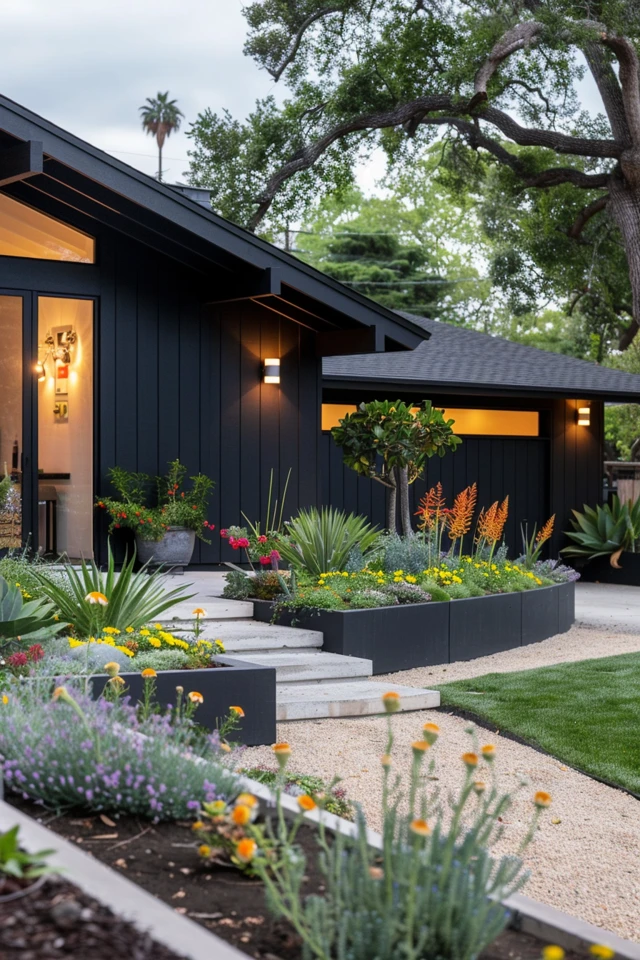
Ranch-style homes are iconic staples of American architecture, beloved for their single-story layouts and sprawling footprints. However, their long, low profiles can sometimes feel flat or uninspired without the right landscaping strategy to bring them to life. If you are looking for visual inspiration to transform your exterior, don’t miss our curated Picture Gallery at the end of this post.
The main challenge with ranch homes is the lack of vertical variation. When a house is essentially a long rectangular box, the landscape needs to work twice as hard to add depth, dimension, and inviting focal points. You want to avoid the “bowling alley” effect where the eye just shoots straight across the property without stopping to appreciate the details.
My goal in this guide is to help you break up those horizontal lines without fighting the architecture. We will focus on layering, strategic hardscaping, and selecting the right plant scales to modernize your curb appeal. Whether you are doing a full renovation or just a weekend refresh, these strategies will ground the house while making it feel grander.
1. Playing with Height: Breaking the Horizontal Line
The defining feature of a ranch home is its horizontal orientation. To create a balanced composition, you must introduce vertical elements that interrupt that long roofline. This does not mean hiding the house behind a forest, but rather punctuating the view with varied heights.
I always recommend starting with ornamental trees positioned off the corners of the house. Trees like Japanese Maples, Dogwoods, or Redbuds are perfect because they rarely exceed 15 to 25 feet. This height relates well to a single-story structure without dwarfing it.
Designer’s Note: The Corner Anchor
A common mistake I see is homeowners planting trees perfectly symmetrical and centered on the front lawn. This can make a ranch house look like a dollhouse. Instead, plant trees in asymmetrical groupings off to the side or near the corners. This extends the visual width of the house into the landscape, making the property feel larger.
When placing these vertical elements, you have to consider the window height. Ranch windows are often large and low. You want verticality, but you do not want to block natural light. Ensure that any shrubs planted directly in front of windows have a mature height that stays at least 6 inches below the window sill.
For the beds themselves, consider mounding the soil slightly. creating a berm (a raised bank of soil) can add 12 to 18 inches of height before you even put a plant in the ground. This subtle elevation change helps break the monotony of a flat yard.
2. Redefining the Entryway
In many original ranch designs, the front door is recessed or simply lost in the long façade. Your landscaping needs to act as an arrow that directs guests clearly to the entrance. The entryway should always be the star of the show.
Start by widening your walkway. The standard builder-grade walkway is usually 36 inches wide, which feels cramped and utilitarian. I prefer to widen main paths to at least 48 inches, or ideally 60 inches. This allows two people to walk side-by-side comfortably and gives the entry a more gracious, estate-like feel.
Common Mistakes + Fixes
Mistake: Using a straight concrete path from the driveway to the front door, parallel to the house.
Fix: Create a curved path that swings out into the yard before curving back to the door. This softens the hard angles of the architecture and creates a “journey” to the entrance.
If you cannot tear out existing concrete, you can line the walkway with low bordering plants to create the illusion of a wider path. Liriope, Mondo Grass, or low-growing boxwoods act as a green frame. This emphasizes the entry sequence and separates the path from the lawn.
Consider adding a small patio area near the front door if space allows. Ranch homes often have deep eaves. extending the hardscape out from the porch creates a “landing pad” that makes the entry feel like an outdoor room rather than just a door.
3. The Art of Layering: Depth over Width
Because the house is flat, your planting beds need to provide depth. A single row of bushes planted like soldiers against the foundation is the worst thing you can do for a ranch home. It emphasizes the flatness and looks dated.
You need to think in three distinct layers: background, middle ground, and foreground. Deepen your flower beds to at least 6 to 8 feet from the house foundation. This might feel like a lot of space to give up, but it is necessary for proper layering.
Layer 1: The Background
This is your foundation layer. Use evergreens here to provide year-round structure. They should be the tallest plants in the bed but keeping them below the eaves is critical. Distylium or Yew are great durable choices that handle pruning well.
Layer 2: The Middle Ground
This is where you add texture and flowering shrubs. Hydrangeas, Azaleas, or ornamental grasses work beautifully here. The goal is to stagger them so they fill the gaps between the background plants. Do not plant them in a straight line; arrange them in triangular clusters.
Layer 3: The Foreground
This is the edge of the bed where it meets the lawn or path. Use low-growing perennials or ground cover here. Creeping Phlox, Hostas (for shade), or Sedum (for sun) create a finished, polished edge. This layer softens the transition between the mulch and the grass.
What I’d Do in a Real Project
If I were designing a ranch landscape today, I would curve the bed lines heavily. Since the house is all right angles and straight lines, I would use “kidney bean” shapes for the planting beds. The organic curves contrast beautifully with the geometric architecture.
4. Materials and Hardscapes: Mid-Century vs. Modern Farmhouse
Ranch homes usually lean toward one of two styles: Mid-Century Modern or Traditional/Farmhouse. Your choice of materials for retaining walls, edging, and paths should reinforce the style of the interior. Consistency is key to a high-end look.
For a Mid-Century Modern vibe, lean into concrete and slate. Large rectangular concrete pavers with gaps filled with black stones or grass look incredible leading up to a ranch. The geometry complements the low roofline perfectly. Avoid overly rustic stones with rounded edges.
If your ranch leans more Traditional or Farmhouse, brick and cobblestone are your best friends. A red brick path or a stack-stone retaining wall adds warmth and texture. It feels established and cozy, which suits the rambling nature of a traditional ranch.
Realistic Constraints: Budgeting for Hardscape
Hardscaping is the most expensive part of landscaping. If you are on a tight budget, crushed gravel or pea stone is a fantastic alternative to pavers or poured concrete.
It costs a fraction of the price.
It offers excellent drainage.
It provides a satisfying “crunch” underfoot.
Critical Tip: You must use a high-quality steel or aluminum edging to keep the gravel contained. Without edging, gravel migrates into the lawn and becomes a nightmare to mow.
When choosing colors for hardscaping, look at your roof shingles. The roof is highly visible on a ranch home. If you have a grey roof, stick to cool-toned stones (bluestone, slate, grey concrete). If you have a brown or tan roof, use warm-toned stones (sandstone, beige pavers, brick). Clashing undertones between the roof and the path will make the house feel disjointed.
5. Lighting: Drama for Low Profiles
Lighting is often an afterthought, but for a ranch home, it is essential for curb appeal after sunset. Because the house is low, it can disappear into the darkness easily. Proper lighting increases perceived value and security.
You want to focus on “washing” the façade. Place spotlights close to the foundation and aim them upward to graze the brick or siding. This highlights the texture of the material and emphasizes the width of the home in a positive way.
Specific Measurements for Lighting
Path Lights: Space them roughly 6 to 8 feet apart. A common mistake is placing them every 3 feet, which creates a “runway” look. You want pools of light that barely touch, not a continuous stream.
Uplights: Place these at the base of your ornamental trees. Lighting the canopy of a tree from below creates a beautiful sculptural effect that adds perceived height to the yard.
Kelvin Temperature: Stick to 2700K or 3000K bulbs. This provides a warm, inviting white light. Avoid 4000K or 5000K, which looks like blue commercial lighting and feels sterile.
Designer’s Note: The Dark Sky Approach
Be mindful of light pollution. Use fixtures with “hoods” that direct light down onto the path rather than up into the sky (unless you are specifically uplighting a tree). This is better for wildlife and creates a cozier atmosphere.
6. Creating Zones in a Sprawling Yard
One advantage of ranch homes is that they often sit on wider lots. This gives you the opportunity to create distinct zones in the front yard, rather than just having one giant rectangle of grass. Zoning makes the yard feel functional and designed.
Consider creating a “morning coffee” spot. A small crushed gravel circle with two Adirondack chairs placed under a shade tree creates a destination. It suggests that the front yard is living space, not just a buffer from the street.
Privacy Considerations
Since ranch homes are single-story, bedroom windows are at street level. Privacy is a real concern. Instead of closing the curtains constantly, use landscaping to create a screen.
Plant ornamental grasses roughly 10 to 15 feet away from bedroom windows.
Varieties like Feather Reed Grass or Miscanthus grow tall enough to screen the view from the street but are airy enough to let light into the room.
This is a “soft” fence that looks neighborly while providing seclusion.
Another way to zone is by using low fences. A split rail fence or a low horizontal slat fence running parallel to the street can define the property boundary. It adds another layer of horizontal interest and connects visually with the architecture of the house.
Final Checklist: The Ranch Refresh
Before you head to the nursery or call a contractor, run through this checklist to ensure your plan is solid.
- Check Your Distances: Are your foundation beds at least 6 feet deep? Shallow beds look cheap on a ranch home.
- Audit Your Heights: Do you have a mix of ground cover, medium shrubs, and tall ornamental trees?
- Clear the View: Have you ensured that no plants will block the view of the front door from the street?
- Verify Window Clearance: Are the plants in front of windows varieties that will stay below the sill height at maturity?
- Path Width: Is your main walkway at least 48 inches wide?
- Palette Check: Have you limited your plant palette to 3-5 main varieties for a cohesive look, rather than buying one of everything?
- Hardscape Color: Does your stone or concrete choice coordinate with the roof color?
- Lighting Temperature: Are all your outdoor bulbs warm white (2700K-3000K)?
FAQs
How do I landscape a ranch house on a budget?
Focus on the beds first. Enlarge the planting beds by cutting away sod (which is free to do yourself). Fill them with high-impact but inexpensive plants like ornamental grasses and perennials that you can divide and multiply in future years. Use premium mulch to make the beds look crisp. A well-defined edge is worth more than expensive plants.
What if my ranch has a very low roof overhang?
Avoid large foundation shrubs entirely. Instead, use a wide bed of ground cover and low perennials (like Lavender or Salvia) near the house. Move the height—like trees and tall shrubs—further out into the yard, at least 15 feet away from the foundation. This keeps the house from feeling claustrophobic.
Can I use tall hedges for privacy?
You can, but be careful. A tall hedge right against the sidewalk can look like a fortress. A better approach is a “layered” hedge. Plant a row of taller shrubs, and then plant a row of lower flowering plants in front of them. This breaks up the green wall and adds curb appeal while still blocking the view.
My ranch exterior is plain brick. How do I soften it?
Texture is the answer. Use plants with soft, billowy forms to contrast the hard brick. Hydrangeas, Ferns, and Hostas have large, soft leaves that look great against masonry. Avoid stiff, prickly plants like certain Hollies, as they just add more rigidity to the look.
Conclusion
Landscaping a ranch home is a rewarding exercise in balance. You are working with a distinct architectural style that demands respect for its lines, but also requires softening to feel welcoming. By pushing your planting beds deeper, varying your plant heights, and widening your walkways, you can completely change the personality of your home.
Remember that a landscape is never truly “finished.” It evolves over the seasons and years. Start with the hardscaping and the trees, as those are your permanent bones. From there, have fun experimenting with the layers of perennials and shrubs.
Take a look at your home from the street today. Does it feel hugged by the landscape, or is it just floating on a sea of grass? Use these tips to ground your home and create an exterior that reflects the warmth and comfort of the interior.
Picture Gallery


