
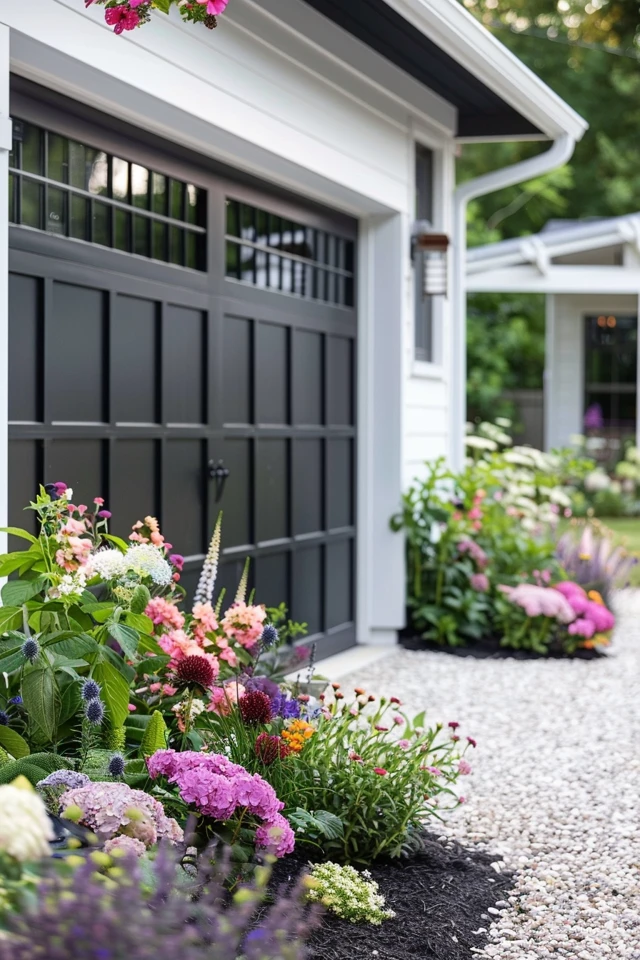
Landscaping Ideas for Side of Garage Makeover
The side of the garage is often the “forgotten middle child” of home exterior design. It usually ends up as a dumping ground for trash cans, a graveyard for old potting soil, or a muddy strip where grass refuses to grow. However, neglecting this space is a missed opportunity to add curb appeal and functionality to your property.
I once worked with a client who had a six-foot wide strip of dirt alongside their garage that inevitably turned into a mudslide every time it rained. By installing a proper gravel drainage system and some shade-tolerant vertical planting, we transformed it into a charming service path that actually protected the home’s foundation. If you are looking for visual inspiration, don’t miss the extensive Picture Gallery located at the very end of this blog post.
This guide will walk you through how to reclaim that space. We will cover everything from handling tricky drainage issues to selecting the right plants for narrow, often shady corridors. Let’s turn that eyesore into an asset.
1. Assess the Conditions and Functionality
Before buying a single paver or shrub, you have to understand what you are working with. The side of a garage presents unique micro-climates that differ from the rest of your yard.
First, determine the sunlight exposure. Is this area on the north side, receiving almost zero direct light? Or is it a south-facing wind tunnel that bakes in the afternoon? Most side yards are “deep shade” zones, which drastically limits your plant palette but opens up opportunities for lush, fern-heavy designs.
Next, identify the utility of the space. Do you need to roll heavy trash bins through here weekly? Do you need access to an air conditioning unit or a gas meter? If you need to move equipment, functionality must trump aesthetics.
Designer’s Note: The 36-Inch Rule
In landscape design, we have a “golden rule” for service pathways. You need a minimum of 36 inches of clear width to comfortably roll a standard wheelbarrow or a large trash bin. If your side yard is only 48 inches wide, that means you only have 12 inches left for plants. Don’t force a planting bed where a path needs to be.
2. Hardscaping: Creating a Solid Foundation
Because side yards often suffer from poor drainage and high foot traffic, grass is rarely the right choice. Hardscaping provides a clean, dry surface that defines the space.
Gravel and Stone
For a budget-friendly and drainage-smart solution, pea gravel or crushed granite is excellent. It allows rainwater to percolate into the soil rather than pooling against the garage foundation. To keep it tidy, install steel or stone edging to prevent the rocks from migrating into your lawn.
Stepping Stones
Large flagstones or concrete pavers dropped into a gravel bed create a modern, structured look.
- Space pavers about 4 to 6 inches apart to allow for a comfortable stride.
- Use “fines” or stone dust beneath the pavers to level them so they don’t wobble.
- Avoid smooth, polished stones; they become incredibly slippery in shaded, damp side yards.
Solid Pavement
If this is a high-traffic utility zone, a solid concrete or brick path is best. Ensure the pavement is graded (sloped) away from the garage wall. A slope of one-quarter inch per foot is the standard requirement to keep water out of your garage.
Common Mistakes + Fixes
Mistake: Placing hardscaping directly against the siding or stucco.
Fix: Leave a 6 to 12-inch gap between the path and the garage wall. Fill this gap with decorative river rock. This prevents moisture from wicking up your siding and keeps termites/pests away from the structure.
3. Selecting Plants for Narrow Spaces
The biggest challenge with side yards is width. You cannot plant a shrub that wants to grow six feet wide in a four-foot wide space. You will spend the rest of your life pruning it.
Go Vertical
Look for “columnar” or “fastigiate” plant varieties. These are bred to grow tall and narrow.
- Sky Pencil Holly: Great for sun/partial shade, stays very narrow (1-2 feet wide).
- Helmond Pillar Barberry: Adds deep purple color, grows upright.
- Bamboo (Clumping only): strictly avoid running bamboo. Clumping varieties create a lush, tall screen without taking over the neighborhood.
Shade Lovers
If your garage casts a permanent shadow, lean into woodland plants.
- Hostas: They come in endless varieties. Mix blue-green leaves with chartreuse ones for contrast.
- Ferns: Japanese Painted Ferns add silver and purple hues to dark corners.
- Astilbe: These provide feathery plumes of color even in full shade.
Potting and Containers
If the ground is full of tree roots or utility lines, skip digging entirely. Use uniform large planters along the wall. This allows you to control the soil quality and swap out seasonal flowers. Ensure pots are at least 18 inches in diameter so they don’t dry out too quickly.
4. Camouflaging Utilities and Storage
The side of the garage is the natural habitat for the ugly mechanics of a house: AC compressors, heat pumps, and trash cans. The goal is to screen them without blocking access or airflow.
Lattice and Trellis Screens
A freestanding wood lattice screen is an easy DIY project. Anchor two 4×4 posts and attach a lattice panel. Plant a climbing vine like Clematis or Star Jasmine at the base. Within a season, you will have a living wall hiding your trash bins.
The AC Unit Constraint
Never enclose an air conditioner completely. It needs to “breathe” to function efficiently.
- Keep plants at least 2 to 3 feet away from the unit.
- Do not let vines grow onto the fan grill.
- Use a three-sided fence structure with the open side facing away from the primary view.
The “Potting Station” Solution
If you have a bit more width, turn the utility area into a feature. A narrow potting bench placed against the garage wall can serve as storage for small tools and pots. Hang hooks above it for hand trowels. It creates a “destination” rather than just a pass-through.
5. Lighting and Decor
Lighting is critical in side yards for both safety and aesthetics. These areas are often pitch black at night, making them hazards for tripping.
Path Lights
Install low-voltage LED path lights every 6 to 8 feet. You don’t need a runway effect; pools of light should just overlap slightly. If you are renting or on a budget, solar stake lights have improved significantly in recent years, provided the area gets some charge during the day.
Downlighting/Moonlighting
If you have eaves on your garage, install small puck lights or directional spots pointing down. This washes the wall with light and illuminates the path without the clutter of fixtures on the ground.
Decor Elements
Since the space is tight, keep decor on the walls.
- Mirrors: A weatherproof garden mirror can make a narrow side yard feel twice as wide.
- Wall Art: Iron or metal wall sculptures break up the monotony of a long garage wall.
- Water Features: A small wall-mounted fountain adds sound, which helps mask the hum of the nearby AC unit.
Final Checklist: What I’d Do in a Real Project
If I were hired to redesign your side garage area tomorrow, here is the exact mental checklist I would run through.
1. Drainage Audit
Wait for a heavy rain. Go outside and watch where the water goes. If it sits against the garage, I am calling a grading contractor before I buy a single plant.
2. Measure Twice
I measure the distance from the wall to the property line.
- Under 4 feet: It is a path only. No beds. Plants go in pots or on trellises.
- 4 to 6 feet: A 3-foot path plus a shallow planting bed.
- Over 6 feet: Full planting beds and a winding path are possible.
3. Surface Selection
I almost always choose crushed stone or gravel for these areas. It is cost-effective ($3-$5 per square foot installed DIY), handles moisture well, and discourages weeds if installed with landscape fabric.
4. Plant Selection
I pick 3 varieties maximum. In a small space, a hodgepodge of 10 different flowers looks messy. I would choose one vertical evergreen, one ground cover, and one seasonal bloomer. Repeat this pattern down the line for a modern, cohesive look.
5. The “AC Test”
I verify that a technician can easily access the service panel of the AC unit. If my screen makes their job hard, I redesign the screen to be removable.
FAQs
What is the cheapest way to landscape the side of a garage?
Mulch and stepping stones are the most economical choice. A bag of mulch costs a few dollars, and simple concrete pavers are inexpensive. However, mulch needs replenishing annually. Pea gravel is slightly more upfront but lasts longer.
Can I grow vegetables on the side of my garage?
Only if you have at least 6 hours of direct sunlight. Most side yards are too shady for tomatoes or peppers. However, leafy greens like lettuce, spinach, and kale tolerate partial shade quite well.
How do I stop weeds from growing in the gravel path?
Preparation is key. You must dig out the top 3 inches of soil. Lay down a heavy-duty, non-woven geotextile landscape fabric (not the cheap plastic stuff). Pin it down. Then pour your gravel. The fabric prevents weed seeds in the soil from coming up, though you will still need to pull occasional surface weeds blown in by the wind.
What if my neighbor’s house is very close?
If you need privacy but lack width, install a “living wall” trellis. Fasten wire mesh to your fence or posts and grow Evergreen Clematis or English Ivy (check if invasive in your area). This provides a green screen that is only a few inches deep.
Conclusion
The side of your garage does not have to be a wasteland. By treating it as a distinct room with its own rules regarding scale and light, you can unlock valuable square footage on your property.
Whether you need a utilitarian path for trash bins or a secret fern garden for quiet reflection, the key is to respect the constraints of the space. Keep your pathways wide enough to be useful, choose plants that respect boundaries, and ensure your drainage protects your home. Start with the hardscaping, layer in your vertical greens, and you will be amazed at the transformation.
Picture Gallery


