
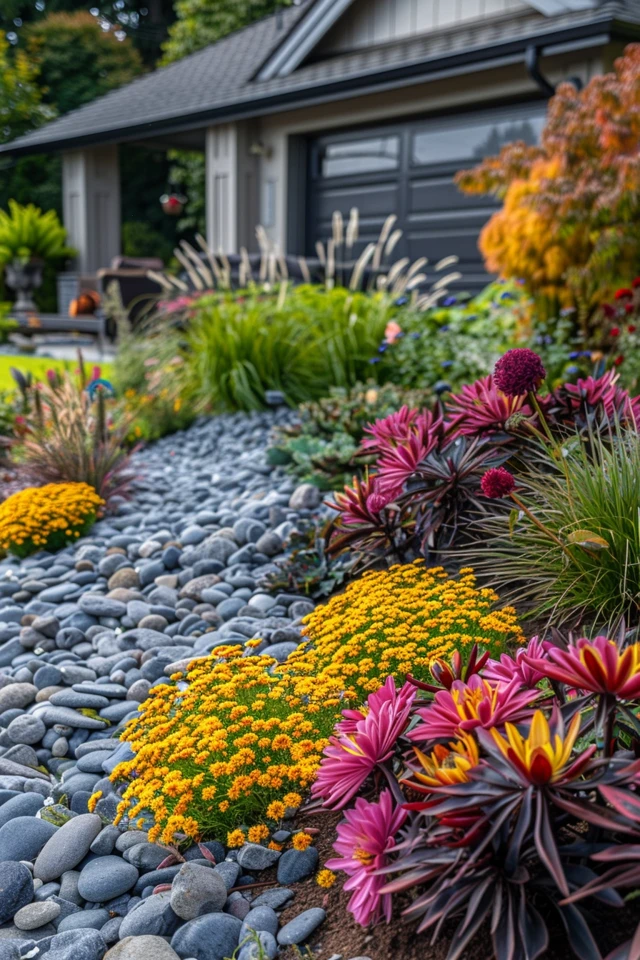
Low Maintenance Landscaping Ideas Pacific Northwest
Living in the Pacific Northwest means making peace with two extremes: soggy, gray winters and surprisingly dry, crisp summers. When I work with clients in Seattle, Portland, or Vancouver, the conversation almost always starts with the mud. We love the lush greenery, but nobody wants to spend their entire weekend fighting moss or mowing a lawn that refuses to dry out.
Creating a beautiful outdoor space here is about working with the climate rather than forcing a tropical or desert aesthetic that fights the environment. For those who want to jump straight to the visuals, please note that a comprehensive Picture Gallery is located at the end of this blog post. My goal is to help you design a yard that looks established and intentional but requires minimal effort once installed.
I approach landscape design the same way I approach interior layouts: it is all about flow, scale, and material durability. By selecting the right native plants and hardscaping materials, we can extend your living space outdoors year-round. Let’s dive into how to achieve that effortless woodland look without the backbreaking maintenance.
1. The Native Woodland Palette: Layering for Success
The easiest way to lower maintenance in the PNW is to mimic the natural forests surrounding us. Native plants have evolved to handle our wet winters and summer droughts without needing constant irrigation or fertilizers. When I design a planting plan, I think in layers, just like furnishing a room.
Start with your “flooring” or ground cover. Instead of high-maintenance grass, use spreaders like Kinnikinnick or Wild Ginger. These plants knit together to suppress weeds and lock in soil moisture.
Next, add your “furniture” layer. This includes Sword Ferns, Salal, and Oregon Grape. These are the workhorses of the PNW garden. They provide structure, stay green all year, and are virtually indestructible once established.
Finally, consider the “ceiling” or canopy. If you have existing conifers, protect them. If you are planting new trees, look for Vine Maples. They offer incredible architectural shape and fall color but stay relatively small compared to towering firs.
Designer’s Note: The Rule of Triangulation
When placing plants, avoid lining them up like soldiers. In interiors, we group accessories in odd numbers, and the same applies outdoors. I always plant perennials and shrubs in groups of three, five, or seven.
Arrange them in a scalene triangle (a triangle with unequal sides). This creates a natural, organic look that fills in gaps faster. If you plant in straight rows, one dead plant creates a noticeable missing tooth. If you plant in clusters, the others fill the void seamlessly.
Common Mistake & Fix
Mistake: planting too close together to get an “instant garden” look. This leads to overcrowding and fungal issues due to lack of airflow—a major problem in our damp climate.
Fix: Read the plant tag for the mature width. If a shrub grows to 4 feet wide, place the center of the plant at least 3.5 to 4 feet away from its neighbor. Mulch the empty space heavily for the first two years until they fill in.
2. Hardscaping: Reducing the Green Fatigue
In the Pacific Northwest, “green fatigue” is a real thing. When everything is lush and overgrown, the eye needs a place to rest. Hardscaping provides that negative space and dramatically reduces maintenance by eliminating mowing.
I often recommend replacing small, struggling patches of lawn with crushed rock or flagstone patios. This is especially important in small urban backyards where a lawnmower is more of a nuisance than a tool.
Gravel is a fantastic, permeable option that handles our heavy rains well. However, you must choose the right type. Do not use pea gravel in high-traffic areas; it acts like ball bearings and is difficult to walk on.
Instead, specify “5/8-inch minus” or crushed rock. The jagged edges lock together to form a firm surface that is stable enough for patio furniture. It drains instantly, meaning no puddles to step in when you take the dog out in November.
What I’d Do in a Real Project
- Define the Zone: I would layout a seating area using steel edging to contain the gravel. This creates a crisp, modern line that separates the wild planting beds from the clean hardscape.
- Select the Color: Avoid bright white stone; it looks artificial in our gray light. Choose dark basalt or gray granite to blend with the natural soil tones.
- Scale the path: A primary walkway should never be less than 42 inches wide. This allows two people to walk side-by-side comfortably. For a secondary path, 30 inches is the absolute minimum.
Material Lesson: Paver Spacing
If you prefer pavers over loose gravel, consider large-format concrete steppers (24″ x 24″). Space them 4 to 6 inches apart and fill the gaps with creeping thyme or crushed rock. This breaks up the visual mass of the concrete and allows rainwater to return to the soil rather than running off into the storm drain.
3. Managing Water: Rain Gardens and Dry Creek Beds
Drainage is the unsexy hero of PNW landscaping. Low maintenance means not having to worry about your basement flooding or your plants rotting in standing water. Instead of fighting the rain, we design features that manage it.
A dry creek bed is both aesthetic and functional. It acts as a channel to direct water away from your foundation during heavy storms. When it’s dry in August, it looks like a deliberate sculptural element made of river rock and boulders.
Rain gardens are another excellent low-maintenance strategy. These are shallow depressions planted with species that tolerate “wet feet” in winter and drought in summer. They act as sponges, filtering runoff from your roof.
Good plant choices for these zones include Red Twig Dogwood, Slough Sedge, and Pacific Ninebark. They thrive on neglect and fluctuating water levels.
Designer’s Note: The Slope Ratio
To move water effectively away from your home, you need a positive grade. The rule of thumb is a 2% slope minimum. This means for every foot you move away from the house, the ground should drop about 1/4 inch.
Over 10 feet, the ground should be 2.5 to 3 inches lower than at the foundation. I always double-check this with a laser level before installing any hardscaping or planting beds.
Common Mistake & Fix
Mistake: Piling mulch or soil against the siding of the house to create a raised bed.
Fix: Keep soil and mulch at least 6 inches below the siding or weep screed. This prevents rot and keeps pests like carpenter ants from having an easy bridge into your home structure.
4. Year-Round Interest: Embracing the Gray Season
As an interior designer, I am constantly thinking about the view from the inside out. In the PNW, we spend a lot of time indoors looking out at the rain. If your yard is full of deciduous perennials that die back to the ground, you are looking at mud for five months.
A low-maintenance yard must have “winter bones.” This means prioritizing evergreens and plants with interesting bark or structure. We want the garden to look “furnished” even in January.
I rely heavily on textural contrasts. The peeling bark of a Paperbark Maple or the bright red stems of a Red Twig Dogwood (variety ‘Midwinter Fire’) look stunning against a gray sky.
Ornamental grasses are also vital. Leave them standing through the winter. Their tawny colors provide warmth, and the seed heads look beautiful when frosted over. You only need to cut them back once a year in early spring.
Lighting: The Fourth Dimension
Because our days are so short in winter, landscape lighting is not a luxury; it is a necessity for curb appeal and safety. Low-voltage LED lighting is energy-efficient and low maintenance.
The Temperature Rule: Always specify bulbs with a color temperature of 2700K to 3000K (Warm White). Anything higher (4000K+) looks like a blue-tinted security light and feels harsh against the cool tones of our twilight.
What I’d Do in a Real Project
- Uplight Trees: Place a fixture at the base of a Vine Maple to illuminate its sculptural branching structure.
- Path Lights: Use shielded fixtures that direct light down onto the path, not up into your eyes. Space them roughly 6 to 8 feet apart to create pools of light rather than a runway strip.
- Silhouette: If you have a nice fence or wall, wash it with soft light to silhouette the plants in front of it.
5. The “Set It and Forget It” Maintenance Plan
Even a low-maintenance garden requires some intervention. The goal is to reduce daily or weekly chores to seasonal ones. The key to this is mulch.
In the PNW, weeds germinate all winter long because the ground rarely freezes hard. A thick layer of arborists’ wood chips (not fine bark dust) is your best defense. Coarse chips decompose slowly, feed the soil, and prevent weed seeds from taking hold.
I recommend applying 2 to 3 inches of wood chip mulch every 18 months. This suppresses weeds and reduces the need for summer watering by retaining soil moisture.
Avoid landscape fabric (weed barrier) under planting beds. It sounds like a good idea, but eventually, organic matter builds up on top of it, weeds grow into the fabric, and it becomes a nightmare to remove. It also suffocates the soil. Use cardboard covered by mulch instead.
Designer’s Note: The “Right Plant, Right Place” Philosophy
Nothing creates more maintenance than putting a sun-lover in the shade or a thirsty plant in a dry spot. You will spend forever pruning leggy growth or dragging a hose around.
Map your sun exposure. In the PNW, “Full Sun” usually means 6+ hours of direct afternoon light. “Part Shade” is dappled light or morning sun only. Be honest about your conditions.
Common Mistake & Fix
Mistake: Ignoring the mature size of conifers. People buy a cute “dwarf” spruce, plant it next to the walkway, and five years later, they are hacking it back because it blocks the door.
Fix: Research the 10-year size estimate. If a plant says it gets 8 feet wide, believe it. Give it space so you never have to prune it for size control, only for health.
Final Checklist: Your Low Maintenance Game Plan
Here is the roadmap I use to keep projects on track. Use this to organize your renovation.
- Site Analysis: specific soil type (clay vs. sandy) and sun mapping (morning vs. afternoon).
- Drainage Check: Observe where water pools after a heavy rain. Plan dry creek beds for these areas.
- Hardscape Layout: define your sitting areas and pathways. Aim for wide, generous proportions.
- Soil Prep: Don’t just dig a hole. Amend the entire planting bed with 2-3 inches of compost before planting.
- Plant Selection: Choose 70% native or adaptive evergreens and 30% seasonal accents.
- Irrigation: Install drip irrigation immediately. Even drought-tolerant plants need water for the first two summers.
- Mulch: Finish with 3 inches of coarse wood chips.
- Lighting: Install low-voltage wiring before laying mulch.
FAQs
How do I stop moss from growing on my patio?
In the PNW, fighting moss is a losing battle, but you can manage it. On hardscaping, ensure you have good slope for drainage. Regular sweeping prevents organic matter (food for moss) from building up. If you must remove it, use a stiff brush and vinegar or a specialized eco-friendly cleaner. Avoid pressure washing pavers too often, as it degrades the surface.
What are the best plants for a shade garden that isn’t just ferns?
While ferns are great, try adding Hellebores (Lenten Roses) for winter flowers, Hostas for broad leaf texture (if you don’t have too many slugs), and Japanese Forest Grass (Hakonechloa) for bright chartreuse color that lights up dark corners. Barrenwort (Epimedium) is another tough, drought-tolerant shade lover.
How do I deal with heavy clay soil?
Do not add sand to clay; it creates concrete. Instead, add organic matter. Top-dress your beds with compost every year. Let the worms and rain work it down into the soil. Choose plants that tolerate clay, such as Red Flowering Currant, Dogwood, and Daylilies.
Can I have a flower garden in the PNW that is low maintenance?
Yes, but focus on perennials rather than annuals. Coneflowers (Echinacea), Rudbeckia, and Lavender thrive here in sunny spots and come back every year. They require cutting back only once a year. Avoid hanging baskets of petunias unless you have an automatic watering system.
Conclusion
Creating a low-maintenance landscape in the Pacific Northwest is about changing your mindset. It is about trading the perfectly manicured, high-input lawn for a space that respects the local ecology. By using native plants, smart hardscaping, and proper zoning, you create a yard that takes care of itself.
As an interior designer, I want the outdoor space to feel like a sanctuary, not a chore list. When you look out your window in November and see the bright red twigs of a dogwood or the structural beauty of a sword fern against a boulder, you’ll be glad you chose lasting structure over fleeting blooms. It adds value to your home and time back to your weekends.
Picture Gallery


