
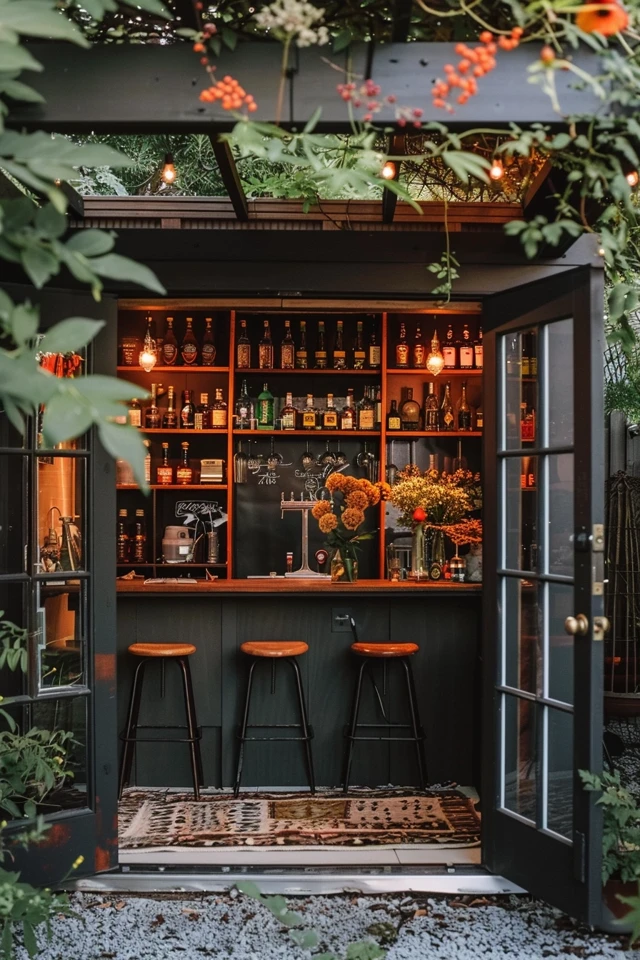
Man Cave Shed Ideas for Your Ultimate Retreat
Every homeowner eventually craves a dedicated space that is entirely their own. While basements and garages are the traditional choices for a getaway, the backyard shed offers a unique advantage: complete physical separation from the main house. It is the only place where you can truly control the environment, the noise levels, and the aesthetic without compromising with the rest of the household.
I remember working with a client named Mark who tried to squeeze a simulator setup into a guest bedroom. It just never felt right because the “household context” was always looming outside the door. Moving his project to a conditioned 12×16 garden shed changed everything; it became a destination rather than just a room. If you are just looking for visual inspiration, you can scroll down to the Picture Gallery at the end of the blog post.
However, converting a shed into a livable, comfortable “man cave” requires more than just throwing a rug over a plywood floor. You have to treat it like a miniature house construction project. In this guide, I will walk you through the structural necessities, layout tricks for tight footprints, and the design details that turn a storage unit into a high-end retreat.
1. The Envelope: Insulation, Power, and Climate Control
Before we talk about leather armchairs or neon signs, we must address the “envelope” of the shed. A standard garden shed is built to keep rain off lawnmowers, not to keep a human comfortable during a movie marathon in December or July. If you skip this phase, your furniture will mold, and your electronics will overheat.
Insulation is not optional
In a confined space like a shed, temperature swings are rapid and violent. I recommend closed-cell spray foam insulation for sheds. It acts as a vapor barrier and provides a higher R-value (thermal resistance) per inch than fiberglass batting, which maximizes your interior square footage. If you use traditional fiberglass batts, you must install a separate vapor barrier to prevent condensation from rotting your studs from the inside out.
Electrical planning
You cannot run your ultimate retreat on a single extension cord snake across the lawn. That is a fire hazard and a code violation. You need a sub-panel installed in the shed, ideally with at least 60 amps of service. This allows for:
- Lighting circuits (LEDs).
- Outlet circuits (Computer, TV, Mini-fridge).
- A dedicated circuit for heating/cooling.
The Mini-Split solution
For climate control, the ductless mini-split is the industry standard for sheds. It provides both heating and cooling, runs quietly, and mounts high on the wall to save floor space. Window units are loud and ruin your security; space heaters are inefficient and dangerous in small, cluttered rooms.
Designer’s Note: The Moisture Trap
I once visited a DIY shed project where the owner had installed a beautiful felt-top poker table. Within six months, the felt was wavy and smelled like mildew. He had insulated the walls but left the floor as bare plywood over dirt. Moisture wicks up from the ground. Always seal the underside of your shed or install a vapor barrier and subfloor system before laying down your finish flooring.
2. Space Planning and Layout Strategy
Sheds are typically small. The most common sizes I see for these projects are 10×12 (120 sq. ft.) or 12×16 (192 sq. ft.). In a house, we have room to float furniture; in a shed, inches matter. You have to be ruthless about scale and zoning.
The “One Primary Function” Rule
In a small footprint, you can usually do one thing perfectly or three things poorly. Decide on the primary driver. Is this a pub? A cinema? A workshop? A home office? That function dictates 70% of the floor plan. If it is a cinema, the TV wall dictates the sofa placement. If it is a pub, the bar location dictates the flow.
Clearance and Flow
Even in a shed, you need to respect traffic patterns.
- Walkways: Aim for a minimum of 30 inches for main walkways. In a pinch, 24 inches works, but it will feel tight.
- Seating Clearance: If you have a desk or bar, allow 36 inches from the edge of the desk to the wall behind you so you can slide your chair back without hitting the studs.
- TV Distance: A massive TV in a tiny shed can cause eye strain. The ideal viewing distance is roughly 1.5 times the diagonal screen size. For a 65-inch TV, you want to be sitting about 8 feet back.
Common Mistakes + Fixes
Mistake: Using “overstuffed” residential furniture.
Fix: Use apartment-scale furniture. Look for sofas with narrow arms and shallower depths (34-36 inches rather than the standard 40+ inches). This saves valuable floor space without sacrificing seat width.
Mistake: Inward swinging doors.
Fix: If building from scratch or renovating, install an outward swinging door or a sliding barn door. An inward swinging door eats up roughly 9 square feet of usable floor space that you cannot put furniture on.
3. Interior Finishes: Escaping the “Tool Shed” Look
The goal is to make the interior feel like a high-end room, not a plywood box. The materials you choose for the walls and floors set the tone. Because the square footage is low, you can often afford higher-quality materials than you would in a large living room.
Wall Treatments
Drywall offers the most “finished” look but is prone to cracking if the shed settles or shifts with the seasons. Wood paneling or shiplap is often a better choice for sheds. It is flexible, durable, and nails the “retreat” aesthetic.
- Dark and Moody: Paint the walls and ceiling the same dark color (Charcoal, Navy, Forest Green). This blurs the edges of the room and actually makes the small space feel larger and cozier.
- Industrial: Use finished high-grade plywood with exposed fasteners, sealed with a clear matte polyurethane. This looks modern and masculine.
Flooring for Durability
Luxury Vinyl Plank (LVP) is my go-to for shed conversions. It is waterproof, scratch-resistant, and thin (saving headroom). It can also handle the temperature fluctuations better than solid hardwood, which might cup or warp in a detached structure. Avoid wall-to-wall carpet; it traps dirt tracked in from the yard. Use area rugs instead, which can be removed and cleaned.
Lighting Layers
Do not rely on a single overhead “boob light.” It creates harsh shadows and makes the ceiling feel lower.
- Ambient: Recessed can lights (4-inch size is better for sheds than 6-inch) on a dimmer.
- Task: Desk lamps or pendant lights over the bar area.
- Accent: LED strip lighting behind the TV or under the bar shelves adds depth and mood without taking up space.
4. Themed Executions: Function-Specific Designs
Once the shell and layout are determined, you can lean into the specific theme. Here is how to handle the three most popular requests I get, with specific design constraints in mind.
The Backyard Pub
This is all about the bar. A standard bar height is 42 inches. The bar overhang needs to be at least 12 inches (ideally 15 inches) for knee clearance. If you are building a custom bar, ensure the “bartender side” has 36 inches of width to move around.
- Must-have: A dedicated beverage cooler. Don’t rely on a mini-fridge that requires you to bend down constantly. Build it into the cabinetry at waist height if possible.
- Vibe check: Use warm lighting (2700K temperature) to mimic the feel of a local tavern.
The Gaming/Media Bunker
Light control is paramount here. You need blackout shades on every window. Sound control is also critical so you don’t disturb the neighbors or the main house.
- Acoustics: Hard surfaces bounce sound. In a small box, this creates terrible audio echo. Cover at least 30% of the wall surface with acoustic panels or heavy velvet curtains. A thick high-pile rug is mandatory.
- Tech: Hardwire your internet. Wi-Fi signals struggle to punch through exterior cladding and insulation. Run a CAT6 ethernet cable through the same trench as your electrical line for lag-free gaming.
The Maker’s Workshop
This requires different logic than a lounge. You need bright, cool lighting (4000K-5000K) to see details.
- Power: Run outlets every 4 feet along the bench height (usually 36 inches). You never want to cross the workspace with a cord.
- Flooring: If you are working with heavy tools or oil, consider an epoxy coating over the subfloor or rubber gym mats. LVP might get scratched here.
5. Integrating the Shed into the Landscape
A man cave shed should not look like a spaceship landed in your backyard. It needs to be anchored to the landscape. This is often the most overlooked part of the budget, yet it creates the “arrival experience.”
The Approach
You need a solid pathway from the house to the shed. Grass turns to mud in the winter, and you will ruin your interior floors tracking it in.
- Pavers or Flagstone: These offer a permanent, clean look. Set them in stone dust or polymeric sand.
- Gravel: A budget-friendly option, but use a plastic grid system underneath to keep the gravel from migrating into the lawn.
The Transition Zone
Add a small deck or landing pad outside the door, at least 4 feet by 4 feet. This gives you a place to wipe your feet and perhaps set a chair for outdoor sitting. Adding a pergola over the entrance can help physically and visually connect the structure to the garden, softening the harsh boxy lines of the shed.
What I’d do in a real project
If I were building this today for a client with a $15k-$20k budget:
1. I would buy a prefabricated 10×12 shell to save time on framing.
2. I would spend the bulk of the money on spray foam insulation and a 60-amp electrical panel.
3. I would install LVP flooring in a “Natural Oak” tone to hide dust.
4. I would paint the walls and ceiling “Iron Ore” by Sherwin Williams.
5. I would install a large sliding glass door on the side facing the house to open up the view.
Final Checklist: Before You Buy Furniture
Use this checklist to ensure the room is actually ready for habitation.
- Moisture Test: Tape a 2×2 foot piece of plastic to the concrete or subfloor. Wait 48 hours. If it is wet underneath, you have a moisture issue to solve before flooring.
- Connectivity Check: Test your Wi-Fi signal inside the shed with the door closed. If it is weak, order a mesh extender or bury an ethernet cable.
- Power Load: Add up the amperage of your AC, heater, fridge, and TV. Ensure your breaker panel can handle it with 20% headroom.
- Security: Install a deadbolt and a smart camera facing the entrance. Sheds are prime targets for theft because they are isolated.
- Lighting Temp: Ensure all bulbs match in color temperature (e.g., all 3000K). Mismatched lights make a small space look chaotic.
FAQs
Do I need a permit for a man cave shed?
In most US municipalities, sheds under a certain square footage (often 100 or 120 sq. ft.) do not need a building permit for the structure itself. However, once you add permanent electrical wiring or plumbing, you almost always need a trade permit and an inspection. Always check with your local zoning office first.
Can I use a portable generator instead of running hardwire?
Technically yes, but practically no. Generators are loud, require refueling, and produce exhaust fumes that must be kept away from windows. For a permanent retreat, hardwired electrical is the only safe and convenient option.
How much does it cost to convert a shed?
A high-quality DIY conversion (insulation, drywall, electric, floor, trim) usually costs between $50 and $100 per square foot, excluding the cost of the shed shell itself. If hiring pros for everything, expect $150+ per square foot.
What is the best way to heat a shed in freezing climates?
A mini-split heat pump is the most efficient. If that is out of budget, an oil-filled electric radiator is safer than a forced-air space heater because it doesn’t have exposed elements that can ignite sawdust or fabrics.
Conclusion
Creating a man cave shed is one of the most rewarding home improvement projects because the result is purely for you. It is a space unburdened by the practical necessities of the main house—no laundry piles, no kid toys, just a dedicated zone for your interests.
Success lies in the boring details. If you prioritize the insulation, moisture control, and electrical capacity, the styling will be the easy part. A well-built shed adds value to your property and sanity to your life. Take the time to plan the “envelope” first, and you will have a retreat that is usable year-round, not just on mild weekends.
Picture Gallery


