
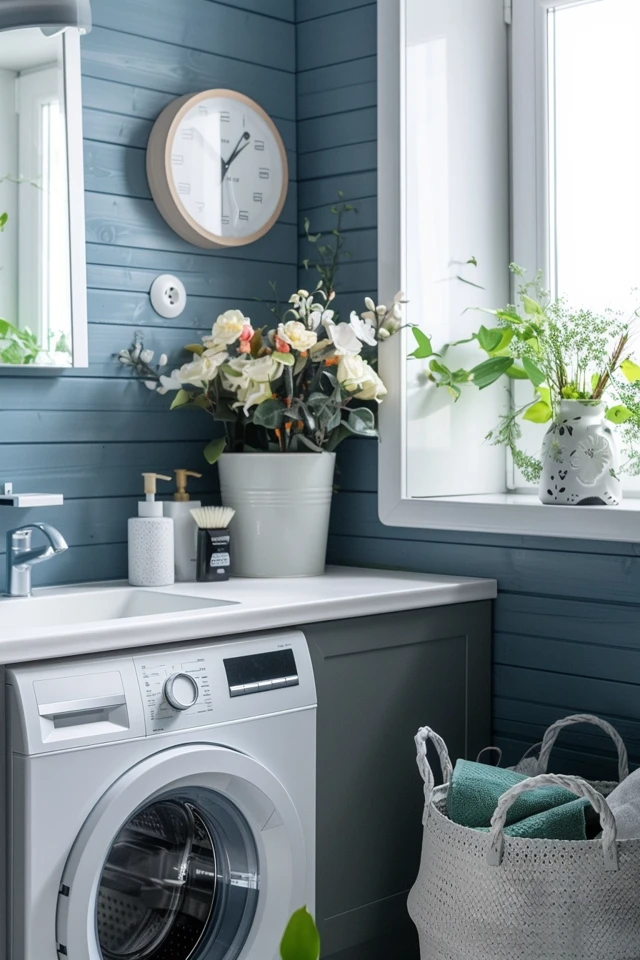
Maximize Space: Small Bathroom with Washer and Dryer Ideas
Combining a laundry room with a small bathroom is one of the most practical layout decisions you can make for a compact home or apartment. It centralizes plumbing, keeps messy clothes contained, and maximizes square footage that might otherwise be wasted on a dedicated utility closet. However, the execution is tricky; if done poorly, your bathroom can quickly feel like a cramped laundromat.
I have designed dozens of multipurpose wet rooms, and the secret lies in seamless integration rather than simply shoving machines into a corner. You have to treat the washer and dryer as built-in furniture pieces, ensuring they blend with your vanity, tile choices, and lighting plan.
In this guide, I will walk you through the layouts, measurements, and design tricks I use to make these spaces functional and beautiful. For visual inspiration, be sure to check out the Picture Gallery at the end of the blog post.
1. Layout Logistics: Determining the Right Configuration
Before buying tile or picking paint colors, you must nail down the footprint. In a small bathroom, every inch of floor space is premium real estate. The configuration of your machines will dictate the rest of the room’s flow.
The Stacked Approach
Stacking your units is usually the best choice for bathrooms under 50 square feet. This footprint typically requires a width of about 27 to 30 inches and a depth of 30 to 35 inches.
By going vertical, you free up floor space for a larger shower or a double vanity. However, you must ensure you have the ceiling height; standard stacked units reach about 75 to 80 inches high.
The Side-by-Side Under Counter
If you have a long, narrow bathroom (galley style), placing machines side-by-side under a continuous counter is a sleek option. This creates a massive surface area for folding clothes or storing toiletries.
The challenge here is height. Standard washing machines are about 38 to 39 inches tall. Standard bathroom vanity height is 30 to 34 inches. To make this work, the counter over the machines will be higher than a standard sink area, which creates a split-level counter or requires a vessel sink to balance the ergonomics.
Designer’s Note: The Depth Trap
The most common issue I see in DIY renovations is underestimating depth. A “standard” washer is roughly 27 inches deep, but that does not account for the hoses and vents in the back.
You need to allocate at least 4 to 6 inches of clearance behind the machines for plumbing and airflow. If you are building a closet or cabinet to hide them, you also need 2 inches of clearance in front for the door to close.
The Math:
- Machine depth: ~27 inches
- Rear clearance: +5 inches
- Front clearance: +2 inches
- Total required depth: ~34 inches
If your bathroom layout only allows for a 30-inch deep cabinet, you must purchase “compact” or “closet-depth” machines. Do not try to force standard units into a shallow space; you will crush the dryer vent, which is a massive fire hazard.
2. The Art of Concealment: Hiding the Appliances
Unless you have very stylish, high-end machines, you probably don’t want to look at your washer while relaxing in the bath. Concealment is key to keeping the “spa” vibe in a bathroom-laundry combo.
Pocket and Barn Doors
Swing doors are the enemy of small bathrooms because the door swing eats up usable floor space. Pocket doors are the gold standard because they disappear completely into the wall.
If opening the wall for a pocket door isn’t structurally possible, a sliding barn door is a great alternative. Just ensure the track hardware matches your shower fixtures (matte black, brushed nickel, etc.) to keep the look cohesive.
Bifold Doors with a Twist
Standard bifold doors often feel flimsy and cheap. However, solid-core custom bifolds can look elegant. The trick is to use high-quality track hardware so they don’t derail.
Ensure the bifold doors can fold back completely flat against the adjacent wall. This allows you full access to the machine opening without fighting the door while holding a laundry basket.
Built-in Cabinetry (The “Laundry Armoire”)
For a truly custom look, I often design a “laundry armoire.” This is built-in joinery that matches the bathroom vanity.
From the outside, it looks like a linen closet. Inside, it houses the stacked machines.
What I’d do in a real project:
- Install “flipper” or pocket door slides for the cabinet doors. These allow the doors to open and slide back into the cabinet carcass, disappearing entirely.
- Include a pull-out shelf between the stacked washer and dryer if space allows. This serves as a temporary folding station.
3. Managing the Mechanics: Plumbing, Electrical, and Ventilation
This is the unglamorous part of the design process, but it is where projects usually fail. A bathroom is a wet zone with high humidity. Adding a dryer, which produces heat and moisture, requires strict management of the environment.
Venting Requirements
Your dryer must vent to the outside, not into the bathroom or attic. In small bathrooms, the run to the exterior wall should be as short and straight as possible. Long vent runs with multiple elbows reduce efficiency and increase lint buildup.
If you cannot vent to the outside (common in interior condos or basements), you must use a ventless heat pump dryer or condensing dryer. Be aware that these units take longer to dry clothes and can slightly increase the ambient temperature of the room.
Shut-off Valve Accessibility
Never bury your water shut-off valves behind the machine where you can’t reach them. In an emergency (like a burst hose), you need to shut the water off instantly.
I always specify a recessed water supply box that is positioned slightly above the washing machine or to the side. If it must be behind the machine, ensure the cabinetry allows you to reach in easily.
Electrical Safety
Bathrooms require GFCI (Ground Fault Circuit Interrupter) outlets for safety near water sources. Your washing machine needs a dedicated circuit.
Most full-size electric dryers require a 240V outlet. Verify your current electrical panel can handle the load. If you are retrofitting an older bathroom, this might require an expensive panel upgrade.
Common Mistakes + Fixes
Mistake: Placing the toilet right next to the washer without clearance.
Fix: Building codes usually require 15 inches from the center of the toilet to any obstruction. Additionally, washers vibrate. Leave at least 1 to 2 inches of air gap between the machine (or its cabinet) and any vanity or toilet to prevent rattling noises transferring through the fixtures.
4. Storage Solutions for Dual-Purpose Spaces
In a dedicated laundry room, you might have walls of cabinets for detergent. In a small bathroom, you don’t have that luxury. You need to be ruthless and efficient with vertical storage.
Over-the-Toilet Storage
Since the washer and dryer are likely taking up one wall, the space above the toilet becomes critical. Avoid flimsy wire racks.
Install custom floating shelves or a wall-mounted cabinet that extends to the ceiling. Use this for bathroom necessities like extra toilet paper and towels. Keep laundry supplies strictly in the laundry zone to avoid cross-contamination.
Utilizing the “Dead” Space Above Machines
If you stack your machines, there is often a gap between the top of the dryer and the ceiling. This is prime storage space.
I usually install a deep cabinet here for bulky items that aren’t used daily, such as guest towels or bulk detergent refills. Because it is high up, keep a foldable step stool tucked in the vanity toe-kick or hung on the back of the door.
Detergent Management
Giant plastic detergent jugs are ugly and take up too much space. Decant your liquids and powders into clear glass or acrylic containers.
Square containers stack better than round ones. This simple switch reduces visual clutter significantly, which helps the room feel larger.
5. Design Continuity: Blending Functions
The goal is for the room to feel like a bathroom first and a laundry room second. The finishes should dictate the hierarchy.
Flooring Continuity
Do not change the flooring material under the washer and dryer. Run your bathroom tile all the way to the wall under the machines.
This makes the room look bigger because the eye sees a continuous floor plane. It also makes it easier to slide the machines out for servicing.
Material Rule of Thumb:
Use porcelain or ceramic tile. Avoid natural hardwood or laminate in this zone. Leakage from a washer can ruin wood floors in minutes. Porcelain is impervious to water and highly durable against the vibration of the spin cycle.
Lighting Layers
A single overhead light is not enough. You need task lighting for the vanity and specific lighting for the laundry area.
I recommend installing a recessed can light or a directional spotlight directly in front of the washer/dryer. This helps you spot stains when treating clothes. Put this light on a separate switch from the vanity lights so you don’t ruin the mood if someone is relaxing in the bath while a load is running.
Soundproofing
Bathrooms are full of hard surfaces (tile, glass, porcelain) that bounce sound around. A spinning washer can be deafening in a tiled box.
How to dampen the sound:
- Vibration Pads: Always place thick rubber vibration pads under the feet of the washer. This is non-negotiable.
- Solid Doors: If the machines are in a closet, use a solid-core door rather than a hollow-core door. It blocks significantly more noise.
- Textiles: Add a plush bath mat and shower curtain. Soft materials absorb sound waves.
Final Checklist: What I’d Do in a Real Project
If I were consulting on your renovation today, here is the exact checklist I would run through before approving the build:
1. Verify the Swing
Check that the washer door, dryer door, and bathroom entry door do not collide. Remember that front-load washer doors are usually not reversible, but dryer doors often are.
2. Install a Catch Pan
Place a plastic or metal drain pan under the washing machine, plumbed to a drain line. This is a crucial insurance policy against leaks, especially if the bathroom is on a second floor.
3. Check the Amperage
Confirm your electrical plan includes a dedicated 20-amp circuit for the washer and the appropriate 240V (or gas line) for the dryer.
4. Maximize the Mirror
Install the largest mirror that fits over the vanity. It reflects light and tricks the eye into thinking the tight space is twice as big, counteracting the bulk of the appliances.
5. Ventilation Audit
Ensure the bathroom exhaust fan is high-CFM (at least 80-110 CFM) to handle the moisture from the shower and the heat from the dryer.
FAQs
Can I put a washer and dryer in a bathroom without a window?
Yes, absolutely. The lack of a window makes mechanical ventilation even more important. You must have a strong bathroom exhaust fan to remove humidity, and the dryer must be vented to the outdoors through the wall or roof. If outside venting is impossible, a condensing (ventless) dryer is your only option.
What is the minimum size bathroom for a washer and dryer?
Technically, you can fit a toilet, small vanity, and stacked washer/dryer in a space as small as 5 feet by 7 feet (35 square feet). However, this will feel very tight. A 6×8 or 5×9 footprint allows for much better flow and clearance for doors.
Does having laundry in the bathroom hurt resale value?
Generally, no. In smaller homes, condos, or apartments, having in-unit laundry is a massive value add, regardless of location. In larger luxury homes, buyers might prefer a dedicated laundry room, but a secondary laundry set in a master bath is increasingly seen as a luxury convenience.
How do I stop the washing machine from “walking” on the tile floor?
Level the legs perfectly. Use a spirit level on top of the machine (front-to-back and side-to-side). Once leveled, lock the feet in place with the locking nuts. Finally, place the machine on specialized anti-vibration rubber cups. This grips the slick tile and absorbs the movement.
Conclusion
Integrating a washer and dryer into a small bathroom is a puzzle of millimeters. It requires you to balance the rigid demands of plumbing and large appliances with the soft, relaxing aesthetics of a personal sanctuary.
Don’t let the technical constraints scare you. By focusing on vertical storage, clever concealment with cabinetry, and consistent finishes, you can create a space that works hard but looks effortless. Measure twice, account for door swings, and invest in quality lighting.
With the right layout, you won’t just save space; you’ll streamline your daily routine.
Picture Gallery


