
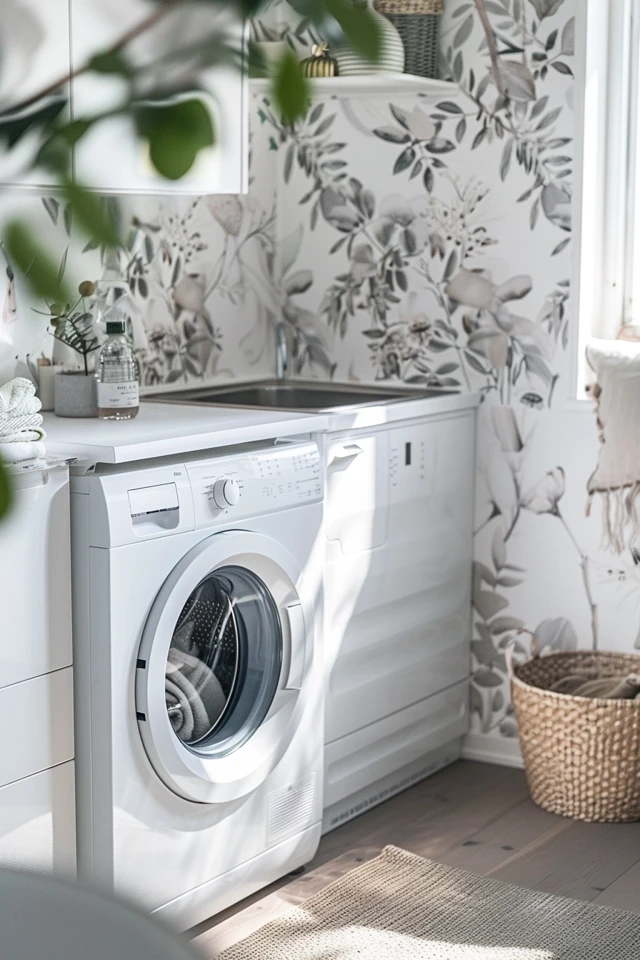
Title: Maximize Space: Top Load Washer Laundry Ideas
Introduction
Designing a functional laundry room is difficult enough, but it becomes a distinct puzzle when you are committed to top-load machines. While front-loading washers often get the spotlight in magazines for their ability to sit neatly under a continuous countertop, top-loaders remain a favorite for their reliability, capacity, and ergonomics. The challenge lies in utilizing the vertical space directly above the machine without blocking the lid.
I recently worked with a client who had a narrow laundry mudroom and absolutely refused to switch to front-loaders due to a bad experience with mold gaskets in a previous home. We had to get creative. Instead of seeing the top-loading mechanism as a limitation, we treated it as a zoning guide. We focused heavily on upper storage and wall utility rather than floor-level surfaces. The result was a space that felt open and airy, rather than boxed in by heavy cabinetry.
In this guide, I will walk you through the specific layouts, measurements, and custom carpentry tricks I use to make top-load laundry rooms efficient. If you are looking for visual inspiration, you can jump right to the Picture Gallery at the end of this blog post.
Strategic Vertical Storage and Cabinetry
Since you cannot stack a dryer on top of a top-loading washer, you lose the vertical efficiency that stacking provides. To regain that storage volume, you must look higher up the wall. However, placing cabinetry above a top loader requires precise math to avoid banging the lid or creating an unreachable cavern.
Standard upper cabinets are usually installed 18 inches above a standard kitchen counter. In a laundry room with a top loader, this rule does not apply. You need to measure the height of your washer with the lid fully open. Most machines are about 50 to 55 inches tall when open. Your cabinetry or shelving must start at least two inches above that peak height.
I generally recommend open shelving for the immediate space above the washer. Cabinets can feel heavy and imposing when they are mounted that high. Open shelves keep the visual weight light. If you must use closed cabinets, install them at the ceiling line and use the space between the washer lid and the cabinet bottom for a hanging rod or a shallow shelf.
Designer’s Note: Depth Matters
A standard upper cabinet is 12 inches deep. However, modern washing machines are massive, often 30 to 34 inches deep. If you mount a 12-inch cabinet high up on the wall, it will be very difficult to reach over the machine to access it. For this reason, I often specify deeper cabinetry (15 to 18 inches) over laundry machines, or I install a pull-down storage system so you do not have to fetch a step stool every time you need the bleach.
The Hinged Countertop Solution
The biggest complaint I hear about top-load washers is the lack of folding space. Because the lid lifts up, you cannot run a solid slab of quartz or butcher block across the machines. However, if you are working with a carpenter or are a handy DIYer, a hinged countertop is the ultimate space-maximizing hack.
This involves creating a “waterfall” style countertop structure that encompasses the machines. The section directly over the dryer is fixed, while the section over the washer is cut and attached with a heavy-duty piano hinge. When you need to load the wash, you lift the counter section and lean it against the wall. When the machine is running, you lower it to create a seamless folding table.
If a hinged lid feels too complex or heavy, consider a “high-clearance” shelf. Instead of a counter resting on the machines, we install a deep, robust shelf that spans the width of the room just above the open-lid height. This creates a permanent storage surface. While it is too high to be a comfortable folding table for most people, it is perfect for storing laundry baskets, detergent dispensers, and towels.
Common Mistakes + Fixes
- Mistake: Using heavy stone for a hinged lid.
Fix: Never use quartz or granite for a lift-up section. It is dangerous and too heavy. Use plywood with a laminate veneer or a lightweight wood species like cedar or pine.
- Mistake: Forgetting the water shut-off valve.
Fix: If you build a surround or counter, you must cut an access panel to reach the water shut-off valves and the dryer vent. Code usually requires this, and you will thank yourself if a hose ever bursts.
Optimizing the “Dead Zone” Between Machines
In a top-load configuration, the washer and dryer sit side-by-side. Unless your room is perfectly sized, you will likely have a gap between the machines or between the machines and the wall. This is often just enough space for socks to fall into and disappear forever.
I treat these gaps as prime real estate. If you have 6 to 10 inches of space, this is the perfect location for a slide-out cart. You can buy slim rolling carts, but I prefer a custom “filler” pull-out. This looks like a permanent cabinet front but pulls out on drawer slides to reveal storage for detergent pods, dryer sheets, and stain sticks.
If the gap is smaller, say 2 to 4 inches, use a T-molding or a magnetic strip to bridge the gap. This prevents debris from falling between the units. Visually, pushing the machines as close together as the manufacturer allows helps the room feel larger. However, always check your manual. Most machines vibrate and need about one inch of clearance on all sides to prevent noise and damage.
Lighting and Visual Expansion
Small laundry rooms often feel like caves. Good lighting is not just about aesthetics; it is a safety requirement when you are dealing with water and electricity. Since top loaders require you to look down into the machine, overhead lighting placement is critical.
Avoid placing a single canister light directly behind where you stand. This casts your shadow right into the washing machine drum, making it hard to see if you missed a sock. Instead, position recessed lighting slightly in front of the machines, washing light onto the faces of the appliances.
For under-cabinet lighting, use LED tape lights with a diffuser. If you have installed shelves above the washer, run a strip of LEDs along the underside of the lowest shelf. This provides task lighting exactly where you need it for treating stains.
Rules of Thumb for Lighting
- Color Temperature: Stick to 3000K to 3500K. This is a crisp white that allows you to see colors accurately (important for sorting darks and navy blues) without feeling like a hospital operating room.
- Lumens: Aim for roughly 300 to 400 lumens per square foot in a laundry workspace. It needs to be brighter than a living room.
Selecting Durable Materials for High-Use Zones
When you are maximizing space, every surface gets used. That means your walls, floors, and shelves need to withstand humidity, vibration, and chemical spills. Top loaders can sometimes splash water when the lid is open, or during transfer to the dryer.
For flooring, I rarely recommend hardwood in a laundry room, especially on second floors. One leak can ruin the ceiling below. Large-format porcelain tile or luxury vinyl tile (LVT) are the best options. LVT is softer underfoot and warmer, which is nice if you are standing there folding clothes for long periods.
For the walls behind the machines, skip the matte paint. It is difficult to scrub. I prefer a semi-gloss paint or a tile backsplash. Tile adds personality and is impervious to water. If you are on a budget, a beadboard paneling painted in a high-gloss exterior-grade enamel is incredibly durable and adds a charming cottage feel.
Designer’s Note: Rug Sizing
In a narrow laundry room with side-by-side machines, a runner rug is your best friend. It draws the eye down the length of the room, making it feel longer. Leave at least 3 to 4 inches of floor visible on either side of the rug. Do not push the rug all the way to the baseboards, or the room will look cramped. Ensure the rug is washable and has a low pile so the door can swing over it.
Final Checklist: What I’d Do in a Real Project
If I were designing your laundry room today, here is the exact mental checklist I would run through to ensure we maximize every inch:
- Measure the “Open” Height: I would measure your specific washer with the lid fully open. I would add 2 inches to that measurement. That is the absolute lowest point any shelf or cabinet can hang.
- Locate Utilities: I would mark the water hookups and dryer vent. I would ensure no cabinetry blocks these. If they are ugly, I would plan a removable cover or box to hide them while keeping them accessible.
- Select a Hamper System: Floor space is precious. I would look for a wall-mounted hamper or dedicated open space under a sink for rolling bins. I never want hampers sitting in the walkway.
- Plan the Drying Zone: Since we can’t do a countertop dry, I would install a fold-down drying rack on the wall opposite the machines. When not in use, it sits flush against the wall.
- Check Door Swing: Does the laundry room door swing into the room? If it hits the washer, I would switch it to swing outward or install a pocket door. This reclaims about 9 square feet of usable floor space.
FAQs
Q: Can I install a shelf directly over a top-load washer?
Yes, but height is the critical factor. You must measure the machine with the lid open. Standard shelf height is usually too low. Install the shelf at least 55 inches from the floor (or higher depending on your machine) to ensure the lid clears the shelf bottom.
Q: How much space do I need in front of the washer?
You need a minimum of 42 inches of clearance in front of the washer and dryer to comfortably load and unload laundry. In very tight spaces, you can squeeze by with 36 inches, but you will feel cramped when the dryer door is open.
Q: What is the best way to hide the plumbing hoses behind the washer?
If you cannot build a custom box, use a “waterfall” shelf that sits just above the control panel of the machine. This shelf can be deep enough to cover the gap where the hoses are, visually blocking them from view while keeping them accessible from the top.
Q: Is it okay to put a rug in front of a washing machine?
Absolutely, but safety comes first. Use a rug pad or rug tape to secure it. Washing machines vibrate, and you will be carrying heavy baskets, so a slip-resistant surface is mandatory. Choose a synthetic material like polypropylene that resists mold.
Conclusion
Choosing a top-load washer does not mean you have to sacrifice style or storage. In fact, the constraints of a top-loader often force you to make smarter design decisions, utilizing vertical wall space and clever custom joinery that you might have otherwise ignored.
The key is to respect the mechanics of the machine. Give the lid room to breathe, ensure your materials can handle moisture, and prioritize lighting that makes the space workable. By shifting your storage upward and treating the “dead zones” as opportunities, you can create a laundry room that rivals any expansive Pinterest dream space.
Picture Gallery


