
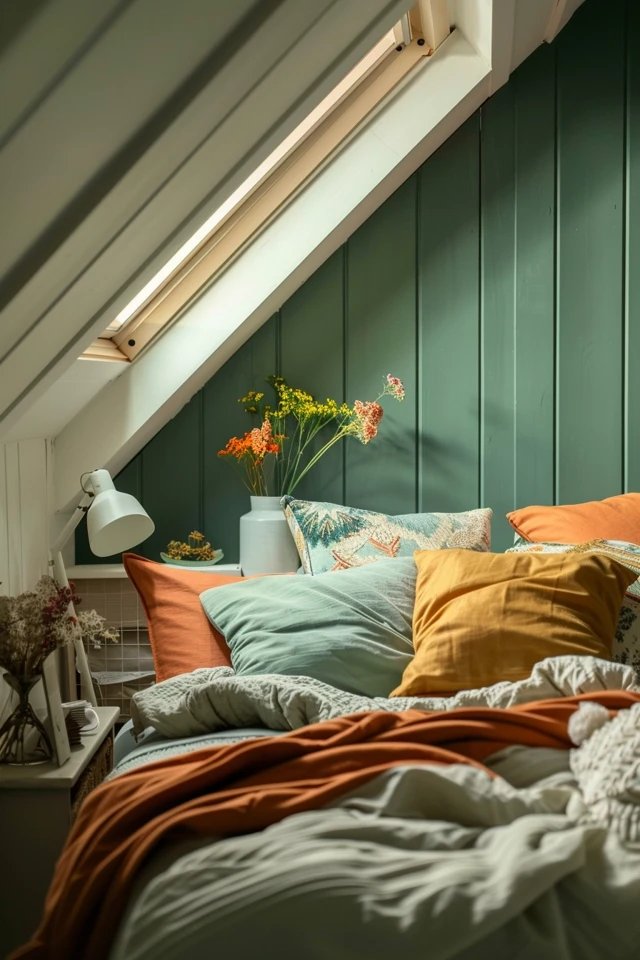
Maximizing Cozy: Low Ceiling Attic Bedroom Ideas
Introduction
There is something inherently magical about an attic bedroom. The sloped ceilings and unique nooks create a sense of privacy and separation from the rest of the household, almost like a secret treehouse for adults. However, transforming a dusty, angular attic into a functional sanctuary is often the most challenging project a homeowner can tackle.
I recall a specific project in a 1920s bungalow where the peak of the roof was only seven feet high, tapering down to a mere three feet at the knee walls. The homeowners wanted a primary suite, but they were terrified the space would feel claustrophobic rather than cozy. By embracing the low clearance rather than fighting it, we turned those awkward angles into architectural assets.
It requires a shift in perspective and a strict adherence to scale. You cannot simply drag standard bedroom furniture up three flights of stairs and expect it to work. If you are looking for visual inspiration to guide your renovation, please note that a curated Picture Gallery is available at the end of the blog post.
1. Layout Logistics: Mastering the Slopes and Knee Walls
The first step in any attic design is identifying your “walkable zone.” In interior design, we generally look for a minimum ceiling height of 7 feet for comfortable standing room, but attics break this rule constantly.
You need to map out where a person can stand fully upright versus where they must crouch. This dictates your floor plan entirely. The bed usually belongs under the slope or against the knee wall to preserve the highest ceiling point for circulation paths.
However, placing a bed under a slope requires caution. You never want a client to wake up and immediately hit their head. I recommend pulling the bed frame away from the low wall by at least 6 to 10 inches if the slope is steep. This creates a breathing room buffer and space for a custom headboard shelf.
Designer’s Note: The Staircase Reality Check
One lesson I learned the hard way involved a queen-size box spring and a narrow turn-of-the-century staircase. We measured the room perfectly, but we forgot to measure the turning radius of the stairwell.
Always measure the diagonal clearance of your stairwell before buying furniture. If access is tight, look for “split” box springs, vacuum-packed memory foam mattresses, or modular flat-pack furniture that can be assembled in the room.
Defining the Knee Wall
The knee wall is the short vertical wall that connects the sloped ceiling to the floor. In most attics, this is between 3 and 4 feet high.
Do not ignore this space. It is prime real estate for built-in storage, recessed dressers, or bookshelves. If you leave it as a blank wall, you are wasting the most valuable square footage in the room.
2. Low-Profile Furniture: Scaling Down for Comfort
When the ceiling is low, the furniture must follow suit. Standard furniture heights will make an attic room feel crowded and top-heavy.
The goal is to increase the vertical negative space between the top of your furniture and the ceiling. This optical illusion tricks the eye into thinking the room is taller than it is.
The Bed Frame
Avoid high-profile canopy beds or tall, imposing headboards. These will visually slice the room in half.
I almost always specify platform beds for attic spaces. Look for frames that sit 6 to 9 inches off the floor, rather than the standard 12 to 14 inches. This lowers your center of gravity.
If you love the look of a headboard, choose a horizontal channel-tufted design that runs wide rather than tall. This emphasizes the width of the room, distracting from the lack of height.
Seating and Storage
If you have space for a reading nook, choose low-slung lounge chairs without high backs. Mid-century modern designs work exceptionally well here because they tend to have lower profiles and open leg structures, which keeps the visual flow open.
For dressers, prioritize width over height. A long, low sideboard used as a dresser often looks better under a sloped ceiling than a tall highboy chest.
Common Mistakes + Fixes
Mistake: Using standard table lamps on nightstands.
Fix: In an attic, the slope often cuts into the space where a lamp would stand. Switch to wall-mounted sconces installed on the knee wall or the slope itself.
Mistake: Overstuffing the room with heavy pieces.
Fix: Use furniture with “legs.” Seeing the floor continue underneath the bed and chairs makes the footprint feel larger.
3. Lighting Strategies for Limited Vertical Clearance
Lighting an attic is technically difficult. You rarely have the vertical clearance for a chandelier or a pendant light without it becoming a hazard.
You must rely on a layered approach that mixes ambient, task, and accent lighting without cluttering the headspace. The goal is to wash the walls and ceiling with light to push the boundaries outward.
Recessed Lighting Rules
If you are doing a full renovation, recessed “can” lights are your best friend, but size matters. Do not use the standard 6-inch cans; they look huge in a low ceiling.
Opt for 3-inch or 4-inch recessed gimbals. Gimbals are lights that can swivel. This is crucial on a sloped ceiling because you can point the light beam straight down or toward a wall, rather than having it follow the angle of the roof and shine directly into your eyes.
Sconces and Floor Lamps
Since overhead fixtures are often impossible, wall sconces are vital. I prefer articulating arm sconces mounted at bedside.
Mounting Height: In a standard room, I mount sconces 60 to 66 inches off the floor. In an attic with low knee walls, you may need to mount them lower. Sit in the bed to test the height; the bulb should not be visible from your resting eye level.
Cord Management: If you cannot hardwire sconces, use plug-in versions with fabric-wrapped cords. Use rigid cord covers painted to match the wall color for a cleaner look.
Kelvin Temperature
Attics can feel dark and cave-like. Avoid cool, blue-toned daylight bulbs (5000K), which can make the space feel clinical and cold.
Stick to 2700K or 3000K warm white bulbs. This mimics the cozy, sunset glow that makes small spaces feel inviting rather than cramped.
4. The Envelope: Paint, Wallpaper, and Texture
There is a longstanding myth that you must paint small, low rooms stark white to make them feel bigger. While white is airy, it can also highlight the strange shadows created by angular ceilings.
In my practice, I often go the opposite direction. Darker, moodier colors can blur the hard lines where the wall meets the ceiling, making the space feel infinite rather than small.
Color Drenching
This is a technique where you paint the walls, the trim, the knee walls, and the sloped ceiling all the same color. It is incredibly effective in attics.
When you paint the ceiling white and the walls a color, you are drawing a visual line right where the room starts to shrink. By drenching the room in a soft sage green, warm terracotta, or even a deep navy, you remove those boundaries. The eye travels continuously without stopping at the “lid” of the room.
Vertical Paneling
To fake height, install vertical shiplap or beadboard. The vertical lines draw the eye upward, countering the low ceiling.
You can install this on the knee walls and carry it all the way up the slope to the peak. It adds architectural interest and durability, especially in tight spaces where walls get bumped often.
Wallpapering the Ceiling
If you want pattern, put it on the ceiling. A small-scale floral or geometric print on the slopes can camouflage imperfections in the drywall, which are common in old attics.
Avoid large-scale murals or heavy stripes that might look distorted on the angles. Stick to non-directional patterns that look good from any angle.
5. Custom Storage Solutions for Awkward Angles
Storage is the number one complaint in attic bedrooms. Standard closets are rarely an option due to height restrictions.
You have to get creative and often invest in semi-custom or custom solutions to utilize the “triangle” spaces.
The Knee Wall Dresser
The most efficient use of space is recessing drawers directly into the knee wall. This requires framing work, but it saves floor space.
If you are renovating, ask your contractor to frame out boxes between the studs in the knee wall. You can install standard drawer glides and fronts, effectively burying your dresser into the wall.
Open Shelving and Rods
Where the ceiling is highest (usually near the door or the center peak), install your hanging storage. Since you likely won’t have depth for a standard 24-inch closet, try a perpendicular hanging rod.
This allows you to hang clothes front-to-back rather than side-to-side. It requires only 12 to 14 inches of width, making it perfect for tight nooks.
Floating Shelves
In the tightest corners where nothing else fits, install floating shelves cut to the specific angle of the wall. These are perfect for books, decorative bins, or shoes.
Real Project Application: The Rolling Cart
For a renter-friendly solution, I once used low, rolling under-bed carts but didn’t put them under the bed. We lined them up along the knee wall and skirted them with a tension rod and linen fabric. It created a “wall of storage” that looked built-in but required zero construction.
Final Checklist: What I’d Do in Your Room
If I were consulting on your attic bedroom today, this is the exact checklist I would run through to ensure success:
Check Insulation: Before decorating, ensure the roof is insulated. Spray foam is best for tight rafters. If the room is freezing in winter or boiling in summer, no amount of decor will make it cozy.
Measure the Pitch: Determine the angle of your ceiling. This helps when ordering custom shades or blinds.
Identify the Bed Wall: Locate the spot with the best view that doesn’t obstruct the flow. Usually, this is the gable end or the knee wall.
Select Low Furniture: Source a bed frame under 15 inches high and nightstands that sit below the mattress top.
Plan the Lighting Loop: Ensure you have three sources of light (bedside, general floor/table, and closet task light).
Choose the Palette: Decide if you are expanding the space with white or embracing the cozy with a color drench.
* Rug Sizing: Measure the open floor space. Aim for a rug that sits under the bottom two-thirds of the bed and extends into the room. In attics, sheepskin throw rugs are great for irregular floor shapes.
FAQs
How do I dress a window on a slanted wall?
This is a common headache. Gravity causes standard curtains to hang straight down, cutting off the room. You have two good options. First, use top and bottom rods (shirred curtains) to hold the fabric tight against the glass. Second, use motorized cellular shades that run on side tracks. They disappear when open and stay flush when closed.
Is an attic bedroom safe for kids?
Yes, but window safety is paramount. Attic windows are high off the ground. Install window guards or limiters that prevent them from opening more than 4 inches. Also, consider carpet or a thick rug with a high-quality pad to dampen the sound of footsteps for the people living on the floor below.
What creates the “cozy” factor most effectively?
Texture is the secret ingredient. Because attics can feel boxy and angular, you need soft materials to counteract the hardness. Layer linen bedding, a chunky wool throw, velvet pillows, and a high-pile rug. The more tactile the room is, the cozier it feels.
Can I install a ceiling fan in a low attic?
It is risky. Building code usually requires fan blades to be at least 7 feet from the floor. In most attics, this isn’t possible. Instead, look for “flush mount” enclosed fans (sometimes called “fandeliers”) where the blades are caged, or simply use a high-quality oscillating floor fan for airflow.
Conclusion
Designing a low-ceiling attic bedroom is less about fighting the architecture and more about leaning into it. These spaces naturally want to be intimate, secluded, and restful. By lowering your furniture profile, layering your lighting, and utilizing every inch of knee-wall space, you can create a room that feels intentional and bespoke.
Don’t be afraid of the dark corners or the sharp angles. Paint them, light them softly, and turn them into the features that give the room its character. The result will be a sanctuary that feels miles away from the rest of the house.
Picture Gallery


