
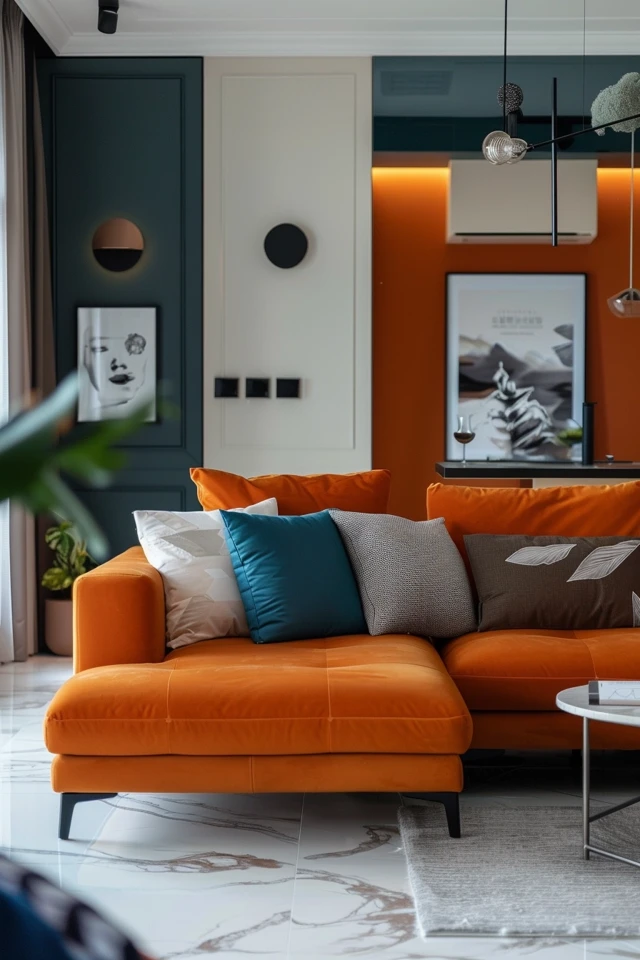
Maximizing Style in L Shaped Living Rooms
An L-shaped living room is one of the most common architectural features in modern homes and apartments, yet it remains one of the most confusing to furnish. You have two distinct rectangles joined at a corner, and figuring out how to make them feel like one cohesive home can be frustrating. Many people end up with one cluttered corner and one vast, empty wasteland.
The beauty of this layout, however, is that the hard work of zoning is already done for you. The natural shape provides a clear separation between lounging, dining, or working areas without requiring you to build walls. If you are looking for visual inspiration, you can jump right to our Picture Gallery at the end of this blog post.
In this guide, we are going to break down the specific rules of scale, flow, and lighting that professional designers use to tackle this shape. We will move past basic decorating tips and get into the math of floor plans and the psychology of visual cohesion. By the end, you will have a clear roadmap for transforming your L-shaped space.
1. Establishing Your Zones: The Function First Approach
Before you buy a single piece of furniture, you have to decide what each “leg” of the L is going to do. The most common mistake homeowners make is trying to force the television onto the largest wall, regardless of how it affects the traffic flow. You need to look at the room’s architecture first.
Typically, an L-shaped room consists of a “long leg” and a “short leg.” In a standard open-concept home, the long leg usually serves best as the primary living or media area because it accommodates larger furniture like sectionals. The short leg is naturally suited for a dining area, a home office, or a dedicated reading library.
However, if you love entertaining and rarely watch TV, you might flip this script. You could put a long dining table in the larger section and a cozy conversation pit in the smaller section. The key is to commit to a function for each zone so you don’t end up with furniture drift, where chairs just seem to float aimlessly between spaces.
Designer’s Note: The Sightline Rule
One lesson I learned the hard way in an early project involved neglecting the “sightline” from the front door. We placed the back of a large sectional directly facing the entryway. It immediately closed off the room and made the house feel half its size.
Always stand at the entrance of the room. If the first thing you see is the tall back of a piece of furniture, the room will feel uninviting. In L-shaped rooms, try to keep the sightlines into the “corner” open to encourage visual flow.
2. Mastering the Layout and Traffic Flow
Once you know what the zones are, you have to arrange the furniture to allow for movement. In an L-shaped room, the traffic path usually cuts right through the intersection of the two rectangles. If you block this intersection, you create a bottleneck that makes the whole house feel cramped.
A major rule of thumb is to keep furniture off the walls. In an L-shape, pushing sofas against the walls exaggerates the bowling-alley feel of the rectangular sections. By floating your furniture even just a few inches—or ideally, centered in the room—you create a sense of airiness.
For the transition area where the L bends, avoid placing heavy case goods like sideboards or bookshelves. This corner is high-traffic. Instead, use rounded furniture here, like a circular ottoman or a round entry table, to soften the hard 90-degree angle of the walls.
Specific Measurements for Flow
- Main Walkways: You need a minimum of 36 inches of clearance for main traffic paths. In tighter apartments, you can squeeze this to 30 inches, but anything less will result in bruised shins.
- Coffee Table Distance: Keep 14 to 18 inches between the edge of your sofa and the coffee table. This is close enough to set down a drink but wide enough to walk through.
- Dining Clearance: If one leg of your L is a dining area, ensure you have 36 inches from the table edge to the wall or the nearest piece of furniture so guests can slide their chairs back.
Common Layout Mistakes + Fixes
- Mistake: Using two different focal points that fight each other (e.g., a fireplace in one leg and a TV in the other, oriented in opposite directions).
- Fix: Orient the furniture in the main living leg toward one primary focal point. If you have a fireplace and a TV, place the TV next to the fireplace or on a perpendicular wall so the seating arrangement serves both.
- Mistake: Ignoring the “dead corner” in the back of the L.
- Fix: Turn this awkward spot into a functional vignette. A tall indoor tree (like a Ficus Audrey), a floor lamp with a reading chair, or a small bar cart works perfectly here to utilize the square footage.
3. Rugs: The Anchors of the L-Shape
Rugs are the most effective tool for defining the separate zones in an L-shaped room without putting up physical barriers. You are essentially creating “rooms within a room.” The biggest error here is undersizing your rugs, which makes the furniture look like it is floating on an island.
For the living area, select a rug large enough that at least the front legs of all major seating pieces sit on it. A standard 8×10 or 9×12 rug is usually necessary for the main leg of the L. For the dining or secondary zone, the rug needs to extend 24 inches beyond the table on all sides so chair legs don’t catch when pulled out.
A common question is whether the rugs need to match. They definitely should not be identical, as that looks too “catalog.” However, they must be cousins. They should share a color palette or a texture. For example, a patterned vintage-style rug in the living room pairs beautifully with a solid, textured jute or wool rug in the dining area.
Practical Considerations for Real Life
If you have kids or pets, the L-shape can often become a race track. This means the corners of your rugs will see high impact. I always recommend using rug tape or a high-quality felt pad to secure the corners, especially in the transition zone where the two legs meet.
For high-traffic rentals or homes with dogs, consider using two large sisal or seagrass rugs as your base layer. They are durable and relatively inexpensive. You can then layer a smaller, softer vintage rug on top of the sisal in the living area to add comfort and define that specific conversation zone.
4. Lighting Strategies to Connect the Spaces
Lighting is often the reason an L-shaped room feels disjointed. If one leg has great natural light and the other is a dark cave, the room will feel unbalanced. You need to create a lighting plan that distributes illumination evenly across both legs of the L.
Relying on a single ceiling fixture in the center of the room is a recipe for disaster. You need “triangles of light” in each zone. This means having at least three light sources at varying heights in each section of the L.
In the dining leg, a pendant light or chandelier over the table anchors the space. In the living leg, combine recessed lighting (if available) with floor lamps and table lamps. The goal is to ensure that when you stand in the corner of the L, the brightness levels match in both directions.
Designer’s Checklist: What I’d Do in a Real Project
- Kelvin Temperature: Ensure every bulb in both legs of the L is the same color temperature. I strictly use 2700K (warm white) or 3000K (soft white). Mixing daylight bulbs with warm bulbs will make the room feel chaotic.
- Floor Lamps: Place a floor lamp in the deep corner where the two walls meet. This brightens the shadows and visually pushes the walls back, making the room feel larger.
- Dimmer Switches: Install dimmers on all overhead fixtures. This allows you to “turn down” the dining room lighting while watching a movie in the living area, visually separating the zones when needed.
5. Creating Visual Cohesion Through Styling
Once the layout and lighting are set, the final step is styling. The goal is to make the L-shaped room feel like one continuous thought. You achieve this through repetition of color, material, and scale.
Pick a color palette of 3 to 4 colors and use the 60-30-10 rule. The dominant color (60%) should be consistent on the walls and large furniture pieces across both sections. The secondary color (30%) might be your rug or curtains. The accent color (10%) comes through in throw pillows, art, and vases.
If you have wood tones in the living room (like a walnut coffee table), repeat that wood tone in the dining area (perhaps walnut dining chairs). If you have brass lighting in one leg, use brass hardware or frames in the other. This repetition tricks the eye into seeing the two spaces as a unified whole.
Handling Window Treatments
Windows in L-shaped rooms can be tricky because they might be on different walls facing different directions. For continuity, use the same drapery fabric and mounting height for all windows in the space.
Mount the curtain rods as high as possible—ideally just below the crown molding or ceiling. This draws the eye up and creates vertical lines that unify the room. Even if one window is small and another is a sliding door, matching the curtains makes the architectural differences disappear.
Final Checklist for Your L-Shaped Room
Before you consider your project complete, run through this quick checklist to ensure you haven’t missed any functional details.
- Zoning Check: Is it immediately obvious what the function of each “leg” is? (e.g., Dining vs. Lounging).
- Rug Size: Do the front legs of the sofa sit on the rug? Does the dining rug extend past the pulled-out chairs?
- Walkways: Can you walk from one end of the L to the other without turning sideways or dodging furniture?
- Lighting Balance: Are there dark corners? Have you placed a lamp in the “dead corner”?
- Color Flow: Is your accent color repeated at least once in both sections of the room?
- Sightlines: Is the view from the entry open and welcoming, rather than blocked by a sofa back?
Frequently Asked Questions
Where should I put the TV in an L-shaped living room?
Ideally, place the TV on the wall that allows the sofa to float in the center of the room or face the view. Avoid placing the TV in a spot that forces you to walk in front of it to get to the other “leg” of the room. If walls are scarce, a low media console that acts as a room divider can work, provided the back of the TV is finished or hidden.
Can I use a sectional in a small L-shaped room?
Yes, but be careful with scale. A sectional can actually make a small room feel bigger because it reduces visual clutter compared to a sofa plus two chairs. Look for a “condo-sized” sectional or one with a chaise lounge rather than a full back on the return side to keep sightlines open.
How do I decorate the wall where the L bends?
This is often a small strip of wall. Treat it as a gallery moment. A vertical stack of three pieces of art or a tall, narrow mirror works well here. A mirror is particularly effective because it reflects light into the darker corner and lets you see around the bend.
What if my L-shaped room is also the entryway?
If your front door opens directly into the L, create a “landing strip.” Use a narrow console table behind the sofa or against the wall with a tray for keys and a mirror above it. This psychologically creates an entryway without needing a foyer.
Conclusion
Designing an L-shaped living room is all about embracing the duality of the space. You have the unique advantage of separation without isolation, allowing family members to engage in different activities while still being together. By focusing on clear traffic paths, distinct lighting zones, and cohesive materials, you can turn this awkward geometric challenge into the most functional room in your house.
Remember that guidelines are just that—guidelines. Your home needs to work for your specific lifestyle. Start with the layout, invest in the right-sized rugs, and don’t be afraid to experiment with the flow until it feels right.
Picture Gallery


