
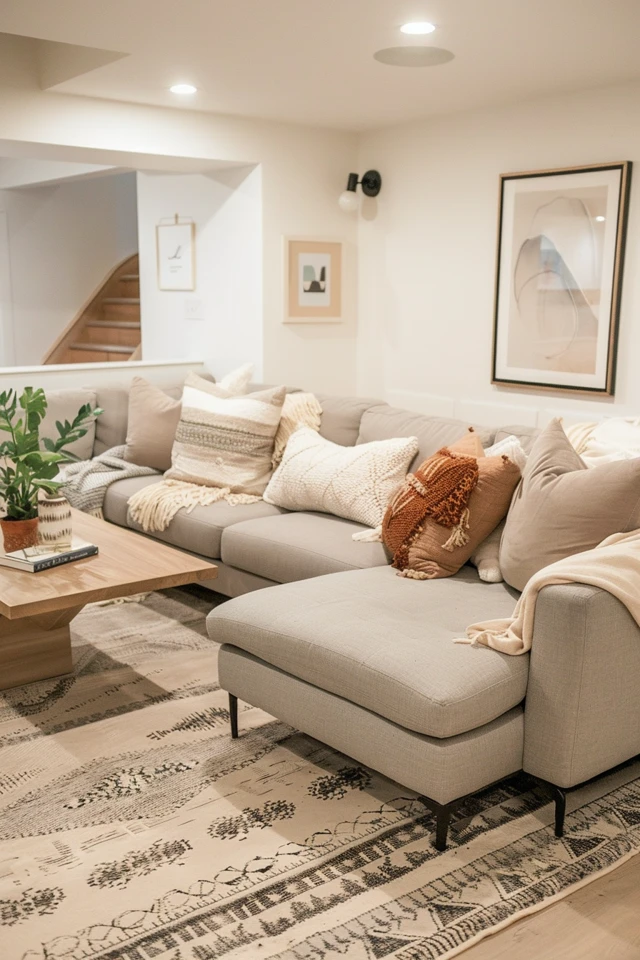
Maximizing Style: Low Ceiling Small Finished Basement Ideas
Introduction
Walking down the stairs into a basement often feels like descending into a cave. The air feels different, the light drops off, and the ceiling suddenly feels like it is pressing down on you. I have worked on dozens of lower-level renovations, and the biggest complaint is always the claustrophobic feeling caused by low height and limited square footage.
However, a small basement with a low ceiling actually offers a unique opportunity to create the coziest room in the house. Rather than fighting the architecture, successful designs lean into that enclosed feeling to create a lounge, media room, or guest suite that feels intentional and intimate. For those of you who want to see the end results immediately, you can scroll to the bottom to view the curated Picture Gallery at the end of this blog post.
The trick lies in manipulating the eye and understanding the scale of your furnishings. You do not need to physically raise the roof to make the space feel taller. By using specific lighting strategies, paint techniques, and furniture layouts, we can trick the brain into perceiving more volume than actually exists.
1. Strategic Lighting: The Anti-Dungeon Formula
Lighting is the single most critical factor in a basement renovation. In a room with standard 8-foot or even 7-foot ceilings, hanging fixtures are usually out of the question. They clutter the visual field and make the ceiling feel lower.
Instead, you need to focus on recessed lighting, but not just any old can light. I recommend using 4-inch “wafer” or “canless” LED lights. These are incredibly thin and can often fit right under ductwork or joists where traditional housing cans would not fit.
Designer’s Note: The Color Temperature Rule
A common mistake DIYers make is buying bulbs with a color temperature of 5000K (Daylight). This makes a basement look like a hospital or a garage. Stick strictly to 3000K or 3500K. This range provides a clean, white light that is warm enough to be inviting but bright enough to banish shadows.
You must also layer your lighting to push the walls out. Relying solely on ceiling lights creates harsh shadows that make the room feel smaller.
Here is the lighting plan I use for small basements:
- Perimeter Lighting: Install directional recessed lights about 18 to 24 inches from the wall to wash light down the vertical surfaces.
- Floor Lamps: Use lamps that shoot light upward toward the ceiling to bounce light back down.
- Sconces: If hardwiring isn’t an option, use plug-in wall sconces mounted at eye level (roughly 60 to 66 inches from the floor) to add depth.
2. Vertical Illusions and Paint Techniques
There is a pervasive myth that painting a small room white makes it look bigger. In a low-ceiling basement with little natural light, white paint often just looks gray and dingy. It creates shadows in the corners that highlight the lack of height.
A better approach is to blur the lines between the walls and the ceiling. I frequently paint the baseboards, walls, and ceiling all the same color. This technique, known as color drenching, removes the visual break where the wall ends and the ceiling begins.
Common Mistakes + Fixes
Mistake: Painting the ceiling bright white and the walls a darker color.
Fix: This creates a “lid” effect that emphasizes exactly how low the ceiling is. If you are afraid of dark colors, choose a soft mid-tone greige or warm putty color and wrap the entire room in it.
If you want to add architectural interest, think vertically. Vertical shiplap or beadboard draws the eye upward.
Here are the specs for successful paneling in low rooms:
- Board Width: Use narrower boards (4 to 6 inches). Wide planks can make the walls look short and squat.
- Height: Take the paneling all the way to the ceiling. Do not stop at a chair rail height, which chops the room in half horizontally.
- Finish: Use a satin or eggshell finish. The slight sheen reflects light, helping the space feel more open.
3. Low-Profile Furniture Selection
Scale is everything when dealing with limited vertical space. If you put a standard overstuffed sofa with a high back into a room with a 7-foot ceiling, the furniture will dominate the volume. The room will immediately feel cramped.
You need to shop for “low and loungey” furniture. I look for sofas and chairs with a back height of 32 inches or lower. This leaves more “white space” between the top of the furniture and the ceiling, which tricks the brain into thinking the ceiling is higher.
Real-World Constraints: The Stairwell
Before you buy anything, measure your basement stairwell width and head clearance. I have seen clients buy beautiful sectionals that physically cannot make the turn down the stairs.
What I’d do in a real project:
- Modular Sofas: I almost exclusively specify modular sectionals for basements. They come in individual boxes, making them easy to maneuver down narrow stairs.
- Legs Matter: Choose furniture raised on legs rather than pieces with skirts that sit on the floor. Seeing the floor continue underneath the sofa makes the footprint of the room feel larger.
- Glass and Acrylic: Use a glass coffee table or acrylic side tables. They serve a function without taking up visual weight.
Ensure you maintain proper traffic flow. In a small space, tight walkways are a shin-busting hazard. Aim for a minimum of 30 inches for walkways, though 36 inches is ideal if space permits.
4. Flooring and Rugs that expand the space
Basements are prone to moisture, even “dry” ones. This is a non-negotiable constraint for flooring choices. Solid hardwood is rarely a good idea below grade because it expands and contracts with humidity changes.
My go-to material is Luxury Vinyl Plank (LVP). It is waterproof, durable, and thin, which saves precious vertical fractions of an inch compared to building up a subfloor for tile or wood.
Rug Sizing Logic
A small rug makes a room look small. It creates a “postage stamp” effect that floats in the middle of the room, disconnecting the furniture.
To maximize the sense of space, follow these rules:
- Go Big: Choose a rug that leaves only about 12 to 18 inches of bare floor showing around the perimeter of the room.
- The Anchor Rule: The front legs of all major seating furniture must sit on the rug. Ideally, all legs should be on it, but front-legs-only is acceptable in tight quarters.
- Texture: Use a flatweave or low-pile rug. High-pile shags add bulk and can be difficult to clean if the basement has any dampness issues.
Designer’s Note: Comfort Underfoot
Since LVP can be cold, do not skimp on the rug pad. Use a dense felt pad rather than a waffle-weave rubber one. It adds insulation and makes the floor feel luxurious without raising the height significantly.
5. Managing Soffits and Structural Quirks
Every basement has them: the boxed-out ductwork, the steel support beam, or the cluster of pipes that ruins your ceiling line. In a small, low room, these soffits can feel oppressive if not handled correctly.
The instinct is often to try to hide them, but trying to drywall around them often creates awkward, chunky boxes.
Strategy A: The “Paint Out”
If the soffits are drywall, paint them the exact same color as the ceiling and walls. Do not paint the vertical side of the soffit the wall color and the underside the ceiling color. That just highlights the weird geometry. Make it a monochrome block so it disappears.
Strategy B: The Built-In Illusion
If you have a soffit running along one wall, build shelving or cabinetry directly underneath it. By extending built-ins from the floor up to the bottom of the soffit, you turn an eyesore into a purposeful architectural feature. It looks like the soffit exists to house the cabinetry, rather than being an obstruction.
Storage Solutions for Low Rooms
- Low Credenzas: Instead of tall bookcases, run a long, low credenza wall-to-wall. This emphasizes the horizontal length of the room rather than the lack of height.
- Floating Shelves: Install floating shelves high up on the wall, leaving about 12 inches of space from the ceiling. This draws the eye up.
- Closed Storage: In small spaces, visual clutter is the enemy. Use closed cabinetry to hide toys, games, and wires.
Final Checklist: The Project Roadmap
Before you start painting or buying furniture, run through this checklist. This mirrors the process I use to ensure a basement project stays on track and looks professional.
Planning & Layout
- Measure the ceiling height at the lowest point (under soffits/beams).
- Measure the width and head clearance of the staircase.
- Mark out the furniture layout on the floor with painter’s tape to check walkways (aim for 30″+).
Lighting & Electrical
- Select recessed lights with a 3000K color temperature.
- Ensure dimmer switches are installed for all zones.
- Plan for floor outlets if you have a floating sofa layout (to avoid cords tripping people).
Finishes
FAQs
Q: Can I paint my low basement ceiling black?
A: Yes, actually. Painting an exposed ceiling (joists, pipes, and ducts) flat black is a common industrial look. It makes the clutter “disappear” into the void. However, you must have excellent lighting, or the room will feel like a black hole.
Q: How do I dress small basement windows?
A: Avoid floor-length curtains if the windows are high “hopper” style windows; it looks awkward. Use inside-mount roman shades or cellular shades. They look tailored and don’t drag on the floor or block heater vents.
Q: What is the best furniture layout for a long, narrow basement?
A: Divide the room into zones. Use the back of a sofa or a console table to separate the TV watching area from a play area or a home office. Do not line all the furniture up against the walls; it creates a “bowling alley” effect.
Q: How do I make the room feel warmer?
A: Texture is key. Use velvet pillows, wool throws, and wood accents. Also, ensure your subfloor has a thermal break or underlayment designed for concrete slabs to stop the cold from seeping through.
Conclusion
Renovating a small basement with a low ceiling is less about fighting the space and more about embracing it. By controlling the lighting temperature, keeping furniture profiles low, and unifying your color palette, you can turn a dark storage area into the most popular room in the house.
Remember that constraints often breed creativity. The lack of height forces you to prioritize comfort and intimacy, resulting in a space that feels like a cozy retreat rather than a compromise.
Picture Gallery


