
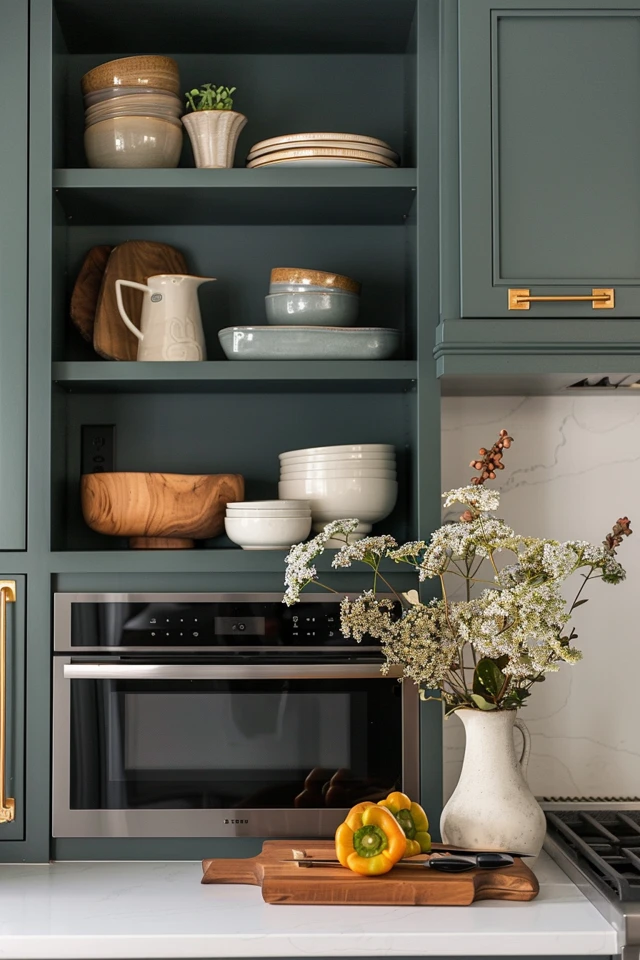
Title: Microwave Shelf Ideas for Stylish, Space-Saving Kitchens
Introduction
Few appliances are as universally used yet aesthetically frustrating as the microwave. It is the workhorse of the modern kitchen, essential for reheating coffee or popping corn, but it often ends up being a bulky eyesore that monopolizes precious counter space. In my years of designing kitchens, I have seen beautiful marble backsplashes and custom millwork ruined by a clunky plastic box sitting right in the visual center of the room.
The goal of a well-designed kitchen is to make functionality feel effortless and invisible. We want the convenience of the appliance without letting it dictate the design language of the space. Whether you are planning a full gut renovation or just looking for a weekend DIY project to clear off your counters, dedicating a specific shelf or niche for your microwave is the answer.
For a curated collection of real-world examples and inspiration, make sure to browse the Picture Gallery at the end of this blog post.
1. The Integrated Upper Cabinet Shelf
One of the most seamless ways to house a microwave is to build it directly into your upper cabinetry run. This elevates the appliance off the counter, clearing space for prep work, while keeping it at a convenient eye level. Unlike a mounting bracket over a range, a dedicated cabinet shelf allows for better ventilation and a more custom look.
When designing this, I typically specify a cabinet depth of at least 15 to 18 inches. Standard upper cabinets are usually 12 inches deep, which is rarely enough to house a standard microwave without it protruding awkwardly. By deepening the specific cabinet box where the microwave lives, you create a deliberate focal point that looks intentional rather than accidental.
This approach works best when you utilize a “trim kit.” A trim kit is a metal frame specifically sold by the manufacturer to bridge the gap between the microwave and the cabinet walls. It gives the unit a built-in appearance similar to a wall oven, eliminating dust traps and dark gaps.
Designer’s Note: The Safety Zone
I learned this lesson the hard way early in my career: never place a microwave too high. The bottom of the microwave shelf should be no higher than 54 inches from the finished floor. If you go higher, you risk spilling hot liquids onto your face or chest when reaching up to remove a heavy bowl of soup.
Common Mistakes + Fixes
Mistake: Ignoring the electrical outlet placement.
Fix: Do not place the outlet directly behind the microwave if you have a shallow shelf. The plug head takes up about 2 inches of depth. Recess the outlet into the wall or place it in the cabinet above and drill a pass-through hole for the cord.
2. The Appliance Garage or “Breakfast Station”
If you prefer a kitchen that looks less like a workspace and more like a serene living area, the appliance garage is your best friend. This concept involves a counter-to-ceiling cabinet that rests directly on the countertop, featuring doors that can be closed to hide everything away. This is my favorite solution for open-concept homes where the kitchen is visible from the living room.
Inside this “garage,” the microwave sits on a reinforced shelf at a comfortable height. The beauty of this system is that you can group related items together. I often design these with the microwave on a middle shelf and the toaster or coffee machine on the counter level below it. This creates a functional “breakfast zone” that keeps traffic out of the main cooking triangle.
For the doors, you have several options. Pocket doors (which slide back into the cabinet walls) are the gold standard because they don’t block walkways when open. Tambour doors (roll-top style) are making a huge comeback in modern design, offering texture and warmth without swinging out into the room.
Real-World Constraints: Ventilation
Microwaves generate heat and moisture. If you enclose your microwave in a cabinet with doors, you must ensure the doors are open during operation. Some high-end joinery specifications include an electrical cutoff switch that cuts power to the outlet if the doors are closed, though this is an expensive add-on.
What I’d Do in a Real Project
- I would use a bi-fold or pocket door system to ensure the doors disappear when the kitchen is in “work mode.”
- I would install an LED strip light inside the cabinet so the interior doesn’t feel like a dark cavern.
- I would line the shelf with a wipeable laminate or quartz remnant, as microwave spills are inevitable.
3. The Island Niche
Moving the microwave to the kitchen island is a fantastic way to preserve the aesthetic of your main wall elevations. This keeps the upper cabinets light and airy, perhaps allowing for windows or floating shelves instead of heavy boxes. The island niche places the microwave below the countertop, usually facing the interior of the kitchen so it remains hidden from guests in the dining area.
This layout is particularly effective for families with children. It allows school-aged kids to heat up snacks without climbing on stools or reaching over a hot stove. However, since the unit is low, you must consider the ergonomics for adults.
You generally have two choices here: a standard microwave sitting on an open shelf, or a drawer microwave. A drawer microwave is a specialized, high-end appliance that slides out like a drawer. While they are ergonomic, they are significantly more expensive. An open shelf with a standard countertop microwave is a budget-friendly alternative that works just as well if planned correctly.
Measurements that Matter
If you are building an open shelf in your island, do not place it directly on the floor. I recommend a bottom drawer at least 15 inches high, with the microwave shelf sitting on top of that. This raises the unit to knee/thigh level, making it much easier to load and unload without crouching all the way to the ground.
Common Mistakes + Fixes
Mistake: Buying a microwave with a trim kit for an island shelf.
Fix: Trim kits on lower shelves often look clunky and trap crumbs. For islands, a clean, finished open box (painted or wood-stained interior) usually looks better. Just ensure the cabinet box is 24 inches deep to accommodate the unit and the plug.
4. The Pantry Integration
In luxury residential design, there is a strong trend toward the “dirty kitchen” or “working pantry.” This is a secondary space where the messy work happens. Moving the microwave into a walk-in pantry is the ultimate space-saving move for the main kitchen. It completely removes the appliance from your primary visual field.
This requires a pantry of a decent size. You need a countertop or a sturdy shelf that is at least 18 to 20 inches deep. Standard pantry shelving is often only 12 inches deep, which is insufficient for a microwave. You will need to frame out a deeper section specifically for this purpose.
The downside to this location is the extra steps. If you use your microwave constantly while cooking (for melting butter, defrosting meat, etc.), walking to the pantry can become annoying. This solution is best for homeowners who use the microwave primarily for reheating leftovers or making popcorn, rather than as a core cooking tool.
Designer’s Note: Electrical Loads
Pantries often have minimal electrical wiring. A microwave is a high-draw appliance. Ensure your electrician runs a dedicated 20-amp circuit to the pantry location. If the microwave shares a circuit with a toaster oven or coffee maker in the pantry, you will trip the breaker constantly.
5. Floating Wall Shelves (Renters & Small Spaces)
Not everyone is in the middle of a major renovation with a budget for custom cabinetry. For renters or those with compact galleys, a heavy-duty floating shelf is a stylish and practical solution. This gets the appliance off the counter without requiring a contractor.
The key to making this look “designed” rather than “makeshift” is the scale and material of the shelf. Avoid thin, flimsy particle board. Look for solid wood shelves that are at least 1.5 to 2 inches thick. Stainless steel commercial shelves are also a fantastic option for an industrial or modern farmhouse aesthetic; they are easy to clean and heat resistant.
You must locate the wall studs. A microwave is heavy, and the door opening mechanism creates a repeated pulling force. Drywall anchors will eventually fail. You need to drive lag bolts directly into the studs to ensure the shelf doesn’t come crashing down.
Styling the Shelf
To keep a floating microwave shelf from looking lonely, integrate it into a larger vertical storage system.
- Mount a second shelf immediately above it for storing microwave-safe bowls and glass storage containers.
- Place a trailing plant (like a Pothos) on the shelf above to soften the hard, metallic lines of the appliance.
- Use a basket next to the microwave (if space permits) to hide the cord or hold manuals.
6. The Hutch or Freestanding Unit
If you have a blank wall but no built-ins, a freestanding hutch or baker’s rack is a charming way to house a microwave. This adds character to the kitchen and provides flexible storage that can move with you if you relocate.
Vintage hutches can be modified to accept a microwave. This often involves drilling a hole in the back panel for the cord. The contrast of a sleek, modern appliance against an antique or painted wood piece creates a lovely, collected-over-time vibe.
For a more modern industrial look, metal shelving units (like metro shelving) offer adjustable heights. You can set the microwave shelf exactly where you want it and use S-hooks on the sides to hang oven mitts or towels.
Pro Tip: Cord Management
The biggest enemy of a freestanding shelf is the dangling black cord. Use paintable cord covers that stick to the wall to conceal the wire as it travels down to the outlet. Alternatively, if the furniture has legs, zip-tie the cord down the back of one of the legs to keep it out of sight.
Final Checklist: What I’d Do in a Real Project
Before you commit to a microwave shelf location, run through this checklist. These are the exact steps I take with my clients to ensure we don’t make a costly error.
1. Measure the Appliance Twice: Measure the width, height, and depth. Then add 2 inches to the depth for the plug and 1 inch to the sides for airflow.
2. Check the Door Swing: Does the microwave door swing left? Most do. If you place it against a wall on the left side, the door might not open a full 90 degrees, preventing you from removing the tray for cleaning.
3. Verify the Depth: Ensure the shelf is deep enough so the microwave feet are fully supported, not just the front edge.
4. Plan the Power: Is there an outlet nearby? Can it handle the load?
5. Assess the Height: Stand in the spot and mime using the microwave. Is it too high for your shoulder? Too low for your back?
FAQs
What is the standard depth for a microwave shelf?
There is no single standard because microwaves vary, but a safe rule of thumb is a shelf depth of 18 to 24 inches. A standard 12-inch upper cabinet is too shallow. Most countertops are 24 to 25 inches deep, so matching that depth (or slightly less, like 20 inches) usually works best visually and functionally.
Do I need a special microwave for a built-in shelf?
Technically, no, but you must read the manufacturer’s manual regarding “clearance.” Countertop models vent out of the sides or back. If you build them into a tight box without airflow gaps, the motor will overheat and fail prematurely. “Built-in” specific microwaves often vent out the front to solve this issue.
Can I put a microwave shelf above the stove?
You can, but I generally advise against it unless you are using a specialized Over-The-Range (OTR) microwave with a built-in exhaust fan. A standard microwave cannot handle the heat and steam rising from the stove, and it will become a grease trap. From a design perspective, a dedicated hood vent is much more attractive than a microwave over the range.
How do I hide the microwave cord on an open shelf?
The best method is to install the outlet directly behind the microwave so the cord is bunched behind the unit. If that isn’t possible, use adhesive cord clips to run the wire along the underside of the shelf or down the back leg of the shelving unit.
Conclusion
Designing a designated spot for your microwave is a small detail that makes a massive difference in the daily flow of your kitchen. It is about reclaiming your counter space and reducing visual clutter. Whether you choose to hide it inside a lush appliance garage, tuck it into a custom island niche, or display it on a sturdy industrial shelf, the key is intention.
By treating the microwave placement as a design decision rather than an afterthought, you elevate the entire room. Remember to prioritize safety and ergonomics over aesthetics, but don’t be afraid to get creative with how you integrate this necessary appliance. With the right measurements and a little planning, you can have a kitchen that is both highly functional and effortlessly stylish.
Picture Gallery


