
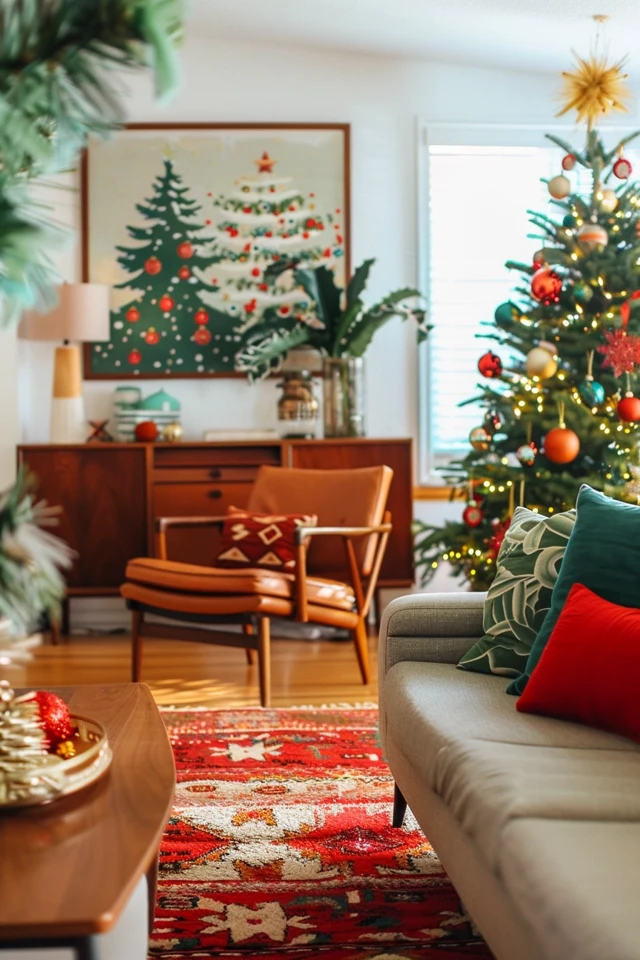
Title: Mid Century Christmas Decor: Vintage Holiday Charm
Introduction
There is a specific kind of magic found in mid-century holiday design that modern minimalism just cannot replicate. It is a style defined by playful optimism, where atomic starbursts meet shiny aluminum trees and color palettes break all the traditional red-and-green rules. For my clients who love this era, the goal is never to make their home look like a museum exhibit, but rather to capture that warm, nostalgic cocktail party vibe of the 1950s and 60s.
When we approach this aesthetic, we have to balance the kitsch with the sleek lines that make Mid Century Modern (MCM) architecture so timeless. It requires a confident hand to mix turquoise, pink, and gold without overwhelming a space. To help you visualize these concepts, I have curated a comprehensive Picture Gallery at the end of the blog post that showcases these vintage styling techniques in real homes.
Whether you live in a sprawling ranch house or a contemporary apartment, this look is surprisingly adaptable. We are going to break down the lighting, the textures, and the specific spacing rules that keep this look polished rather than chaotic. Let’s bring some vintage joy back into your living room.
1. Establishing the Atomic Color Palette
The first mistake I see homeowners make with retro decor is assuming anything “bright” fits the bill. True mid-century design relies on specific, saturated tertiary colors.
If you are just starting, I recommend the “Turquoise and Red” combination. It offers high contrast and feels authentically 1950s. For a softer, early-60s Hollywood Regency vibe, look at “Blush Pink and Gold.”
Designer’s Note: The 60-30-10 Rule
Even with retro whimsy, you must stick to ratios.
- 60% Dominant Color: usually your neutrals (walnut wood, white walls, cream rugs).
- 30% Secondary Color: This is where your vintage hue comes in (e.g., a teal aluminum tree or olive green velvet stockings).
- 10% Accent: The metallic punch. In MCM, this is almost always gold, brass, or silver tinsel.
Common Mistakes + Fixes
Mistake: Using modern neon colors instead of vintage pastels or jewel tones.
The Fix: Look for “ceramic” finishes on bulbs and ornaments rather than “LED cool white.” The colors should look painted on, not glowing from within.
2. The Tree: Aluminum, Flocked, and Spacing
The Christmas tree is the anchor of your holiday living room. In the mid-century era, the movement toward artificial trees changed the landscape of design.
The Aluminum Tree
If you want the ultimate 1950s look, an aluminum tree is the gold standard. These trees are not meant for string lights. In fact, putting electric strings on metal trees is a fire hazard.
Instead, you must use a color wheel. This is a rotating motorized light that sits on the floor, projecting changing colors upward onto the reflective branches.
Placement and Scale
Because aluminum and flocked trees are visual heavyweights, they need negative space.
- Distance from walls: Pull the tree at least 18 inches from the corner. These trees are sculptural and need “breathing room” to be appreciated.
- Height: If you have standard 8-foot ceilings, stick to a 6.5 or 7-foot tree. You need at least 12 inches of clearance for a starburst topper.
Ornament Curation
This style prizes spacing. Modern trees are often stuffed full of filler ornaments. Vintage trees use “Shiny Brite” glass ornaments, indented reflectors, and finials.
What I’d do in a real project:
I hang ornaments inside the tree, near the trunk, as well as on the tips. This creates depth. I also space large glass balls at least 6 inches apart so each one reads as an individual object of art.
3. Mantel Styling: The Putz House Village
Nothing says mid-century Christmas quite like a “Putz house” village. These are the tiny cardboard glitter houses that were popular in the mid-20th century.
Layout Logic
When styling a mantel with these intricate miniatures, linear perfection is boring. You need elevation changes.
Step-by-Step Styling:
- Create a Base: I use a layer of faux snow or a white batting runner cut to the width of the mantel. Keep it 2 inches back from the edge to prevent fire hazards if you use the fireplace.
- Vary the Heights: Use small acrylic risers or hidden blocks under the “snow” to raise some houses higher than others. This mimics a hillside village.
- Bottle Brush Trees: Use these as your dividers. Group them in odd numbers (3 or 5) between the houses. Mix cream, teal, and pink trees for that atomic look.
Lighting the Village
Vintage Putz houses have holes in the back for lights.
Renter-Friendly Tip: Do not try to string a heavy C7 cord across a mantel if you don’t have outlets nearby. Use battery-operated LED fairy lights. Stuff a small bundle of lights inside each house. It is safer and eliminates ugly cords hanging down the fireplace front.
Stocking Holders
Avoid heavy, ornate cast iron holders. Look for low-profile brass weight bars or use Command hooks hidden under the snow/garland layer for a floating look.
4. Mid Century Lighting: Bubble Lights and C9 Bulbs
Lighting in the 1950s was tactile. It got hot, it bubbled, and the bulbs were large.
Bringing Back Bubble Lights
NOMA bubble lights are iconic. They look like small candles with a liquid vial that bubbles when heated.
Safety Warning: Vintage sets get very hot. I always recommend buying modern reproductions. They look identical but adhere to modern UL safety standards.
Outdoor Lighting: The C9 Bulb
If you are doing an exterior lighting scheme, skip the tiny “rice” lights. You want C9 bulbs—the big, thumb-sized ceramic ones.
Spacing Rules for Rooflines:
- Clip spacing: Place bulbs exactly 12 inches apart.
- The Look: The goal is a rigid, straight line along the fascia board. We aren’t doing “icicle” drips here. We want crisp, geometric lines that highlight the architecture of the home.
Designer’s Note:
If you have a large picture window (common in ranch homes), frame it. I often place a line of C7 ceramic bulbs along the interior sill of the window. It creates a warm glow that looks great from the street and the sofa.
5. The Holiday Bar Cart & Entertaining Zones
The bar cart is an essential piece of furniture for this design era. It is also the easiest place to swap in holiday decor without cluttering functional surfaces.
Styling the Cart
Clear the daily clutter. We want specific festive glassware.
- Glassware: Look for “Dorothy Thorpe” style glasses (clear with a thick silver rim) or vintage coupes with star etched patterns.
- Accessories: Add a bowl of vintage matchbooks and a tall glass vase filled with vintage glass swizzle sticks.
- Greenery: Do not drape garland here; it gets in the way of pouring drinks. Instead, use a single, tall aluminum spray or a small tinsel tree in the corner of the cart.
Textiles and Soft Goods
You don’t need to reupholster your furniture to match Christmas. Swap your throw pillows.
Look for pillows in “atomic” barkcloth fabrics. Motifs like boomerangs, stars, and geometric diamonds work best.
Material Selection for Families:
If you have pets or kids, vintage barkcloth is durable, but vintage glass is not.
The Fix: I swap fragile vintage ornaments on the lower third of the tree for shatterproof look-alikes. There are excellent acrylic reproductions of “Shiny Brites” available now that won’t break if a dog tail hits them.
6. Walls and Windows: Wreaths and Swags
Mid-century decor often utilizes wall space for sculptural elements.
The Starburst Mirror/Clock Alternative
If you have a starburst clock (very common in MCM design), don’t take it down. Dress it up. I gently wire a small sprig of holly or a velvet bow to the bottom spoke. It’s subtle but festive.
Window Wreaths
Skip the heavy evergreen wreaths. Look for cellophane wreaths or tinsel wreaths.
Hanging Height:
Hang wreaths in the center of the upper sash of your window. Use a wide satin ribbon (2-3 inches wide) to suspend it. The ribbon is part of the decor, so choose a contrasting color like chartreuse or turquoise.
Final Checklist: The MCM Holiday Refresh
Here is the checklist I use to ensure a project feels “designed” and not just “decorated.”
The Foundation
- Choose a specific color trio (e.g., Pink/Gold/White or Red/Turquoise/Silver).
- Select the tree type: Aluminum (requires color wheel) or Green (requires spacing for ornaments).
The Lighting
- Source C7 or C9 ceramic-finish bulbs (no cool white LEDs).
- Check all vintage light cords for fraying; replace with modern reproductions if in doubt.
- Set up the color wheel for the aluminum tree.
The Vignettes
- Clear the mantel shelf completely before starting.
- Group bottle brush trees in odd numbers.
- Vary heights of Putz houses using risers.
The Soft Goods
- Swap sofa pillows for atomic prints or solid velvets.
- Style the bar cart with festive glassware and metallic accents.
- ensure walkways are clear of tree branches (30-inch clearance minimum).
FAQs
Can I mix mid-century decor with a farmhouse style home?
Yes, but you need a bridge. Lean into the “rustic mid-century” vibe. Use a green tree rather than aluminum. Focus on the plaid elements and wooden mid-century ornaments. Use mercury glass, which works in both aesthetics.
Are vintage aluminum trees safe?
They are generally safe if used correctly. The danger comes from electric shorts. Never string lights directly on an aluminum tree. If the insulation on a light string wears down, the entire tree becomes electrified. Always use a floor projector or color wheel.
Where can I find affordable vintage ornaments?
Estate sales in the summer are your best bet for low prices. However, modern retailers like West Elm and CB2 often release “retro” lines that capture the shape and color perfectly without the fragility of 70-year-old glass.
How do I clean a flocked tree that has yellowed?
This is tricky. Vintage flocking yellows with age and dust. You can try misting it lightly with a mixture of water and lemon juice and letting it dry in the sun, but be careful. Often, it is better to embrace the creamy “antique white” color as part of the vintage charm.
Conclusion
Embracing mid-century Christmas decor is about more than just buying old things. It is about capturing a spirit of optimism and fun. It allows you to play with color in a way that serious modern design often forbids.
Remember the key rules we discussed: give your ornaments space to breathe, use lighting to create warmth rather than brightness, and keep your color palette tight and intentional. Whether you go for a full aluminum forest or just a few well-placed bottle brush trees on the mantel, this style brings a smile to everyone who enters the room.
Picture Gallery


